
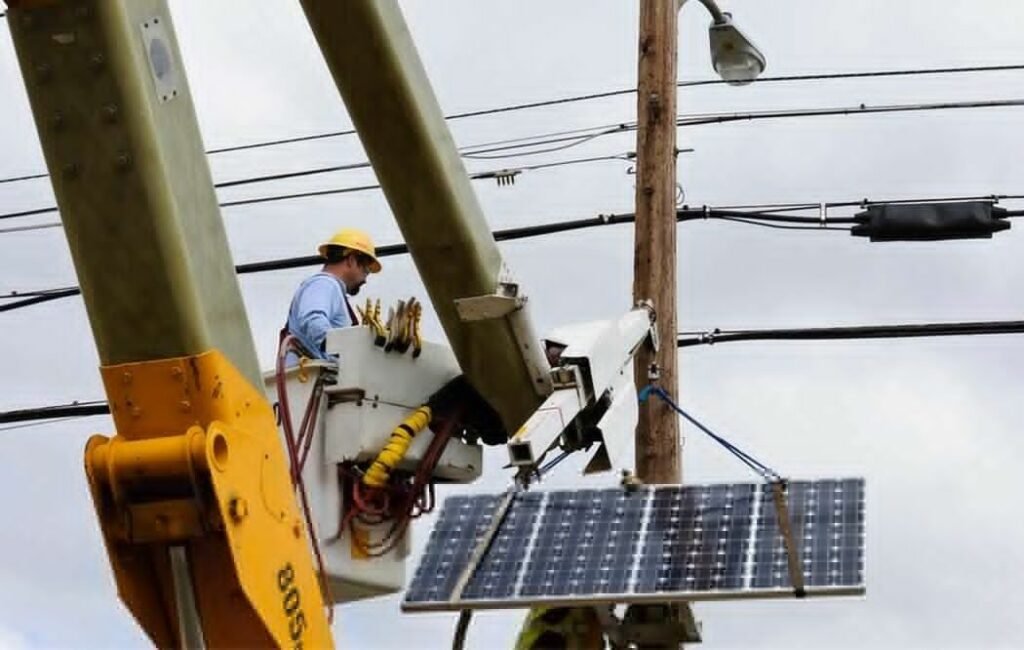
When selecting a solar energy street light, most buyers first notice design or appearance. But the more critical technical distinction – and the one that determines long-term performance and cost – is the system’s connection to the electrical power grid. Understanding this difference helps you choose the most suitable solar energy street light system for any environment or budget.
Based on grid connection type, a solar energy street light can be classified into three main categories: grid-tied (on-grid), off-grid (stand-alone), and hybrid systems. Each category has distinct properties, strengths, and ideal applications. At DEL, we manufacture the best Solar LED Street Lights for all three configurations. This article examines each system in depth so you can make a fully informed decision.
3 Types of Solar Energy Street Light Systems
Before diving into specifics, it helps to understand why the grid connection matters so much. A solar energy street light system’s relationship with the grid determines its reliability during cloudy weather, its upfront cost structure, its operational complexity, and where it can realistically be deployed. Let’s examine each type in detail.
1. Grid-Tied (On-Grid) Solar Energy Street Light
A grid-tied solar energy street light is connected to the main electrical power grid. These systems harness solar energy during daylight hours to power the street lights and contribute surplus energy back into the grid. At night – or during extended cloud cover when solar generation is insufficient – the street lights draw power from the grid to maintain illumination. This is an increasingly popular choice for urban infrastructure projects where a reliable grid already exists.
To understand the economics better, see our related guide on the cost of solar street lights in construction projects and how grid-tied systems compare in total spend.
How It Works
Solar Panels: The solar panels convert sunlight into electricity, which powers the street lights during the day and at night through stored or grid energy. Any surplus electricity can be fed back into the grid, helping reduce annual power costs.
Grid Connection: The solar energy street light automatically draws power from the grid to maintain illumination at night or during cloudy days when solar generation is insufficient.
Electricity Billing: While these street lights are powered substantially by solar energy, they remain on-grid – meaning there will still be an electricity bill. However, the bill is typically much lower than for fully grid-powered street lights due to the solar energy contribution throughout the day.
Benefits of Grid-Tied Solar Energy Street Lights
Cost Savings
- Excess solar energy offsets nighttime grid costs
- Lower monthly electricity bills
- No large battery bank required
Reliability
- Grid backup ensures continuous lighting
- Suitable for extended overcast periods
- No dark nights due to low battery
Lower Initial Investment
- No need for large battery storage
- Simpler installation process
- Faster ROI in urban settings
Challenges
Dependence on the Grid: These systems rely on grid availability. A main grid failure can interrupt lighting continuity, making them less suitable for areas prone to frequent outages.
Limited Autonomy: In regions with unreliable grid infrastructure, grid-tied solar energy street lights may not provide the independence that off-grid or hybrid solutions offer. If grid reliability is a concern, review our guide on off-grid solar street lighting as an alternative.
Applications
Grid-tied solar energy street lights are the best choice in urban areas where the grid is stable and electricity costs are a primary concern. They are also effective where running new distribution lines to individual poles would be expensive – instead, solar energy can be collected centrally (from rooftop panels or ground-mounted arrays) and fed into the grid to power street lights across the city at night.
In some configurations, grid-tied systems eliminate the need for solar panels on each individual street light pole. Central solar generation is delivered via the grid, simplifying design, reducing visual clutter, and making the streetscape more aesthetically appealing. See how the anatomy of solar LED luminaires changes across these configurations.
2. Stand-Alone (Off-Grid) Solar Energy Street Light
An off-grid solar energy street light operates entirely independently of the electrical grid. It is completely self-sufficient, generating and storing its own electricity through solar panels and battery banks for use at night or during cloudy periods. This type of solar energy street light is especially valuable in remote or rural areas where grid access is limited, unreliable, or nonexistent – covering a large share of the developing world.
For a deeper look at how these perform in real-world deployments, see our dedicated article on solar street lights for rural communities and solar street light projects in Kenya.
How It Works
Solar Panels: Solar panels generate power during daylight hours by converting sunlight into electricity. The energy generated is stored in batteries for use after sunset or during cloudy weather.
Batteries: The battery bank is the heart of an off-grid solar energy street light. It stores the energy collected during the day and ensures continuous illumination at night or through periods of low solar radiation. Battery capacity is a critical parameter that determines how many consecutive cloudy days the system can operate without sunlight. Learn more about the 9 factors to consider when setting up a solar street light LED system.
Light Source: The LED light source operates autonomously, switching on at dusk and off at dawn – requiring no manual intervention and no external power connection whatsoever.
Benefits of Off-Grid Solar Energy Street Lights
Complete Independence
- No grid connection required
- Ideal for remote locations
- Immune to grid outages
No Electricity Bills
- Zero ongoing grid energy costs
- Cost-effective over the long term
- No utility dependency
Scalability
- From single poles to entire areas
- Easy to add units incrementally
- Modular design options available
Challenges
Higher Initial Cost: Off-grid systems require a larger upfront investment due to battery banks and other components needed for standalone operation. See our breakdown of 8 ways that affect solar street light price to understand cost drivers.
Battery Maintenance: Batteries require regular maintenance and eventual replacement, which adds to long-term operational costs. Understanding 5 ways to fix a solar light not working can help you manage battery-related issues effectively.
Energy Storage Limitations: Battery capacity limits how much energy can be stored during peak solar hours. Extended periods of low sunlight – common in winter months or densely clouded regions – can challenge the autonomy of off-grid systems without adequately sized storage.
Applications
Off-grid solar energy street light systems are best suited for rural and remote areas where extending the electrical grid is difficult or prohibitively expensive. Typical applications include village roads, rural highways, parking areas, parks, and conservation zones. For guidance on installation in these contexts, see our park solar lights installation guide.
A compelling real-world example: off-grid solar energy street lights illuminating roads and pathways in remote parts of Africa and Asia have measurably improved safety and security for local communities. They are also deployed in disaster-prone areas where grid infrastructure is vulnerable to damage, ensuring outdoor lighting continues to function during emergencies and power outages. Read more about solar street lights in Africa for regional context.
3. Hybrid Solar Energy Street Light
A hybrid solar energy street light combines the best elements of both grid-tied and off-grid systems. It can operate independently on stored battery power and solar energy, but can also draw from the grid when needed. This dual capability makes hybrid systems the most resilient and adaptable category of solar energy street light available today – particularly valuable in areas with unpredictable weather, fluctuating energy demands, or unreliable grid access.
How It Works
Solar Panels: Solar panels generate electricity during the day, which is used to directly power the solar energy street light and simultaneously charge the battery bank for nighttime use.
Batteries: The battery bank stores excess solar energy for use when sunlight is unavailable. If the battery runs low during extended cloudy periods or unusually high energy demand, the system automatically switches to grid power as a backup – ensuring no interruption in lighting.
Grid Connection: Hybrid systems are connected to the grid but draw from it only when batteries are exhausted. This priority hierarchy – solar first, batteries second, grid last – maximizes energy efficiency and minimizes electricity costs while guaranteeing continuous operation. This approach pairs well with remote control technology for solar lights, which can automate switching based on real-time conditions.
Benefits of Hybrid Solar Energy Street Lights
Maximum Reliability
- Three-tier energy backup
- Never dark during outages
- Best for critical infrastructure
Energy Efficiency
- Solar used first, grid as last resort
- Dramatically reduced electricity bills
- Smart energy priority management
Adaptability
- Works in variable climates
- Handles seasonal demand shifts
- Ideal for snowy or monsoon regions
Challenges
Complexity: Hybrid systems are more technically sophisticated than basic grid-tied or off-grid alternatives. They require advanced controllers to manage the switching between solar, battery, and grid power – adding design and commissioning complexity.
Higher Cost: Hybrid systems incur a higher initial investment due to the inclusion of both battery storage and grid connection infrastructure. For a thorough analysis, see our guide on total cost of ownership for EPC projects.
Maintenance: Both solar and grid components require regular servicing, and the battery bank adds an additional maintenance layer. However, for critical applications, this cost is easily justified by the reliability gained.
Applications
Hybrid solar energy street lights are ideal for regions with unreliable grids or extreme, unpredictable climates. In areas with regular power cuts, hybrid systems deliver constant outdoor lighting – using battery backup during grid downtime, and grid power as a last resort when batteries are depleted.
Even in stable urban environments, hybrid systems can meaningfully reduce electricity bills while delivering uninterrupted lighting. Cities can automate the logic: run on solar and battery during off-peak hours, and switch to grid during peak traffic periods requiring higher illumination. This aligns naturally with innovative LED solar street light solutions designed for smart city environments. For highway deployments where reliability is non-negotiable, see solar street lights for highways.
Quick Comparison: All Three Solar Energy Street Light Systems
| Feature | Grid-Tied | Off-Grid | Hybrid |
|---|---|---|---|
| Grid Required? | Yes | No | Optional |
| Battery Storage | Not required | Essential | Required |
| Initial Cost | Low–Medium | Medium–High | High |
| Electricity Bills | Reduced | None | Minimal |
| Reliability | Grid-dependent | Weather-dependent | Highest |
| Best For | Urban, stable grid | Remote, rural areas | Critical / variable areas |
| Maintenance | Low | Medium (batteries) | Higher |
Practical Applications and Case Studies
Understanding where and how to apply these solar energy street light systems helps in making informed decisions. Here are practical examples and case studies across different contexts:
1. Urban Applications
Grid-Tied Systems in Smart Cities: In cities like Barcelona and Singapore, grid-tied solar energy street lights are integrated into smart city infrastructures. These systems reduce electricity costs while contributing to the city’s broader energy efficiency goals. The ability to feed excess solar energy back into the grid supports renewable energy targets and smart grid compatibility – a trend detailed in our article on design and construction of automatic solar street lights.
Hybrid Systems in Metropolitan Areas: In metropolitan areas where power outages are common, hybrid systems perform best. In New York City, hybrid solar street lights illuminate emergency zones – such as key intersections – during storm-related grid outages. Hospitals, critical road junctions, and emergency response corridors benefit directly from the ability to switch seamlessly between solar and grid power.
2. Rural and Remote Applications
Off-Grid Systems in Developing Countries: Where local grid coverage is absent, off-grid solar energy street lights are crucial for delivering accessible, clean illumination. In villages, rural roads, and transit camps, they improve safety, stimulate local economic activity, and raise quality of life. Off-grid solar energy street lights in rural Kenya have measurably reduced crime rates and enabled communities to conduct evening activities safely. See our full report on solar street lights in Africa and solar street light projects in Kenya.
Stand-Alone Systems in Conservation Areas: Off-grid solar energy street lights are widely used in conservation zones and national parks, where reducing environmental footprint is essential. They provide gentle, eco-friendly lighting without disturbing the natural setting. Kruger National Park in South Africa, for example, uses solar-powered street lights to illuminate pathways and campsites – enhancing security without compromising the park’s character.
3. Industrial and Commercial Applications
Hybrid Systems in Industrial Zones: In industrial zones requiring high and variable electricity loads, hybrid solar energy street light systems are increasingly adopted. Industrial parks in countries like India use hybrid systems to handle fluctuating local energy demand and maintain supply continuity during grid interruptions – helping businesses stabilize operations while cutting costs. For procurement-level guidance, see our article on ADB and World Bank solar street light procurement.
Grid-Tied Systems in Commercial Developments: Shopping malls and office complexes in cities like Dubai commonly specify grid-tied solar energy street lights as part of their green building credentials. These systems support sustainability certifications while reducing operating costs – a win for both developers and building managers. See how IP65-rated solar street lights add durability for commercial outdoor environments.
Regional Spotlight: Solar street light deployments vary significantly by region. Explore our dedicated guides for India, Bangladesh, the Middle East, Latin America, and Southeast Asia to understand how each region approaches solar energy street light deployment.
Future Trends and Innovations in Solar Energy Street Lights
The field of solar LED street lighting is rapidly evolving. Ongoing innovations aim to improve efficiency, reduce system costs, and expand applications across all three system types.
1. Advanced Battery Technology
Solid-State Batteries: Next-generation solid-state batteries promise greater energy density, improved safety, and far longer lifespan compared to conventional lithium-ion batteries. These improvements will be particularly impactful for off-grid and hybrid solar energy street light systems, where battery performance directly determines operational autonomy and replacement frequency.
Supercapacitors: Supercapacitors are also being explored as supplementary or replacement storage for solar street lights. With faster charge and discharge cycles and significantly longer operating life than chemical batteries, supercapacitors could extend the service interval of solar energy street light installations dramatically – reducing maintenance visits and lifecycle costs.
2. Integration with Smart City Infrastructure
IoT-Enabled Street Lights: Integrating solar street lights with the Internet of Things (IoT) enables real-time monitoring and remote control of entire lighting networks. Cities can optimize energy use dynamically, respond immediately to maintenance alerts, and activate features such as remote dimming and motion-activated brightness adjustment. Explore how remote control technology benefits solar lights in smart deployments.
Smart Grid Compatibility: Future solar energy street light systems will increasingly integrate with smart grid platforms, enabling more efficient energy distribution, real-time load balancing, and reduced peak demand. This makes grid-tied and hybrid systems even more economically attractive for municipalities managing large-scale lighting infrastructure.
3. Sustainable Materials and Manufacturing
Eco-Friendly Materials: Innovations in materials science – biodegradable composites, recycled aluminium, and low-carbon manufacturing processes – are expected to reduce the environmental footprint of producing and disposing of solar energy street light systems. This aligns with the broader sustainability goals that motivate solar street lighting adoption in the first place. For more on environmental impact, see our article on solar cell street lights and ecological considerations.
Circular Economy Models: The solar street light industry is increasingly embracing circular economy models – designing systems for end-of-life material recovery, module refurbishment, and component reuse. This approach lowers the long-term cost of ownership while reducing landfill waste from retired battery banks and luminaire assemblies. See our analysis of total cost of ownership for EPC projects for the financial picture.
Conclusion
There are three main types of solar energy street light systems – grid-tied, off-grid, and hybrid – and the right choice depends on a range of site-specific factors including grid availability, environmental conditions, budget, and application requirements. Each system carries its own trade-offs, and understanding these thoroughly is the key to a successful deployment.
Grid-tied solar energy street light systems reduce electricity costs while maintaining reliable grid connectivity – ideal for urban areas with a stable supply. Off-grid systems deliver complete independence from the grid – the natural choice for remote locations where grid access is unavailable or uneconomical. Hybrid systems combine the strengths of both, offering maximum reliability and flexibility for areas with fluctuating weather or unreliable grid access.
Whichever system you choose, investing in a quality solar energy street light solution minimizes long-term operational costs, reduces ecological impact, and contributes to safer, more sustainable communities. For guidance on selecting the right specification, explore our resources on 9 factors for choosing solar power light poles, 5 advantages of solar light pole systems, and 7 benefits of all-in-one street light technology.
Frequently Asked Questions (FAQs)
How does the cost of solar energy street lights compare to traditional street lights?
While the initial cost of a solar energy street light – particularly off-grid and hybrid systems – is higher than conventional street lighting, the long-term savings on energy bills, reduced maintenance, and zero fuel costs make solar systems a sound economic decision over a 10–25 year project lifecycle. Grid-tied systems offer the fastest payback period in urban environments.
What is the typical lifespan of the components used in solar energy street lights?
Solar panels typically have a lifespan of 25 to 30 years, while LED lights can last over 50,000 hours of operation. Batteries, depending on type and usage pattern, generally need to be replaced every 5 to 15 years – with lithium iron phosphate (LiFePO4) batteries trending toward the longer end of that range.
Can a solar energy street light work in areas with frequent cloudy or rainy weather?
Yes. Even in predominantly cloudy regions, a well-designed solar energy street light can be highly effective. Hybrid systems combine solar with grid backup, ensuring continuous lighting regardless of weather. Off-grid systems sized with adequate battery storage can sustain multiple consecutive cloudy days. For schools and community areas, see our guide on solar street lights for school zones in variable climates.
How do solar energy street lights handle extreme temperatures?
Solar energy street lights are engineered to operate across a wide temperature range. Materials used in solar panels, battery enclosures, and luminaire housings are selected for thermal durability. IP65 or higher ingress protection ratings ensure performance in rain, dust, and temperature extremes. Learn more about the benefits of IP65 solar street lights for harsh environments.
What are the main factors to consider when choosing between grid-tied, off-grid, and hybrid solar energy street lights?
The main factors include:
(1) grid availability and reliability in the target area,
(2) local sunlight hours and seasonal weather variation,
(3) upfront and lifecycle budget,
(4) required lighting autonomy during power outages, and
(5) specific application needs such as highway lighting, school zones, or industrial areas.
Grid-tied systems suit stable urban grids; off-grid suits remote locations; hybrid suits unpredictable environments. See our deep dive into 9 factors for setting up solar street light LED systems for a full checklist.
How do I calculate the right number of solar energy street lights for a road or parking area?
Calculating the correct spacing and quantity depends on the desired lux level, pole height, luminaire output (lumens), and road width. Using photometric simulation tools like DIALux can optimize placement before installation. Our guides on calculating distance between LED solar area lights and DIALux solar street light simulation provide step-by-step methods.
What certifications should a quality solar energy street light have?
For bankable and internationally compliant projects, a solar energy street light should carry certifications such as IEC 62133 (battery safety), IP65 or IP66 (ingress protection), CE marking (European conformity), and relevant ISO standards for manufacturing quality. Projects funded by development banks may have additional compliance requirements. See our article on certification requirements for bankable EPC contracts.
Is it possible to upgrade an existing grid-tied solar energy street light to a hybrid system?
In many cases, yes. If the existing poles and wiring support the additional load, a battery storage unit and charge controller can be retrofitted to an on-grid system to create a hybrid configuration. However, this requires professional assessment of the existing infrastructure, controller compatibility, and battery sizing. Engaging a certified installer is strongly recommended. Refer to our guide on 9 tips for maintaining solar compound lighting to understand long-term upkeep for upgraded systems.
How does a solar energy street light contribute to reducing carbon emissions?
Each solar energy street light replacing a grid-powered or diesel-generator-powered fixture eliminates the CO₂ emissions associated with that electricity consumption. At scale – across thousands of poles in a city or rural electrification project – the cumulative emissions reduction is substantial. Beyond operational emissions, the solar street light also reduces transmission losses inherent in centralized grid distribution. For a broader perspective, see our article on solar road lights and global economic growth.
Can a solar energy street light system be monitored remotely?
Yes. Modern IoT-enabled solar energy street light systems support real-time remote monitoring via GPRS, 4G, or LoRaWAN communication modules. Operators can track battery state-of-charge, panel output, luminaire health, and fault conditions from a central dashboard – and even adjust brightness or schedules remotely. This capability is detailed in our article on 9 benefits of solar light remote control technology.
Related reading: The Power of the Solar Street Lamp · German-Engineered Solar Street Lights · Solar Street Lights for Highways · 4 Tips to Invest in a Solar Street Light Post