
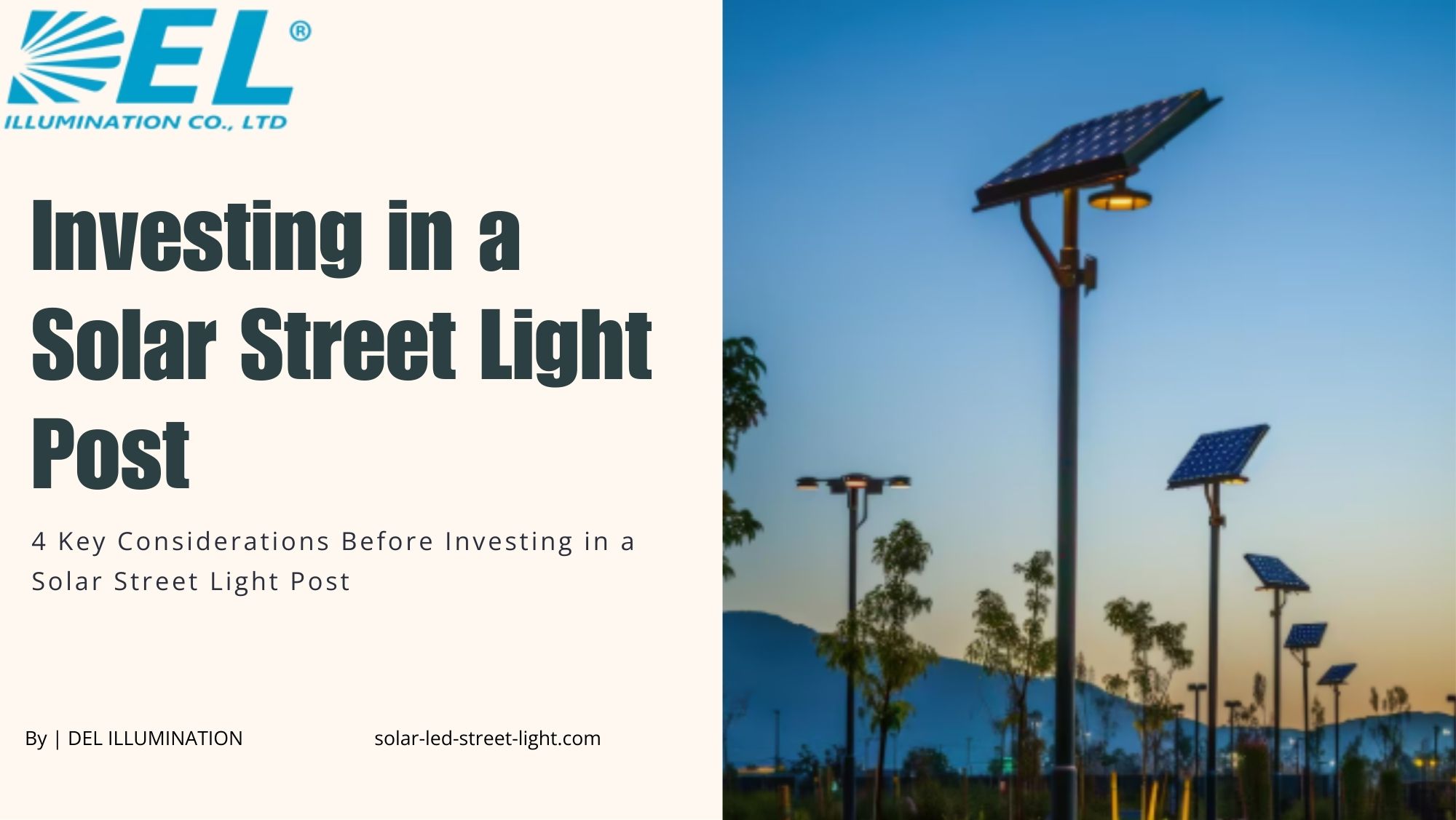
Do you currently own a solar street light post? If not, now is the ideal moment to invest in this groundbreaking technology. Solar technology is one of the fastest-growing segments in the global energy market. Allied Market Research estimates that by 2026, the global solar energy market will grow to $223.3 billion. With escalating demand for renewable energy sources across the European Union, America, China, and beyond driven in part by ADB and World Bank solar street light procurement initiatives, solar-powered lighting systems emerge as the ideal solution for modern lighting requirements. Let us explore why you should invest in a solar street light post today.
What Is a Solar Street Light Post?
A solar street light post is a stand-alone lighting structure that combines different components to harness the sun’s energy and illuminate at pre-set times. Understanding each component helps you make a smarter purchasing decision:
- Photovoltaic (solar) cells: absorb and transform sunlight into usable electrical energy
- Rechargeable battery: stores the generated energy and powers the light during low-sunlight periods or at night
- LED lights: the primary illumination source for the system, known for high efficiency and long lifespan
- Charge controller: manages the charging and discharging of the battery and governs LED operation
- Optional add-ons: motion sensors, remote monitoring modules, and self-cleaning panels to automate and optimise the fixture
If you want to explore how advanced control systems improve performance, see our guide on solar light remote control technology.
Advantages of a Solar Street Light Post
What benefits do you gain from owning a solar street light post?
- Versatile deployment: whether it is a parking lot, street, or remote area, these lights illuminate where you need them most
- Enhanced security: reliable illumination reduces the risk of accidents, vandalism, and theft, deterring criminal activities
- Grid independence: a solar street light post can operate completely off-grid, making it perfect during power outages or in areas with unreliable electricity supply
- Simpler installation: no underground wiring or grid connection is required, reducing project timelines significantly
- Lower maintenance costs: routine cleaning and periodic inspection are typically all that is needed
- Eco-friendly: solar streetlights reduce greenhouse gas emissions and support sustainable development goals
For a deeper dive into the environmental and economic case, read our article on the power of the solar street lamp and how it compares with conventional lighting.
These advantages also align with findings from global infrastructure bodies. Learn how solar road lights are contributing to global economic growth in developing and developed markets alike.
4 Factors to Consider Before You Purchase a Solar Street Light Post
Before you make that investment decision, here are four critical factors every buyer should evaluate when selecting a solar street light post.
1. Price
Price is always a guiding factor in most purchasing decisions. We advise all clients to research the available deals thoroughly before committing to a solar street light post. A basic solar street light is generally cheaper than a feature-rich model, but advanced features often justify the higher price tag.
Consider what advanced features deliver in value:
- Motion sensors: reduce energy wastage by activating the light only when movement is detected
- Remote monitoring: saves on maintenance costs by enabling easier management and remote troubleshooting
- Self-cleaning solar panels: maintain maximum efficiency by minimising dirt and debris buildup over time
The initial purchase price of a solar street light post is often higher than traditional lighting solutions. For example, a conventional lamp post may cost around $400, whereas a quality solar street light post starts near $1,000. However, when you compare the total running costs, the solar option proves far cheaper in the long run. Solar streetlights rely on free renewable energy, while traditional lamp posts require electricity, incurring ongoing utility bills. Additionally, solar streetlights require far less maintenance compared to conventional solutions. To understand how to calculate the right specifications for your budget, refer to our guide on how to calculate distance for LED solar area lights.
If you are evaluating projects under international financing frameworks, our article on FIDIC EPC contracts for solar street lights provides important procurement insights.
2. Location
When choosing where to install a solar street light post, you should ask yourself two key questions:
First: What is the weather pattern in the area? The local weather heavily influences the amount of sunlight available for energy production. In regions with frequent cloudy or overcast conditions, overall energy output from the system will be lower. Trees, buildings, and other obstructions also affect available solar exposure. A solar street light post needs an area with ample sunlight throughout the day to generate sufficient energy to power the lighting system reliably.
Second: What are the specific lighting requirements for the intended location? Factors such as traffic flow, aesthetic preferences, and safety considerations all affect what you need. Understanding these factors helps you balance the correct brightness level, installation height, and light distribution pattern for your solar street light post.
For park and recreational environments, our solar park lights installation guide walks you through site selection best practices step by step.
3. Quality of Components
Your choice of component quality for the solar street light post will directly affect both the upfront price and the long-term running costs. Here is what to look for:
- LED lights: LEDs have a higher upfront investment but a longer lifespan. High-quality LEDs are more energy-efficient and far less prone to premature failure than incandescent or fluorescent alternatives. For a comprehensive comparison of innovations in this space, read our article on 4 LED solar street light innovative solutions.
- Lithium-ion batteries: despite their initial cost, lithium-ion batteries offer superior energy density, meaning a more compact battery can store the same capacity as a larger lead-acid unit. This translates to a lighter, more efficient solar street light post overall.
- Advanced charge controller: an ultra-modern controller with features like motion sensing and dawn-to-dusk operation can dramatically reduce energy wastage and improve system longevity.
When comparing manufacturer quality, it is worth reading our analysis of German engineering vs generic solar street lights, which highlights how component quality directly impacts ROI on a solar street light post.
4. Durability and Weather Resistance
Durability is a top concern for any long-term investment. You want a solar street light post that can withstand the test of time and deliver value for money. To assess durability before purchasing, examine the following:
- Component quality: inspect the solar panel, battery, and LED housing for build robustness and material quality
- Test reports: ask the manufacturer for independent performance test reports that detail how the light fixture performs under various conditions
- Certifications: check for certifications such as CE, RoHS, or UL these indicate that the solar street light post meets specific international quality benchmarks
- IP Rating: a solar street light post with an Ingress Protection (IP) rating of IP65 or higher can withstand extreme weather conditions including heavy dust and rainfall. This level of protection ensures internal components remain safeguarded from moisture and debris.
For a detailed overview of why IP65 certification matters, visit our dedicated article on the 5 benefits of IP65 solar street lights.
You should also look at solar light pole systems and their structural advantages, which often determine how well the overall installation holds up against wind loads and physical impact.
If you want to verify technical performance in a simulated environment before committing to a purchase, our Dailux solar street light simulation tool lets you model real-world outcomes before installation.
Bonus: Troubleshooting and Long-Term Performance
Even the best solar street light post can encounter issues over time. Knowing how to identify and resolve common problems is just as important as the initial purchase decision. Our guide on 5 ways to fix a solar light not working covers the most frequent causes of failure and how to address them quickly without expensive service calls.
For project managers and EPC contractors, protecting your investment through proper design documentation is also critical. Read how patent design for solar street lights reduces EPC project risk to understand the legal and technical safeguards available.
Conclusion
Purchasing the right solar street light post can feel like a daunting task, but with the right knowledge it becomes a straightforward and rewarding investment. From understanding pricing dynamics and location requirements to evaluating component quality and weatherproofing standards, each consideration helps ensure you choose a solar street light post that delivers maximum value over its lifetime.
Never be in a hurry to make the final decision, do your due diligence. Whether you are a municipality, contractor, or private developer, investing in a quality solar street light post today is a commitment to lower costs, greater sustainability, and reliable illumination for years to come. Do you need a quality solar street light post at an affordable price? Contact us today.
Frequently Asked Questions (FAQs)
FAQ 1: How long does a solar street light post last?
A high-quality solar street light post is built to last between 5 and 10 years on average, though premium systems with lithium-ion batteries and quality LED fixtures can operate reliably for 10–15 years with minimal maintenance. The lifespan depends heavily on component quality, IP rating, local weather conditions, and how regularly the system is inspected and cleaned.
FAQ 2: What is the ideal IP rating for a solar street light post?
An IP65 rating is the widely accepted minimum standard for an outdoor solar street light post. This rating ensures the unit is fully protected against dust ingress and resistant to water jets from any direction. In coastal or high-humidity areas, consider units rated IP66 or IP67 for superior moisture protection.
FAQ 3: Can a solar street light post work in cloudy or rainy climates?
Yes, a well-designed solar street light post can continue to operate in cloudy or rainy weather, provided it uses a high-capacity lithium-ion battery with enough reserve energy storage. Most quality systems are engineered to provide 3–5 consecutive nights of illumination on a full charge, meaning short stretches of overcast weather won’t interrupt performance.
FAQ 4: How do I maintain a solar street light post?
Routine maintenance for a solar street light post is relatively simple. You should periodically clean the solar panel surface to remove dust, bird droppings, or debris that reduces energy absorption. Inspect the battery, LED module, and controller connections every 6–12 months. Modern systems with remote monitoring capabilities allow you to track performance data and identify potential faults before they escalate into costly failures.
FAQ 5: Is a solar street light post more cost-effective than a traditional street light?
Over the full lifetime of the installation, yes, a solar street light post is typically more cost-effective than a traditional grid-powered street light. While the initial purchase and installation cost is higher (roughly $1,000+ vs. $400 for a conventional post), the elimination of ongoing electricity bills, reduced maintenance frequency, and longer LED lifespan combine to deliver a lower total cost of ownership. In areas with high electricity tariffs or unreliable grid access, the payback period can be as short as 2–4 years.