
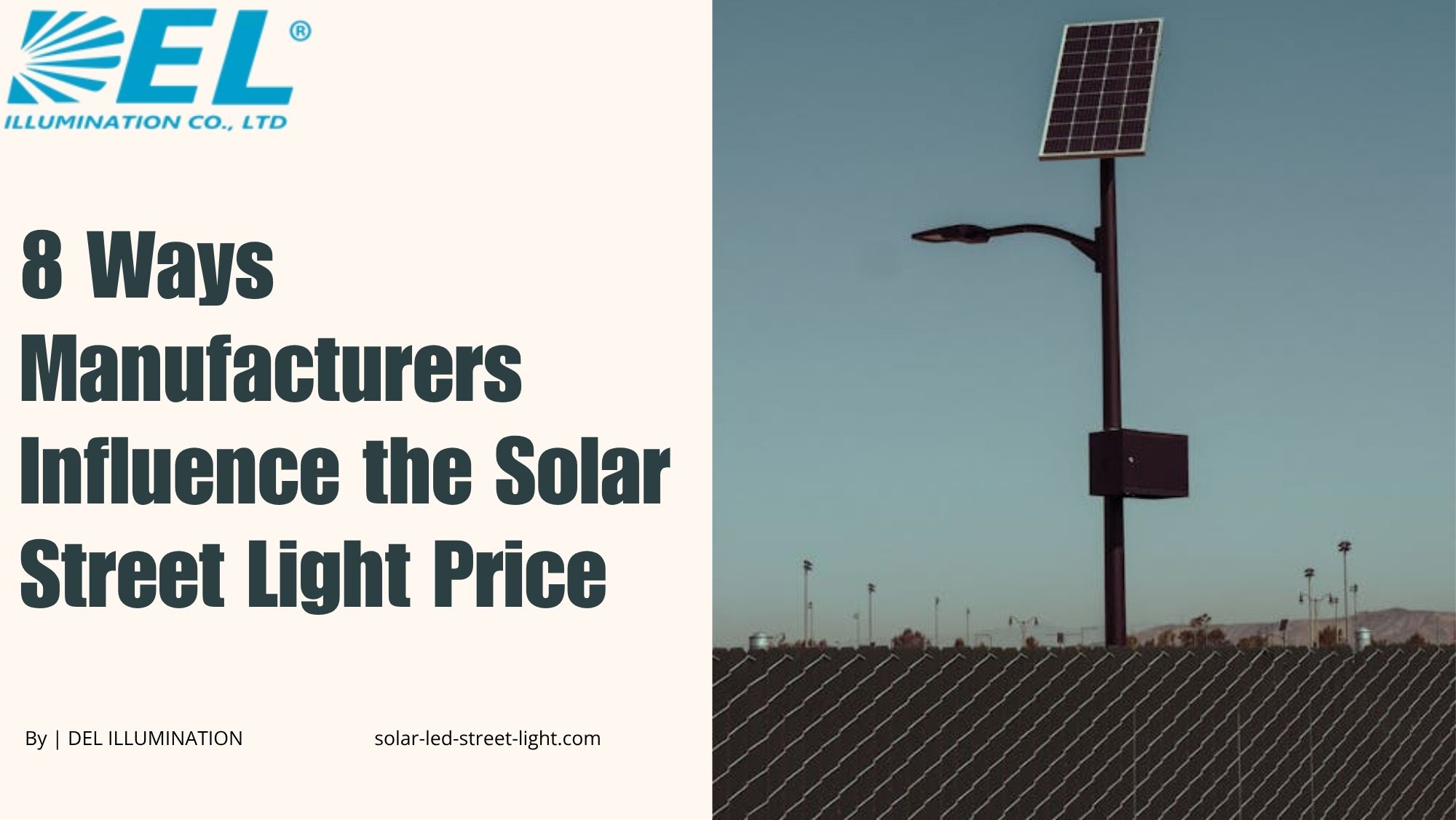
Updated On 02-04-2026
Manufacturers play a pivotal role in shaping the solar street light price. Whether you are evaluating a street solar lights manufacturing plant cost or comparing led solar light manufacturing plant cost across suppliers, understanding these pricing levers helps buyers make smarter investments. The price of these lighting solutions is subject to a multitude of factors, and manufacturers wield significant influence in determining how these factors are weighed and integrated into the final cost. To understand how solar street lights fit into the bigger picture, explore our overview of the power of solar street lamps and how they are transforming public infrastructure worldwide. Let’s dive in and discover the various ways in which manufacturers exert their influence on the pricing of solar street lights.
How Manufacturers Influence the Solar Street Light Price
Manufacturers can influence the solar street light price through various strategies and factors. These include:
1. Quality of Components
The choice of solar panels significantly affects the overall quality and the solar street light price. High-quality manufacturers invest in superior solar panels that are not only more efficient at converting sunlight into electricity but also have a longer lifespan. These panels often come at a higher price, but they result in better long-term performance and reliability, reducing maintenance costs for customers. To understand all the components that go into a solar street light system, read our detailed guide on the anatomy of solar LED luminaires.
Additionally, the quality of the housing and components responsible for weatherproofing and durability is another key factor affecting the led street light manufacturing plant cost. High-quality manufacturers invest in corrosion-resistant materials, IP65-rated enclosures, and superior craftsmanship, ensuring their solar street lights can withstand harsh environmental conditions. While these components may increase the upfront solar street light price, they contribute to a longer lifespan and reduced maintenance expenses over time.
2. Brand Reputation
A well-established and reputable manufacturer is often associated with quality and reliability. When consumers recognize a brand for consistently delivering high-quality products, they are more willing to invest in those products, even if they come at a slightly higher solar street light price. Manufacturers with a strong reputation have usually invested in research and development, ensuring that their solar street lights are efficient, durable, and equipped with the latest technology. Our guide on the 10 things to look for in the best solar street lights can help you evaluate manufacturers objectively.
Brand reputation also influences market dynamics. Strong brands have the leverage to set higher solar street light prices because they are seen as leaders in the industry. Competitors often benchmark their pricing against these reputable manufacturers, allowing them to maintain higher price points across the board. This competitive advantage further reinforces the notion that solar street lights from reputable brands are worth the investment.
3. Production Scale and Manufacturing Plant Cost
One of the primary ways manufacturers impact the solar street light price is by optimizing their production processes. The street solar lights manufacturing plant cost directly affects what end consumers pay. As production scales up, companies can invest in more efficient machinery and technologies, leading to increased productivity. This improved efficiency reduces the per-unit production cost, allowing manufacturers to offer solar street lights at a more competitive price point. For context on how the global market is evolving, see our article on solar road lights and global economic growth.
Additionally, bulk purchasing of raw materials is another advantage of large-scale manufacturing. Manufacturers can negotiate better deals with suppliers when ordering materials in large quantities. This results in a lower led solar light manufacturing plant cost, further contributing to the reduction of the overall production cost. These cost savings can then be passed on to consumers in the form of lower solar street light prices.
4. Technological Advancements
One of the key ways manufacturers influence the solar street light price is by enhancing the efficiency of solar panels. Manufacturers invest in research and development to create solar panels that can capture more sunlight and convert it into electricity more efficiently. When solar panels are more effective, fewer panels are required for a given installation – directly reducing the solar street light price. For a deep dive into the latest developments, explore our article on 4 innovative LED solar street light solutions.
Another way manufacturers impact the solar street light price is by developing smart and integrated technologies. By incorporating sensors, energy management systems, and remote monitoring and control capabilities, they can optimize the performance of solar street lights. These technologies not only make the lights more energy-efficient but also allow for better management and control, resulting in reduced energy consumption and lower operational costs over time.
5. Customization
Customization offers the advantage of flexibility and has a direct bearing on the solar street light price. Manufacturers can adjust various components – such as the size and type of solar panels, battery capacity, LED specifications, and even the design of the fixture itself – to match the unique needs of a particular project. For insights into how customization affects structural design, see our blog on the design and construction of automatic solar street lights. High-performance components typically come at a premium and push up the solar street light price accordingly.
The quality of materials and components used in customization is a significant price determinant. Manufacturers can choose between standard or premium-grade materials, and this choice directly affects the durability and lifespan of the solar street lights. Premium materials may drive up the initial solar street light price, but they can reduce maintenance and replacement expenses over the long term. If you are considering pole customization in particular, our guide on 5 advantages of solar light pole systems covers key factors to evaluate.
6. Warranty and After-Sales Support
A comprehensive warranty provided by the manufacturer can significantly influence the solar street light price. A longer warranty period, typically covering several years, instills confidence in buyers regarding the product’s durability and performance. Manufacturers that stand behind their products with robust warranties signal their commitment to quality. As a result, customers may be willing to pay a slightly higher solar street light price upfront, as they anticipate lower maintenance and replacement costs in the long run.
Furthermore, the level of support offered by manufacturers – including technical assistance, troubleshooting, and readily available replacement parts – enhances the overall value proposition of their products. Buyers are often willing to invest more in a solar street light if they know they can rely on prompt and effective support. If you ever encounter performance issues, our step-by-step article on 5 ways to fix a solar light not working can help you troubleshoot common problems quickly.
7. Government Policies and Incentives
One of the most direct ways manufacturers affect the solar street light price is by responding to government incentives and subsidies for solar technology. When governments provide financial support or tax incentives to encourage the adoption of solar street lights, manufacturers can adjust their pricing structures to make their products more attractive to potential buyers. This often involves reducing the upfront solar street light price for customers.
Moreover, when manufacturers align their product designs and manufacturing processes with energy efficiency requirements set by the government, they can qualify for additional incentives or exemptions. These incentives can be passed on to consumers in the form of lower solar street light prices. To understand what to look for when choosing a supplier in any regulatory environment, see our guide on 9 factors for setting up solar street light LED systems.
8. Supply Chain and Logistics
Logistics and supply chain management play a critical role in the solar street light price. Manufacturers must coordinate the transportation of raw materials to their facilities and the distribution of finished products to customers. Efficient logistics – including transportation routes, warehousing, and inventory management – can significantly impact the cost structure. For buyers planning large installations, it also helps to calculate the correct distance between LED solar area lights before placing bulk orders, so quantities are accurate and waste is minimized.
Furthermore, manufacturers must navigate the complexities of international trade, tariffs, and customs regulations. These factors can introduce additional costs and uncertainties into the supply chain, which may be passed on to consumers. Manufacturers with a keen understanding of international trade dynamics can strategically position themselves to mitigate these challenges and maintain competitive solar street light pricing.
Tips for Saving on the Solar Street Light Price
Saving on the solar street light price requires a combination of careful planning, smart shopping, and considering various cost-saving strategies. Whether you are a municipality, a real estate developer, or a private buyer, these tips will help you get the best value:
- Determine Your Requirements: Begin by assessing your specific lighting needs. Calculate the number of solar street lights required, their brightness (lumens), and the hours they need to operate each night. A clear requirement list prevents over-buying and keeps the solar street light price in check.
- Choose Efficient LED Lights: Opt for energy-efficient LED fixtures, as they consume less power and last longer than traditional bulbs. They may have a higher upfront solar street light price but will save you money in the long run through reduced energy and replacement costs.
- Right-size the Solar Panels and Batteries: Ensure that the solar panels and batteries are appropriately sized for your location and the desired lighting duration. Oversized components can unnecessarily inflate the led solar light manufacturing plant cost and the final product price.
- Research Government Incentives: Many regions offer subsidies, rebates, or tax benefits for solar installations. Tapping into these programs can significantly reduce the effective solar street light price you pay.
- Bulk Purchases: If you are buying a large number of solar street lights, consider buying in bulk. Suppliers often offer discounts for bulk purchases, which directly lowers the per-unit solar street light price.
- Compare Multiple Suppliers: Don’t settle for the first supplier you come across. Obtain quotes from multiple suppliers and compare prices, quality, and warranties. Our guide on 9 factors for choosing solar power light poles outlines key supplier evaluation criteria.
- Consider All-in-One Units: All-in-one solar street lights can reduce installation complexity and long-term maintenance costs. Learn more about 7 benefits of all-in-one street light technology to see if this format suits your project.
- Plan Installation Carefully: Proper installation can prevent future repair costs that inflate the total solar street light price over time. Whether it’s a park or a roadway, our park solar lights installation guide is a great resource.
- Review Warranty and Maintenance Terms: Choose products with good warranties and inquire about maintenance requirements. A lower solar street light price with a poor warranty may cost more in the long run.
- Negotiate with Suppliers: Don’t hesitate to negotiate to get the best price. For guidance on making a smart investment, read our tips on how to invest in a solar street light post.
Conclusion
Manufacturers play a pivotal role in determining the solar street light price, directly influencing the cost and availability of these eco-friendly lighting solutions in the market. From production scale and component quality to government policies and supply chain efficiency, each factor described above contributes to the final price tag on your solar street light. Understanding these dynamics empowers buyers to make informed decisions and negotiate effectively. Whether you are comparing the led street light manufacturing plant cost of different vendors or evaluating the long-term return on investment, keeping these 8 factors in mind will always guide you toward the best value. For further reading, explore our complete guide on 9 factors for setting up solar street light LED systems. Do you need a solar street light quotation? Contact us today.
Frequently Asked Questions (FAQs)
1. What is the average solar street light price in 2026?
The solar street light price can vary widely based on wattage, battery capacity, brand, and features. On average, a basic all-in-one solar street light ranges from $80 to $300 per unit for residential or small commercial use, while high-power units with smart controls for municipal projects can cost $400 to $1,500 or more per unit. To evaluate what features are worth paying more for, read our guide on the 10 things to look for in the best solar street lights.
2. Why does the solar street light price vary so much between manufacturers?
The solar street light price varies because manufacturers differ in the quality of components they use (solar panels, batteries, LEDs), their production scale, brand reputation, warranty terms, and supply chain efficiency. A manufacturer operating a large led solar light manufacturing plant with advanced automation will typically offer more competitive pricing than a small-scale producer. Understanding the anatomy of solar LED luminaires helps buyers know exactly what they are paying for.
3. How does production scale affect the solar street light price?
Large-scale production significantly reduces the per-unit solar street light price. When a manufacturer operates at high volume, it benefits from economies of scale – lower raw material costs through bulk purchasing, optimized machinery usage, and streamlined assembly processes. This means the led street light manufacturing plant cost is distributed across more units, resulting in a lower cost per light. Buyers who place bulk orders can also negotiate additional discounts.
4. Can government incentives reduce the solar street light price I pay?
Yes, government incentives can substantially reduce the effective solar street light price for buyers. Many national and local governments offer subsidies, tax rebates, or grants to encourage the adoption of renewable energy-powered lighting. It is advisable to check with your local energy authority or municipal body to identify any available schemes. See how solar road lights are driving global economic growth and attracting policy support worldwide.
5. Is a higher solar street light price always an indicator of better quality?
Not necessarily. While a higher solar street light price often reflects better components, longer warranties, and stronger brand reputation, it is important to evaluate value rather than just cost. Always compare specifications, IP65 ratings and weatherproofing, battery life, warranty terms, and after-sales support before concluding that the highest-priced option is the best choice for your needs.