
Choosing the best solar street lights for your project can feel overwhelming when the market is flooded with hundreds of options at varying price points, quality levels, and performance ratings. Whether you’re planning a residential pathway, a municipal road, or a commercial parking lot, identifying the best solar street lights requires a clear understanding of what separates a high-performing product from a mediocre one.
In this comprehensive guide, we have outlined ten critical things you should know about the best solar street lights. Use this information as a complete buying guide to confidently select top-tier products from any marketplace. Understanding these ten factors will also help you avoid common pitfalls that lead to poor investment decisions in solar lighting.
1. The Best Solar Street Lights Fit Perfectly as a Complete Unit
You can instantly recognize a well-engineered product by how securely and precisely all its components fit together. The best solar street lights are manufactured with tight tolerances, ensuring every component, from the solar panel bracket to the LED housing, sits firmly in its designated position. Poor-fitting components are a red flag for low-quality manufacturing and often lead to premature failure due to vibration, moisture ingress, or mechanical stress.
A perfect fit also signals that the product has undergone rigorous quality control. When parts align correctly, it minimizes the risk of internal wiring stress, panel misalignment, and structural damage during harsh weather conditions. Always inspect product images closely or request a sample before bulk purchasing.
2. The Best Solar Street Lights Come With an Integrated Design
An integrated or all-in-one design merges the solar panel, battery, LED lamp, and controller into a single compact unit. The best solar street lights built with this approach are significantly easier and faster to install, reducing labor costs and potential points of failure. Semi-integrated designs are also a good option where the battery is separate but the panel and light are combined.
All-in-one solar street lights reduce the complexity of installation to simply mounting the fixture on a pole no external wiring, no separate battery box, and no controller cabinet required. If you want to explore this further, check out our detailed post on 7 Benefits of All-in-One Street Light Technology.
3. The Best Solar Street Lights Are Virtually Maintenance-Free
One of the most valued characteristics of the best solar street lights is their minimal maintenance requirement. High-quality units are built from durable, weather-resistant materials that can withstand years of outdoor exposure without degradation. In most cases, the only upkeep needed is occasional cleaning of the solar panel surface to remove dust or debris that may reduce charging efficiency.
Maintenance-free operation directly translates to lower total cost of ownership over the product’s lifespan. For municipalities and large-scale installations, this is a critical financial advantage. Learn more about troubleshooting and upkeep in our guide on 5 Ways to Fix a Solar Light Not Working.
4. The Best Solar Street Lights Have Built-In Smart Sensors
Advanced sensor technology is a hallmark of the best solar street lights available today. Built-in dusk-to-dawn photosensors automatically switch the light ON at sunset and OFF at sunrise, eliminating the need for manual operation or timers. Motion sensors add another layer of intelligence, brightening the light to full capacity when human activity is detected and dimming it to an energy-saving level when the area is empty.
This smart lighting behavior significantly reduces energy consumption by up to 70% compared to lights that run at full brightness all night. The combination of motion and ambient light sensing ensures the best solar street lights always deliver the right amount of illumination at the right time. For more on smart control options, read our post on 9 Benefits of Solar Light Remote Control Technology.
5. The Best Solar Street Lights Use the Latest Technology
Technology-forward design is what differentiates the best solar street lights from outdated models still lingering on the market. High-lumen LED chips provide maximum luminous output while consuming minimal power. Monocrystalline solar photovoltaic (PV) panels with a conversion efficiency of 20% or higher ensure faster and more reliable battery charging even on partially cloudy days.
Many top-tier products are now Bluetooth or Wi-Fi enabled, allowing the solar panels and LED heads to be remotely controlled via a smartphone app or central management system. This remote control capability lets facility managers adjust lighting angles, change brightness schedules, and monitor performance data in real time, without ever having to climb a pole. For innovations in LED solar design, see our article on 4 LED Solar Street Light Innovative Solutions.
6. The Best Solar Street Lights Come From Reputable Manufacturers
Brand reputation is a reliable indicator of product quality in the solar lighting industry. The best solar street lights are produced by companies with long track records in solar R&D, manufacturing excellence, and after-sales support. These brands typically dominate industry trade publications, hold multiple patents, and are frequently cited in government procurement lists.
Reputable manufacturers back their products with comprehensive warranties — often covering the LED module for 5+ years and the solar panel for 10–25 years. This aligns with the expected lifespan of these components: LED street lights and batteries typically last around 6 years, while quality solar panels can last 20 to 25 years. Always purchase from companies that offer verifiable warranty documentation and accessible customer service. To understand how solar street lighting is driving economic progress globally, check out our piece on Solar Road Lights and Global Economic Growth.
7. The Best Solar Street Lights Use Superior-Quality Materials
Material quality directly determines how long a solar street light survives outdoor conditions. The best solar street lights use die-cast aluminum alloy for the lamp housing, which offers an exceptional combination of lightweight strength, heat dissipation, corrosion resistance, and anti-rust performance. The solar panel frame should be made from anodized aluminum and the glass cover should be tempered for impact resistance.
The solar panel’s conversion efficiency should be 15% or higher, with monocrystalline panels regularly achieving 20%+. High-quality materials not only ensure durability but also contribute to the professional aesthetic of the fixture. For insights on pole systems and material choices, visit our article on 5 Advantages of Solar Light Pole Systems.
8. The Best Solar Street Lights Have IP65 or Higher Ratings
The Ingress Protection (IP) rating system measures how well a device is sealed against dust and water intrusion. The best solar street lights carry a minimum IP65 certification, which means they are completely dust-tight and fully protected against low-to-high-pressure water jets from any direction. For installations in coastal, tropical, or high-rainfall environments, IP66 or IP67 ratings are even better.
Dust accumulation on solar panels reduces photovoltaic output, while moisture ingress into the electronics can cause short circuits and premature failure. A high IP rating is not a luxury, it is a fundamental requirement for any outdoor lighting product. Read our dedicated analysis on 5 Benefits of IP65 Solar Street Lights to understand why this rating matters so much for longevity.
9. The Best Solar Street Lights Use Eco-Friendly Lithium Batteries
Battery technology is at the heart of every solar street light’s performance. The best solar street lights are pre-installed with lithium iron phosphate (LiFePO4) or ternary lithium batteries that offer far longer charge-discharge cycles compared to conventional lead-acid batteries. These eco-friendly batteries are also lighter, more compact, and free from harmful heavy metals like lead and cadmium.
The battery capacity should be sufficient to provide a minimum of 5 consecutive nights of illumination without solar recharging, compensating for extended periods of bad weather or reduced sunlight. Fast-charging capability where the solar panel can fully charge the battery in 6–8 hours of peak sunlight is another key feature to look for. Always check the battery specifications before purchasing to ensure adequate autonomy for your location’s climate conditions.
10. The Best Solar Street Lights Fully Meet Client Requirements
Every project has unique lighting requirements, and the best solar street lights are those that can be configured to meet your specific needs. Whether you need a Type II wide-area road distribution, Type III medium roadway distribution, or Type V symmetrical area lighting, a top-tier product should offer multiple optics options to achieve the correct photometric distribution for your application.
The best solar street lights deliver the right combination of brightness (measured in lumens), lighting duration (hours per night), and expected lifespan. A product that cannot match your project’s lux level requirements or fails to light an adequately large area is simply not on the best list, regardless of its price. For tips on calculating the ideal spacing and coverage area, read our guide on How to Calculate Distance for LED Solar Area Lights.
Bonus: Installation Tips for Getting the Most From Your Solar Street Lights
Even the best solar street lights will underperform if installed incorrectly. Proper orientation of the solar panel toward true south (in the northern hemisphere) is essential for maximum daily energy harvest. The panel should be mounted at an angle equal to your site’s latitude for optimal year-round performance, and should never be shaded by trees, buildings, or adjacent structures.
For park and recreational area installations, our complete Park Solar Lights Installation Guide walks you through site assessment, pole height selection, spacing calculations, and commissioning steps. Additionally, understanding the full power of the solar street lamp can help you make a stronger case for solar lighting adoption in your community or organization.
For automatic lighting systems, our article on Design and Construction of Automatic Solar Street Lights provides deeper technical insight into circuit design and system integration.
How to Choose the Best Solar Street Lights
These ten factors represent a comprehensive framework for evaluating and selecting the best solar street lights for any application. From integrated design and smart sensor technology to IP ratings, battery autonomy, and material quality, each criterion plays a vital role in determining long-term performance and return on investment.
Always verify the battery type and capacity, solar panel efficiency, LED lumen output, and manufacturer warranty before making a purchasing decision. While cost is a factor, the best solar street lights are ultimately defined by their ability to deliver reliable, bright, and energy-efficient illumination for years not months. Choose products backed by strong customer service, tested in real-world conditions, and supported by transparent technical documentation.
If you have any specific requirements for solar street lights, please feel free to contact DEL ILLUMINATION for expert consultation and customized solutions.
Frequently Asked Questions (FAQs)
Q1. What makes solar street lights the “best” compared to conventional street lights?
The best solar street lights outperform conventional street lights in several key areas. They operate completely off-grid, drawing 100% of their energy from sunlight and eliminating electricity bills. They require no trenching or electrical cabling, dramatically reducing installation costs. They are equipped with smart motion and dusk-to-dawn sensors for autonomous operation, and their LED light sources consume significantly less energy while producing higher lumen output per watt. Over a 6–10 year period, the total cost of ownership of a quality solar street light is typically far lower than that of a grid-connected alternative.
Q2. How many nights can the best solar street lights operate without sunlight?
The best solar street lights are designed to provide a minimum of 3 to 5 consecutive nights of autonomous operation without any solar recharging. This backup autonomy is made possible by high-capacity lithium batteries and energy-efficient motion-sensing modes that reduce power consumption when no activity is detected. Products with smart dimming features such as 100% brightness on motion detection and 30% brightness in standby mode can extend backup duration significantly beyond 5 nights in moderate-use scenarios.
Q3. What IP rating should I look for in the best solar street lights?
For any outdoor installation, the best solar street lights should carry a minimum IP65 certification. This rating confirms complete dust-tightness and protection against water jets from any direction. For coastal environments with salt spray, high-humidity tropical climates, or areas prone to heavy monsoon rain, look for IP66 or IP67-rated products for an additional layer of protection. Never purchase a solar street light for outdoor use without verifying its IP rating in the product datasheet.
Q4. Are lithium batteries really better for solar street lights than lead-acid batteries?
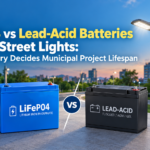
Yes, lithium batteries are considerably superior for use in the best solar street lights. Lithium iron phosphate (LiFePO4) batteries offer 2,000–3,000 charge-discharge cycles compared to just 300–500 cycles for lead-acid batteries, translating to a significantly longer service life. They are also lighter by up to 60%, more compact, perform better in extreme temperatures, and do not contain toxic lead or sulfuric acid. While lithium batteries carry a higher upfront cost, their superior lifespan and lower maintenance needs make them the more economical choice over the full product lifetime.
Q5. How do I calculate the right number of best solar street lights for my project?
Calculating the correct quantity of best solar street lights for a project involves analyzing three key variables: the required lux level (illuminance) on the ground, the pole mounting height, and the photometric distribution type of the fixture. As a general rule, residential pathways require 5–10 lux, while main roads typically need 20–30 lux. The luminaire’s candela distribution chart (available in the product’s IES file) is used in photometric simulation software to calculate pole spacing. For a practical step-by-step calculation method, refer to our dedicated guide on How to Calculate Distance for LED Solar Area Lights, and also consider reading about 4 Tips to Invest in Solar Street Light Posts for pole selection guidance.