

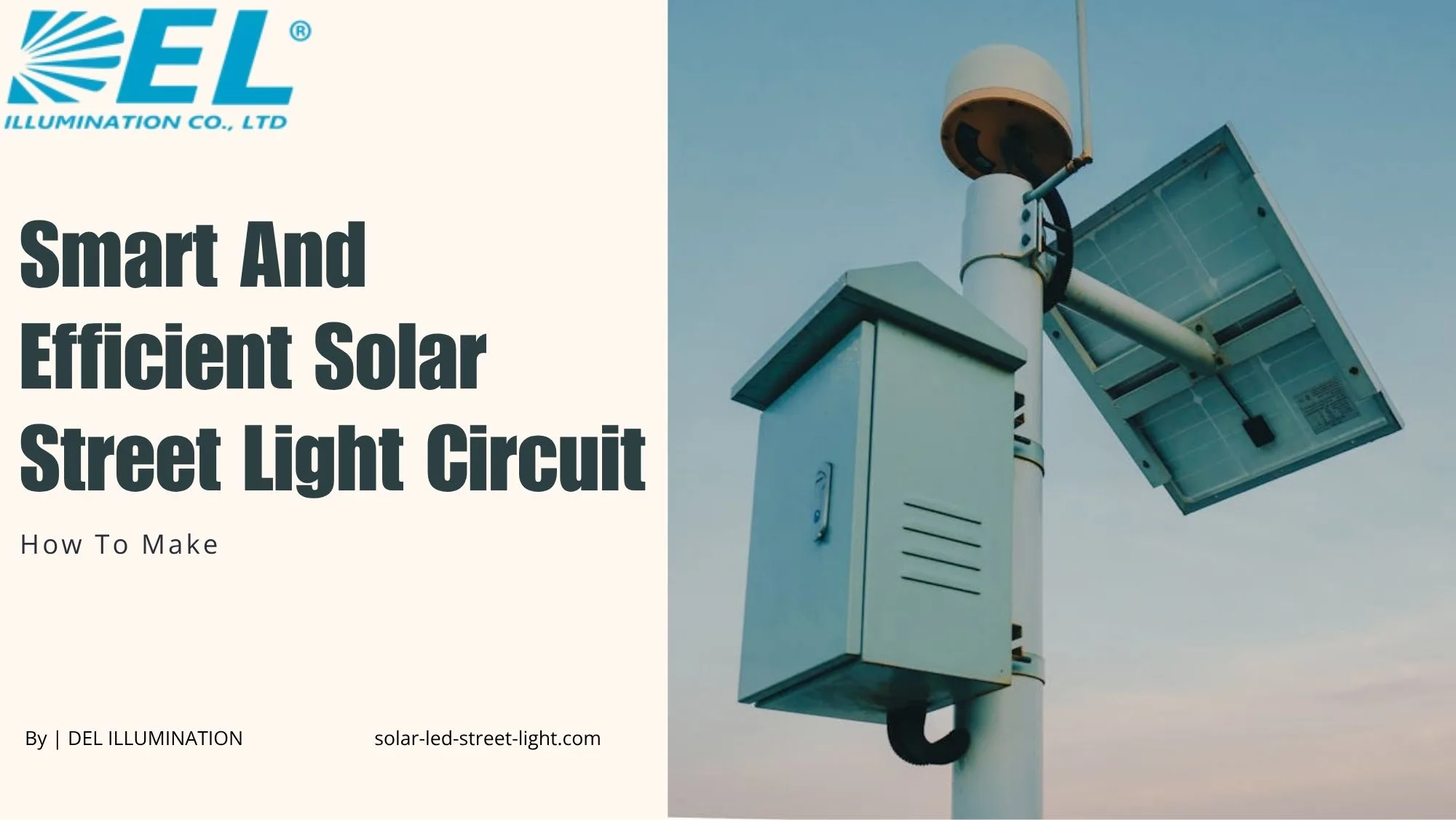
Solar street lights are off-grid lights employed for illuminating streets all over the world. These lights also provide a lifeline for areas that suffer from significant power outages due to load shedding or technical issues in the grid. They rely on solar energy stored in a battery, and at the core of every well-functioning installation lies a properly designed solar street light circuit. Over the course of time, significant innovations have been carried out in technology, leading companies around the world to manufacture high-functioning and high-performing streetlights powered by increasingly intelligent circuitry.
Researchers continuously focus on developing a smart and efficient solar street light circuit that can improve the performance of streetlights as well as the convenience of users. Significant research has been carried out in the field of automation so that the solar street lights circuit can make intelligent decisions during operation in order to optimise performance and conserve stored energy. If an efficient solar street light is used, energy savings can be dramatic – extending battery life and reducing maintenance costs over the long term.
However, smart solar streetlights can be expensive and most people might not be able to afford commercially built smart systems. Therefore, it is important for people to understand how they can introduce automation features into a solar street light so that they can optimise operation and increase energy conservation efficiency. In this article, we will explain a method through which people will be able to design a smart and efficient solar streets light circuit capable of making intelligent decisions during the course of its operation.
The process consists of three major steps: development of an algorithm and designing, computer programming, and circuit implementation. We will discuss these three major steps in detail below. For broader context on how solar street light systems are structured, refer to our guide on the anatomy of solar LED street light luminaires and our article on design and construction of automatic solar street lights.
Step 1: Development of an Algorithm and Designing
The first step involved in building a smart solar street light is the development of an algorithm depending upon the requirements. It is important to have a clear idea of the smart features you need to introduce so that it is viable to develop a logical algorithm. A well-thought-out algorithm is what separates a basic solar streets light circuit from a truly intelligent one. Some of the most common smart features that people introduce into their solar streets light circuit are as follows:
Natural Light Intensity Sensor
This is the most important automation feature for the efficient working of a solar street light circuit. Solar street lights should incorporate a sensor capable of measuring the intensity of natural light present in the atmosphere and making decisions based on the data it receives. When ambient light drops below a threshold at dusk, the circuit automatically activates the LED. When daylight returns, it switches the light off and begins charging the battery. In order to implement this feature, people will have to carry out computer programming based on an algorithm that instructs the sensor to take appropriate decisions depending upon the sensor data. To learn more about how these systems behave at specific times, read our guide on switching solar lights at midnight.
Motion Sensor
A motion sensor is another significant automation feature that can greatly optimise the operation of a solar street light and enable it to use stored energy in a more efficient manner. The motion sensor is capable of detecting any movement in the coverage area of the street light and turning it on or off depending upon the data. If there is motion in the coverage area, the light turns on at full brightness; if there is no motion for a significant period, it automatically dims or turns off entirely. In this way, the solar streets light circuit eliminates unnecessary energy use during low-traffic hours. In order to implement this feature, people will have to develop an algorithm based on sensor data and implement it through computer programming. For a deeper understanding of remote and automated control technologies, see our article on 9 benefits of solar light remote control technology.
Battery Storage Level Management
It is essential for every smart solar street light to implement a mechanism capable of sensing the real-time battery storage level and regulating the operation of the streetlight accordingly. The purpose is to regulate the light output as per the battery storage level in order to enhance operating hours. Therefore, an algorithm can be designed so that the light output of the streetlight drops when battery storage falls below a particular threshold level.
This adaptive dimming feature is one of the most effective ways to extend the useful hours of operation of a solar street lights circuit without compromising safety. For more on battery care and management, read our comprehensive guide on 10 tips to maintain your solar street light battery.
Step 2: Computer Programming
In order to develop a working solar street light circuit, a controller will be required that has been programmed as per the specific requirements. In order to perform this task, people need to possess a significant level of programming skills suitable for implementing the algorithm developed in the previous step. Microcontrollers such as Arduino or ESP32 are popular choices for this purpose due to their low power consumption and wide community support.
People can seek the services of experts in case they are not fully aware of computer programming, or they can look up existing codes on the internet that have been developed by others for implementing similar features in a solar street lights circuit. Once an appropriate code has been written, it needs to be burned onto a microcontroller or other controlling device, which will then make decisions as per the implemented algorithm. Testing the code in a virtual environment before deploying it in a live solar street light is strongly recommended to catch logical errors early.
For reference on what intelligent solar systems can achieve at scale, see our article on 4 LED solar street light innovative solutions and our post on 7 benefits of all-in-one street light technology, which covers integrated circuit designs that combine all these elements in a single unit.
Step 3: Solar Street Light Circuit Implementation
The next and most critical step in the process is the physical implementation of the solar street light. It is strongly recommended that the designed circuit be first implemented in simulation software such as Proteus or LTspice. In this way, people will be able to simulate the operation of the solar street lights circuit and find any issues that might occur during actual performance. This will help them rectify all problems and implement a working model that is reliable in every respect.
We also recommend using good quality components for implementing the solar street light, specifically those with high efficiency and low energy loss ratings. Cutting corners on component quality is a common reason why otherwise well-designed circuits underperform in the field.
It is equally important to take extreme care during wiring so that all connections have been properly made and there are no short-circuiting issues anywhere in the solar street light. It is more appropriate to use Printed Circuit Board (PCB) technology for implementing the circuit, since it contains all connections and components in a uniform, optimised layout while eliminating the risk of short-circuiting issues. Similarly, we strongly recommend using LED technology for solar streetlights because LEDs are highly efficient compared to traditional technologies. For guidance on LED performance factors, read our article on 9 factors for setting up a solar street light LED.
When all three steps have been performed sequentially, the completed solar street lights circuit can be placed in a weatherproof enclosure where it is fully protected from atmospheric conditions such as rain, dust, and temperature extremes. Proper IP-rated housing is essential for long-term reliability – learn more in our guide on 5 benefits of IP65 solar street lights.
Choosing the Right System for Your Needs
Designing a custom solar street light circuit from scratch is a rewarding project, but it may not always be the most practical solution. For many applications, selecting a proven off-the-shelf system and customising its settings is a more reliable and cost-effective approach. Whether you build or buy, understanding the underlying solar street lights circuit principles covered in this article will help you make better decisions about automation, energy management, and maintenance.
If you are evaluating solar street lighting options for your project, the following resources will help guide your decision:
- 10 things to look for in the best solar street lights
- 9 factors for choosing solar power light poles
- 5 advantages of solar light pole systems
- 8 ways that affect solar street light price
- Cost of solar street lights for construction projects
- 6 tips to buy quality low-price solar street lights
- Reliable solar energy street light systems
- The power of solar street lamps
- 7 factors for rural solar street light setup
- Solar road lights and global economic growth
For maintenance-related topics, also see our guides on 5 ways to fix a solar light that is not working, 9 tips to maintain solar compound lighting, and how to calculate distance for LED solar area lights. If you are planning a park installation, our park solar lights installation guide is also a useful reference.
Conclusion
Building a smart and efficient solar street light circuit involves three sequential steps: designing a logical algorithm with automation features, programming a microcontroller to execute that algorithm, and carefully implementing and testing the physical solar street light circuit. When executed correctly, a smart solar street light can dramatically reduce energy consumption, extend battery life, and improve the overall reliability of your solar street lighting system.
Whether you are a hobbyist, engineer, or project manager, understanding the fundamentals of a solar street light empowers you to build or select systems that are genuinely intelligent and efficient. Do you have questions about designing your own solar street light circuit? Contact us – we are happy to help.
Frequently Asked Questions (FAQs) About Solar Street Light Circuit
1. What is a solar street light circuit and how does it work?
A solar street light circuit is the electronic system that manages the charging of the battery from the solar panel during the day and controls the discharge of that stored energy to power the LED light at night. It typically includes a charge controller, a microcontroller or timer-based switch, and optionally sensors for light intensity and motion. A smart solar street light also incorporates algorithms that allow it to make automatic decisions – such as dimming during low-battery conditions or switching off when no motion is detected – to optimise energy use.
2. What components are needed to build a solar street light circuit?
The core components of a solar street light include a solar panel, a rechargeable battery (preferably LiFePO4), a charge controller (PWM or MPPT), a microcontroller (such as Arduino), an LDR or photodiode for light sensing, a PIR sensor for motion detection, and LED light modules. Supporting components include resistors, transistors or MOSFETs for switching, connecting wires, and a weatherproof enclosure. The quality of each component directly affects the performance and longevity of the solar street light circuit.
3. Can I add a motion sensor to an existing solar street light circuit?
Yes, in many cases a PIR motion sensor can be retrofitted into an existing solar street light circuit with some programming and wiring modifications. You will need a microcontroller to process the motion sensor data and control the light output accordingly. However, the feasibility depends on whether the existing system has an accessible control board that supports modification. For simpler installations, purpose-built all-in-one smart solar street lights with integrated motion sensors may be a more practical upgrade path.
4. Why is simulation important before building the actual solar street light circuit?
Simulating your solar street light circuit in software such as Proteus or Tinkercad before physical implementation allows you to identify logical errors in your algorithm, incorrect component values, and potential short-circuit issues – all without spending money on hardware. Simulation significantly reduces the risk of component damage or system failure during real-world deployment. It is an especially important step for beginners who are designing a solar street light for the first time.
5. How does battery storage level management improve a solar street light circuit?
Integrating battery storage level monitoring into a solar street light circuit allows the system to adaptively dim or reduce light output when the battery charge drops below a set threshold. This prevents deep discharges that can permanently damage the battery, extends the total operating hours per night, and improves the long-term reliability of the system. Without this feature, a basic solar street light may completely drain the battery on cloudy days, leading to premature battery failure and unexpected blackouts.