
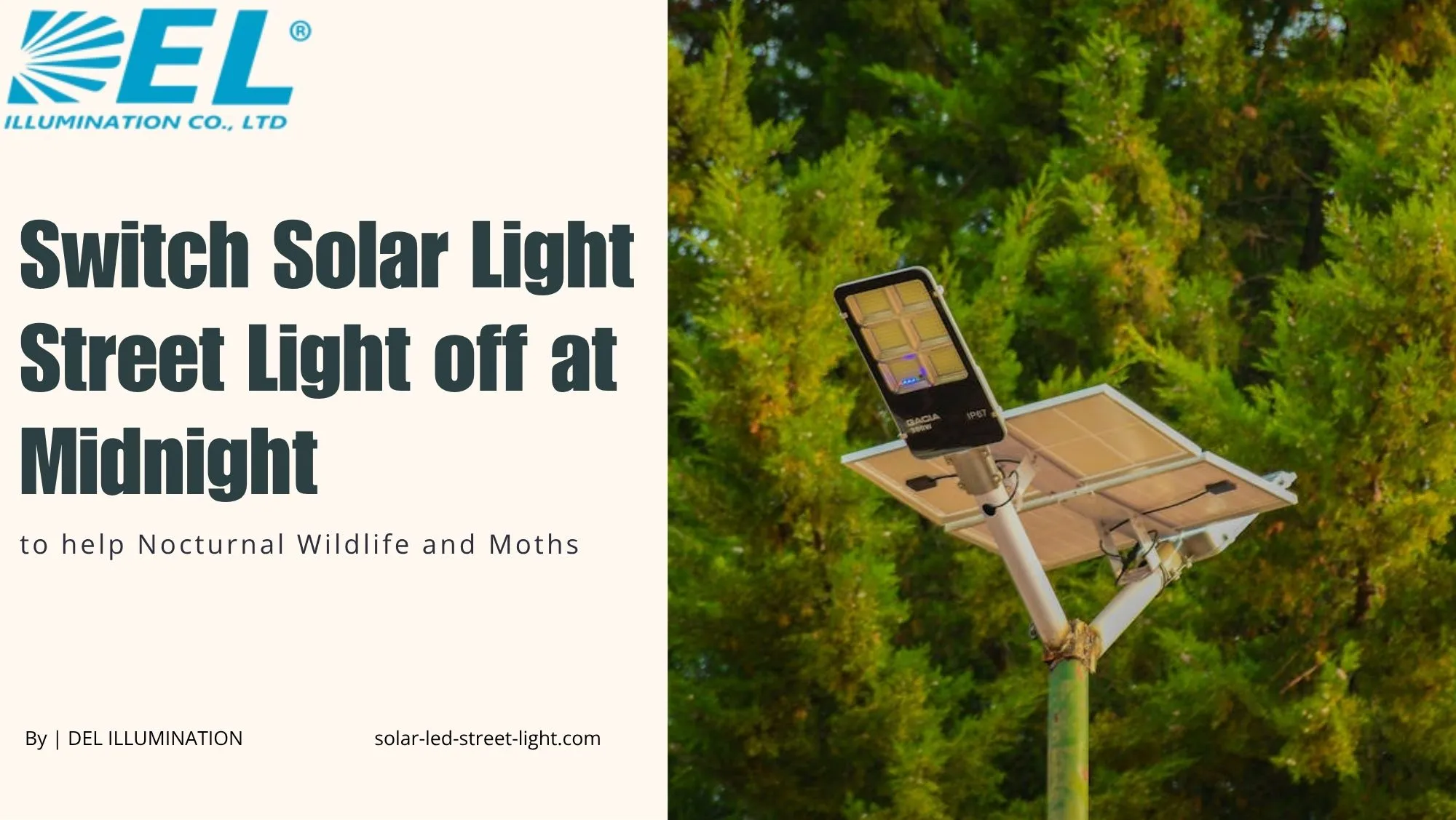
In most countries, the conversation around urban development is a constant conflict between environmental needs and infrastructure growth. Rarely do we hear about decisions made by authorities who are genuinely mindful of the ecosystem. It is precisely for this reason that leading solar light street light companies around the world are actively advising communities to consider switch solar light systems off at midnight a simple but powerful step to protect nocturnal wildlife and moths.
Switch solar light off after midnight is not just an environmentally responsible act it also makes strong financial sense. Two major solutions are gaining traction in street lighting: replacing old high-pressure sodium (HPS) bulbs with energy-efficient Light-Emitting Diodes (LEDs), and turning lights off during the latter parts of the night when foot and vehicle traffic is minimal. In many parts of the world, these changes in solar street light technology have been taking effect for over a decade. You can read more about the economic benefits of solar road lighting and how it is shaping communities globally.
How Solar Street Light Systems Can Influence Nocturnal Wildlife
Despite the growing adoption of solar street light infrastructure, there is still limited awareness about how these lights affect nocturnal wildlife. Researchers have conducted numerous studies examining how moths, which serve as critical night-time pollinators for a wide variety of flowers – are impacted by artificial light at night. Alarmingly, moth populations have declined by approximately 40% over the past 40 years.
Light pollution from sources including the solar street light is believed to be a contributing factor in this decline, alongside habitat loss and climate change. Studies reveal that when HPS street lights are left on through the night, moths struggle to visit flowers naturally. Instead, they are drawn to fly higher around the lights, resulting in less pollen being carried in lit areas. Further research has linked this behaviour to reduced fruit production in surrounding plant species – a ripple effect with wide ecological consequences.
If you’re interested in how solar lighting design intersects with ecological responsibility, our guide on the anatomy of solar LED street light luminaires provides a deeper technical perspective.
Research Setup: Comparing Light Types and Timing
To understand whether LED technology in a solar street light exacerbates or eases disruption to nocturnal ecosystems, researchers set up mock street light chains alongside hedgerows. This allowed them to control the type and duration of lighting used. The study compared:
- HPS lights vs. LED lights
- Full-night lighting vs. part-night lighting (switch solar light off at midnight)
- Both lit conditions vs. unlit controls that replicated natural darkness
White Campion wildflowers pollinated by both moths and bees were placed in both lit and unlit environments. After several days and nights, researchers measured pollination rates, seed counts, and seed weight per fruit to quantify the real-world ecological impact of different solar street light configurations.
LED Solar Street Lights Are Attractive to Insects
Most modern solar street light units produce blue-spectrum light that attracts insects, including moths. However, researchers found no statistically significant difference in pollination rates between moths under HPS lights and those under LED lights. The more impactful variable was whether the solar street light was on or off during the second half of the night.
When street lights were turned off at midnight, pollination rates in that area matched those observed under natural darkness. This is a crucial finding: switch solar light off at midnight allows the nocturnal ecosystem to function normally for the remainder of the night, effectively neutralising the harmful effects of artificial light pollution.
For communities considering smart control options, our article on solar light remote control technology explains how automated dimming and scheduling features can be used to implement part-night lighting effortlessly.
Financial and Environmental Benefits of Switch Solar light Off
The results of these studies have been positive enough that local authorities are now actively exploring part-night solar street light policies not just for ecological reasons, but for the significant energy and cost savings they deliver.
There is no compelling evidence that switch solar light units to part-night operation increases negative impacts on wildlife. On the contrary, multiple studies suggest it actively reduces those impacts. Whether or not every local council is fully convinced, the scientific consensus points toward a meaningful opportunity: turning off the solar street light at midnight can simultaneously reduce energy bills and mitigate the ecological damage caused by light pollution.
To understand how to choose the right system for this kind of smart management, see our guide on 9 factors for setting up solar street light LED systems.
For further reading on the broader ecological consequences of outdoor lighting, our article on solar cell street light and ecological damage is highly recommended.
Practical Steps for Implementing Part-Night Solar Street Light
If your local authority or housing community is considering switching to part-night lighting schedules, here are some practical recommendations:
- Audit current lighting schedules — identify which solar street light units remain on after midnight with little to no usage justification.
- Invest in smart controllers — modern all-in-one solar street light technology comes with programmable timers that allow automatic shutoff after midnight.
- Choose IP65-rated fixtures — durable, weatherproof lights rated for outdoor conditions ensure reliability even with reduced operating hours. See our overview of IP65 solar street light benefits.
- Monitor wildlife impact — establish a baseline before and after implementing part-night operation to track ecological changes.
- Maintain your system — regular upkeep of batteries and components ensures performance. Our 10 tips for maintaining solar street light batteries is an excellent reference.
Conclusion – Solar Light street Light
Though switch solar light off at midnight may seem like a minor operational adjustment, its ripple effects on nocturnal biodiversity can be profound. From supporting moth populations as vital pollinators to reducing the broader ecological footprint of urban lighting, part-night lighting is one of the most impactful and cost-effective decisions a community can make.
For expert guidance on designing, installing, and managing your solar street light infrastructure in a way that balances human needs with environmental responsibility, Del Illumination is here to help. Whether you’re a local authority, contractor, or homeowner, our team is ready to assist you with every aspect of your solar street lighting journey.
Frequently Asked Questions (FAQs)
1. Why should a solar street light be switched off at midnight?
Switch solar light off at midnight helps protect nocturnal wildlife, especially moths by restoring natural darkness during the hours when human activity is minimal. Research shows this practice reduces light pollution without compromising public safety.
2. Does turning off a solar street light at midnight save money?
Yes. Part-night operation significantly reduces energy consumption, which translates to lower operational costs for local authorities and housing communities. Given that solar systems already reduce grid dependence, combining them with smart shut-off schedules maximises savings.
3. Do LED solar street lights affect moths differently than HPS lights?
Studies indicate that while LED solar street light units emit more blue-spectrum light that attracts insects, the difference in pollination impact between LED and HPS lighting is not statistically significant. The more important factor is whether the light is on or off during the second half of the night.
4. Can all solar street light systems be programmed to switch off at midnight?
Most modern solar street light systems, especially all-in-one models with smart controllers, can be programmed to turn off or dim after a set time. Remote control and timer features make part-night scheduling straightforward to implement. See our guide on smart solar street light circuit design for more.
5. What other nocturnal wildlife is affected by solar street light pollution?
Beyond moths, artificial light from a solar street light can disorient bats, disrupt bird migration, affect sea turtle nesting behaviour, and interfere with the feeding patterns of many insect species. Reducing nighttime light exposure through part-night schedules benefits a wide range of nocturnal fauna, not just pollinators.
For more information on solar street lighting solutions, visit Del Illumination or explore our complete guide to the best solar street lights.