
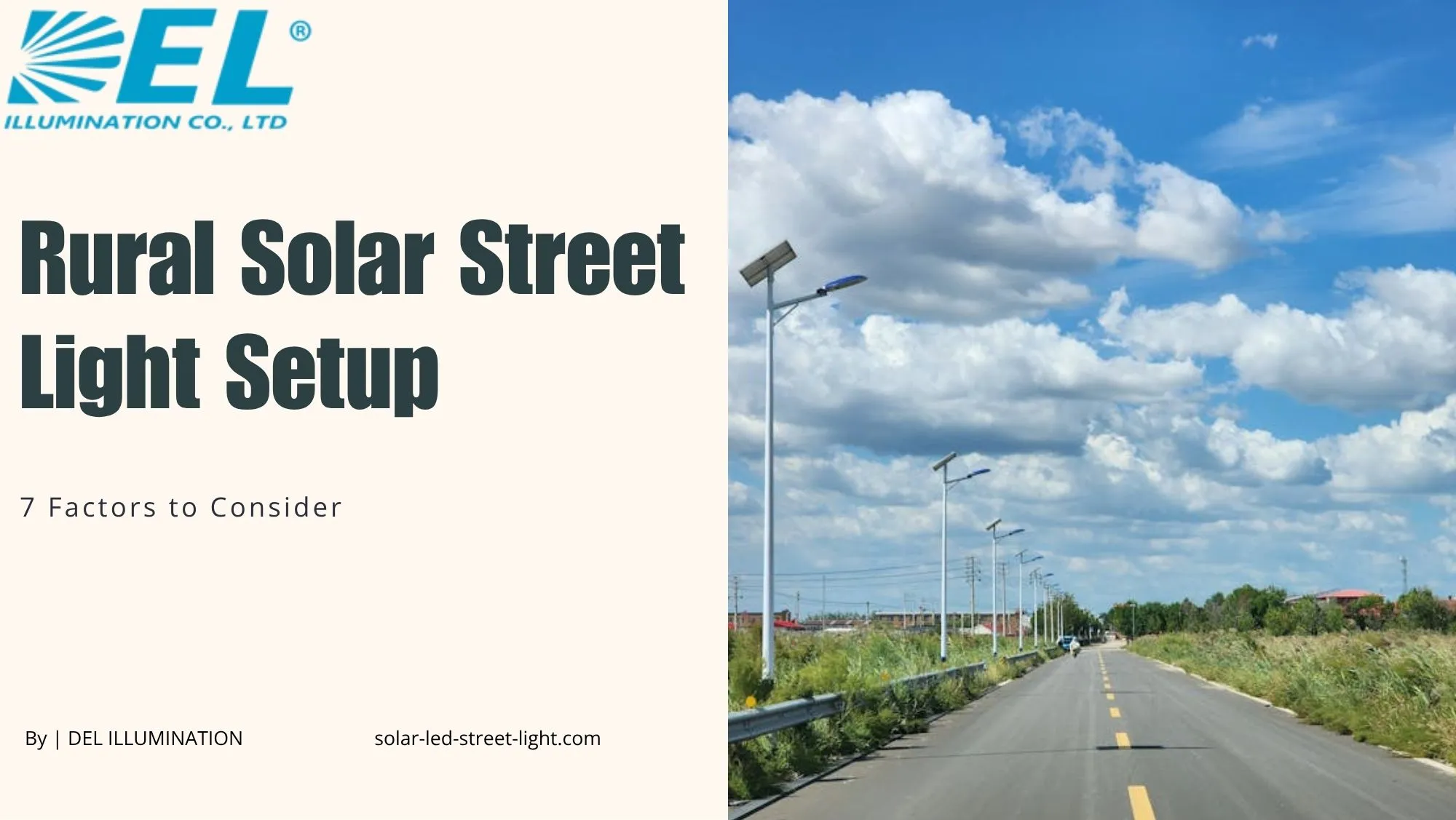
Embarking on the journey to illuminate rural landscapes with a rural solar street light system is an exciting and impactful venture. In the ever-evolving landscape of renewable energy, mastering the intricacies of a rural solar street light setup is crucial for ensuring efficiency, sustainability, and lasting community impact.
As demand for eco-friendly illumination in remote areas continues to surge, staying ahead of the curve is more important than ever. Your success hinges on a comprehensive understanding of the key factors that shape a robust rural solar street light installation. Join us as we uncover the essential seven considerations that can make or break your project.
Factors to Consider in a Rural Solar Street Light Installation
What should you keep in mind before you begin your rural solar street light installation? Below, we break down each critical factor in detail.
1. Solar Resource Assessment
Solar resource assessment involves evaluating the available sunlight at a specific location to determine its solar energy potential. For any rural solar street light setup, this step is pivotal in designing systems that harness maximum energy and operate efficiently – even in the most remote areas.
Take charge of your installation process by actively conducting on-site surveys. Assess the landscape, shading patterns, and solar exposure to optimize the positioning of your rural solar street light units for maximum sunlight absorption. This proactive approach ensures that local conditions are fully accounted for, resulting in a more reliable and resilient system.
Equip yourself with the latest solar irradiance sensors to accurately measure sunlight intensity at your installation sites. These technologies provide real-time data, allowing you to make informed decisions and optimize configurations. Integrate weather monitoring systems to track seasonal variations and enable your rural solar street light systems to adapt dynamically to changing environmental conditions.
Implement active monitoring systems that continuously analyze solar resource data. By staying proactive, you can identify patterns, anticipate challenges, and fine-tune your installations for optimal energy production. Utilize advanced performance modeling tools to simulate various scenarios – predicting system behavior and enhancing overall performance for every rural solar street light unit you deploy.
For a deeper understanding of how solar energy powers outdoor lighting infrastructure, read our guide on the power of solar street lamps.
2. Site Selection
Choosing the right location is a foundational decision for any rural solar street light project. Begin your site assessment by thoroughly evaluating sunlight exposure. Identify locations with minimal shading obstacles to ensure uninterrupted access to sunlight throughout the day.
Solar panels depend on direct sunlight to generate optimal power, so choose areas with clear, unobstructed paths for sunlight penetration. Utilize tools like solar path finders and shade analysis software to accurately assess potential shading concerns and optimize the overall performance of your rural solar street light system.
Factor in the geographical features of the installation site. Analyze the terrain, slope, and elevation to determine how they might impact sunlight exposure and system efficiency. A flat, elevated surface is ideal for maximizing solar panel performance and minimizing installation challenges. Additionally, consider the local climate and weather patterns to anticipate environmental factors that could affect your rural solar street light’s long-term performance.
Proper site selection is equally important for specialized installations. Explore how this applies to solar street lights for highways, residential colonies, and industrial parks.
3. Battery Storage Capacity
In any rural solar street light system, the battery serves as the heartbeat of the entire setup. Its storage capacity directly influences the system’s ability to store and dispense energy during periods of low or no sunlight. The larger the battery storage capacity, the more energy can be collected and retained – ensuring uninterrupted illumination throughout the night.
This is particularly vital in rural settings where consistent, reliable lighting is paramount for safety and security. When planning your rural solar street light installations, consider opting for advanced battery technologies that offer not only substantial storage capacity but also enhanced durability and rapid charge-discharge cycles.
Lithium-ion batteries, for instance, have emerged as a game-changer, providing a compact yet potent solution to meet the demanding requirements of a rural solar street light setup in remote locations. Their superior energy density and longer cycle life make them an ideal investment for off-grid environments.
Treat battery storage capacity as the linchpin of your design. By meticulously selecting and integrating high-capacity batteries, you empower your rural solar street light installations to weather the challenges of rural environments – ensuring that every corner of the community remains bathed in the glow of sustainable, solar-powered light.
Learn more about factors that affect system performance in our article on 9 factors for setting up a solar street light LED system.
4. Energy Efficiency of LED Lights
LED lighting is an indispensable component of every effective rural solar street light setup. Here is a look at the crucial roles LED lights play:
Illuminate with Precision
LED lights are the undisputed champions of energy efficiency. By converting a higher percentage of electricity into visible light, they outshine traditional lighting technologies. This luminous efficiency not only ensures brighter streets in rural areas but also optimizes the utilization of solar-generated power. Choosing LED lights is a strategic move towards harnessing maximum brightness with minimal energy consumption in your rural solar street light system.
Solar Synergy at Its Best
The symbiotic relationship between LED lights and solar power is the cornerstone of a successful rural solar street light setup. LED lights operate seamlessly on low-voltage DC power, aligning perfectly with the direct current output of solar panels. This synergy results in a highly efficient and sustainable lighting solution that maximizes the value of every watt harvested.
Extended Lifespan, Reduced Hassles
Another compelling reason to prioritize LED lights in your rural solar street light installations lies in their extended lifespan. The active management of power and heat within LED technology contributes to a significantly longer operational life compared to traditional lighting sources. This reduces the frequency of replacements and minimizes maintenance demands in remote rural locations.
Fine-Tune with Intelligent Controls
Elevate your rural solar street light installations by incorporating intelligent controls that actively manage LED lighting systems. Smart technologies allow for precise control over brightness levels, adaptive dimming, and scheduling – ensuring that energy is expended only when and where it is truly needed. This approach enhances overall efficiency and transforms your setup into a smart, future-ready investment.
Discover how LED innovation is advancing rural lighting in our article on 4 innovative LED solar street light solutions and explore the anatomy of solar LED luminaires.
5. Weather Conditions
Weather conditions play a decisive role in the long-term performance of a rural solar street light system. The solar panel orientation and tilt angle are pivotal in maximizing energy absorption. In regions prone to heavy rainfall or snowfall, ensuring panels are angled to shed water or snow is critical. Periodic adjustments based on seasonal variations further optimize energy capture, keeping your rural solar street light system operating at peak efficiency year-round.
Battery performance is another critical consideration influenced by weather. Extreme temperatures – whether scorching heat or freezing cold – can degrade battery capacity over time. For a reliable rural solar street light system, select batteries with a wide operating temperature range and implement proper insulation measures to safeguard against extremes. Regular monitoring and maintenance are essential to identify and address potential issues before they compromise system functionality.
Beyond panel orientation and battery management, weatherproofing the entire rural solar street light setup is non-negotiable. Use durable, weather-resistant materials and implement robust seals for vulnerable components – such as connectors and junction boxes – to shield the system from moisture, dust, and other environmental hazards. A comprehensive approach to weatherproofing reduces maintenance frequency and significantly extends the life of your installation.
For guidance on maintaining performance in adverse conditions, see our 5 benefits of IP65 solar street lights and 5 ways to fix a solar light that’s not working.
6. Maintenance and Accessibility
Ongoing maintenance is a critical pillar of any high-performing rural solar street light system. Routinely inspecting and cleaning solar panels is imperative – dust, debris, and environmental factors accumulate over time, reducing the panels’ ability to harness sunlight effectively. Proactively addressing these issues ensures that your rural solar street light units consistently generate and store sufficient energy for reliable, long-lasting illumination.
Accessibility is another crucial aspect that demands attention during the planning stage. Opt for strategic placement of your rural solar street light poles and fixtures, making them easily reachable for routine checks and repairs. This foresight can significantly reduce downtime and maintenance costs, allowing for swift troubleshooting when issues arise.
Consider employing smart technology and remote monitoring systems to facilitate real-time diagnostics for your rural solar street light network. Remote monitoring enables you to identify and address potential problems promptly and with precision – without requiring costly, time-consuming site visits. This is especially valuable in far-flung rural locations where physical access can be challenging.
For practical maintenance advice, read our guides on 9 tips to maintain solar compound lighting, 9 benefits of solar light remote control technology, and building reliable solar energy street light systems.
7. Community Engagement and Education
Every successful rural solar street light installation is ultimately a collaborative effort between installers and the communities they serve. Engage with the local community from the project’s inception – understanding their needs, concerns, and aspirations. Conducting community forums, workshops, and information sessions will not only disseminate crucial knowledge about the rural solar street light system but also build the trust and rapport that sustains a project long after installation.
By involving the community as active stakeholders, you lay the foundation for a rural solar street light project that integrates seamlessly into the daily lives of residents. Education forms the bedrock of sustainable development. Craft tailored educational initiatives – whether through pamphlets, interactive sessions, or visual aids – that convey the benefits of solar energy in a language and format that resonates with the local population.
Empower community members with the knowledge to maintain, troubleshoot, and maximize the benefits of their rural solar street light systems. An informed community is not just a recipient of the infrastructure – it becomes an active custodian, ensuring the system’s longevity and effectiveness for years to come. This community-first approach is what transforms a good installation into a truly impactful one.
See how community-centered solar lighting works in action across our specialized guides for school zones, bus stops, and petrol stations.
Conclusion
Having successfully planned and implemented numerous rural solar street light setups, these seven factors consistently prove to be the pillars of a high-performing, long-lasting installation. From conducting a thorough solar resource assessment and selecting the right site, to choosing the best batteries, LED technology, and weatherproofing strategies – each decision shapes the overall effectiveness of your rural solar street light project.
Combining smart maintenance practices with genuine community engagement transforms a technical installation into a sustainable solution that rural communities can rely on for years. We hope you found this guide insightful. For further reading, explore our comprehensive resources on what makes the best solar street lights, design and construction of automatic solar street lights, and how solar road lights contribute to global economic growth.
Do you have questions about your next rural solar street light installation? Contact us – we’re here to help.
Frequently Asked Questions (FAQs)
Q1. What is the most important factor in a rural solar street light setup?
While all seven factors are interconnected, solar resource assessment is arguably the most foundational. Without an accurate understanding of how much sunlight is available at the installation site, it is impossible to correctly size the solar panels, battery storage, or LED wattage. A poorly assessed solar resource can lead to under-powered systems that fail to provide adequate lighting throughout the night – undermining the entire purpose of the rural solar street light installation.
Q2. What type of battery is best for a rural solar street light system?
Lithium-ion (Li-ion) batteries are widely regarded as the best option for rural solar street light systems. They offer high energy density, a longer cycle life (typically 2,000–3,000+ charge cycles), and perform reliably across a wider range of temperatures compared to older lead-acid technologies. Although they have a higher upfront cost, their lower maintenance requirements and longer lifespan make them more cost-effective over the lifetime of a rural solar street light installation.
Q3. How do weather conditions affect the performance of a rural solar street light?
Weather conditions impact a rural solar street light system in several ways. Prolonged cloud cover or rainy seasons reduce the amount of sunlight reaching the solar panels, which in turn reduces battery charging. Extreme heat can degrade battery performance and shorten component lifespan, while freezing temperatures can also reduce battery capacity. Dust and debris accumulation in dry, arid regions can coat solar panels and reduce their efficiency. Proper weatherproofing, IP65-rated components, and regular maintenance are essential to keeping rural solar street light systems performing reliably year-round.
Q4. How often does a rural solar street light require maintenance?
A well-designed rural solar street light system generally requires minimal maintenance – typically a bi-annual inspection is sufficient under normal conditions. This includes cleaning the solar panels to remove dust, bird droppings, and debris; checking all electrical connections and seals for wear or corrosion; and testing the battery’s charge and discharge performance. In areas with heavy dust, seasonal storms, or extreme temperatures, quarterly checks may be advisable. Incorporating remote monitoring technology can further reduce the need for physical site visits by flagging performance issues in real time.
Q5. Why is community engagement important in a rural solar street light project?
Community engagement is vital because local residents are the primary users and long-term stewards of a rural solar street light system. When communities are involved from the planning stage, they develop a sense of ownership over the infrastructure, which leads to better care and faster reporting of issues. Education programs ensure that community members understand how to perform basic maintenance tasks – such as cleaning panels and identifying faulty connections – which extends the operational life of the system. Projects that overlook community engagement often face vandalism, neglect, or misuse, leading to premature failure of the rural solar street light installation.