
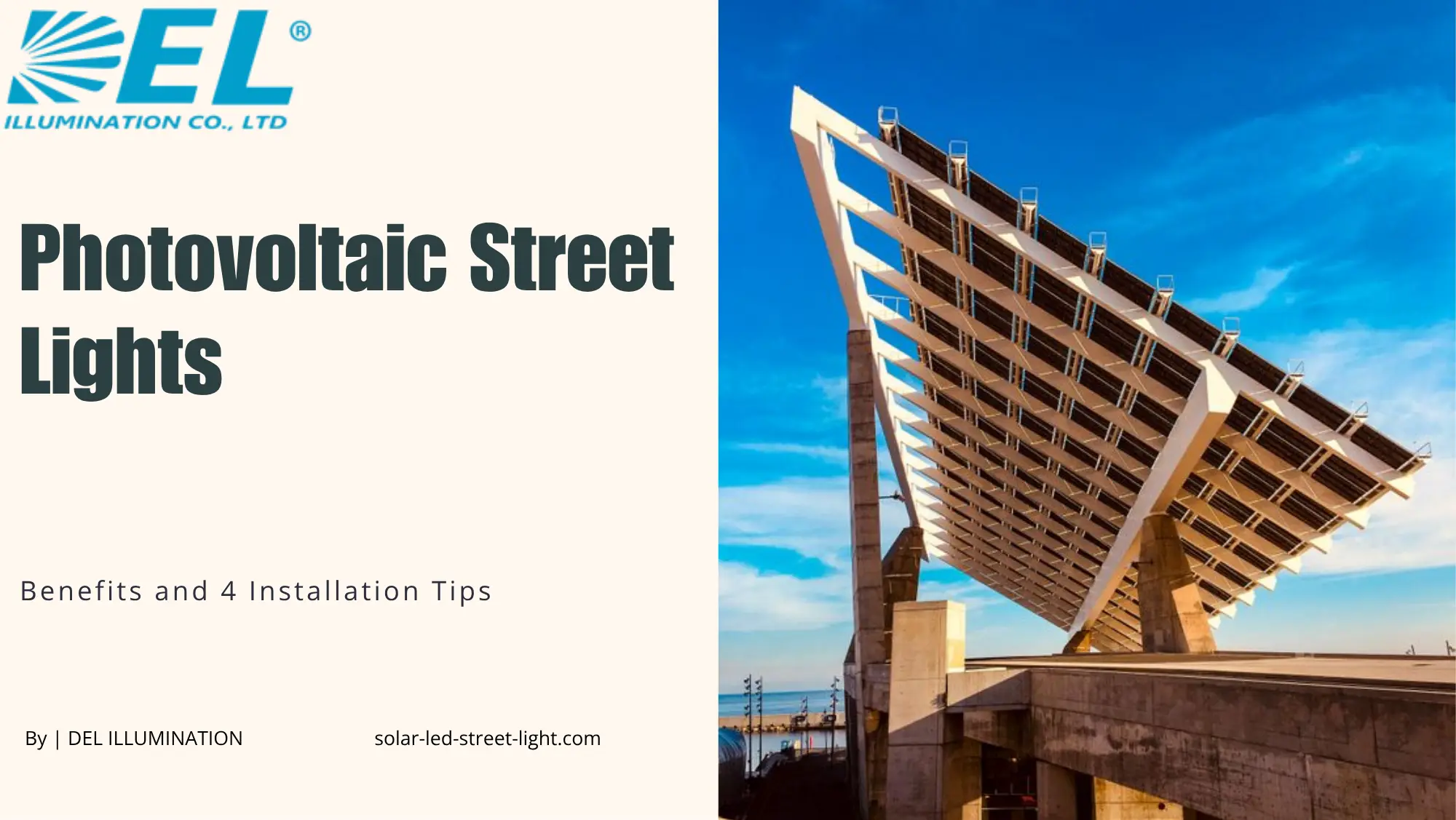
The global solar street lighting market was valued at USD 10.95 billion in 2024 and is projected to reach USD 19.57 billion by 2032, growing at a CAGR of 11.77%, according to Fortune Business Insights. Driving this growth is a fundamental shift in how cities approach outdoor lighting infrastructure away from grid dependent, carbon emitting conventional systems and toward photovoltaic street lights that generate their own clean electricity from sunlight, operate independently of the grid, and deliver long term cost savings that conventional systems simply cannot match.
As of Q2 2025, 23% of global municipal lighting operates autonomously via solar power up from just 9% in 2020 a figure that reflects how rapidly photovoltaic street lights have moved from niche alternative to mainstream infrastructure choice. Solar street lighting systems now collectively offset 8.3 million tonnes of CO₂ annually, equivalent to removing 1.8 million petrol powered vehicles from roads, according to the International Renewable Energy Agency (IRENA, 2024).
This article explains what photovoltaic street lights are, how they work, their key benefits, practical installation tips, and the compelling reasons why more cities, municipalities, and businesses are choosing them over conventional alternatives.
What Are Photovoltaic Street Lights?
Photovoltaic street lights are outdoor lighting systems that use solar panels also known as photovoltaic (PV) modules to convert sunlight into electrical energy. This energy is stored in a battery during the day and used to power an LED light fixture automatically from dusk to dawn. Unlike conventional streetlights, photovoltaic street lights do not need to be connected to the electrical grid they operate entirely on self generated renewable energy.
It is becoming increasingly important for cities to find ways to become more sustainable. One of the most practical and proven tools available is the installation of photovoltaic street lights. They help cities reduce their carbon footprint, cut energy costs, and provide reliable nighttime illumination in locations where grid infrastructure is unavailable or prohibitively expensive to extend.
The core components of a photovoltaic street light system are:
- Solar panel (PV module): Converts sunlight into DC (direct current) electricity. Monocrystalline panels achieve conversion efficiencies of 21–23% in premium systems, compared to 15–17% for polycrystalline alternatives.
- Rechargeable battery: Stores the electricity generated during daylight hours. LiFePO4 (Lithium Iron Phosphate) batteries rated for 2,000–3,000+ charge discharge cycles and an 8–12 year calendar life are the benchmark specification for professional deployments.
- Charge controller: Manages energy flow between the panel and battery, preventing overcharge and over discharge. MPPT (Maximum Power Point Tracking) controllers harvest 25–30% more energy than standard PWM controllers.
- LED light module: Converts stored battery energy into road surface illumination. Quality LED modules achieve 160–180 lm/W efficacy, with a rated lifespan of 50,000 hours.
- Pole and mounting bracket: Supports the system at the correct mounting height for the required road or path coverage.
Many governments are now actively investing in photovoltaic street lights, and they are being installed in cities worldwide from large scale municipal programmes in India, Africa, and Southeast Asia to pilot deployments in Los Angeles, where the city Bureau of Street Lighting installed 106 solar streetlights in the Van Nuys neighbourhood in 2024, with 150–200 more planned for the following fiscal year. For a detailed technical explanation of how the complete solar street light system operates, our guide on solar street light working principle covers the photovoltaic conversion cycle step by step.
The Benefits of Photovoltaic Street Lights
There are many benefits to using photovoltaic street lights. They are environmentally friendly, save money over the long term, and provide a reliable, independent light source. Let us take a closer look at each of these benefits:
Photovoltaic street lights are environmentally friendly because they use renewable solar energy a resource that produces no emissions, no chemical pollution, and no greenhouse gases during operation. Solar energy is a renewable resource that will never run out, unlike fossil fuels which are finite and increasingly costly to extract and burn. According to IRENA’s 2024 data, solar street lighting systems globally offset 8.3 million tonnes of CO₂ annually a compelling environmental credential for municipalities with carbon reduction commitments. Additionally, the directional LED optics used in photovoltaic street lights focus illumination onto road surfaces rather than upward into the sky, reducing light pollution and its negative effects on wildlife and human health compared to conventional omnidirectional street lighting. For further reading on how solar street lighting reduces ecological damage compared to conventional alternatives, see our article on solar cell street light ecological damage.
Photovoltaic street lights save money because they require no grid electricity to operate, meaning there are no monthly energy bills for the light’s operating hours. Although the upfront capital cost of photovoltaic street lights is higher than conventional grid connected alternatives, the total cost of ownership over 10 years is substantially lower particularly for LiFePO4 equipped systems that eliminate battery replacement cycles. Industry data published in 2025 confirms that payback periods for solar street lighting now average 6.3 years, compared to 8.9 years in 2021, reflecting the continued fall in solar panel and LED technology costs. The US Department of Energy confirms that approximately 93% of outdoor lighting installations will use LED technology by 2025, and photovoltaic street lights exclusively use LED ensuring they benefit from the full energy efficiency and longevity advantages of LED technology.
Photovoltaic street lights also provide a reliable source of light. They operate completely independently of the electrical grid, meaning they continue to function during power outages, copper theft events, and grid maintenance periods all of which are documented, recurring problems for conventional street lighting networks. In Los Angeles, nearly 7,000 copper theft incidents cost the city USD 17 million in grid connected street lighting repairs in 2023 alone. Photovoltaic street lights have no exposed wiring at street level and no connection to the copper infrastructure that makes conventional systems a target for theft. For a comprehensive overview of how to build reliable solar street light systems, see our guide on reliable solar energy street light systems.
4 Tips for Installing Photovoltaic Street Lights
If you are interested in installing photovoltaic street lights, there are several important considerations to keep in mind. Getting these right before procurement and installation begins will save significant time, cost, and performance problems across the system’s operational life.
Tip 1 Choose the Right Location
The first and most important step in any photovoltaic street light installation is choosing the right location. The solar panels need direct, unobstructed sunlight during peak hours ideally from 9am to 3pm local time to harvest sufficient energy to fully charge the battery each day. This means avoiding locations that are shaded by buildings, trees, overhead structures, or other poles during any part of the peak solar window.
A south facing location is ideal in the northern hemisphere; a north facing orientation is correct in the southern hemisphere. The tilt angle of the solar panel should be set equal to the local latitude (in degrees) to maximise annual average energy harvest. In urban environments where shading from buildings is unavoidable, MPPT charge controllers which extract maximum available energy even from partially shaded panels are particularly valuable.
Also ensure the installation area is large enough to accommodate the number of photovoltaic street lights required while maintaining the correct pole spacing for the desired road surface illuminance and uniformity. Our practical guide on how to calculate distance for LED solar area lights covers the spacing methodology used by professional engineers.
Tip 2 Gather Your Materials and Components Carefully
Once you have confirmed the installation location and layout, it is time to gather all necessary components. Not all photovoltaic street light products are created equal, and the component quality decisions made at this stage directly determine the system’s performance and lifespan across the next 8–15 years.
Specify the following as minimum requirements for any professional photovoltaic street light installation:
- Monocrystalline solar panel (minimum 21% conversion efficiency)
- LiFePO4 battery (minimum 2,000 cycles at 80% DoD)
- MPPT charge controller with data logging capability
- LED module with independent LM 79 photometric test report
- IP67 rated, IK08 rated luminaire housing verified by an accredited laboratory
- Hot dip galvanised and powder coated mounting pole with structural calculations
You may also want to include a motion sensor (PIR or microwave) so the light dims during low activity hours, conserving battery capacity and extending backup duration. Our guide on 10 things that make the best solar street lights provides a comprehensive specification checklist for procurement evaluation.
Tip 3 Find a Reputable Supplier
Finding a reputable supplier is critical for photovoltaic street light procurement and this step requires more than simply comparing catalogue prices. Many companies sell photovoltaic street lights, but the quality gap between a verified, certified product and a specification inflated generic product is enormous and completely invisible at the catalogue stage.
Before awarding a contract, request: independent third party test certifications (IEC 60598, IEC 61215, IP67 from SGS/Intertek/TÜV), photometric test reports (LM 79 from an accredited laboratory), LM 80 LED lumen maintenance data, battery specification sheets with cycle life documentation, and a minimum 5 year comprehensive warranty covering all components.
Research the supplier’s track record in comparable deployments ideally visiting a reference project site in a similar climate to your intended deployment location. A supplier who cannot provide reference projects and third party certification documentation should not be considered for professional scale photovoltaic street light procurement. For guidance on how to evaluate quality and price together, our article on 6 tips to buy quality solar street lights at low price provides a practical supplier evaluation framework.
Tip 4 Secure the Necessary Permits
Before installing photovoltaic street lights on public roads, pathways, or commercial properties, it is essential to verify what permits are required by your local municipality, county, or national authority. Requirements vary significantly by jurisdiction and by installation context.
For installations on public roads, you will typically need planning permission from the local highway authority, an electrical installation permit (even for off grid systems in some jurisdictions), and approval from any relevant utility company if the installation is near existing overhead or underground cables. Commercial and industrial property installations may require building permits if new pole foundations are involved. For large scale photovoltaic street light deployments on internationally funded projects including those financed by the World Bank or Asian Development Bank the procurement documentation requirements are significantly more detailed. Our resources on ADB and World Bank solar street light procurement provide guidance on these requirements. Additionally, understanding the relevant street lighting standards and regulations that apply to your project is essential before specification our street lighting standards comparison covers the key national and international standards.
How Photovoltaic Street Lights Work: The Complete Process
The photovoltaic street light working principle is elegant in its simplicity but sophisticated in its engineering. Understanding it helps procurement officers and facility managers make better specification decisions and diagnose performance issues when they arise.
The photovoltaic cells in the solar panel are the heart of the system. They are composed of semiconductor materials most commonly monocrystalline or polycrystalline silicon that exploit the photovoltaic effect discovered by Alexandre Edmond Becquerel in 1839. When sunlight strikes the cells, photons transfer their energy to electrons in the semiconductor material, causing them to break free of their atomic bonds and flow through the circuit as direct current (DC) electricity. The process follows this sequence:
- Sunlight strikes the photovoltaic cells and generates DC electrical current
- The MPPT charge controller manages the current flow, optimising energy transfer from the panel to the battery
- The battery stores the electrical energy generated throughout the day
- At dusk, the charge controller’s photosensor detects the drop in ambient light and activates the LED fixture
- The LED light turns on automatically and illuminates the road or pathway below
- At dawn, the photosensor detects returning daylight, switches off the LED, and returns the system to charging mode
The main advantage of this self contained cycle is that photovoltaic street lights produce no emissions or pollutants during operation and require no human intervention for routine switching. Once correctly installed and configured, a quality photovoltaic street light will complete this daily cycle automatically for 8–12+ years without any manual switching, programming adjustment, or battery replacement. For a more detailed technical explanation of each component and its role in the system, our guide on the anatomy of solar LED street light luminaires covers the full system architecture.
Why Choose Photovoltaic Street Lights?
Photovoltaic street lights are becoming increasingly popular due to their many verified, measurable benefits over conventional lighting. For city planners, facility managers, and EPC contractors evaluating their next outdoor lighting project, here is a consolidated summary of the reasons to choose them:
Environmental friendliness is one of the most compelling aspects of photovoltaic street lights. They produce no emissions or pollution and consume no fossil fuels during operation. This positions them as a direct contributor to national and municipal carbon reduction commitments and an increasingly important credential in infrastructure procurement frameworks where sustainability scoring carries formal weight.
Cost effectiveness is the second major driver of adoption. Photovoltaic street lights are increasingly cost effective to install as component prices continue to decline and they save money on energy costs throughout their operational life. In many jurisdictions, they are also eligible for government grants, tax incentives, accelerated depreciation, and renewable energy procurement credits that further reduce the effective cost. For a detailed analysis of how solar street light costs compare across project types, our guide on the cost of solar street lights in construction projects provides practical benchmarks.
Increased safety is the third benefit that distinguishes photovoltaic street lights from conventional alternatives. They provide a bright, consistent source of illumination that improves road surface visibility for drivers and pedestrians regardless of whether the electrical grid in the surrounding area is operational. In regions prone to power outages, grid failures, or copper theft, photovoltaic street lights maintain safe illumination levels throughout the night even when the surrounding grid is dark.
Conclusion
Photovoltaic street lights are a proven, scalable, and increasingly cost effective solution for cities, municipalities, businesses, and rural communities seeking reliable outdoor lighting that is independent of the electrical grid, free of ongoing energy costs, and contributing to verifiable carbon reduction targets. With the global market projected to grow at 11.77% CAGR through 2032 and 23% of global municipal lighting already operating autonomously via solar power, photovoltaic street lights have moved firmly into the mainstream of urban infrastructure.
If you are interested in installing photovoltaic street lights, be sure to do your research, choose the right location with adequate solar access, specify verified LiFePO4 and monocrystalline panel technology from a certified supplier, and secure the necessary permits before installation begins. With careful planning, quality components, and a reputable supplier, photovoltaic street lights will deliver safe, reliable, zero cost illumination for a decade or more.
For expert consultation on photovoltaic street light solutions tailored to your specific project requirements, visit solar led street light.com or contact our team for a customised quote.
FAQs
1. Do photovoltaic street lights work in cloudy or rainy weather? Yes modern photovoltaic street lights with correctly sized LiFePO4 batteries continue to operate through extended periods of cloudy or rainy weather. Quality systems are designed with 3–7 days of battery backup capacity, meaning consecutive overcast days do not interrupt lighting operation. MPPT charge controllers also harvest meaningful energy from diffuse light on overcast days, topping up the battery even when direct sunlight is unavailable. Monocrystalline panels perform significantly better than polycrystalline in low light and diffuse irradiance conditions, making them the correct specification for deployments in monsoon climates, high latitudes, or temperate regions with frequent cloud cover. Our guide on reliable solar energy street light systems explains how backup day calculations are done for specific climate zones.
2. How long do photovoltaic street lights last? The lifespan of a photovoltaic street light depends on the quality of its components. The solar panel degrades at approximately 0.5–1% per year and maintains 85–90% of its original output after 20 years. A quality LED module rated for 50,000 hours operating at 10 hours per night lasts approximately 13–14 years before reaching the L70 lumen maintenance threshold. The battery is the component that most commonly determines system lifespan: LiFePO4 batteries last 8–12 years in daily solar street light duty, while gel lead acid batteries typically require replacement within 3–5 years. For maximum system longevity, specify LiFePO4 chemistry as a non negotiable requirement. For a complete maintenance schedule that extends system life, our guide on 9 tips to maintain solar compound lighting provides a practical framework.
3. What permits are needed to install photovoltaic street lights? Permit requirements for photovoltaic street lights vary significantly by country, state, and municipality. On public roads, most jurisdictions require a highway works permit from the relevant road authority, a building permit for any new pole foundations, and an electrical installation notification even for off grid systems. In some jurisdictions, planning permission may be required if the pole height or visual impact exceeds local thresholds. Commercial property installations typically require fewer permits than public road installations. Always check with your local authority before beginning installation, and factor permit application timelines into project schedules particularly for large scale deployments where multiple authorities may need to be consulted simultaneously. Our article on understanding solar light poles and street restrictions covers the regulatory landscape in detail.
4. How do photovoltaic street lights differ from standard solar street lights? The terms are used interchangeably “photovoltaic street light” and “solar street light” both refer to the same technology: outdoor lighting systems powered by solar panels that convert sunlight (via the photovoltaic effect) into electricity to power LED fixtures. “Photovoltaic” is the technically precise term describing the conversion process, while “solar” is the colloquial shorthand used in most commercial and government contexts. Both terms correctly describe the same system. For a practical guide to the four prerequisites for building your own system, see our article on the DIY solar LED street light guide.
5. Are photovoltaic street lights suitable for rural and off grid communities? Photovoltaic street lights are particularly well suited to rural and off grid communities where extending the electrical grid is economically or logistically impractical. Because they generate and store their own electricity, they require no grid infrastructure, no underground cabling, no utility connections, and no monthly electricity bills making them one of the most cost effective infrastructure investments available to rural local authorities. Real world deployments across sub Saharan Africa, South Asia, and rural Latin America consistently demonstrate measurable improvements in community safety, extended economic activity hours, and improved educational outcomes following installation. For detailed guidance on planning solar street light deployments for rural communities, see our article on how village solar street light helps rural communities and our guide on 7 key factors for rural solar street light setup.