
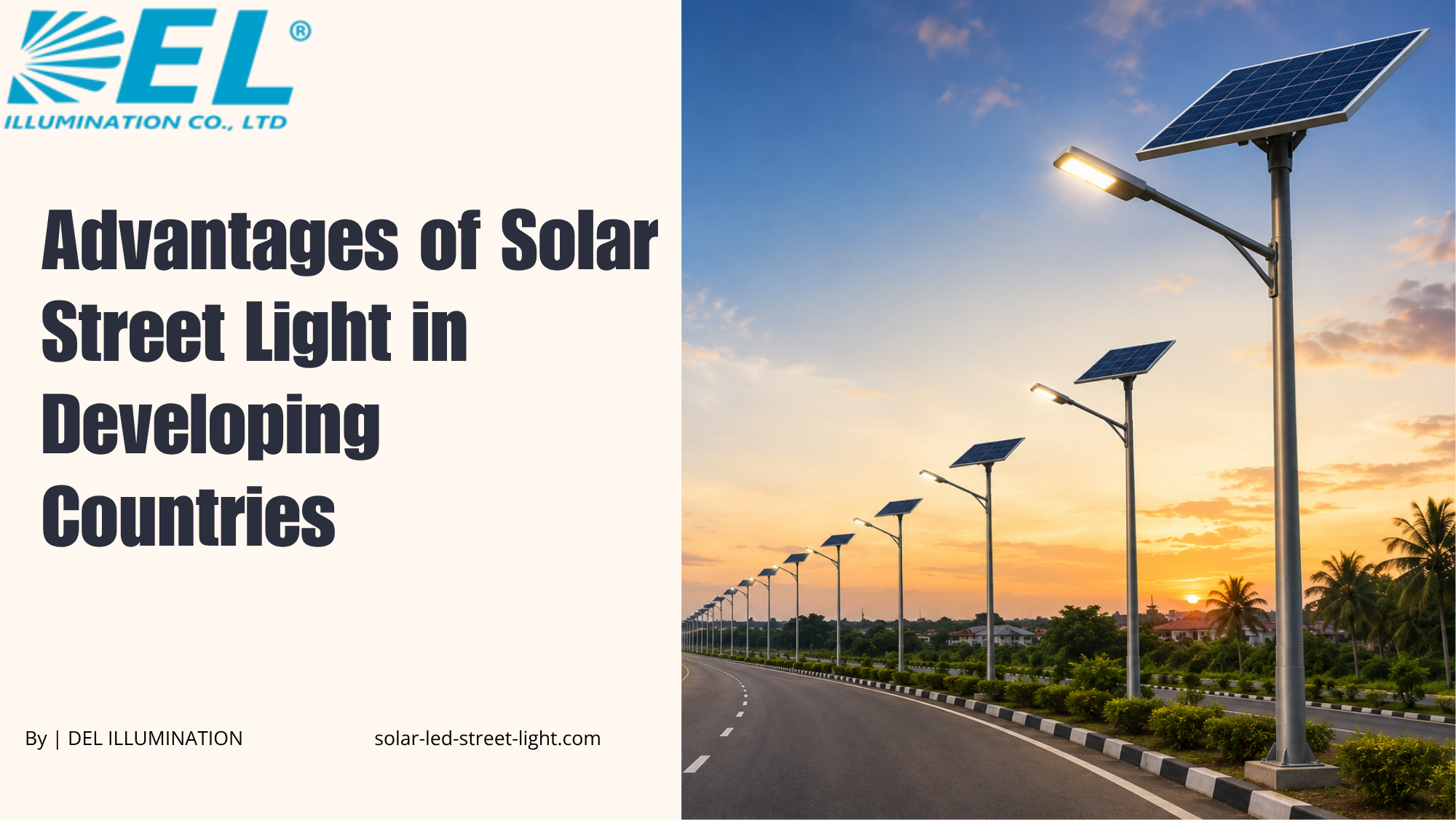
Nations are grouped into two categories, developed and developing countries, based on industrialization and per capita income levels. In this article, you will learn how countries that have lower per capita income levels and less industrialized get to enjoy the advantages of solar street light. The advantages of solar street light are especially meaningful where grid access is limited and budgets are tight.
The list of low and middle income countries (LMICs) is quite extensive, so it would not be easy to consider each country. Here we are going to go through countries that have sizeable solar powered street light projects.
Affordable and Clean Lighting and Energy
Going by the United Nation’s Sustainable Development Goals (SDGs), developing countries are required to provide affordable and clean energy (SDG Goal 7). Most lighting projects in LMICs are meant to be powered by solar energy, and the advantages of solar street light align directly with this goal.
Investing in solar street lighting not only provides security light at night, but it also offers clean and more efficient energy. The excess solar energy produced by the photovoltaic cells can be fed to a local grid to power homes in the rural areas of developing countries.
Moving away from fossil fuels and embracing solar energy is what most investors, project managers, or developing countries use to reduce their carbon footprint. Solar street light is a low carbon development investment and can be used as a tool for climate action (SDG Goal 13). Among the advantages of solar street light, this climate contribution is one of the most lasting.
Better Spending of Public Funds
Learning from Uganda, investing in solar powered street lights as opposed to conventional grid based options could reduce your installation costs by at least 25 percent. Most of the developing countries operate on minimal budgets, and most local authorities lack the necessary capital to finance such investments. As a result, cheaper solutions such as solar lighting can easily be implemented.
The upfront cost of using traditional street lighting is enormous in areas that lack electricity connection. The government must first provide grid connectivity before the street light infrastructure, hence increasing the cost of investment. Therefore, solar street lighting becomes a viable solution, and the cost advantages of solar street light become clear.
The government can redirect the saving from solar street light projects to set up more street lights or use it to provide other public services such as building more infrastructures.
Economic Benefits
Solar street light investment in Uganda has brought a more vibrant night time economy. Using the light coming from these retrofits, informal vendors and traders can operate for longer hours at night. This has helped them cater to professionals who come home late from work, and in return, they get an income. These economic advantages of solar street light ripple through whole communities.
Extending working and trading hours beyond daylight hours creates employment which contributes positively to the economy of developing countries. Since income is one of the factors that can make a country move up the ladder of development, then solar street lighting could change the situation.
The installation of solar powered street lights also provides job opportunities to the local communities, especially those with a specialty in solar energy. Tender and transportation of the infrastructure can also be viewed as a source of income to members of the country, especially if the community is primarily involved.
As crime rates reduce in the informal settlements and low income neighborhoods, companies would be willing to invest and thus end the economic challenges caused by insufficient or insecure employment opportunities. You can explore the full range of All In One models suited to these projects.
Coalition Between Countries
Most of the developing countries may not be in a capacity to build their own solar street light infrastructure due to technological and innovation challenges. This means LMICs get support from companies such as DEL ILLUMINATION, located in developed countries. The collaborative advantages of solar street light extend well beyond hardware.
The partnership extends from state to company and country to country relationships. The shared technology and technical expertise could improve industrialization in developing countries hence allowing them to become established.
Solar street light knowledge spillover and capacity building for government officials and local communities will promote social and economic development.
Road and Public Security Benefits
Taking the case of the solar powered street light project in Uganda, it has generated better road safety and lower crime rates in the country. In terms of road safety, they have reduced accidents due to poor visibility and carjacking. It has reduced fatalities from road traffic injuries, which is a high risk for pedestrians in developing countries. Safety is one of the clearest advantages of solar street light.
Lower crime rates in the communities are as a result of lighting up streets for better identification of robbers which prevents them from involving themselves in criminal activities. Therefore, people can now confidently walk at night along these lit up streets, which was once impossible. These streets are now safe and more secure, especially for women.
Energy Efficiency Benefits
Efficiency using solar street lights comes into the picture when you consider that less or no electricity is required from the local company grid. This means the demand for electric power in the country can easily be met when the project does not consume power from the mains. The efficiency advantages of solar street light lighten the load on stretched national grids.
According to experts, the adoption of solar LED street lights by developing countries can reduce electricity consumption by 40 percent.
Higher Property Value
In the modern property market, most buyers would be willing to buy a solar powered house. The installation of solar street lights makes security easy in homes that have a big compound or buildings closer to these systems. Rising property value is one of the underrated advantages of solar street light for growing neighborhoods.
We all desire to live in a neighborhood that is well lit and where you can avoid being robbed at your gate, which is more rampant in most developing countries.
Sustainable Solution
If you examine the operations of solar street lights, you will find that they have almost no operating costs. The most likely cost would come from repairs and maintenance. The cost maintenance of solar powered streetlights is 60 percent of what you would pay for the conventional grid type. Long term savings are among the strongest advantages of solar street light.
Solar powered street lights are sustainable because they offer a constant supply of light even during power outages, which is a common problem in developing countries. For a broader comparison, see the All In Two Solar Street Lights range built for demanding sites.
Advantages of Solar Street Light: Conclusion
The advantages of solar street light projects in developing countries, as you see for yourself, are many and enough to improve the levels of living in urban and rural settings. These retrofits mostly benefit the informal settlements or vulnerable population in remote areas.
As the technology supporting advantages of solar street light keeps improving, there will be no reason as to why you would not want to invest in this affordable and clean lighting solution. Ready to start a project? Contact our team to discuss the advantages of solar street light for your region.
Frequently Asked Questions
What are the main advantages of solar street light in developing countries?
The main benefits include affordable clean energy, lower public spending, safer roads, reduced crime, higher property value, and reliable lighting during power outages.
Do solar street lights save money for local governments?
Yes. Installation can cost at least 25 percent less than grid based options, and ongoing maintenance runs around 60 percent of what a conventional grid type light would cost.
How do solar street lights improve public safety?
Well lit streets improve visibility, reduce road accidents, deter criminal activity, and make night travel safer, especially for women and pedestrians.
Can solar street lights work during power outages?
Yes. Because each unit stores its own solar energy in a battery, it keeps working independently of the mains grid, which is valuable where outages are frequent.
How much electricity can solar LED street lights save?
Experts estimate that adopting solar LED street lights can reduce electricity consumption in developing countries by around 40 percent.