
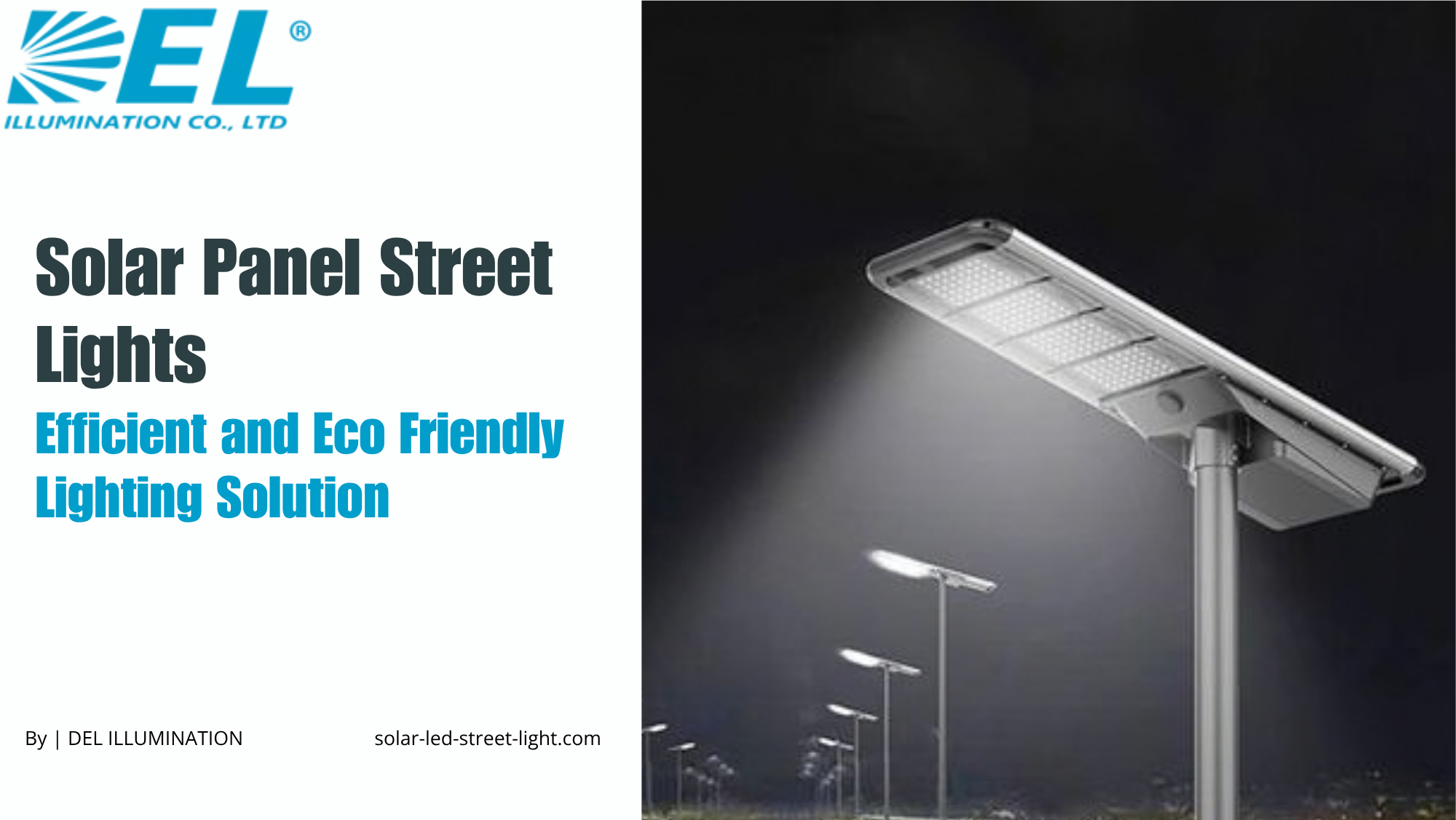
Energy has become increasingly important in today’s world to power our lives. However, relying on traditional energy production methods is becoming more challenging with the ever growing population. One way that many cities and communities are looking to solve this problem is through the use of solar panels, and Solar Panel Street Lights are one of the most practical examples of this shift.
Solar panels convert sunlight into electrical energy, which can then be used to power our homes and businesses. There are many different applications for solar panels, but one of the most popular is using them to power street lights. Solar Panel Street Lights combine a photovoltaic panel, a rechargeable battery, a charge controller, and an LED lamp into one self powered lighting system.
Street lighting is a vital part of any city or town, and it must be able to run constantly. This can be a problem, as most traditional street lights are powered by grid electricity, which can be expensive to supply and to wire. Solar Panel Street Lights are a great alternative, as they can provide the same level of light without the high running costs. Modern all in one solar street lights place the panel, battery, and lamp in a single housing, which makes installation even simpler.
Renewable Resource to Power Streetlights
Solar power is a renewable resource that can be used to power streetlights. Solar panels convert sunlight into electrical energy during the day, store it in a battery, and release it at night to run the lamps. Solar Panel Street Lights are becoming increasingly popular as they are environmentally friendly and cost effective. The International Energy Agency tracks solar PV as one of the key technologies driving the global move toward renewable electricity.
Solar powered streetlights have many benefits, including reducing greenhouse gas emissions, saving energy, and reducing light pollution. Solar Panel Street Lights are a great way to help the environment and save money on energy costs.
Solar panels are an increasingly popular way to power streetlights. Solar panels offer several advantages over traditional methods of powering streetlights, such as being renewable and having low maintenance costs. In addition, solar panels can be used to power other devices, such as traffic lights and security cameras.
5 Key Benefits of Solar Panel Street Lights
- No electricity bills: Each pole generates and stores its own power, so there is no monthly energy cost for the lighting.
- No trenching or cabling: Poles do not need to be connected to the grid, which saves time and civil works on new roads and remote sites.
- Lower carbon footprint: The lights run on sunlight instead of fossil fuel generated electricity.
- Reliable during grid outages: Every light works independently, so a power cut on the grid does not leave the street dark.
- Low maintenance: LED lamps and lithium batteries have long service lives, and routine care is mostly panel cleaning and periodic checks.
Efficient and Environmentally Friendly Option
Renewable energy is becoming an increasingly popular option for powering homes, businesses, and public infrastructure. Solar panels are a great way to harness the power of the sun and generate electricity that can be used to run appliances, lights, and other equipment. One of the benefits of Solar Panel Street Lights is that they are relatively easy to install and maintain.
Additionally, solar panels are environmentally friendly since they do not produce emissions or pollution while operating. Another advantage of solar panels is that they can still generate some electricity on cloudy days, and a correctly sized battery keeps the lights running through several days of poor weather.
If you are considering installing solar lighting, it is essential to research whether it is the right option for your site. There are several factors to consider, including the installation cost, the amount of sunlight your location receives, and the type of solar panel you select. Solar Panel Street Lights are the way of the future, and more and more cities are turning to solar to power their street lights.
Cost of Installation
The cost of installing solar lighting can vary depending on the size of the system, the type of solar panel you select, the battery capacity, and the location of the project. However, the initial investment is typically offset by the savings on electricity bills and by avoiding trenching and cabling work. In some cases, government incentives are available to help offset the cost of the installation.
Amount of Sunlight
Solar panels need sunlight to generate electricity. Therefore, the amount of sun your location receives will impact the performance of your system. If you are in an area with limited sunlight, the panel and battery need to be sized larger, or the light can use a dimming profile to stretch stored energy through the whole night. A structured solar lighting project checklist helps you capture site data such as sun hours, pole height, and spacing before you order Solar Panel Street Lights.
Type of Solar Panel
When selecting solar panels, you must consider the installation cost, the amount of sunlight your location receives, and the type of solar panel you choose. Monocrystalline panels offer higher efficiency and suit compact fixtures, while polycrystalline panels cost less but need more surface area for the same output. Solar panels are a great way to generate electricity and save money on your electric bill. They are also an environmentally friendly option that can help you reduce your carbon footprint.
Different Types of Solar Powered Streetlights
There are many different types of solar powered streetlights available on the market today. Each type has unique benefits and drawbacks that you should consider before purchasing. Here is a rundown of the most common types of Solar Panel Street Lights:
LED Solar Streetlights
LEDs are the most energy efficient lightbulb, so it makes sense that they are used in almost all modern Solar Panel Street Lights. LEDs also have a long lifespan, meaning you won’t have to replace them as often as you would with other bulbs. However, LED solar streetlights can have a higher upfront price than older lamp types, although this gap has narrowed a lot in recent years.
All in One and All in Two Solar Street Lights
All in one models integrate the solar panel, battery, controller, and LED lamp into one compact unit, which makes them quick to install on residential streets, parks, and campuses. All in two models separate the solar panel from the lamp body, so the panel can be larger and angled independently. This makes them a better fit for higher wattage roads and for regions with fewer sun hours.
Compact Fluorescent Solar Streetlights
Compact fluorescent bulbs are not as energy efficient as LEDs but are still more efficient than traditional incandescent bulbs. Compact fluorescent solar streetlights were once a lower cost option for budget conscious buyers, but they have now been largely replaced by LED models.
High Pressure Sodium Solar Streetlights
High pressure sodium solar streetlights use bulbs that emit a bright, yellowish light. These lights are efficient compared with incandescent lamps but can cause glare and light pollution, and they draw more power than LEDs. High pressure sodium solar streetlights can be a choice for areas that need bright light, but they are not suitable for all locations.
Solar Panel Street Lights utilize a renewable energy source, sunlight, to power up the street lights. They are an initiative to reduce carbon footprints as they don’t use any fossil fuel like coal, petrol, or diesel. This helps in saving non renewable sources of energy. Solar Panel Street Lights have many advantages over traditional street lights.
Solar Panel Street Lights are a cost effective way of lighting up the streets as the maintenance cost is much less than for traditional street lights. In addition, they are a great way to reduce your carbon footprint and save on energy costs.
Conclusion
Solar power is a clean and renewable energy source that can power streetlights. Solar powered streetlights are available in various styles and prices so that you can find the right option for your needs. LEDs are the most energy efficient bulb and are now the standard choice for Solar Panel Street Lights.
Solar powered streetlights are a great way to reduce energy costs and help the environment. For public roads and commercial projects, the system should be sized and installed by professionals so that it performs reliably every night. DEL Illumination works as a solar street lighting engineering solution expert for EPC contractors, municipalities, and developers. Contact our team to plan Solar Panel Street Lights for your next project.
Frequently Asked Questions
1. How do Solar Panel Street Lights work?
During the day, the solar panel converts sunlight into electricity and charges the battery. At dusk, the controller detects the drop in light and switches on the LED lamp, which runs on the stored energy through the night.
2. How long do solar street lights last?
LED modules in quality fixtures are commonly rated for 50,000 hours or more. Lithium iron phosphate batteries typically last several years before replacement, and the solar panel itself usually keeps working for 20 years or longer.
3. Do solar street lights work on cloudy or rainy days?
Yes. Solar panels still produce some power in cloudy weather, and a properly sized battery stores enough energy to keep the lights on for several nights of low sunlight. Systems for low sun regions are designed with extra battery autonomy.
4. How much maintenance do solar street lights need?
Maintenance is minimal. The main tasks are cleaning dust or bird droppings from the panel, checking fixings and seals, and replacing the battery at the end of its service life. There are no cables or grid connections to repair.
5. Are solar street lights suitable for highways and main roads?
Yes, when the system is engineered for the road class. Higher wattage lamps, larger panels, bigger batteries, and a proper photometric layout allow solar lighting to meet the brightness and uniformity needed on highways and main roads.