
TRANSPORT INFRASTRUCTURE
— PORTS · AIRPORTS · STATIONS
Keeping transport connected — from ports to stations.
From port roads to station approaches, explore solar street lighting shaped around the routes that keep transport moving. Each project brings passenger access, freight traffic and site conditions into focus — with system configurations designed for busy transport facilities.
ROAD WIDTHS
7–12 m
SYSTEM CONFIGURATIONS
All-in-One / All-in-Two
POLE HEIGHTS
6–11 m
POLE SPACING
22–35 m
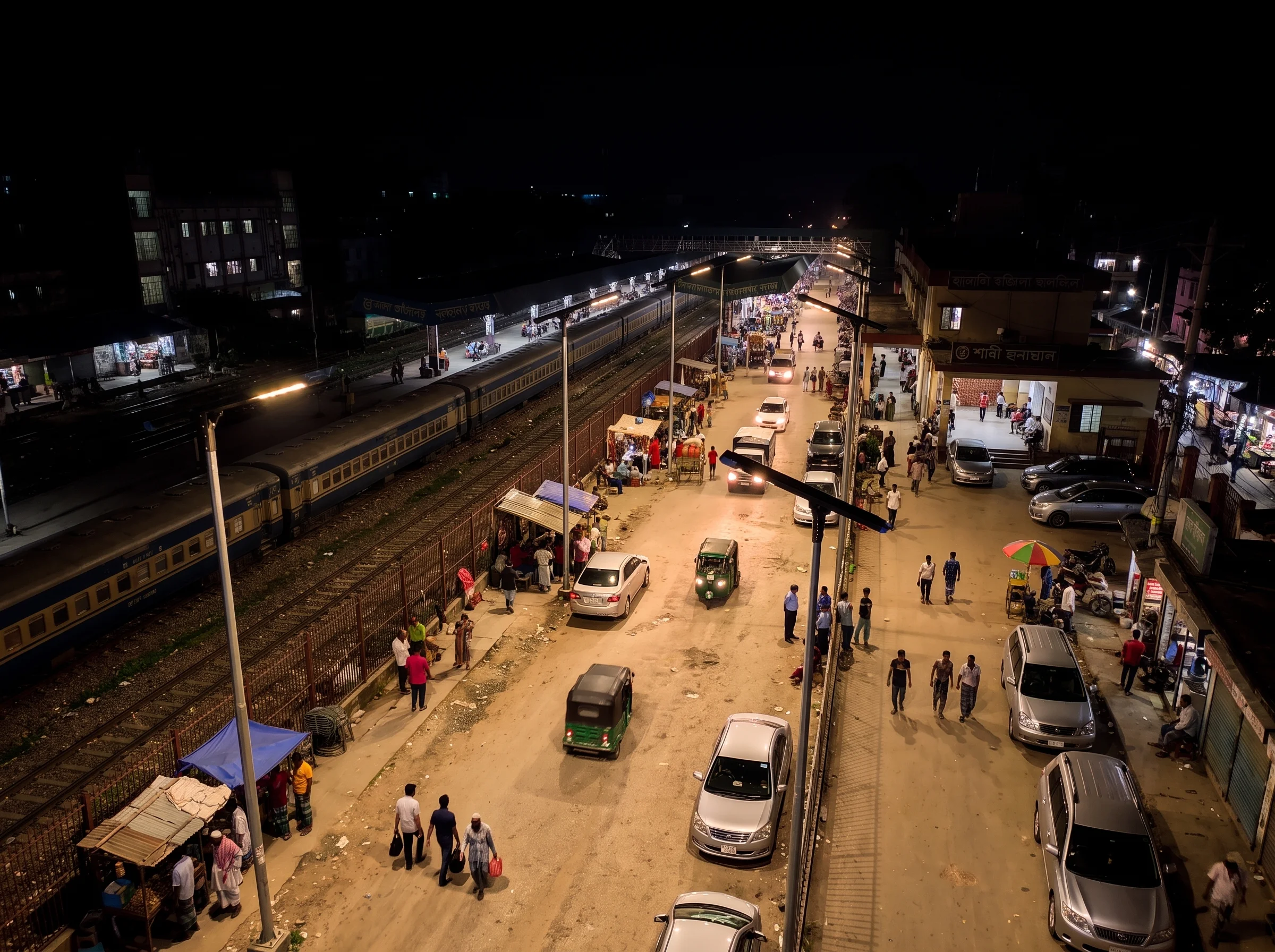
Access roads, station entrances and pickup areas guide the lighting design. Layouts consider buses, trucks and people to support evening movement through transport sites.
Solar panels, batteries and dimming schedules are matched to local sunshine. Energy sizing considers site shading and the lighting hours needed for passenger and freight traffic.
Pole heights, spacing and positions follow access roads and terminal routes. Layouts account for vehicle turns, covered bays and roadside space while keeping travel routes clear.
Pole positions and component access are reviewed early. Service planning considers traffic schedules, work areas and crew access to help maintain lights around daily operations.
From transport routes to lights on site.
Share your site drawings, traffic routes and lighting requirements. We bring together DIALux design, solar street light configurations and pole layouts, then coordinate supply and delivery around transport operations — with guidance during installation and support after handover.
Review access roads, terminal entrances and passenger routes, then develop a DIALux layout to assess lighting coverage for vehicle and pedestrian movement.
Coordinate solar panels, batteries and lighting schedules with pole heights, brackets and foundation requirements, accounting for site shading and vehicle clearance.
Confirm equipment specifications, quantities and shipment schedules, coordinating delivery stages with site access, traffic schedules and the contractor’s planned installation sequence.
Provide installation guidance, controller-setting assistance and troubleshooting support, followed by warranty service and spare-parts coordination to support maintenance around daily transport operations.
lights
Transport Infrastructure Lighting
lights
Transport Infrastructure Lighting
lights
Transport Infrastructure Lighting
lights
Transport Infrastructure Lighting
lights
Transport Infrastructure Lighting
lights
Transport Infrastructure Lighting