
URBAN & MUNICIPAL
— STREETS · NEIGHBOURHOODS · COMMUNITIES
Connecting city streets — from homes to businesses.
From residential streets to commercial avenues, explore solar street lighting shaped around the way a city moves. Each project brings road layouts, pedestrian access and local conditions into focus — with system configurations designed for the streets they serve.
ROAD WIDTHS
6–10 m
SYSTEM CONFIGURATIONS
All-in-One / All-in-Two
POLE HEIGHTS
5–9 m
POLE SPACING
20–30 m
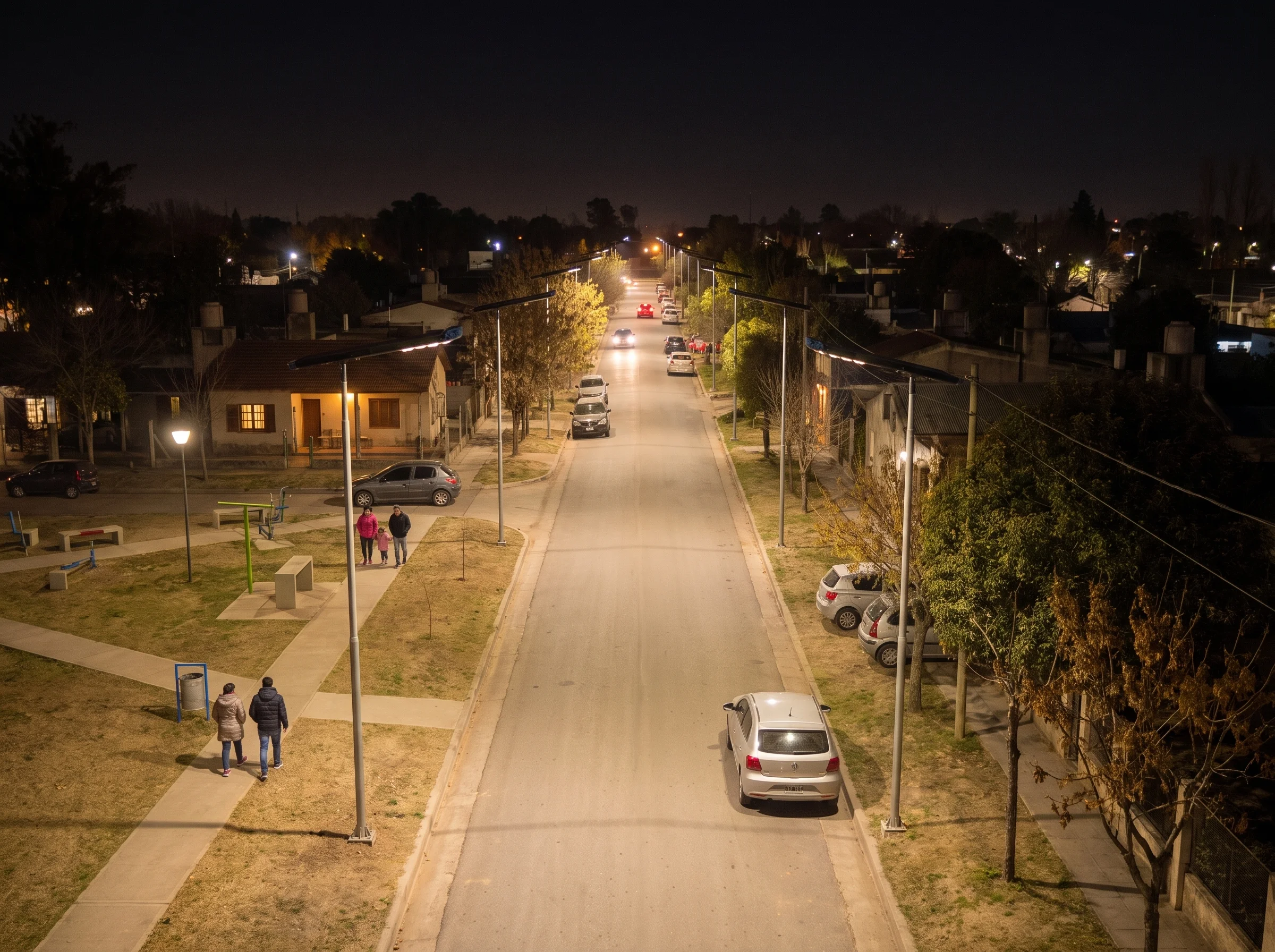
Road widths, crossings and residential entrances guide the lighting design, balancing vehicle visibility with pedestrian access while accounting for roadside businesses, parked vehicles and changing street activity.
Solar panels, batteries and dimming schedules are sized together around seasonal sunshine, nearby shading and required lighting hours, balancing nightly energy demand with the solar charging available.
Mounting heights, spacing and roadside or median positions are coordinated around sidewalks, building entrances and existing utilities, with lighting calculations guiding layouts that fit the available installation space.
Equipment access and pole locations are considered early, helping crews inspect and service solar street lights while accounting for parked vehicles, pedestrian routes and the daily activity around them.
From street plans to lights on site.
Share your road drawings, site conditions and lighting requirements. We bring together DIALux design, solar street light configurations and pole layouts, then coordinate supply and delivery around your installation programme — with guidance during installation and support after handover.
Review road geometry, pedestrian routes and lighting requirements, then develop a DIALux layout to assess light levels, uniformity and glare.
Coordinate solar panels, batteries and operating schedules with pole heights, brackets and foundation requirements to suit site conditions and installation constraints.
Confirm equipment specifications, quantities and shipment schedules, coordinating packaging and delivery sequences with the contractor’s site access and planned installation stages.
Provide installation guidance, controller-setting assistance and troubleshooting support, followed by warranty service and replacement-parts coordination to support maintenance after project handover.
lights
Urban & Municipal Road Lighting
lights
Urban & Municipal Road Lighting
lights
Urban & Municipal Road Lighting
lights
Urban & Municipal Road Lighting
lights
Urban & Municipal Road Lighting
lights
Urban & Municipal Road Lighting