
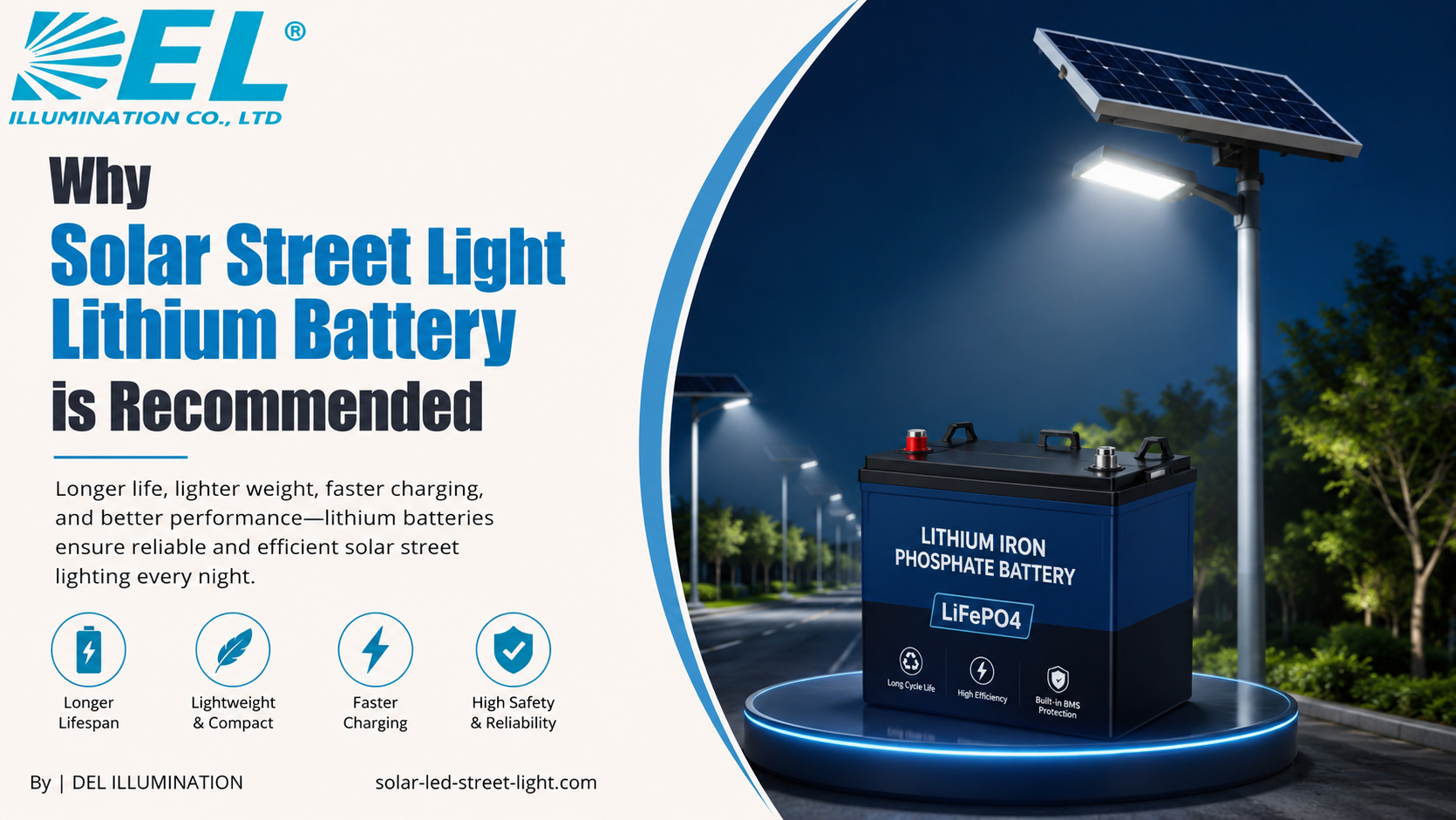
In the market there are many solar street lights, and technically they work with different kinds of battery chemistry. By default, some companies still produce and sell products with lead batteries. On the other hand, a solar street light lithium battery has a lower true cost of ownership, even though it is more expensive up front. This is why many companies and individuals now prefer a solar street light lithium battery over older chemistries. If you are comparing fixtures, our All in One Solar Street Lights range uses this chemistry as standard.
A solar street light lithium battery is recommended for your lighting products because it automatically improves the return on investment of your purchase. This article explains the main benefits of using a lithium battery to power your solar lights, and why it usually outperforms older chemistries over the life of the system.
Why Use a Lithium Battery
For the last two decades the lithium battery has proven itself as a reliable technology. It powers laptops, cars, cameras, cell phones and many other mobile devices, and it is also used to store energy on the electrical grid. Because of this track record, a solar street light lithium battery offers clear advantages over traditional options such as lead batteries. According to the International Energy Agency, battery storage paired with solar continues to grow rapidly worldwide, which reflects the confidence the industry now places in lithium chemistry.
High Temperature Tolerance
Most batteries dislike high temperatures, since heat reduces their service life. Increased temperatures have a far larger impact on traditional batteries than on a solar street light lithium battery. Any temperature above 20 degrees Celsius shortens a lead battery’s lifetime very quickly. By contrast, a lithium battery tolerates heat well, up to around 45 degrees Celsius, before performance is affected.
Low Temperature Tolerance
In cold weather both a lead battery and a solar street light lithium battery lose some energy capacity, but the effect on lead is far more severe. At minus 20 degrees Celsius, a lead battery’s usable capacity can drop to roughly 30 percent. Under the same discharge conditions, a solar street light lithium battery retains about 82 percent of its capacity. This means the lithium battery lasts longer in both hot regions and cold conditions such as mountainous areas.
Turnaround Cycle Efficiency
The efficiency of a solar street light lithium battery is measured by its turnaround cycle efficiency, which describes how much energy you recover when the battery charges and discharges. Research shows the turnaround efficiency of a lead battery is about 75 percent. In practice, if you charge a lead battery with 2000Wh, you only get about 1500Wh back to power your devices, so 25 percent of the stored energy is lost. For solar street lights this means you need at least 25 percent more capacity to power the same load.
Under those conditions the whole system inevitably becomes more expensive. A lithium battery, by contrast, has a turnaround efficiency of around 98 percent. This is precisely why the technology is used so widely by solar companies all over the world.
Discharge Cycles and Depth of Discharge
Depth of discharge describes how far your solar street light lithium battery drains in each cycle. The deeper the discharge, the fewer cycles a battery can complete, which shortens its service life. Lithium batteries handle deep discharge well, comfortably reaching about 95 percent, while lead batteries should not be discharged beyond 50 percent. To plan capacity correctly for a project, our Solar Lighting Project Checklist covers battery sizing step by step.
The Complexity of Lithium Batteries
Given all of the above, you might wonder why anyone still chooses traditional batteries for solar lighting. The answer is simple. Compared with a solar street light lithium battery, traditional batteries are easier to install. Lithium cells are more sensitive below their minimum acceptable voltage during discharge and above their maximum voltage during charging, so they need more advanced electronic protection to stay safe and reliable.
Solar Street Light Lithium Battery: Conclusion
Although the market is full of street lights, it is worth choosing one with a solar street light lithium battery. Despite the higher purchase price, lithium delivers a lower true cost of ownership over time. The same chemistry powers laptops, cars, cameras, cell phones and countless mobile devices. A solar street light lithium battery tolerates heat up to around 45 degrees Celsius, unlike other batteries that struggle above 20 degrees Celsius, and it can discharge up to about 95 percent of its energy, which makes it reliable for storing power for solar street lights.
That said, always buy from a reliable supplier to avoid fake cells, and do thorough research on the vendors around you, as this is one of the surest ways to get the best solar products for your needs. If you have any requirement for a solar LED street light, please feel free to reach out through our contact page.
Frequently Asked Questions
Why is a lithium battery better than a lead battery for solar lights?
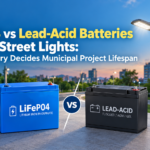
Lithium offers higher turnaround efficiency, deeper usable discharge, better temperature tolerance and a longer service life. Despite a higher upfront cost, it delivers a lower true cost of ownership.
How much of a lithium battery can I safely discharge?
Lithium cells can typically discharge to about 95 percent of capacity, whereas lead batteries should not go beyond 50 percent. This deeper usable range means more real energy from a similar sized battery.
How do temperature extremes affect the battery?
Lithium tolerates heat up to around 45 degrees Celsius and retains roughly 82 percent of capacity at minus 20 degrees Celsius. Lead batteries degrade far faster in both heat above 20 degrees Celsius and severe cold.
Are lithium batteries harder to install than lead ones?
They require more advanced electronic protection because they are sensitive to over discharge and overcharge. Reputable manufacturers build this protection in, so the extra complexity is handled for you.
Where should I buy a solar street light lithium battery?
Always purchase from a reliable supplier or established manufacturer. Researching vendors carefully helps you avoid counterfeit cells and ensures you receive genuine, long lasting batteries.