
Do you remember the old street lights? Those dim, unreliable fixtures that struggled to provide consistent illumination throughout the night? Well, times have certainly changed. The evolution of the street solar light with battery system has been nothing short of remarkable. These innovations have not only improved the efficiency and reliability of these systems but also played a pivotal role in reducing our carbon footprint. Let’s dive in and explore the noteworthy advancements in the street solar light with battery system. For the fundamentals first, see our guide on the solar street light working principle.
The Advancements in a Street Solar Light With Battery System
What are some of the improvements in these lighting solutions?
1. Improved Solar Panel Efficiency
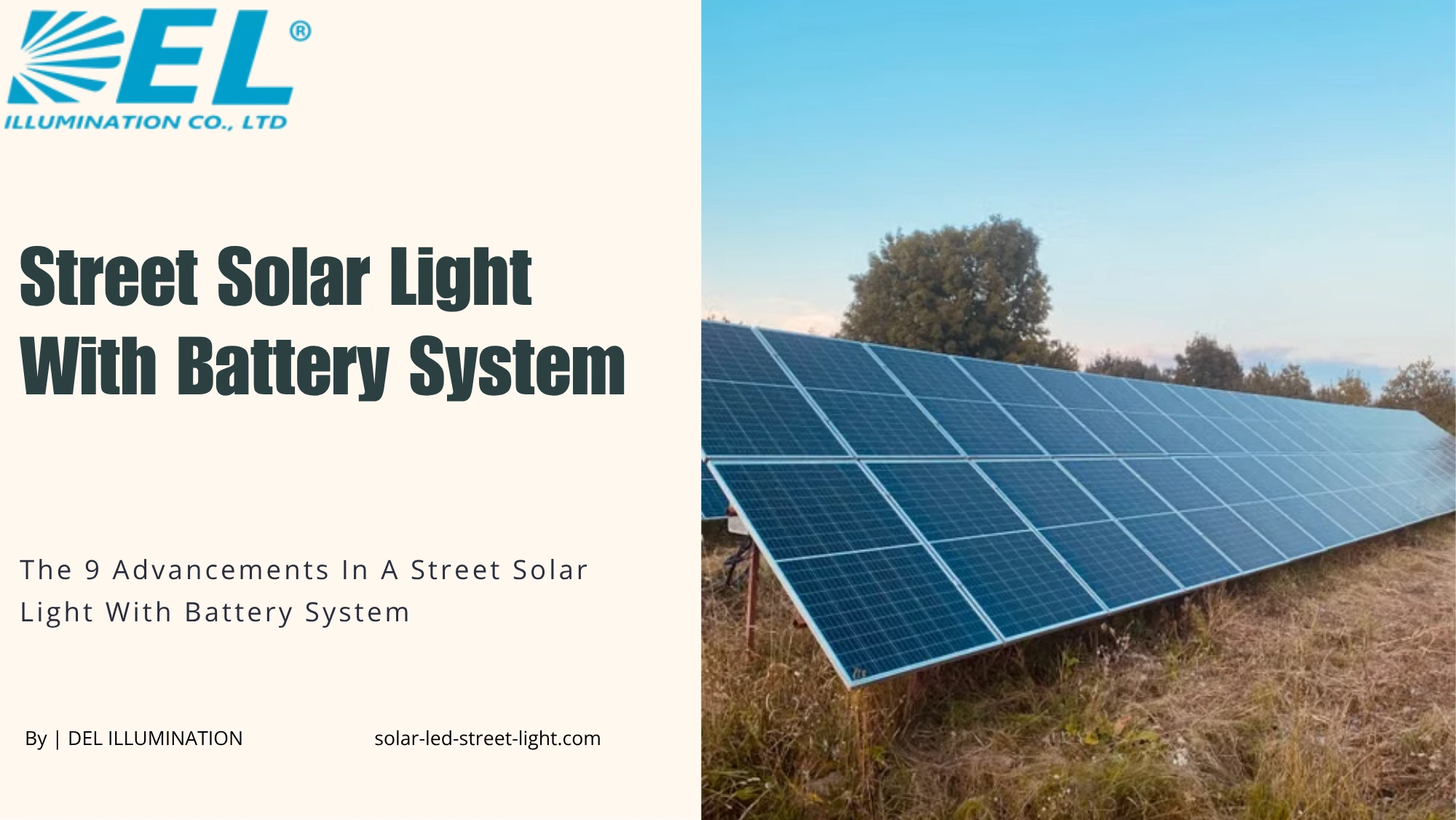
One of the primary enhancements in a street solar light with battery setup lies in the advancement of photovoltaic (PV) cell technology. Traditional solar panels often use silicon based cells, but recent developments have introduced new materials such as perovskite and thin film technologies. These alternative materials exhibit higher light absorption capabilities and improved energy conversion rates, allowing for greater electricity production from the same surface area of solar panels. As a result, street solar lights equipped with these high efficiency panels can generate more electricity even in low light conditions, making them more reliable for nighttime illumination. Learn more in our post on what photovoltaic street lights are.
Additionally, advancements in anti reflective coatings and light trapping techniques have been pivotal in increasing solar panel efficiency. These innovations reduce energy losses due to light reflection and scattering, enabling panels to capture more photons and convert them into electricity efficiently. Such improvements are particularly advantageous in areas with variable weather conditions, as they enhance the panels’ ability to generate power even on overcast days.
2. High Efficiency LEDs
One of the most notable improvements brought about by high efficiency LEDs is their exceptional energy efficiency. Traditional street lights often consumed a substantial amount of electricity, leading to high energy bills and carbon emissions. However, with the integration of high efficiency LEDs, a street solar light with battery system can now harness the sun’s energy during the day and convert it into bright and sustainable illumination during the night. This not only reduces the reliance on conventional power sources but also lowers operational costs and environmental impact.
Another noteworthy improvement is the superior quality of light provided by high efficiency LEDs. These LEDs offer better color rendering and uniform illumination, enhancing visibility and safety on our streets. They are also highly customizable, allowing for precise control of light levels, distribution, and even color temperature, ensuring that the lighting can be tailored to the specific needs of each location. Our comparison of HPS lights vs LEDs in outdoor solar street lamps explores this shift in depth.
3. Lithium ion Batteries
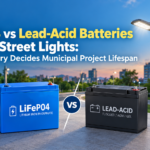
First and foremost, lithium ion batteries have greatly enhanced energy density. This means they can store more energy in a smaller and lighter package compared to traditional lead acid batteries. In a street solar light with battery system, this translates into more efficient use of space and easier installation, as the batteries can be smaller yet still provide ample energy storage capacity.
Lithium ion batteries boast a higher charge discharge efficiency. They can efficiently convert the captured solar energy into electricity and store it with minimal losses. This higher efficiency translates into improved overall system performance. Furthermore, lithium ion batteries exhibit a lower self discharge rate, meaning they retain stored energy for longer periods without significant losses. This characteristic is particularly valuable for a street solar light with battery system, as it ensures a constant and reliable source of energy. To get the most from them, follow our 10 tips to maintain your solar street light battery.
4. Energy Management and Monitoring
One of the key enhancements is the implementation of smart energy management systems. These systems use advanced algorithms and real time data analysis to optimize the operation of a street solar light with battery system. By continuously assessing environmental conditions, energy demand, and the state of the battery, these systems ensure that streetlights are only active when needed, reducing unnecessary energy consumption during daylight hours or when the streets are empty. This not only conserves energy but also extends the lifespan of the battery, reducing maintenance costs.
Moreover, energy management systems enable remote monitoring and control of streetlights. You can remotely adjust brightness levels, detect faults or malfunctions, and receive real time alerts if any issues arise. This level of control not only improves the overall performance of the street light but also allows for proactive maintenance, minimizing downtime and ensuring that streets remain well lit and safe. Discover more in our post on the 9 benefits of solar light remote control technology.
5. Motion Sensors and Smart Controls
One of the primary improvements that motion sensors and smart controls have introduced is the ability to optimize energy consumption. Traditional street lights often operate at a constant brightness level, regardless of whether anyone is nearby. Motion sensors, however, detect movement and can adjust the light intensity accordingly. When there’s no activity detected, the lights can dim or even turn off, reducing unnecessary energy consumption during periods of low activity. This feature alone can result in substantial energy savings, making a street solar light with battery system more sustainable. Explore the 8 benefits of a solar sensor street light for more.
Furthermore, smart controls enhance the flexibility and adaptability of street solar lights. They allow for remote monitoring and management of individual lights or entire networks. This remote control capability enables you to adjust brightness levels, set schedules, and receive real time data on performance. In case of malfunctions or maintenance needs, smart controls can automatically send alerts, streamlining maintenance efforts and reducing downtime.
6. Aesthetics and Design
Gone are the days of clunky, unattractive fixtures that disrupt the harmony of urban environments. Instead, designers have embraced a more minimalist and integrated approach, blending the solar panels, LED lights, and battery storage into seamless structures. Advancements in material technology have played a pivotal role in elevating the aesthetics of a street solar light with battery system. The use of high quality, durable materials has allowed for the creation of fixtures that not only withstand the rigors of outdoor environments but also exude elegance.
Innovations in LED lighting have also had a profound impact on the aesthetics of a street solar light with battery system. The new solar street light LED systems now offer a wider range of color temperatures, allowing for more nuanced and adaptable lighting schemes. This enables you to enhance safety and visibility and to create atmospheres that align with your unique character and ambiance. LED advancements empower you to tailor the outdoor lighting to suit your specific aesthetic preferences.
7. Connectivity and Data Collection
In the past, street solar light with battery systems operated in isolation, often functioning based on rudimentary timers or light sensors. However, modern systems are now equipped with state of the art connectivity features. These lights can communicate with you, each other, and a central control station, allowing for coordinated and intelligent lighting across entire road networks. This interconnectedness enables a seamless transition from dimly lit areas to well illuminated zones as vehicles or pedestrians pass through, enhancing safety and energy efficiency.
Furthermore, data collection has become an integral part of these systems. Sensors integrated into the streetlights can monitor various environmental parameters such as ambient light levels, temperature, and even air quality. This real time data is invaluable for the maintenance crew and you. For example, it enables the timely identification of malfunctioning lights or the need for maintenance, reducing downtime and ensuring that streets remain well lit.
8. Off Grid and Hybrid Systems
One of the key enhancements of off grid and hybrid systems is their ability to operate independently of the central power grid. Traditional street lights rely solely on grid connectivity, making them vulnerable to power outages and grid failures. In contrast, off grid systems incorporate energy storage solutions like lithium ion batteries, enabling them to store excess energy during the day and provide uninterrupted illumination throughout the night. This autonomy ensures consistent lighting even in areas with unreliable grid access, enhancing safety and visibility on streets and sidewalks. This makes the street solar light with battery system especially valuable in rural communities.
Furthermore, hybrid solar street lights combine solar panels with other energy sources, such as wind turbines or microgenerators, to ensure a continuous power supply. This integration not only increases the street solar light with battery system’s reliability but also maximizes energy production, making it highly efficient. During periods of low solar irradiance, the street solar light with battery system can tap into alternative energy sources, ensuring uninterrupted lighting, even in adverse weather conditions.
9. Sustainability and Environmental Impact
A major advancement lies in the overall sustainability of the street solar light with battery system, further supported by the integration of smart technology and remote monitoring. These systems can now be equipped with sensors and communication capabilities, allowing them to communicate their status and performance to you. This real time monitoring enables proactive maintenance, reducing downtime, and ensuring that these lights operate at peak efficiency. According to the U.S. Department of Energy, solar adoption significantly cuts long term environmental impact.
Furthermore, the management and control systems for street solar lights have become more sophisticated. These systems can optimize energy usage, adjust brightness levels based on real time data, and even detect motion to provide adequate lighting when needed while conserving energy during periods of low activity. These advancements not only reduce energy waste but also contribute to safer and more secure urban environments.
Conclusion
The street solar light with battery system has seen significant advancements in recent years, leading to more efficient and sustainable lighting solutions for our spaces. From improved panels and lithium ion batteries to smart controls and hybrid power, every element has been refined to deliver reliable, cost effective illumination. We are always on the lookout to design and improve our street solar light with battery systems to cater to the ever changing market demand and meet your expectations. Do you need a solar street light? Contact us.
Frequently Asked Questions (FAQs)
1. How long does a street solar light with battery last on a single charge?
A fully charged street solar light with battery typically provides 8 to 12 hours of illumination, and quality models with lithium ion batteries can run for 2 to 3 consecutive nights on a single charge. This backup capacity ensures reliable lighting even through cloudy or rainy periods.
2. What type of battery is best for a street solar light with battery system?
Lithium ion batteries are widely considered the best choice for a street solar light with battery system due to their high energy density, longer lifespan, higher charge discharge efficiency, and lower self discharge rate compared to traditional lead acid batteries.
3. Does a street solar light with battery work during winter or cloudy weather?
Yes. A quality street solar light with battery stores enough energy during sunny periods to keep working through several cloudy or short winter days. High efficiency panels and anti reflective coatings also help these systems generate power even on overcast days.
4. How long does the battery in a street solar light with battery system last before replacement?
The battery in a street solar light with battery system generally lasts 3 to 5 years, though high quality lithium ion batteries can last longer with proper care. Good maintenance and avoiding deep discharges significantly extend battery lifespan.
5. What are the main advantages of an off grid street solar light with battery?
An off grid street solar light with battery operates independently of the power grid, providing uninterrupted lighting during outages, eliminating electricity bills, requiring no trenching or wiring, and delivering reliable illumination in remote areas with limited grid access.