
Introduction
Street lighting is critical for safety, security, and community development. As cities and rural regions increasingly adopt renewable energy solutions, solar street lighting has emerged as a reliable, eco-friendly, and cost-effective alternative to conventional grid-based lighting.
When planning a lighting project, one of the most important decisions to make is whether to use stand-alone solar street lights or a centralized solar street light system. Each solution comes with its own set of benefits and limitations, making the choice project-specific.
At DEL Illumination Co., Ltd., a Sino-German joint venture with more than 14 years of expertise, we specialize in the design and manufacture of cutting-edge solar street lighting systems. With our state-of-the-art research and development center in Dresden, Germany, and a 10,000 m² manufacturing facility in Dongguan, China, we combine German engineering with Chinese efficiency to deliver world-class products.
In this article, we’ll explore the differences between stand-alone and centralized solar street light systems, compare their features, and guide you in choosing the right system for your application.
What Is a Stand-Alone Solar Street Light System?
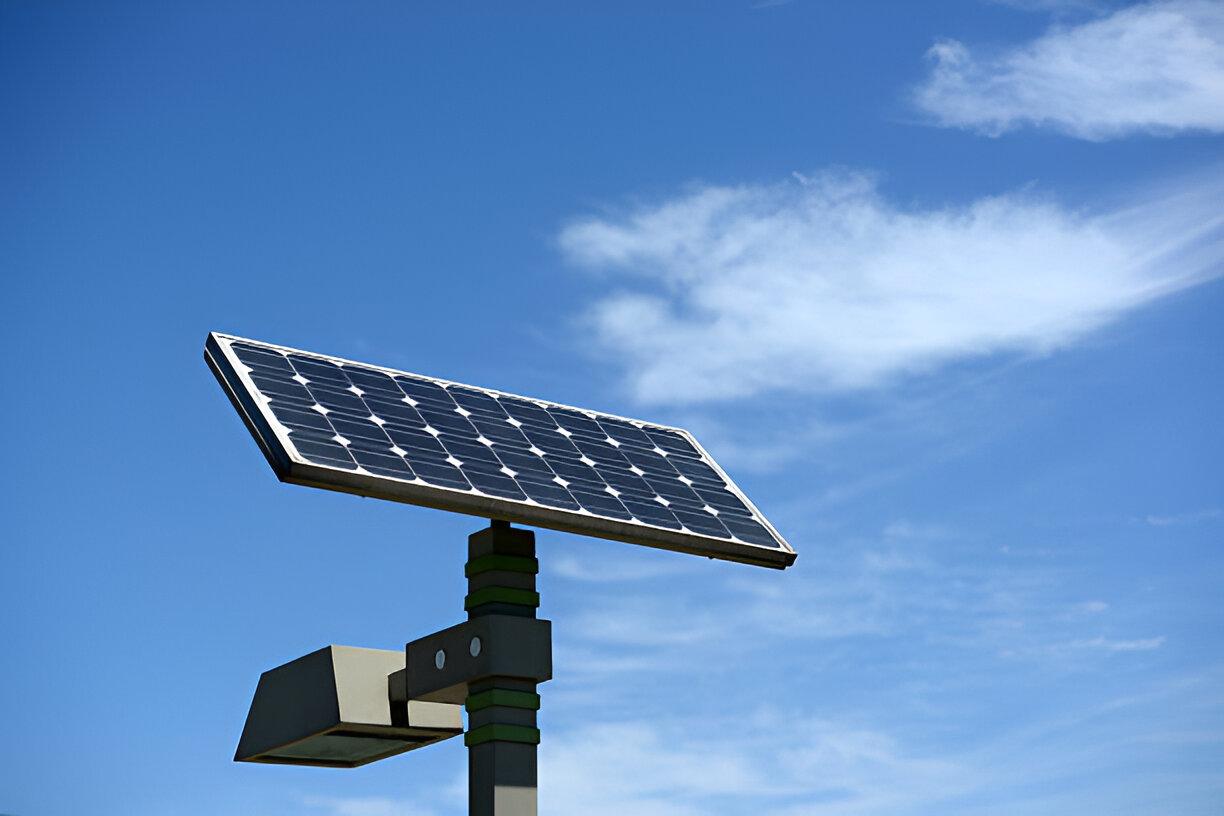
A stand-alone solar street light system, also called all-in-one solar street light, is an independent unit that integrates:
- Solar panel
- LED lamp
- Lithium battery (LiFePO4)
- Charging controller
These components are built into a single compact design, eliminating the need for underground wiring or a central power source.
Key Features of Stand-Alone Systems:
- Plug-and-play design – easy and fast installation.
- Intelligent lighting system with motion sensors and time schedules.
- Durability with anti-theft, anti-rust, and anti-storm engineering.
- Efficient charging using MPPT controllers.
- Longevity – Philips LM80-certified LEDs with a lifespan of up to 50,000 hours (12 years).
- Energy independence – ideal for remote or off-grid locations.
At DEL Illumination, our All-in-One Solar LED Street Light is designed in Germany and offers 200–240 lm/W efficiency, with up to 12 years lifespan and 4–5 days autonomy even during rainy periods.
What Is a Centralized Solar Street Light System?
A centralized solar street light system operates differently. Instead of each light having its own solar panel and battery, multiple lights are connected to a shared central power source. This includes:
- A large solar array.
- Centralized battery bank.
- Power distribution system.
The central unit stores and distributes energy to multiple streetlights, typically installed along highways, industrial zones, or large city roads.
Key Features of Centralized Systems:
- Shared infrastructure for multiple lights.
- Simplified maintenance at the central battery/storage system.
- Greater power handling – suitable for demanding environments.
- Hybrid compatibility – can combine solar with grid backup.
- Higher upfront costs due to large-scale equipment and cabling.
Side-by-Side Comparison: Stand-Alone vs Centralized
| Feature | Stand-Alone Solar Street Light | Centralized Solar Street Light |
|---|---|---|
| Installation | Easy, no wiring required | Complex, requires underground wiring |
| Maintenance | Individual units, simpler | Centralized but requires professional servicing |
| Power Source | Independent solar panel + battery per unit | Shared solar array + battery bank |
| Scalability | Add units as needed | Must expand central system |
| Resilience | If one fails, others continue | Failure at central system can affect all lights |
| Cost | Lower upfront costs | Higher initial investment |
| Best For | Rural roads, villages, parks, pathways | Highways, industrial areas, city projects |
Benefits of Choosing Stand-Alone Systems
- Flexibility – Install them anywhere, especially in off-grid areas.
- Scalability – Expand lighting gradually without reworking existing systems.
- Low Maintenance – Each unit is self-sufficient with minimal upkeep.
- Lower Lifetime Cost – No cabling or excavation expenses.
- Smart Features – Motion sensors and time schedules optimize energy usage.
Benefits of Choosing Centralized Systems
- Powerful Performance – Supports larger lighting projects with consistent brightness.
- Hybrid Integration – Combine solar with grid electricity for reliability.
- Centralized Monitoring – Easy to control from a single hub.
- Urban Suitability – Better for large-scale infrastructure like highways.
When Should You Choose Stand-Alone Solar Street Lights?
- Village roads and community lighting.
- Parks, walkways, and bicycle paths.
- Remote or off-grid areas.
- Projects requiring quick deployment.
- Small to medium-scale projects with limited budgets.
At DEL ILLUMINATION CO., LTD., our All-in-One solar street lights come in multiple models (40W to 160W), designed for different pole heights and installation distances, making them ideal for residential, rural, and municipal projects.
When Should You Choose Centralized Solar Street Light Systems?
- Highways and expressways.
- Large industrial zones.
- City-scale lighting projects.
- Areas with strong infrastructure budgets.
- Projects needing hybrid solar-grid setups for uninterrupted performance.
Quality and Reliability: Why DEL Illumination?
With over 14 years of experience, DEL Illumination stands apart due to:
- German design excellence – developed with the Dresden University of Technology.
- Chinese manufacturing strength – efficient supply chain and 10,000 m² facility.
- Top certifications – ISO9001, C-tick, EMC, FCC, IP66, LVD, IK08.
- Advanced components – Philips LM80-certified LEDs, lithium batteries, monocrystalline panels.
- Anti-theft, anti-storm, and anti-rust engineering for all conditions.
We don’t just sell products—we deliver long-term lighting solutions trusted worldwide.
Real-World Applications
Our portfolio of successful projects spans:
- Residential community lighting.
- Rural development programs.
- City beautification projects.
- Industrial park lighting.
- Smart city applications.
Each project demonstrates our commitment to German quality standards while leveraging China’s large-scale manufacturing capabilities for cost-effective solutions.
Frequently Asked Questions (FAQ)
How do I choose between stand-alone and centralized solar street lights?
The choice depends on project scale. For smaller applications like village roads, parks, and pathways, stand-alone systems are sufficient. For highways, industrial areas, or large cities, centralized systems are better.
What is the lifespan of DEL Illumination solar street lights?
Our lights feature Philips LM80 LEDs with a 50,000-hour lifespan (about 12 years) and lithium batteries with up to 12 years of life.
Do your lights work in cloudy or rainy conditions?
Yes. Our lights feature 4–5 days autonomy, ensuring reliable performance even during prolonged cloudy weather.
What maintenance is required?
Minimal. Our stand-alone lights require only occasional cleaning of solar panels. Centralized systems need periodic checks of the central battery bank.
Can I install the lights myself?
Yes. Our all-in-one solar street lights are designed for easy installation without underground cabling.
Do you provide warranties?
Yes, DEL Illumination provides a guarantee and after-sales support to ensure long-term performance.
The choice depends on project scale. For smaller applications like village roads, parks, and pathways, stand-alone systems are sufficient. For highways, industrial areas, or large cities, centralized systems are better.
Our lights feature Philips LM80 LEDs with a 50,000-hour lifespan (about 12 years) and lithium batteries with up to 12 years of life.
Yes. Our lights feature 4–5 days autonomy, ensuring reliable performance even during prolonged cloudy weather.
Minimal. Our stand-alone lights require only occasional cleaning of solar panels. Centralized systems need periodic checks of the central battery bank.
Yes. Our all-in-one solar street lights are designed for easy installation without underground cabling.
Yes, DEL Illumination provides a guarantee and after-sales support to ensure long-term performance.
Conclusion
Both stand-alone and centralized solar street light systems are excellent renewable solutions, but the right choice depends on the scale and requirements of your project.
-
If you need flexibility, scalability, and ease of installation, choose stand-alone solar street lights like our All-in-One models.
-
If you are managing a large-scale urban or industrial project, a centralized solar street light system may be the right solution.
Contact us today to discuss your project requirements and get expert recommendations on the best solar street lighting system for your needs.
At DEL Illumination Co., Ltd., we combine German design precision with Chinese manufacturing efficiency to deliver reliable, cost-effective, and durable solar street lighting solutions.