
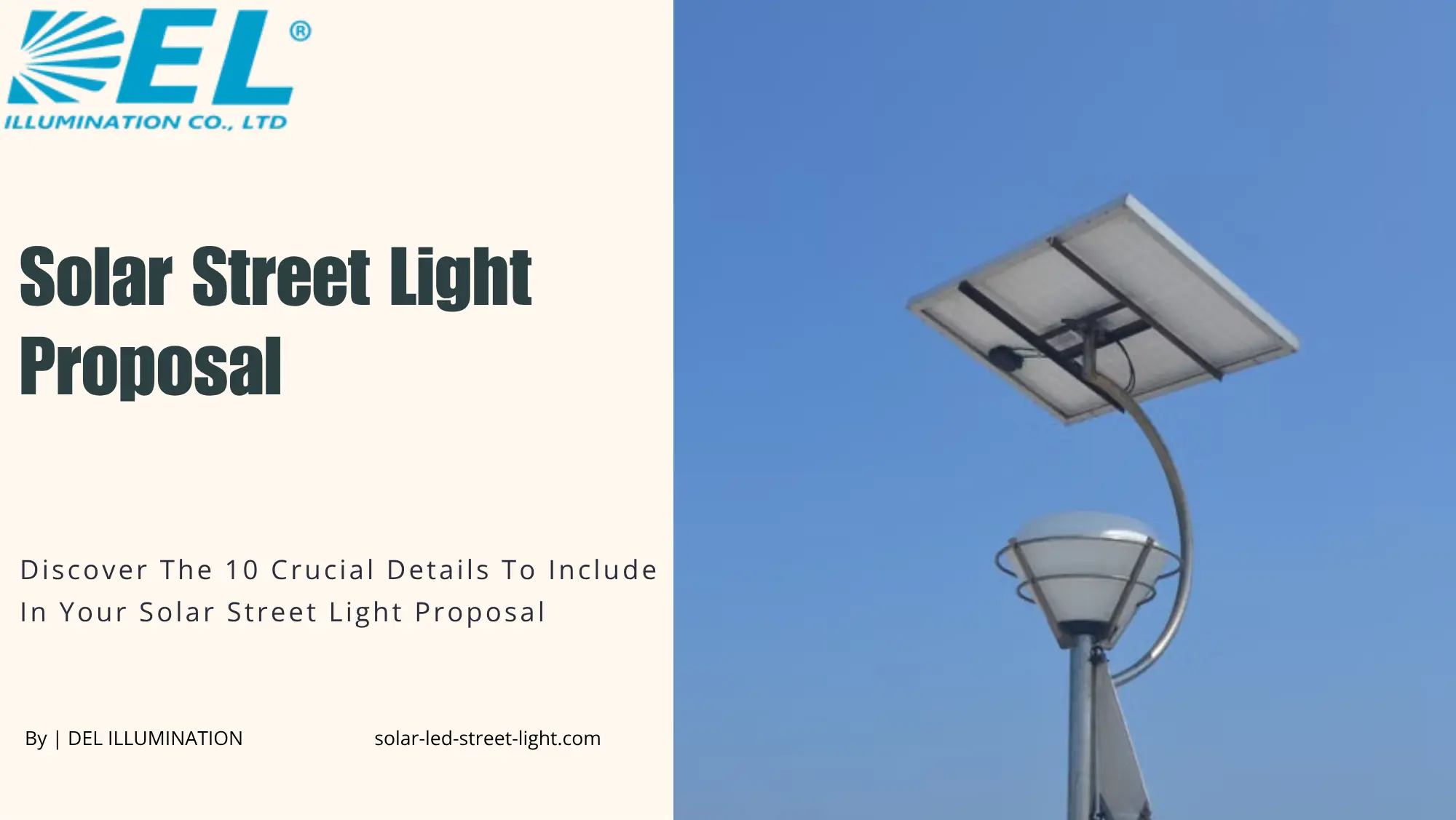
Welcome to the illuminating journey towards crafting a compelling solar street light proposal! In this dynamic era of sustainable solutions, harnessing the power of the sun for street lighting is both visionary and eco friendly. As you embark on this venture, it’s paramount to delve into the intricacies that make your proposal shine. So, let’s dive in and discover how these key elements can transform your vision into a sustainable reality.
The Vital Components of a Comprehensive Solar Street Light Proposal
What should you include in your solar street light proposal to ensure success? Below are the ten crucial details that every winning proposal should cover.
1. Project Objectives
In any comprehensive solar street light proposal, project objectives stand tall as a crucial cornerstone, outlining the very essence and purpose of the endeavour. These objectives should:
- Craft the objectives with precision, clearly defining the purpose of the solar street light project and aligning it with the needs of the community.
- Be quantifiable, allowing for precise measurement of success and providing a tangible framework for evaluation.
- Establish a timeline for achieving each objective. Setting specific deadlines creates a sense of urgency and accountability.
- Consider the expectations of key stakeholders, be it the local community, government bodies, or environmental organizations, and ensure the objectives resonate with their needs.
- Incorporate objectives related to technological advancements to stay at the forefront of progress and maximize the project’s impact.
- Encourage continuous improvement, whether through regular performance evaluations, feedback mechanisms, or adaptation to emerging technologies.
- Consider scalability and replicability. If successful, can this project serve as a model for other communities?
2. Project Scope
The project scope stands out as a crucial component of any solar street light proposal, defining the boundaries, objectives, and deliverables of the initiative. It plays a pivotal role in guiding project planning, execution, and evaluation. You should outline the specific solar street light system to be installed and detail the technical specifications, such as the type and wattage of solar panels, the capacity of the battery storage, and the efficiency of LED fixtures. Clearly delineate the geographical extent of the installation, and specify the number of streetlights and their proposed locations. A distance and spacing calculation helps define this accurately.
Moreover, the project scope explicitly states the goals and benefits to be achieved, emphasizing aspects like energy efficiency, environmental sustainability, and community safety. It establishes measurable performance indicators to assess the success of the solar street light implementation, ensuring accountability and transparency throughout the project lifecycle.
In addition, the scope addresses the project timeline, milestones, and any potential risks that may impact successful completion. It serves as a foundational document, aligning stakeholders’ expectations and providing a comprehensive understanding of the project’s scale and impact.
3. Technical Specifications
Technical specifications form the backbone of a solar street light proposal, delineating the performance, efficiency, and reliability of the proposed lighting system. The primary technical specifications encompass the solar panels, batteries, LED luminaires, and control systems. Solar panels, critical in harnessing solar energy, should be specified in terms of wattage, efficiency, and durability. Optimal battery capacity, type, and lifespan must be clearly defined to ensure seamless energy storage and supply during periods of low sunlight.
The LED luminaires’ technical details, including wattage, colour temperature, and luminous flux, are imperative for determining the system’s illumination capabilities. Additionally, specifying the control system, such as the type of sensors and programmable features, ensures efficient energy management and responsive operation based on environmental conditions. Understanding the anatomy of solar LED luminaires helps you write this section with authority.
4. Financial Analysis
A financial analysis serves as a cornerstone for assessing the economic viability and sustainability of the proposed project. Firstly, an in depth financial analysis allows stakeholders to determine the initial investment required for the installation of solar street lights. This includes the cost of solar panels, lighting fixtures, batteries, poles, and other necessary components. By itemizing these expenses, project managers can present a transparent breakdown of the budget, fostering trust and confidence among investors and decision makers. Reviewing the factors that affect solar street light price makes these figures more credible.
Furthermore, the financial analysis evaluates the operational costs associated with maintaining and running the solar street lights over their lifecycle. This encompasses expenses related to routine maintenance, replacements, and energy consumption. By quantifying these ongoing costs, the proposal provides a realistic projection of the total cost of ownership, aiding in long term budget planning.
Return on Investment (ROI) is another crucial aspect illuminated by the financial analysis. By forecasting the savings accrued through reduced electricity bills and lower maintenance costs over time, stakeholders can gauge the project’s profitability. Expressing these potential returns in clear financial terms enhances the persuasiveness of the solar street light proposal, making a compelling case for the economic benefits.
Moreover, financial analysis considers potential sources of funding, such as government incentives, grants, or subsidies for renewable energy projects. Identifying and quantifying these financial incentives strengthens the proposal by showcasing external support and minimizing financial risks for stakeholders.
5. Environmental Impact
It’s crucial to highlight the environmental impact as a key component of your solar street light proposal. Emphasizing the positive effects of this sustainable solution will not only resonate with stakeholders but also underscore the project’s broader contribution to environmental well being. Include advantages such as:
- Demonstrate how solar street lights, being powered by clean and renewable solar energy, significantly reduce reliance on traditional power sources.
- Highlight the carbon footprint reduction associated with solar street lights.
- Explain how solar street lights play a pivotal role in mitigating climate change by minimizing the release of harmful greenhouse gases.
- Address the environmental advantages of minimal infrastructure disruption.
- Emphasize the longevity and low maintenance of solar street lights, and explain how their durability provides cost savings. Our article on the ecological impact of solar street lights offers useful supporting detail.
6. Community Benefits
It’s vital to highlight the community benefits as a central component of your solar street light proposal. By doing so, you not only emphasize the positive impact on residents but also make a compelling case for the broader societal advantages. Some of these benefits include:
- Enhanced Safety and Security: Solar street lights improve safety by providing well lit public spaces, reducing the risk of accidents and criminal activities, and fostering a sense of security among community members.
- Social and Economic Development: Solar street lights contribute to economic development by creating local job opportunities during installation and maintenance phases.
- Extended Access to Public Spaces: Well lit streets encourage community members to use public spaces during evening hours, promoting social interaction and community cohesion.
- Environmental Awareness and Education: Integrating solar technology into public spaces offers an opportunity for community education on renewable energy.
- Reduced Energy Costs for the Community: By harnessing sunlight, these lights alleviate the burden on the traditional power grid, leading to long term cost savings. Read more on how solar street lights support economic growth.
7. Stakeholder Engagement
Start by clearly identifying and categorizing your stakeholders. This includes local government bodies, community members, businesses, environmental groups, and any other entities that may be affected by or have an interest in your solar street light project. Understanding their perspectives and needs is fundamental. Initiate proactive communication with these stakeholders to garner their input early in the proposal process. This could involve hosting community meetings, conducting surveys, or arranging one on one discussions. The goal is to gather insights, address concerns, and incorporate valuable feedback into your solar street light proposal.
Highlight the benefits of the project, not just in terms of energy efficiency but also community safety, economic development, and environmental impact. Tailor your messaging to resonate with each stakeholder group, showcasing how the project aligns with their interests and priorities.
Clearly outline the measures you’ll take to address any potential challenges or concerns raised by stakeholders. This might involve implementing specific design features, establishing a community liaison, or providing ongoing updates and opportunities for feedback. Demonstrate a commitment to transparency and accountability, clearly articulating the decision making process and how stakeholders will be kept informed throughout the different project phases.
Incorporate mechanisms for ongoing engagement beyond the initial proposal phase. This could include regular community meetings, progress reports, and avenues for stakeholders to voice their opinions as the project evolves.
8. Implementation Plan
It’s imperative to articulate a well defined implementation plan in your solar street light proposal. This component outlines the step by step process to seamlessly integrate solar street lights into the designated area. You can include things like:
- Site Assessment: Begin by conducting a thorough site assessment. Identify key parameters such as geographical location, sunlight exposure, and surrounding infrastructure.
- Technology Selection: Clearly specify the solar street light technology you propose to use. Outline the efficiency, durability, and sustainability features of the chosen technology.
- Detailed Installation Plan: Break down the installation process into specific steps, including the equipment required, installation timeline, and any potential challenges. Our park solar lights installation guide is a helpful reference.
- Quality Control Measures: Describe how you will monitor and evaluate the installation process to guarantee that all systems are functioning optimally.
- Training and Maintenance: Devise a plan for training personnel responsible for the ongoing maintenance of the solar street lights.
- Monitoring and Evaluation: Define a monitoring and evaluation framework to assess the effectiveness of the solar street lights post installation.
9. Maintenance Plan
Include a detailed schedule outlining routine maintenance tasks. Specify the frequency of inspections such as monthly, quarterly, and annually and clearly state the responsibilities of the maintenance personnel. For instance, monthly checks might involve cleaning solar panels and inspecting wiring, while quarterly inspections could focus on battery performance and connections. Highlight the importance of regular performance evaluations, clearly articulating the parameters to be assessed, such as battery voltage, solar panel efficiency, and overall system functionality.
Incorporate a contingency plan within the maintenance section of your solar street light proposal. Outline the steps to be taken in case of system malfunctions, unexpected breakdowns, or extreme weather events. This could involve a rapid response team, a designated emergency contact, and readily available spare parts to minimize downtime. Emphasize the significance of staff training, ensuring that personnel responsible for upkeep are well trained on troubleshooting techniques and equipped with the necessary tools. This not only enhances efficiency but also contributes to cost effectiveness in the long run.
Consider incorporating a predictive maintenance approach, utilizing monitoring systems and advanced analytics. This allows for the identification of potential issues based on data trends, enabling proactive measures before a failure occurs. Highlighting this modern approach demonstrates a commitment to cutting edge technology and efficient resource management.
10. Risk Assessment
Incorporating a robust risk assessment is a vital element in developing a comprehensive solar street light proposal. This proactive approach not only safeguards the integrity of the project but also serves as a testament to your dedication to delivering a successful and sustainable solution.
To begin, meticulously identify potential risks associated with the installation, operation, and maintenance of the solar street lights. These risks may range from environmental factors and equipment malfunctions to regulatory challenges. By actively recognizing these potential obstacles, you empower yourself to devise effective mitigation strategies.
Clearly outline each identified risk, assessing its potential impact on the project timeline, budget, and overall success. Concurrently, propose concrete measures to mitigate or manage these risks, demonstrating foresight and a commitment to overcoming challenges.
By taking a proactive stance on risk assessment, you not only showcase your diligence but also instill confidence in stakeholders regarding your ability to navigate unforeseen circumstances. This comprehensive approach significantly contributes to the overall strength and viability of your solar street light proposal.
Conclusion
Developing a solar street light proposal is undoubtedly a formidable undertaking. The creation of a thorough and impactful proposal necessitates meticulous attention to a multitude of factors, and we have diligently addressed the key considerations from project objectives and technical specifications to financial analysis, community benefits, and risk assessment. Our intent in presenting this information is to aid you in your venture and help your solar street light proposal stand out to decision makers. We trust this guide has been valuable in navigating the intricacies of solar street light projects. Do you have any questions, or need help preparing a proposal? Visit solar led street light.com or reach out to us for expert support and a customised quote.
Frequently Asked Questions
1. What should a solar street light proposal include? A complete solar street light proposal should cover ten core elements: project objectives, project scope, technical specifications, financial analysis, environmental impact, community benefits, stakeholder engagement, an implementation plan, a maintenance plan, and a risk assessment. Together these demonstrate that the project is technically sound, financially viable, and beneficial to the community. Decision makers look for all of these before approving funding.
2. How detailed should the technical specifications be in a solar street light proposal? The technical specifications should clearly state the wattage and efficiency of solar panels, the capacity, type, and lifespan of the battery, the wattage, colour temperature, and luminous flux of the LED luminaires, and the control or sensor systems used. The more specific and verifiable these figures are, the more credible your solar street light proposal becomes. Vague specifications are a common reason proposals are rejected.
3. Why is financial analysis so important in a solar street light proposal? Financial analysis proves the economic viability of the project by itemizing the initial investment, ongoing operational costs, total cost of ownership, and return on investment. It also identifies grants, incentives, or subsidies that reduce financial risk. A transparent, well supported financial section is often the deciding factor in whether a solar street light proposal is approved.
4. How do I make my solar street light proposal stand out to stakeholders? Tailor your messaging to each stakeholder group, clearly linking the project to their priorities safety, cost savings, sustainability, or economic development. Back claims with real data, include a clear ROI, and show a credible implementation and maintenance plan. Demonstrating transparency, accountability, and proactive risk management makes your proposal far more persuasive.
5. What risks should a solar street light proposal address? A solar street light proposal should identify risks across installation, operation, and maintenance including environmental factors, equipment malfunction, regulatory hurdles, and weather events. For each risk, outline its potential impact on timeline, budget, and success, along with a concrete mitigation strategy. Addressing risks proactively builds stakeholder confidence in your ability to deliver.