
Updated on 7 July 2026
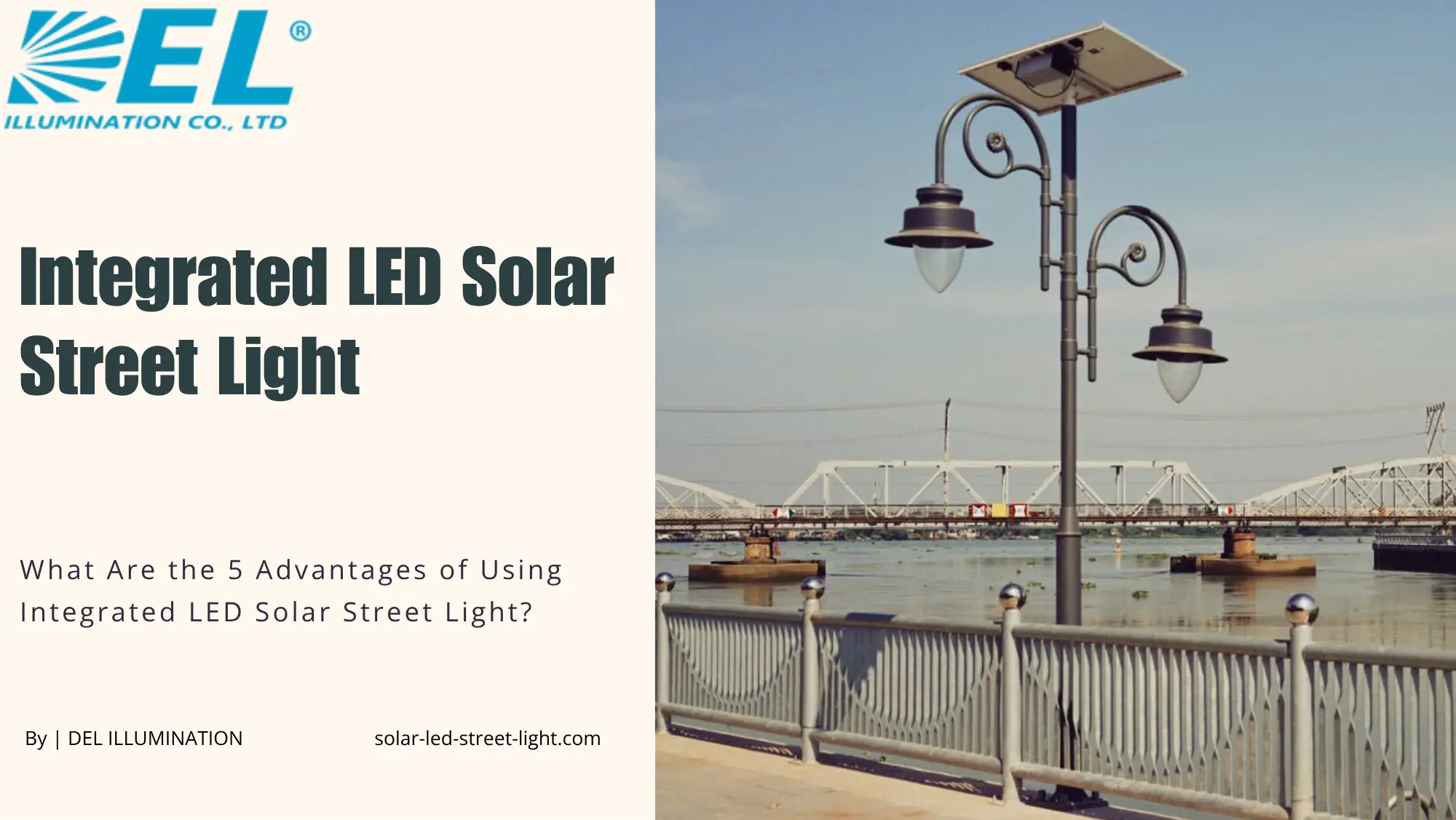
An integrated LED solar street light is an all in one solar street light system in which all the necessary equipment required for illuminating an area through the use of solar energy is provided in the system. Therefore, integrated LED solar street lights provide a turnkey solution for the lighting of an area, as they just have to be installed in order to illuminate the area. Similarly, these street lights also make use of solar energy in order to produce electricity, due to which they have an added advantage as compared to the conventional systems that require the use of electric power generated through non renewable fuel.
There are various other advantages of an integrated LED solar street light system as compared to conventional systems, which make it highly appropriate for use in a variety of situations. Therefore, in this article, we will discuss the most significant benefits of integrated LED solar street light in order to guide our readers and help them make informed decisions regarding their streetlight illumination requirements.
Benefits of Integrated LED Solar Street Light
Advantages of the integrated LED solar street light system are as below.
Initialization Mode
One of the most significant benefits of using an integrated LED solar street light system as compared to traditional high voltage sodium lamps is that they have an optimized initialization mode. In case of high voltage sodium lamps, the light has a preheating requirement before reaching its full illumination capacity, due to which a significant amount of energy is wasted without getting converted into any use. Similarly, conventional sodium lamps are not suitable to be controlled by intelligent control systems, due to which they do not provide the required level of convenience to the users.
On the other hand, an integrated LED solar street light has a much lower initialization mode, as the LEDs quickly reach their full light emitting capacity and illuminate the area in a short period of time. Similarly, it is convenient to control an integrated LED solar street light system with the help of intelligent controllers, due to which they provide greater convenience to the users and save energy.
Efficient Optical Performance
The optical performance of an integrated LED solar street light is much more efficient as compared to its competitors in the market, such as high voltage sodium lights or conventional incandescent bulbs. The optical performance of an integrated LED solar street light is efficient because in this case, the light source is solid state lighting, which provides greater efficiency output as compared to the conventional lights. Similarly, the LED lights in an integrated LED solar street light do not emit toxic substances such as mercury or ultraviolet radiation, which are usually emitted by conventional sources of light.
Another important index for measuring the optical performance of an integrated LED solar street light is its rendering index. It has been studied that street lights with a higher rendering index perform much better optically as compared to those which have a lower rendering index. The rendering index of an integrated LED solar street light is usually greater than 65, while the rendering index of a conventional street light such as high voltage sodium light is in the range of 20 to 30.
Therefore, it can easily be analyzed that the optical performance of an integrated LED solar street light would be much higher as compared to conventional lights. LEDs emit white light, while conventional street lights emit yellow light. Studies have shown that the rendering index of white light is much higher as compared to yellow lights, and it is safer for the environment. Similarly, white light provides greater visibility as compared to lights of other colors, which is why the anatomy of a solar LED street light luminaire matters so much to overall performance.
Environment Friendly
An integrated LED solar street light is much more environment friendly as compared to lights that utilize non renewable energy. Solar energy plays a significant role in reducing the carbon footprint of the earth and enables people to meet their requirements of electricity in a clean way. Similarly, the LEDs in an integrated LED solar street light have a much higher conversion of electricity to light as compared to conventional lights, due to which they are able to make better use of the energy.
Similarly, an integrated LED solar street light can be provided with a control mechanism with the help of which it will be able to regulate the use of power from the battery and keep it operating at the highest efficiency for a maximum period of time. In addition, the LEDs do not emit toxic materials into the environment, which are usually emitted by incandescent lights. The emission of ultraviolet light is also associated with conventional lights, while there is no such problem with an integrated LED solar street light. For a closer look at how solar components affect environmental impact overall, see our piece on solar cell street light ecological damage.
Effective Distribution of Light
An integrated LED solar street light has an optimized optical system, which has been designed in such a way that it ensures effectiveness in the distribution of light in the area that needs to be illuminated. In case the LED has a rectangular distribution, then it will cast a rectangular illumination on the area beneath it, while the dispersion of light in the atmosphere will be minimal. In this way, the maximum amount of light will be used for illuminating the area, and the effectiveness and usability of the integrated LED solar street light will be increased. This precise, luminous distribution of light is one of the reasons integrated fixtures continue to gain ground over legacy street lighting.
Reliability of the System
The reliability of an integrated LED solar street light system is much higher as compared to conventional systems. The integrated system has its own components, due to which it is capable of operating on its own without depending on any external source. Similarly, when there are power outages or other issues in external systems, the integrated system can keep on operating since it stores its power in the battery. The battery of an integrated LED solar street light is usually capable of supporting 3 to 5 rainy days, which means that it can provide continuous lighting for a longer period.
This reliability is closely tied to the all in one nature of the design. Because everything the fixture needs is built into a single unit, an all in one solar street light avoids many of the failure points that come with separately wired components, and the benefits that come from that kind of integrated construction extend well beyond just reliability.
Integrated LED Solar Street Light: Conclusion
The integrated LED solar street light system has various advantages, which make it highly appropriate for use for solar street light purposes as compared to conventional street lights. It has a positive impact on the environment as compared to conventional light, due to which it is highly recommended that integrated LED solar street lights be installed as a replacement for conventional lights.
Frequently Asked Questions
1. What makes an integrated LED solar street light different from a regular solar street light? An integrated LED solar street light combines the solar panel, battery, controller, and LED fixture into a single all in one unit, rather than having these components wired separately across the pole.
2. Does an integrated LED solar street light work during cloudy or rainy weather? Yes. A well designed integrated LED solar street light typically stores enough charge to keep operating through 3 to 5 rainy or cloudy days without direct sunlight.
3. Is an integrated LED solar street light more expensive than conventional street lighting? The upfront cost can be similar or slightly higher, but an integrated LED solar street light usually costs far less over its lifetime, since it eliminates grid electricity costs and reduces maintenance from separate wiring and components.
4. How long does an integrated LED solar street light typically last? Most integrated LED solar street light units last 8 to 10 years or more, with the battery generally being the component that needs replacing first.
5. What rendering index should I expect from an integrated LED solar street light? An integrated LED solar street light typically has a color rendering index above 65, compared to roughly 20 to 30 for conventional high voltage sodium lighting, meaning colors and surroundings appear more natural under the light.