
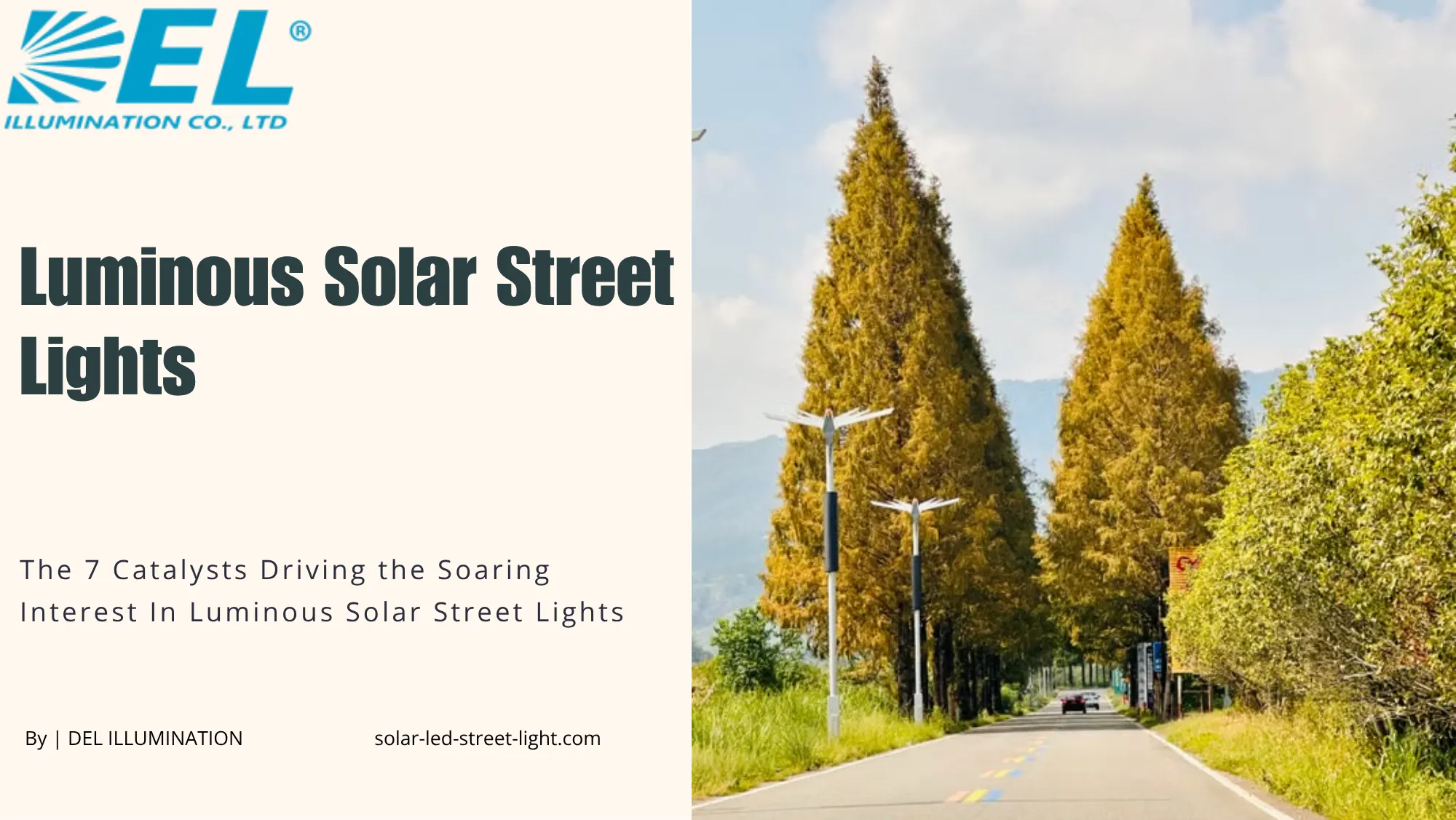
In recent years, there has been a remarkable surge in interest in luminous solar street lights, driven by a confluence of factors that underscore the growing global emphasis on sustainable and eco friendly solutions. This surge in interest is not merely a passing trend but rather a reflection of the evolving landscape in urban development and lighting technologies. The amalgamation of various compelling forces has propelled these solar powered illuminators to the forefront of urban planning. Let’s dive in and explore the multifaceted reasons behind this newfound fascination with luminous solar street lights.
Components of Luminous Solar Street Lights
Luminous solar street lights are composed of several key components:
- Solar panel: Usually mounted on top of the street light, solar panels capture sunlight and convert it into direct current (DC) electricity.
- Battery: They are equipped with rechargeable batteries to store the energy generated by the solar panels during the day.
- LED lights: These are used as the lighting source due to their energy efficiency and longevity.
- Controller: It manages the charging and discharging of the battery, ensuring optimal performance.
- Light pole: Serves as the structural support for the solar panel, LED lights, and other components.
- Motion sensors: Some street lights are equipped with these sensors to detect movement in the vicinity.
- Photocell: This can be included to automatically switch the luminous solar street lights on at dusk and off at dawn.
- Inverter: Used to convert DC electricity stored in the battery to alternating current (AC) for specific applications.
To understand how these parts fit together, see our guide to the anatomy of solar LED luminaires.
How Luminous Solar Street Lights Work
As sunlight strikes the solar panels during the day, the PV cells convert solar energy into direct current (DC) electricity. This generated electricity is then directed to a charge controller, which regulates the voltage and current to optimize the charging of the battery. The battery, often a rechargeable lithium ion or lead acid battery, serves as an energy storage device, storing the excess electricity produced during the day for later use during the night or in low light conditions. Our overview of how solar street lights work explains this process in more depth.
As dusk falls and ambient light decreases, the intelligent control system of the luminous solar street lights activates the light source, typically Light Emitting Diodes (LEDs). The stored energy in the battery powers the LEDs to provide efficient and bright illumination throughout the night.
The Reasons Behind the Surge in Luminous Solar Street Lights
Why the sudden shift in interest? Here are the seven catalysts driving demand for luminous solar street lights.
i. Energy Efficiency
The surge in popularity can be attributed to the efficiency gains associated with harnessing the sun’s energy. Luminous solar street lights capitalize on photovoltaic technology to capture sunlight and convert it into electrical energy, ensuring a sustainable and environmentally friendly source of power. This not only reduces reliance on non renewable energy but also contributes to a significant decrease in electricity costs over the long term.
Furthermore, the active integration of energy efficient LED technology enhances the overall efficiency of luminous solar street lights. LED lights consume significantly less energy compared to traditional lighting technologies, extending the operational lifespan of solar street lights and reducing maintenance costs. Our comparison of HPS lights versus LEDs shows just how large this efficiency gap is.
ii. Cost Savings
One key factor driving this increased interest is the substantial reduction in operational costs. Luminous solar street lights operate independently of the electricity grid, meaning there are no ongoing expenses related to grid power consumption. This autonomy translates into significant savings, as they are no longer burdened by the monthly electricity bills traditionally associated with conventional street lighting.
Installation costs also play a pivotal role in the cost effectiveness of solar street lights. Traditional street lights often require extensive infrastructure for electrical connections, including trenching and wiring. In contrast, luminous solar street lights are easier to install and do not require complex wiring or connection to the grid. This streamlined installation process not only reduces upfront costs but also minimizes the need for ongoing maintenance and repairs. Several factors affect solar street light price, so comparing total value is worthwhile.
iii. Environmentally Friendly
As we strive to reduce our carbon footprint, the adoption of luminous solar street lights becomes a tangible and impactful choice. Unlike traditional street lights reliant on electricity generated from non renewable sources, solar street lights operate independently, drawing energy from the sun a perpetual and renewable resource. This not only curtails dependence on conventional power grids but also diminishes the associated greenhouse gas emissions, contributing to a cleaner and healthier environment.
We should embrace the potential of luminous solar street lights to not only brighten urban spaces but also to do so with a minimal ecological footprint. The integration of sustainable technologies, such as solar panels, energy efficient LED bulbs, and smart lighting controls, further underscores the commitment to environmental stewardship.
iv. Low Maintenance
The absence of complex wiring, dependence on conventional energy sources, and a high IP rating translates to fewer components prone to wear and tear. Consequently, the overall maintenance costs are substantially diminished. Moreover, the longevity of LED bulbs contributes to the low maintenance appeal of luminous solar street lights. LED lights have an impressive lifespan, requiring infrequent replacements compared to traditional lighting technologies. This longevity not only reduces the hassle of constant monitoring but also minimizes the associated expenses. Choosing a fixture with a strong IP65 weatherproof rating further reduces maintenance needs.
The simplicity of the design also plays a pivotal role. Luminous solar street lights are engineered with user friendly features, making them easy to install and maintain. This simplicity not only enhances their appeal but also empowers you to adopt and manage these lighting systems with ease.
v. Off Grid Capability
In off grid areas, where establishing a reliable power supply is often challenging, luminous solar street lights offer a viable and sustainable solution. Unlike traditional street lights that rely on the conventional power grid, these solar powered luminaires operate independently, drawing energy directly from the sun. This self sufficiency not only ensures uninterrupted illumination but also eliminates the need for extensive infrastructure, making them an ideal choice for remote or off grid locations. This makes them especially valuable for rural communities without grid access.
vi. Public Awareness
As public awareness regarding environmental issues, such as climate change and energy consumption, continues to rise, people are seeking sustainable alternatives in various aspects of their lives. Luminous solar street lights have garnered attention as an eco friendly and energy efficient lighting solution that significantly reduces reliance on conventional energy sources.
Communities are showing a keen interest in supporting projects that enhance environmental sustainability, and luminous solar street lights have become a visible symbol of such efforts. The public’s growing interest in clean energy solutions has prompted local authorities and businesses to invest in solar powered infrastructure.
vii. Government Initiatives and Incentives
One significant factor driving this interest is the various financial incentives offered by governments to encourage the installation of solar powered street lighting systems. These incentives often come in the form of subsidies, tax credits, and grants, making the initial investment more affordable for local authorities and communities. As a result, the cost effectiveness of luminous solar street lights becomes apparent, attracting widespread attention and support.
Moreover, government initiatives focused on energy conservation and environmental sustainability have created a conducive regulatory environment for the deployment of solar powered solutions. Stringent regulations and policies aimed at reducing carbon emissions and promoting renewable energy sources further amplify the attractiveness of luminous solar street lights as a green alternative.
Europe, for example, has been at the forefront of promoting Environmental, Social, and Governance (ESG) principles. The emphasis on sustainability and corporate responsibility has influenced both public and private sectors to prioritize eco friendly initiatives. Solar street lights not only contribute to reducing carbon footprints but also align with the ESG goals set by many European countries. You can read more about their role in global economic growth.
Conclusion
The surging fascination with luminous solar street lights is propelled by a dynamic interplay of several catalysts energy efficiency, cost savings, environmental benefits, low maintenance, off grid capability, public awareness, and government incentives. These factors collectively contribute to the escalating interest in harnessing the potential of solar powered lighting solutions, marking a significant shift toward sustainable and efficient urban illumination. Do you need a luminous solar street light? Visit solar led street light.com or contact us for expert advice and a customised quote.
Frequently Asked Questions
1. What are luminous solar street lights? Luminous solar street lights are self contained lighting systems that use solar panels to capture sunlight, store it in a rechargeable battery, and power energy efficient LED lights at night. They operate independently of the electricity grid and often include smart features like motion sensors and photocells. This makes them a sustainable, low cost alternative to conventional grid powered street lighting.
2. How long do luminous solar street lights last? The LED lights in luminous solar street lights typically last around 50,000 hours, while the solar panel can serve for 20 to 25 years. The battery is usually the first component to need replacement, generally every 5 to 10 years depending on type and climate. Good maintenance helps each part reach the upper end of its lifespan.
3. Do luminous solar street lights work on cloudy days? Yes. Luminous solar street lights store excess energy in their batteries during sunny periods, allowing them to operate through cloudy days and low light conditions. Quality systems are sized with several days of battery autonomy for exactly this reason. In very cloudy regions, choosing a larger panel and battery ensures reliable performance.
4. Are luminous solar street lights cheaper than traditional street lights? While the upfront cost can be comparable, luminous solar street lights are far cheaper over their lifetime because they have no electricity bills and require no costly trenching or grid wiring. Lower maintenance and long lasting LEDs further reduce running costs. Over a 10 year period, the total cost of ownership is usually significantly lower.
5. Where are luminous solar street lights most useful? Luminous solar street lights are ideal for off grid and remote areas where extending the power grid is expensive or impractical, as well as for parks, rural roads, residential streets, and any project with sustainability goals. Their grid independence makes them especially valuable where reliable mains power is unavailable. They suit both urban and rural applications.