
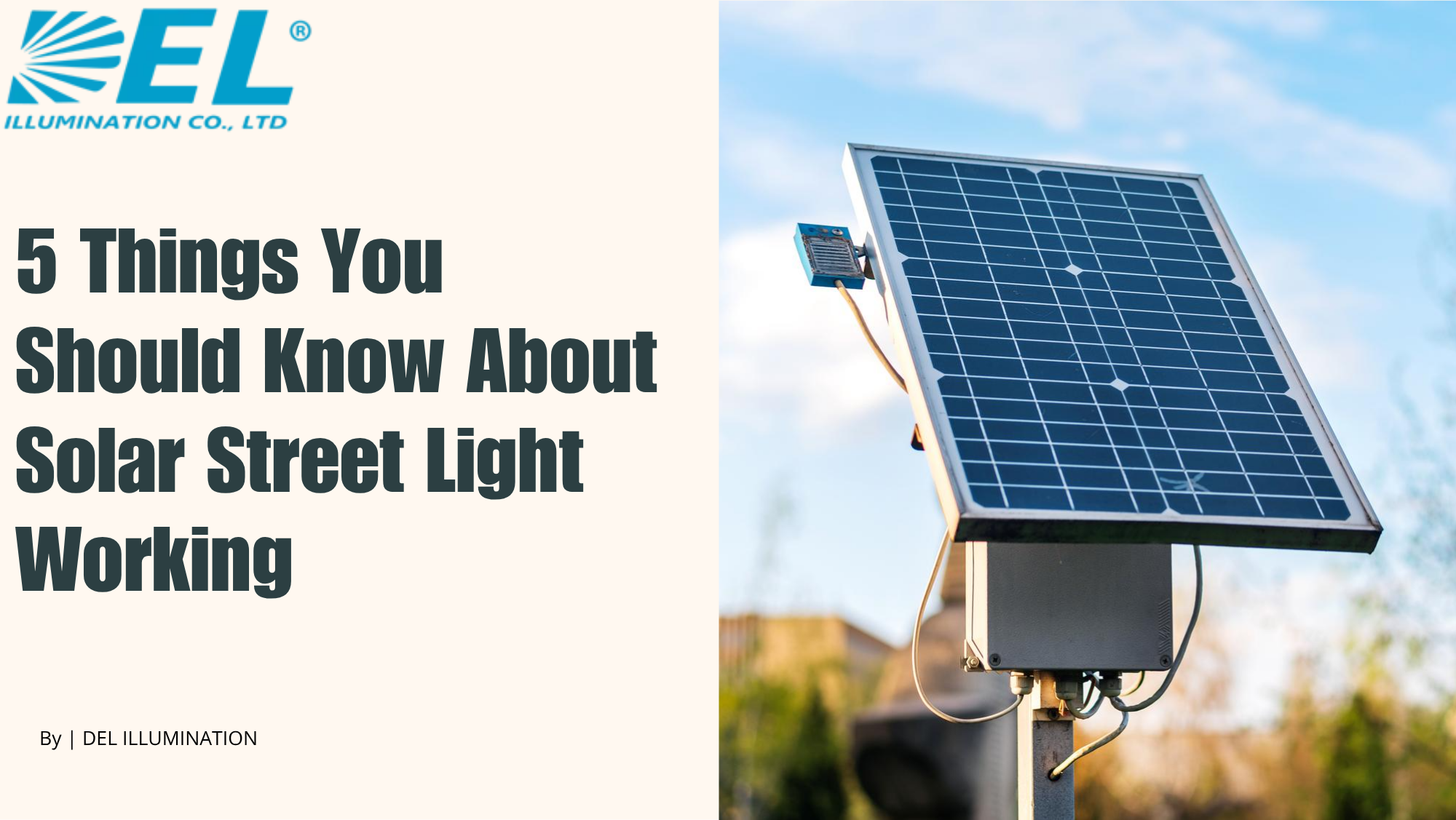
Today, the use of solar energy has increased across the whole world. It incorporates the tapping of sunlight, together with heat radiation, through the deployment of solar heaters, photovoltaic systems, solar heating systems, and several other rewarding technologies. Solar energy is not only environmentally friendly but also dependable, renewable, and durable. It can be used in various applications, including cooking, charging mobile phones, drying, producing electricity, and of course, Solar Street Light installations. As more individuals explore and refine the possibilities of solar energy for producing electricity, an ingenious strategy has emerged for making the most of that energy, and that strategy is solar street lighting.
Solar Street Light working incorporates the use of tall solar poles, which must be erected along the street. You can read more in our full guide to how solar street lights work for a deeper technical breakdown. These street lights work with photovoltaic panels mounted at the top of the pole. Photovoltaic cells are responsible for charging solar batteries, which power the fixture at night. The batteries can also be replaced without much difficulty when needed. Below are five things that make this system more effective, followed by a look at why more property owners and municipalities are choosing this technology.
Rechargeable Batteries
For effective Solar Street Light working, powerful and rechargeable batteries are essential. In these fixtures, batteries are used to store solar energy captured during the day. They ought to be rechargeable as well as replaceable, and once a battery has completed its life cycle, it must be replaced to keep the fixture running reliably. For these batteries to work properly, the solar panels need to be kept free of grease and dust, since these unwanted particles can block sunlight from being absorbed efficiently. Regular cleaning is a small task that makes a real difference in how long the system performs at full capacity.
Photovoltaic Cells
Photovoltaic cells are meant for trapping sunlight and transforming it into electricity. In some designs, the solar array is built directly into the light fixture, while in others the array is attached externally to the solar pole. Before installing a system, it is useful to know the exact number of cells in the array and confirm that the array can draw enough power to run the light reliably through the night. Choosing the right cell configuration for your climate and sunlight hours plays a major role in overall performance.
Charge Controller
This device is meant for keeping a tab on the light levels in the area, making it easier for the light emitting diode to be powered on and off automatically. The most significant role of the charge controller is preventing the battery inside this system from getting overcharged, which would otherwise shorten its lifespan considerably. A quality controller also helps regulate the discharge cycle, ensuring the light stays on through the full night even during shorter winter days.
Light Emitting Diode and Light Pole
The pole upon which the street light is mounted ought to be strong enough to withstand its weight. For effective operation, poles should also be designed so they remain intact even during strong winds or storms. The LED fixture itself needs to be rated for outdoor use, with proper heat dissipation so the diodes do not degrade prematurely under continuous nighttime operation.
The Expanse of the Area
Before installing a Solar Street Light, it is important to consider the area’s expanse as well as the light intensity needed for proper coverage. Improper lighting often results when solar street lights are placed in areas that exceed their illuminating capacity, leaving dark patches between poles. Matching pole spacing and lumen output to the width of the road or path helps avoid this issue entirely.
Apart from understanding how Solar Street Light systems work, it is also worth knowing why so many people choose to invest in them over traditional grid powered alternatives. Here are some of the strongest reasons.
They Need Low Maintenance
After installation, this system rarely requires future technical intervention. The money spent on installation becomes a durable, long lasting solution. Another reason this system needs low maintenance is that components are not replaced frequently, and scheduled maintenance visits are rarely necessary. That said, choosing a durable, well built system from the start matters, since cheaper components tend to fail sooner and increase long term costs.
Efficient in Emergencies
During emergencies such as natural disasters or grid power outages, a Solar Street Light can remain effective even in difficult and extreme conditions, since it operates independently of the main power grid. This makes solar lighting a dependable choice for areas prone to storms or unreliable electricity supply.
They Use a Renewable Source of Energy
The energy used to power a Solar Street Light cannot run out. Unlike oil and coal, solar energy is renewable, so there is no need to worry about it being exhausted over time. It is also among the cheapest forms of energy available once the initial installation cost is covered, making this a smart long term investment for both municipalities and private property owners.
Solar Street Light Conclusion
Solar Street Light systems are recommended for many reasons. This technology can be highly effective when the system includes rechargeable batteries, quality photovoltaic cells, a reliable charge controller, and installation in an appropriately sized area. A good number of people also choose solar street lights because they are not associated with frequent maintenance schedules. Once installed, a well built system can run for years before any major components need replacing. Our company, DEL Illumination, offers clean, affordable, and renewable lighting solutions that are considered among the best alternatives, especially in areas with unreliable power supply. You can explore our All in One and All in Two product ranges to find a Solar Street Light system suited to your project.
Frequently Asked Questions
1. How long does a Solar Street Light last before needing repairs?
A well built Solar Street Light can run for many years with minimal issues, though batteries typically need replacement every five to ten years depending on the type used.
2. Can a Solar Street Light work during cloudy or rainy seasons?
Yes, a properly sized Solar Street Light stores enough energy in its battery to power through several cloudy days, though extended poor weather may reduce brightness slightly.
3. What size area can one Solar Street Light cover?
Coverage depends on pole height, lumen output, and spacing, so it is important to match the Solar Street Light specification to the width of the road or path being illuminated.
4. Do I need an electrician to install a Solar Street Light?
Basic installation is straightforward, but professional installation is recommended to ensure the pole, panel angle, and wiring are set up correctly for long term performance.
5. Is a Solar Street Light more cost effective than a grid powered light?
Yes, while the upfront cost is higher, a Solar Street Light eliminates ongoing electricity bills and requires very little maintenance, making it more cost effective over its lifespan.