
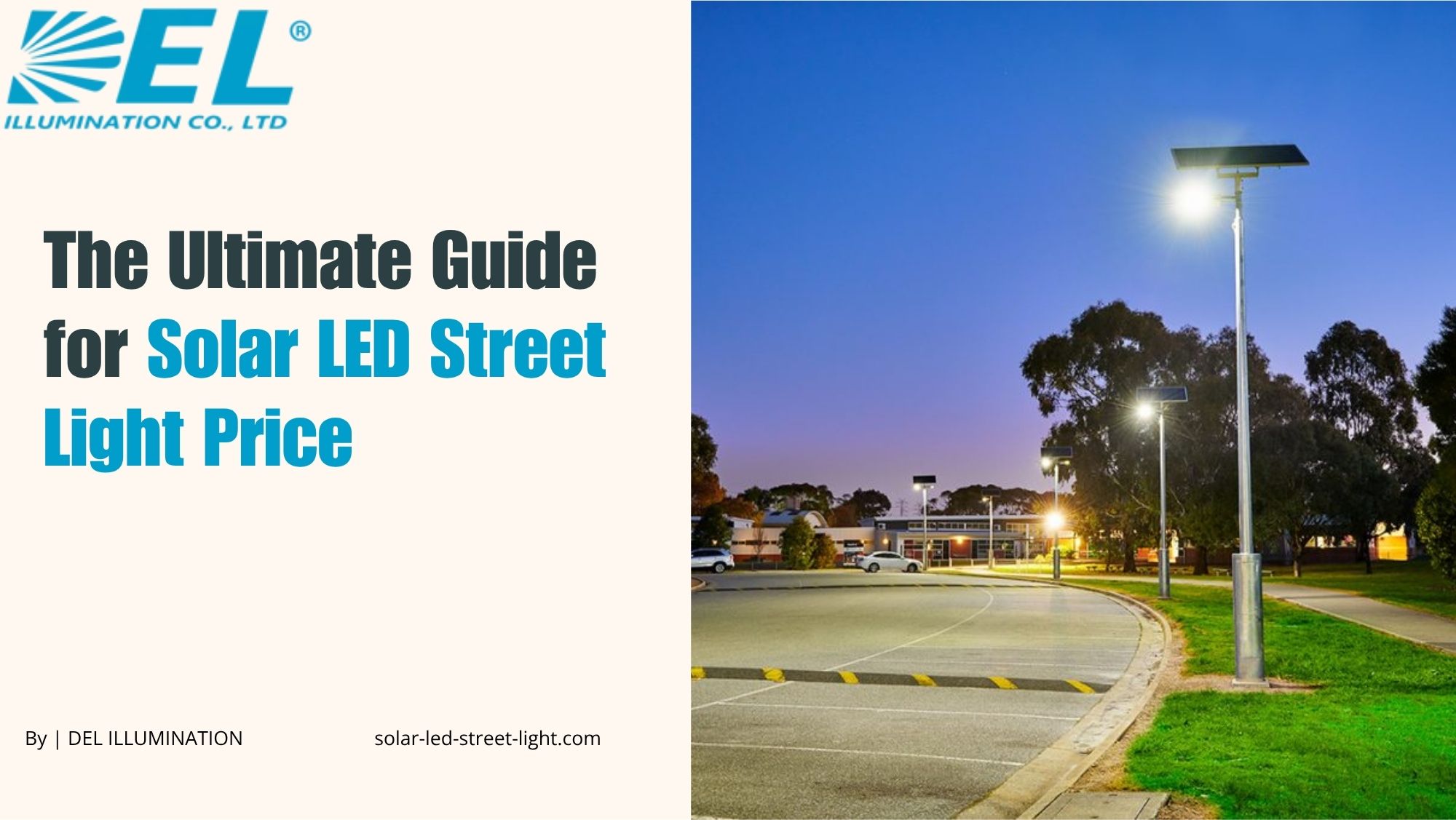
The modern urban and rural landscape has been dramatically transformed by the installation of street lights. They have improved visibility, security and business hours across these areas. In the past, installing street lights was a costly investment, especially in places with no electricity, so how do you find a suitable solar LED street light price today? This guide walks you through it. If you want to compare real fixtures as you read, browse our All in One Solar Street Lights range.
Advances in solar and LED technology have brought real relief, making it easier and cheaper to install street lights. Modern street lights use LED bulbs powered by solar energy through photovoltaic panels. The energy harvested from those panels is stored in a battery and used to run the solar LED street lights at night.
With the growing need to light streets, solar street lights have become popular on roadways, highways, residential roads, playgrounds, commercial roads, car parks, gardens, courtyards, walkways, private paths and parking lots. This demand is driven by the fact that solar LED street lights remove electricity bills entirely, leaving only maintenance to think about. According to the International Energy Agency, the cost of solar photovoltaic technology has fallen sharply over the years, which is a major reason the solar LED street light price has become so competitive.
Although solar LED street lights are now widespread, many buyers still spend thousands of dollars on installation without understanding what drives the cost. In this guide you will learn the main factors that determine the solar LED street light price. They are technology, design, electric capacity and light coverage, and installation.
Solar LED Street Light Technology
Technology in solar LED street lights is usually judged by sensors and programmable dimmer functions. Beyond motion sensors, technology also covers how well the fixture is protected from foreign bodies and moisture.
The IP (Ingress Protection) rating makes it easy to see how well a fixture is sealed against solid objects (the first number) and moisture (the second number). For example, a fixture with an IP55 rating offers partial protection against harmful dust and against low pressure jets of water from any direction. Most quality products range from IP55 upward, and the solar LED street light price for ratings above IP65 is noticeably higher. The specific technology in any solar LED street light tends to be unique to each brand.
Solar LED Street Light Design
The design of a solar LED street light takes into account the material, storage capacity and type of assembly. The solar LED street light price varies with the value of the materials used. Common materials include aluminium, chrome, ceramic, iron and PVC.
In terms of assembly, the question is whether the unit is semi integrated or fully integrated, the classic all in one design. The number of solar panels affects the solar LED street light price, since more panels mean a higher cost, driven largely by storage capacity and battery size. The battery itself also has a significant effect on price.
Compact inbuilt lithium ion batteries are sophisticated to design and add to the cost, and the price rises further as storage capacity increases. Design ultimately decides whether a product suits industrial, commercial or home use, and it shapes a large part of the solar LED street light price. Our Solar Lighting Project Checklist helps you match the right design to your site.
Solar LED Street Light Electric Capacity and Light Coverage
The wattage of the LED bulb has a direct effect on pricing. The higher the wattage, the higher the solar LED street light price. Street light wattage often ranges from 9W to 300W, depending on how much light output an area needs.
Lighting coverage is also measured by the lumen rating, the brightness of the bulb. A higher lumen rating means a brighter light and more wattage used, so the lumen rating has an indirect effect on the solar LED street light price. The bulb can be further customised by colour temperature, the colour of the light source. Colour temperatures suitable for street lighting range from 3000K to 6500K, giving options such as soft white, cool white, pure white, warm white and high bright white.
Solar LED Street Light Installation
Installation as a determinant of the solar LED street light price takes into account the need for a pole of a specific height and material. The mounting depends on the design of the lighting assembly. In some products the solar panels sit on top of the structure, in others on the pole, while fully integrated units combine everything in one fixture.
Installation affects the price mainly through the material and dimensional specifications of the poles. The solar and lighting assembly must be mounted at a considerable height to illuminate the intended coverage area, and taller, sturdier poles cost more.
Solar LED Street Light Price: Conclusion
To be on the safe side, first define your area of light coverage, which helps determine the lumens or wattage rating your application needs. Once you have settled the lighting qualities of your fixture, you can move on to the design. The technology side is optional and depends heavily on your application and local regulations, though motion, light control and time control sensors all improve efficiency, which translates into lower running costs.
The solar LED street light price can be tailored to fit your budget, but only if you pay close attention to the four aspects covered in this guide. Well known brands cost a little more, yet their reputation ties them to reliable long term solutions, so the extra outlay is usually worthwhile. If you have any requirement for solar street lights, please feel free to reach out through our contact page.
Frequently Asked Questions
What four factors affect the solar LED street light price the most?
Technology, design, electric capacity with light coverage, and installation. Together these set the final cost, so understanding each helps you build a fixture that suits both your site and your budget.
Does a higher IP rating increase the price?
Yes. Better sealing against dust and water costs more, so a fixture rated above IP65 generally carries a higher solar LED street light price than an IP55 unit, but it lasts longer in harsh conditions.
How does wattage affect the cost?
Wattage has a direct effect. Street lights typically range from 9W to 300W, and the higher the wattage and lumen output needed to light an area, the higher the price of the fixture.
Why do integrated all in one lights cost differently?
Assembly type, panel count and battery size all shift the price. Fully integrated all in one units bundle the panel, battery and fixture together, and larger storage capacity raises the cost.
Are premium brands worth the higher price?
Often yes. Established brands price higher but back it with reliability and long term support, which lowers repair and replacement costs over the life of the system.