
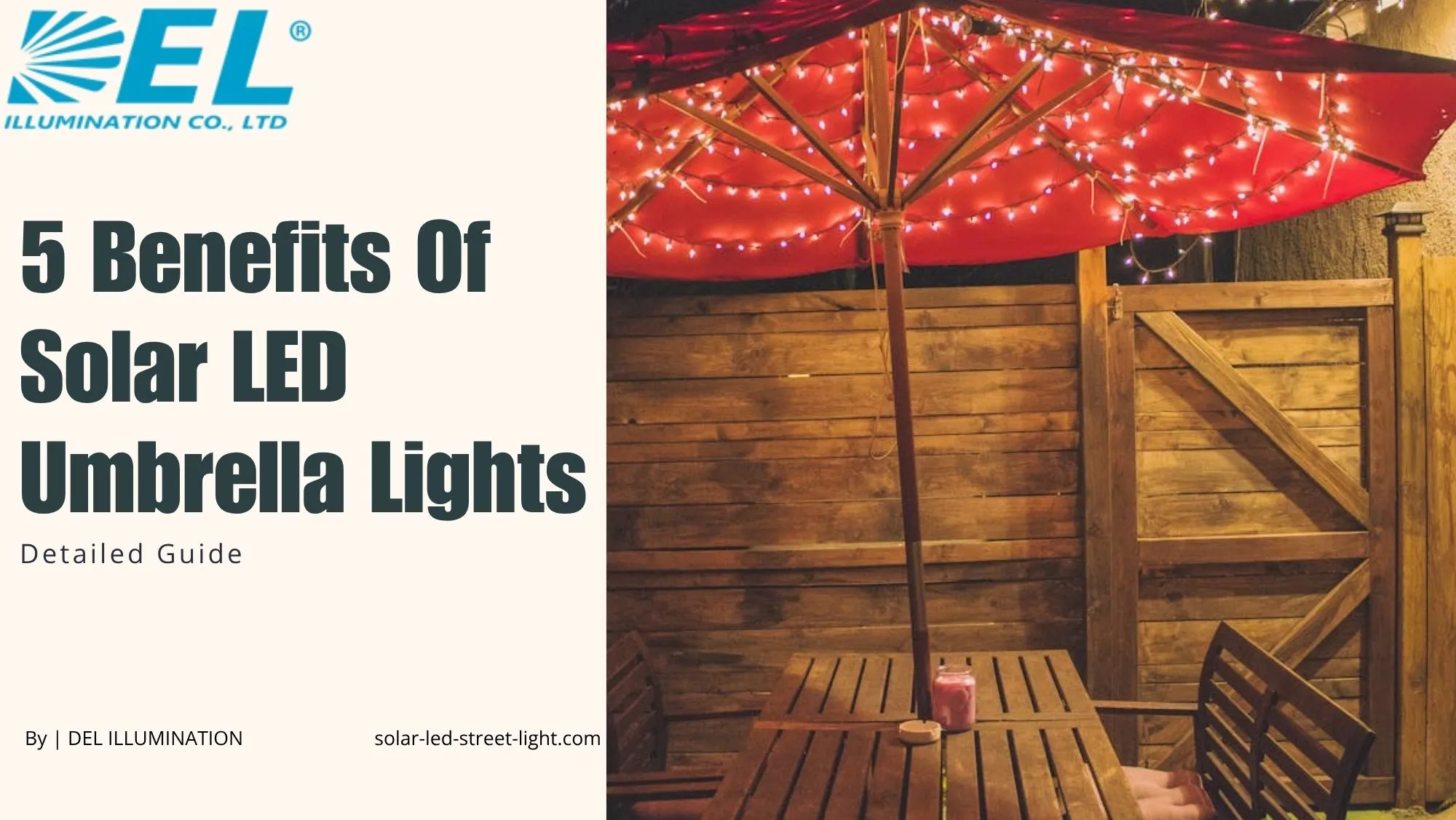
Since indoor-outdoor living became a lifestyle trend, solar LED umbrella lights have emerged as the perfect addition to any outdoor space. These innovative lights can illuminate your patio, deck, or poolside effectively while saving you money and protecting the environment. If you’re wondering what the benefits of solar LED umbrella lights are – or what features to look for before purchasing – you’ve come to the right place. We’ll cover everything in this guide. Discover why the use of solar LED umbrella lights is growing rapidly across homes and commercial spaces worldwide.

What Are Solar LED Umbrella Lights?
Solar LED umbrella lights are lighting features designed to be attached to the ribs or canopy of an outdoor umbrella. They consist of LED bulbs, solar panels, and rechargeable batteries. The solar panels absorb sunlight and convert it into electrical energy. The batteries act as a reservoir for the system, storing that energy to power the LEDs once the sun goes down.
Much like the anatomy of solar LED luminaires used in street lighting, these umbrella lights rely on the same core photovoltaic principle – just scaled down for personal outdoor use.
How to Install Solar LED Umbrella Lights
Integrating solar LED umbrella lights into your outdoor setup is typically a straightforward process. Here is a general step-by-step guideline:
- Choose the right lights: Ensure you choose LED bulbs that are compatible with the design and size of your umbrella. Also, consider the wattage of the bulbs and required illumination levels.
- Attach the lights: Most solar LED umbrella lights come with straps or clips for easy attachment. Follow the manufacturer’s guidelines to secure the lighting fixtures properly.
- Position the solar panel: Place the solar panel in an open space above the canopy. Ensure the panel is unobstructed for maximum sunlight exposure throughout the day.
- Connect the battery: Ensure the solar panel and LEDs are connected to the battery pack, which should also be secured to the umbrella frame. A solid connection ensures your system works reliably.
- Test the lights: Once everything is connected, turn on the lights. If they illuminate, your connections are solid. If not, recheck all connections. Take time to adjust the brightness and explore the different lighting modes available.
The 5 Benefits of Solar LED Umbrella Lights
-
Energy Efficiency
Solar LED umbrella lights use highly efficient components in both energy generation and consumption. They use photovoltaic panels to capture and convert sunlight into electrical energy – the same reliable technology used in large-scale solar energy street light systems. These panels are very effective at capturing and dispersing the energy they absorb.
The light-emitting diode (LED) bulbs used in solar LED umbrella lights are also highly energy-efficient. LEDs consume significantly less power compared to fluorescent or incandescent bulbs. They convert a higher percentage of electrical energy into visible light, minimizing energy wastage through heat generation.
Solar LED umbrella lights typically use lithium-ion battery types, which are efficient in storing and distributing stored energy. Li-ion batteries have a high energy density, meaning they can store more power in a compact package. They also have a low self-discharge rate, allowing them to retain their charge for extended periods – reducing the need for frequent recharging.
-
Cost Savings
Since solar LED umbrella lights run on solar power, they eliminate the need for electrical connectivity and reduce hefty electricity bills. Outdoor lights are often left on all night; with a traditional light source, this can lead to outrageous energy costs. With solar LED umbrella lights, the sun does the work for free.
While the initial purchasing price may be higher than conventional lights, the long-term reliability of solar LED umbrella lights more than offsets the cost. They require minimal maintenance – quality components mean fewer replacements, no complex wiring, and no need for specialized technicians. This mirrors the cost benefits observed in solar street lighting for construction projects.
LED bulbs also have a significantly longer lifespan than traditional bulbs, saving you from frequent bulb purchases. Moreover, solar LED umbrella lights can be used across various outdoor settings – patios, gardens, and poolside areas – providing both illumination and ambiance without increasing your energy costs.
-
Easy Installation
The design of solar LED umbrella lights makes installation a breeze. There are no complex wiring or electrical connections that typically require special equipment or licensed electricians. You can install the lights yourself by following the manufacturer’s guidelines.
Most solar LED umbrella lights feature a clamp or clip-on design that allows you to attach them to the umbrella’s frame quickly and easily. This eliminates the need to drill holes or permanently modify the umbrella structure. The adjustable arms found on quality solar LED umbrella lights allow them to fit a wide variety of umbrella styles and sizes.
Many models include built-in solar panels and light sensors that automatically switch the lights on at dusk and off at dawn – eliminating the need for manual switching. This plug-and-play philosophy is similar to the ease of setting up park solar lights, making the whole process accessible even to first-time users.
-
Versatility
Solar LED umbrella lights are remarkably versatile. They are not just limited to patios – you can install them poolside, in the garden, or on a deck. Most solar LED umbrella lights are portable, meaning you can move them to different locations within your outdoor space as needed. This portability allows you to adapt your lighting according to the occasion or your personal preferences.
Additionally, many solar LED umbrella lights come with multiple lighting settings, such as steady light, flashing, or dimming options. Experimenting with these modes lets you create different ambiances for everything from intimate dinners to lively outdoor gatherings. Quality models with weather-resistant designs let you use the lights year-round, just like IP65-rated solar street lights that perform reliably in all weather conditions.
-
Weather Resistance
Premium solar LED umbrella lights feature innovative construction that improves their durability and resistance to changing weather conditions. These lights often use waterproof materials such as durable plastic or reinforced metal housing that prevents water from seeping into sensitive electronic parts.
UV resistance is another critical factor. If a component is not UV-resistant, it can fade or discolor over time. Quality solar LED umbrella lights include UV-resistant insulating films on their solar panels to prevent discoloration and maintain efficiency. Reinforced frames and robust mounting mechanisms ensure that the lights remain securely attached to the umbrella even in windy weather – a durability standard similar to what’s expected of solar light pole systems designed for outdoor use.
To get the most from your solar LED umbrella lights over time, consider following the same principles outlined in our guide on maintaining solar compound lighting. Periodic cleaning of the solar panel and inspection of the battery can extend the lifespan considerably.
What to Look for When Buying Solar LED Umbrella Lights
Before purchasing solar LED umbrella lights, it pays to evaluate a few key factors:
- Panel efficiency: A higher-efficiency panel means more charge even on cloudy days. Look for monocrystalline panels where possible.
- Battery capacity: Larger capacity means longer run time through the night. Li-ion is the preferred chemistry for solar LED umbrella lights.
- IP rating: An IP65 or higher rating ensures the lights can handle rain, dust, and humidity – similar to the standards used in the best solar street lights.
- Lighting modes: Multiple modes give you flexibility for different outdoor occasions.
- Compatibility: Ensure the clips and adjustable arms fit your specific umbrella model.
If you’re interested in how solar light technology is evolving beyond residential use, our articles on innovative LED solar street light solutions and solar light remote control technology offer fascinating reading.
Conclusion
Solar LED umbrella lights present a sustainable, cost-effective, and stylish lighting solution for enjoying outdoor spaces well into the night. With energy efficiency, long-term cost savings, easy installation, versatile use, and robust weather resistance, solar LED umbrella lights are an investment worth making. Whether you’re upgrading your patio, poolside, or garden, these lights deliver on every front. Do you have any questions? Contact us – we’re happy to help.
Frequently Asked Questions (FAQs)
Q1. How long do solar LED umbrella lights stay on at night?
Most solar LED umbrella lights can run for 6 to 10 hours on a full charge, depending on the battery capacity and the lighting mode selected. Dim or flashing modes consume less power and extend the run time. After a full day of sun exposure, a quality set should comfortably illuminate your outdoor space throughout the evening.
Q2. Do solar LED umbrella lights work on cloudy days?
Yes – solar LED umbrella lights can still charge on overcast days, though at a reduced rate compared to full sunlight. Higher-efficiency panels (such as monocrystalline) perform better under low-light conditions. It is advisable to position the solar panel where it receives the most available daylight to maximize charging even when skies are cloudy.
Q3. Are solar LED umbrella lights waterproof?
Quality solar LED umbrella lights are designed with waterproof or water-resistant housing to protect internal components from rain and moisture. Always check the IP (Ingress Protection) rating before purchasing – an IP44 rating protects against splashing water, while IP65 and above offers full rain protection. For year-round outdoor use, opt for lights rated IP65 or higher.
Q4. Can I leave solar LED umbrella lights outside all year?
Most solar LED umbrella lights are built to withstand outdoor conditions including wind, rain, and temperature fluctuations. However, in regions with harsh winters or extended periods of low sunlight, it’s advisable to store the lights indoors when not in use to preserve battery health. Regular maintenance – such as cleaning the solar panel – also helps prolong their lifespan throughout the year.
Q5. How do I fix solar LED umbrella lights that are not working?
If your solar LED umbrella lights stop functioning, start by checking the connections between the solar panel, battery, and LEDs. Clean the solar panel surface, as dust or debris can block sunlight absorption. Ensure the panel is positioned in direct sunlight during the day. If the battery is old, it may need replacement. For more detailed troubleshooting, refer to our guide on 5 ways to fix solar lights that are not working.