
A solar street light project fails to meet its guaranteed output by 12%. Without a properly structured liquidated damages clause, that shortfall becomes a costly legal battle rather than a contractually resolved financial adjustment. For procurement officers and contractors working on World Bank-financed solar street light deployments, this scenario is far from hypothetical ,it is a risk that poorly adapted FIDIC EPC contracts create every day.
The FIDIC Silver Book (formally the Conditions of Contract for EPC/Turnkey Projects, 2nd Edition 2017) has become the backbone of international infrastructure procurement, with the World Bank renewing its formal five-year agreement with FIDIC to use the Silver Book and associated contract documents across its borrower projects. Yet applying this framework directly to solar street light installations ,which behave very differently from power plants or civil infrastructure ,requires deliberate and well-informed adaptation.
This blog explores exactly how procurement teams, EPC contractors, and city planners must adapt FIDIC EPC contract solar street light to protect their World Bank-financed solar street light projects. Specifically, it covers how to structure performance security, calibrate liquidated damages, and ensure the contract language reflects the real-world performance characteristics of high-quality solar LED systems.
Why the FIDIC Silver Book Needs Adaptation for Solar Street Light Projects
The FIDIC Silver Book was designed primarily with large-scale industrial and infrastructure projects in mind ,power stations, pipelines, and major civil works where the contractor assumes near-total risk over design, procurement, and construction. Solar street light projects differ from these traditional applications in several structurally important ways.
First, solar street light performance is highly dependent on environmental variables ,solar irradiation levels, ambient temperatures, dust accumulation, and grid-independent battery cycling that shift significantly from one deployment region to another. A project installed across 500 locations in a tropical climate behaves differently from an identical technical specification deployed in an arid highland region.
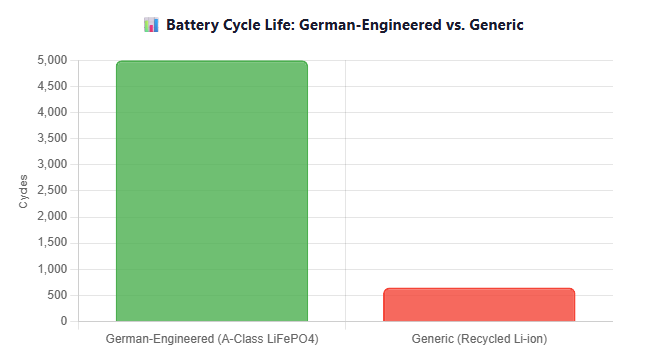
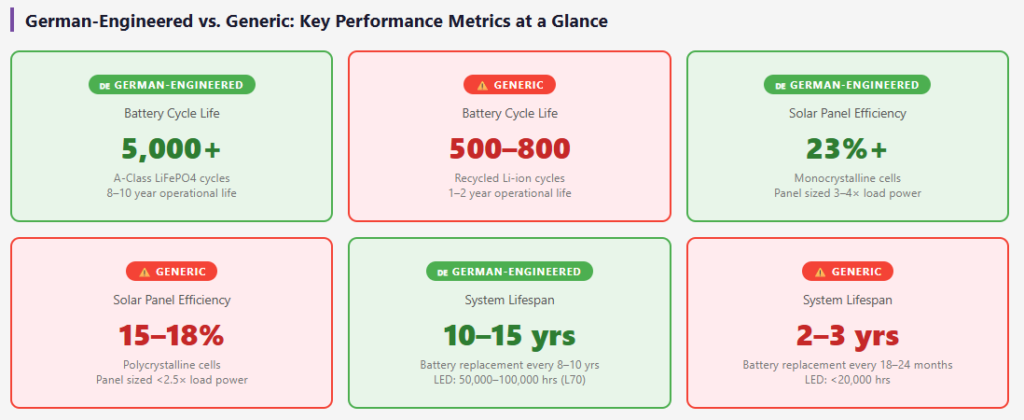
Second, the performance metrics for solar street lighting are granular and component-driven. The LED luminaire must maintain lumen output above the L70 threshold (the point at which the light drops to 70% of its original brightness) across a rated lifespan of 50,000 to 100,000 hours. The LiFePO4 battery must sustain charge cycles across a minimum operational life of 8 to 10 years and 5,000 or more full charge-discharge cycles. These are measurable, testable specifications ,but only if the contract explicitly defines them.
Third, World Bank procurement frameworks require alignment with its Standard Bidding Documents and Environmental and Social (E&S) risk management provisions, which introduce additional compliance layers not reflected in standard FIDIC general conditions. When borrower countries adapt the Silver Book through Particular Conditions, they must simultaneously satisfy World Bank procurement rules and maintain the technical benchmarks required for high-performance solar street lighting.
The practical consequence: a generic, unamended Silver Book creates gaps in risk allocation that disadvantage both the employer and the contractor when solar street light performance falls short of expectations.
Structuring Performance Security for Solar Street Light Contracts
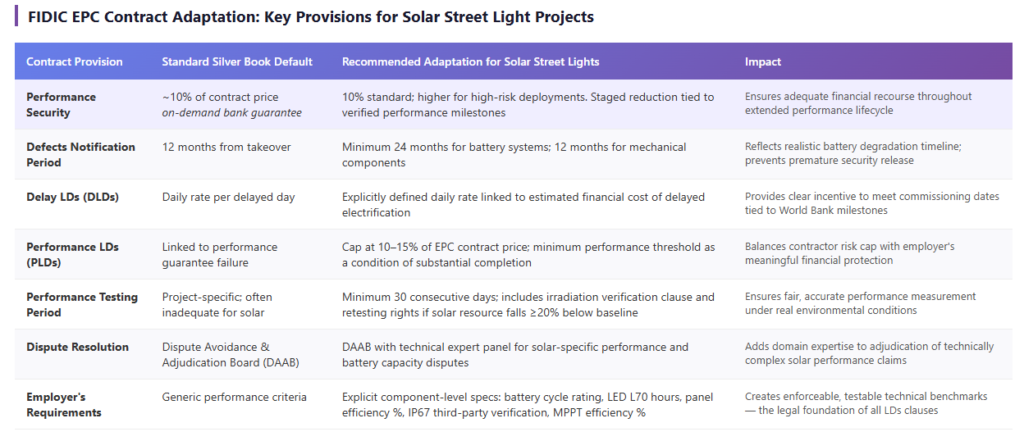
Performance security ,the financial guarantee a contractor provides to assure the employer of its ability and intent to fulfill contractual obligations ,is one of the most negotiated provisions in any FIDIC EPC contract. Under Clause 4.2 of the Silver Book (2017), the contractor is required to provide a performance security in a form approved by the employer, typically as an on-demand bank guarantee or a surety bond.
For World Bank solar street light projects, industry practice sets performance security at approximately 10% of the contract price for standard deployments. In higher-risk projects ,those involving technically complex specifications, remote installation sites, or first-time deployments of a new technology configuration ,this figure may be adjusted upward.
The timing and structure of the performance security are equally important. Under the Silver Book, the security must remain in force throughout the Defects Notification Period (DNP), which begins at project takeover and typically runs for 12 months. However, for solar street light projects deploying LiFePO4 batteries with an 8 to 10-year performance lifecycle, a standard 12-month DNP is woefully inadequate to capture meaningful battery degradation data.
A well-adapted Particular Conditions section should therefore extend the DNP to at least 24 months for battery systems, with a corresponding retention of the performance security instrument ,or at minimum, a staged reduction structure tied to verified performance milestones. Industry legal analysis consistently warns that premature step-downs in performance security create situations where the employer is left without adequate financial recourse if performance liquidated damages materialize after taking over.
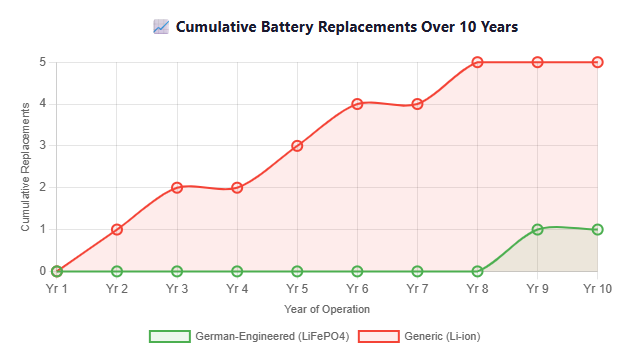
For projects using German-engineered solar street lights with third-party verified IP67 ratings and TÜV or CE certifications, the contractor has a stronger evidentiary basis to negotiate for a structured reduction in performance security after key milestone tests are passed ,an approach that protects both parties and reflects actual project risk reduction.
Defining Liquidated Damages: Delay vs. Performance in Solar Street Light Contracts
Liquidated damages (LDs) in FIDIC EPC contracts exist to provide a predetermined, agreed-upon financial remedy when a contractor fails to meet its contractual obligations, eliminating the need for the employer to prove actual loss in a formal dispute process. For solar street light projects, two distinct categories of LDs must be carefully defined in the contract.
Delay Liquidated Damages (DLDs) apply when the contractor fails to complete installation and commissioning by the agreed contract completion date. For World Bank-financed solar street light programs ,which are often tied to development impact timelines, community electrification targets, or government budget cycles ,delays carry real social and fiscal costs. DLDs are typically calculated as a daily rate linked to the estimated financial impact of each day’s delay on the employer.
Performance Liquidated Damages (PLDs) apply when the installed system fails to meet defined performance guarantees. For solar street light contracts, this means the agreement must explicitly define measurable performance targets, including minimum lumen output (measured in lux at road level), battery autonomy during cloudy periods (typically expressed as backup nights at defined power settings), and solar panel efficiency thresholds above 23% for German-engineered monocrystalline panels.
Industry consensus places the cap on PLDs at between 10% and 15% of the total EPC contract price. This range balances the employer’s need for meaningful financial protection with the contractor’s requirement for a capped and commercially viable risk profile. Critically, the contract must treat the minimum performance guarantee as a condition of substantial completion ,meaning the contractor cannot trigger the takeover process if the installed system fails to meet its baseline output.
A common and costly mistake in solar street light procurement is specifying performance guarantees without defining the testing protocols that will verify them. Contracts adapted for World Bank compliance should include a dedicated testing annex that stipulates when performance tests begin, the minimum test duration (generally not less than 30 consecutive days), the accepted measurement methodology for solar irradiation data, and the specific parameters for battery discharge testing under controlled conditions.
Component-Level Specifications: The Foundation of Enforceable Performance Guarantees
A FIDIC EPC contract for solar street lights can only deliver meaningful performance protection if the technical specifications embedded in the Employer’s Requirements are precise, testable, and unambiguous. Vague specifications ,such as “high-quality solar panel” or “long-life battery” ,are legally unenforceable and open the door to substitution of inferior components that appear compliant on paper but fail in the field.
The Employer’s Requirements section of a World Bank solar street light contract should define minimum acceptable specifications for each critical component:
- LED Luminaire: Minimum 50,000-hour rated lifespan at L70, luminous efficacy of at least 160 lumens per watt, verified by third-party photometric test reports
- Battery System: A-class LiFePO4 cells with a minimum rated cycle life of 5,000 full cycles, operating across a temperature range of -20°C to 60°C, managed by a battery management system (BMS) with overcharge and deep-discharge protection
- Solar Panel: Monocrystalline cells with a verified efficiency of 23% or above, sized at a minimum of 3 to 4 times the daily load power requirement to ensure adequate charging during reduced irradiation periods
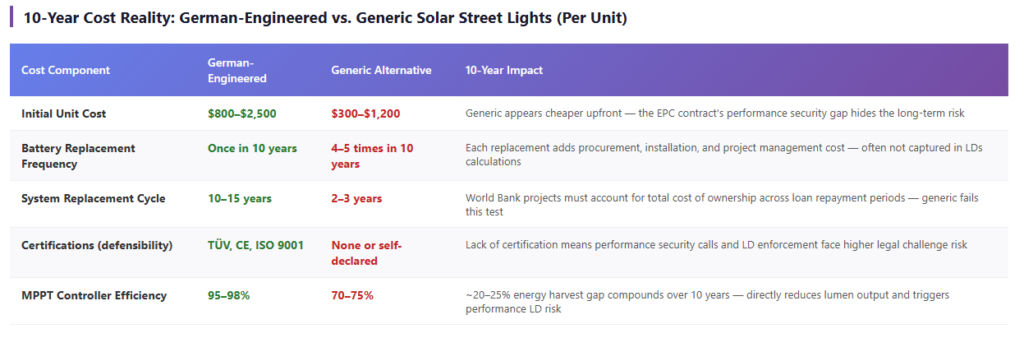
- MPPT Controller: Minimum conversion efficiency of 95%, with data logging capability for monitoring and verification
- Enclosure Rating: Third-party verified IP67 for all electrical components exposed to weather ,not self-declared IP65 ratings, which carry no independent verification obligation
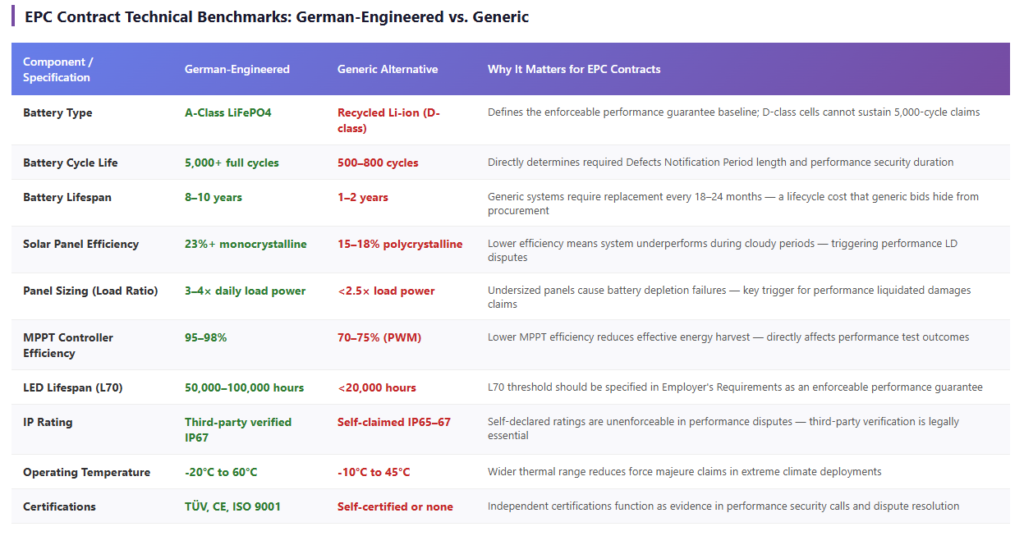
When these specifications are written into the Employer’s Requirements and cross-referenced with the performance guarantee thresholds, they create a legally coherent chain of accountability. If a contractor substitutes generic LiFePO4 cells rated at only 500 to 800 cycles for certified 5,000-cycle A-class cells, that substitution becomes a demonstrable breach of both the technical specification and the performance guarantee ,triggering the LDs mechanism without ambiguity.
German-engineered solar street lights that carry TÜV, CE, and ISO 9001 certifications provide procurement teams with an important contractual tool: the certification itself functions as independent technical evidence in a dispute, reducing the employer’s burden of proof and strengthening the performance security call process.
Risk Allocation and the Particular Conditions: Adapting the Silver Book for Real-World Solar Deployments
The Silver Book’s default risk allocation places almost all project risk on the contractor ,a position that is commercially workable for large-scale civil or energy projects but can become counterproductive in distributed solar street light deployments. When risk is allocated in ways that do not reflect actual project realities, it inflates bid prices (as contractors price in uncertainty), reduces market participation, and ultimately undermines project value.
For World Bank solar street light EPC contracts, the Particular Conditions should include several targeted adaptations beyond performance security and LDs:
The contract should define force majeure with specific reference to solar resource variability. A 30-day baseline performance test cannot be fairly conducted if the testing window falls during an anomalous low-irradiation period. Including a clause that allows for retesting when verified meteorological data demonstrates irradiation levels 20% or more below the long-term average protects the contractor from environmental factors outside their control while preserving the employer’s performance guarantee.
The Particular Conditions should also address warranty periods at the component level. A single 12-month warranty across the entire solar street light system does not reflect the differentiated lifecycle of individual components: LED luminaires rated to 50,000–100,000 hours should carry substantially longer performance warranties than, for example, wiring connections or mounting poles. Layered warranty provisions, aligned with the certification requirements for bankable EPC contracts, create clearer expectations and more defensible performance claims.
Finally, the dispute resolution pathway ,which defaults under the Silver Book to a Dispute Avoidance and Adjudication Board (DAAB) ,should be adapted to include a technical expert panel for performance disputes specifically related to solar resource measurement and battery capacity testing. These are specialist technical questions that benefit from domain expertise rather than purely legal adjudication.
Protecting Your World Bank Solar Street Light Investment Through Smarter Contract Design
Three takeaways stand above all others for procurement teams, contractors, and city planners working on FIDIC EPC-governed solar street light projects financed by the World Bank.
First, performance security and liquidated damages are only as strong as the technical specifications that underpin them. Without precise, testable component standards ,LiFePO4 battery cycle ratings, verified solar panel efficiency, third-party IP67 certification ,your contract’s LDs mechanism has nothing to enforce against.
Second, the standard FIDIC Silver Book requires deliberate adaptation through carefully drafted Particular Conditions to address the unique performance profile of solar street light systems. A 12-month Defects Notification Period, generic performance guarantee language, and standard testing provisions are not adequate for systems with 8 to 10-year battery lifecycles and complex multi-component interactions.
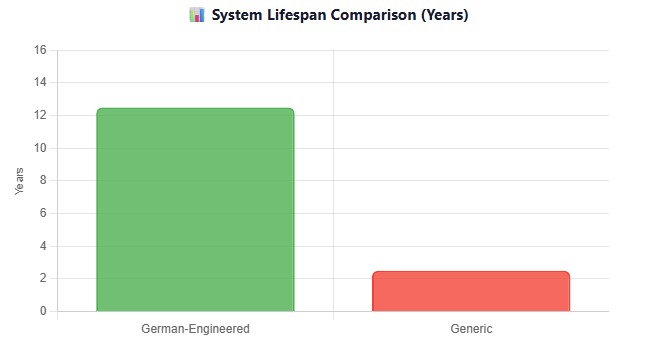
Third, specifying German-engineered solar street lights with TÜV, CE, and ISO 9001 certification from the outset of contract design creates a defensible evidentiary foundation that strengthens performance security calls, LDs enforcement, and dispute resolution outcomes ,while reducing the long-term total cost of ownership through a genuine 10 to 15-year system lifespan versus the 2 to 3-year realistic lifespan of generic alternatives.
At solar-led-street-light.com, our team brings deep technical expertise in German-engineered solar LED street lighting and hands-on experience supporting procurement teams navigating World Bank and multilateral development bank EPC contract requirements. Contact us for a customized consultation or project quote, and ensure your next solar street light project is built on a contract framework as reliable as the technology it protects.
Frequently Asked Questions
Q1: What is the FIDIC Silver Book, and why is it used for World Bank solar street light projects?
The FIDIC Silver Book (2017 Edition) is an internationally recognized standard contract for Engineering, Procurement, and Construction (EPC) or turnkey projects, where the contractor assumes responsibility for design, procurement, and delivery. The World Bank has a formal licensing agreement with FIDIC authorizing borrower countries to use this and related documents in their procurement processes. It is used for solar street light projects because it provides a structured risk allocation framework and is widely accepted by lenders and international contractors.
Q2: What percentage of the contract price is typical for performance security in solar EPC projects?
Standard practice sets performance security at approximately 10% of the contract price for EPC solar projects. For higher-risk deployments ,such as those in challenging climates, involving first-of-kind configurations, or requiring extended Defects Notification Periods ,this figure may be higher. The exact amount should be negotiated and specified in the Particular Conditions of the contract.
Q3: What is the difference between delay liquidated damages and performance liquidated damages in solar street light contracts?
Delay liquidated damages (DLDs) are payable when a contractor fails to complete installation by the agreed contract date. Performance liquidated damages (PLDs) are triggered when the installed system fails to meet defined technical performance guarantees ,for example, insufficient lumen output or battery autonomy below the contracted specification. Both types should be defined separately in the contract to ensure enforceability and prevent arguments about double-compensation.
Q4: How long should the Defects Notification Period be for a solar street light project?
A standard 12-month Defects Notification Period is insufficient for solar street light projects deploying LiFePO4 battery systems rated for an 8 to 10-year operational lifespan. Procurement teams should negotiate an extended DNP of at least 24 months for battery systems, supported by retention or staged reduction of the performance security instrument to ensure adequate financial recourse throughout the extended warranty window.
Q5: Why does it matter whether a solar street light has a third-party verified IP67 rating versus a self-declared IP65 rating?
A third-party verified IP67 rating ,independently tested by an accredited laboratory ,provides a legally defensible technical benchmark that can be cited in contract performance disputes and insurance claims. A self-declared IP65 or IP67 rating carries no independent verification and cannot be reliably enforced if the equipment fails due to water or dust ingress. For FIDIC EPC contracts, specifying third-party verified ratings creates a clearer and more enforceable standard.
Q6: Can a contractor negotiate a reduction in performance security after achieving key milestones?
Yes. Under the Silver Book, performance security adjustments tied to scope changes exceeding 20% of contract value are already contemplated. More broadly, parties can negotiate a staged reduction in security through the Particular Conditions, linked to verified performance milestones ,for example, passage of a 30-day photometric output test and a battery autonomy verification test. German-engineered systems with TÜV certification provide stronger evidentiary support for such negotiations.
Q7: How should solar irradiation variability be handled in performance testing clauses?
Performance testing clauses should specify the minimum acceptable solar irradiation levels for test validity and allow for retesting if verified meteorological data shows that irradiation during the primary test window fell significantly below the long-term average for the project location ,typically 20% or more below baseline. This protects contractors from force majeure-type environmental variability while preserving the employer’s right to meaningful performance verification.
Q8: What certifications should a solar street light supplier hold to satisfy World Bank EPC procurement requirements?
Suppliers should hold TÜV certification for product safety testing, CE marking for compliance with applicable European standards (widely accepted by World Bank borrowers as a benchmark), and ISO 9001 quality management system certification. Third-party test reports for IP ratings, battery cycle life, LED lumen maintenance (L70), and solar panel efficiency are also essential for satisfying the Employer’s Requirements section of a well-drafted World Bank EPC contract.
References
- FIDIC. (2023). World Bank renews agreement to use FIDIC standard contracts for a further five years. https://fidic.org/node/42052
- World Bank. (2024). Contract Management Practice Procurement Guidance. https://thedocs.worldbank.org/en/doc/a5487590ccec42b5709816f40ae8b068-0290012024/original/Contract-Management-Practice-Procurement-Guidance-June-2024-FINAL.pdf
- World Bank / IBRD. (2023). Standard Bidding Documents: Procurement of Works. https://documents1.worldbank.org/curated/en/323361581052752931/pdf/Standard-Bidding-Documents-Procurement-of-Works.pdf
- Climate Solutions Legal Digest / Husch Blackwell. (2025). Powerful Promises: Performance Guarantees and Liquidated Damages in Solar and Biogas EPC Contracts. https://www.climatesolutionslaw.com/2025/05/powerful-promises-performance-guarantees-and-liquidated-damages-in-solar-and-biogas-epc-contracts/
- King & Spalding. (2024). Guaranteed Sunshine: Performance and Testing of Solar Power Projects. https://www.kslaw.com/blog-posts/guaranteed-sunshine-performance-and-testing-of-solar-power-projects
- Construction News / Vinson & Elkins. (2024). Avoiding Performance Security Pitfalls with the FIDIC Silver Book. https://www.constructionnews.co.uk/legal/avoiding-performance-security-pitfalls-with-the-fidic-silver-book-21-03-2024/
- Akin Gump. (2024). A Legal and Commercial Checklist for Bankable Solar EPC Contracts. https://www.akingump.com/en/insights/blogs/speaking-energy/a-legal-and-commercial-checklist-for-bankable-solar-epc
- Gowling WLG. (2024). Why FIDIC is Becoming the Chosen Standard for BESS Projects. https://gowlingwlg.com/en/insights-resources/articles/2024/why-fidic-is-becoming-the-chosen-standard
- PwC Middle East. (2024). EPC Contracts in the Solar Sector. https://www.pwc.com/m1/en/blogs/pdf/epc-contracts-in-solar-sector.pdf
- D&P Law Group. (2024). 3 Key Performance Clauses in Solar EPC Contracts. https://dnplawgroup.com/practice-areas/corporate/3-key-performance-clauses-in-solar-epc-contracts
Disclaimer
This article is for informational purposes only and does not constitute professional engineering, installation, or procurement advice. Performance specifications and costs may vary based on project requirements, location, and local regulations. Always consult qualified solar energy professionals and legal advisors before making procurement decisions.
For expert consultation on solar LED street lighting solutions, visit solar-led-street-light.com or contact our team for a customized quote.