

Solar street lights with remote control technology represent a major technological upgrade in outdoor lighting systems. These lights harness renewable solar energy and integrate advanced control mechanisms, offering convenience, efficiency, and environmental benefits.
DEL manufactures the best solar street lights and is well known for its services. In this article, we will discuss the working of solar street light remote controls, the various types available, and the 9 comprehensive benefits they provide.
Understanding Solar Light Remote Control Technology
How Solar Street Light Remote Control Systems Operate
Solar street light remote control systems are designed to manage lighting operations wirelessly using a combination of solar energy and advanced electronics. Here’s a detailed breakdown of how they work:
- Signal Transmission: The remote control emits a signal infrared (IR), radio frequency (RF), Bluetooth, Wi-Fi, or cellular-based directed toward the solar street light.
- Signal Reception: The solar street light contains a receiver tuned to the frequency of the remote control as part of the light’s control unit.
- Control Circuitry: When the signal is received, the control unit processes the instructions by turning the light on or off, dimming it, or changing its mode of operation.
- Immediate Response: The light responds almost instantly to commands, adjusting its operation in real-time. This is necessary for dynamic environments where lighting needs can change quickly.
This integration of remote control with solar lighting systems ensures that outdoor spaces are illuminated efficiently without the need for manual intervention.
The Evolution of Solar Street Light Remote Controls
Solar street light remote control development has been driven by advancements in wireless technology and solar power. Early systems relied on manual controls and simple timers, but modern systems have become significantly more sophisticated.
- First-Generation Controls: These were typically limited to basic on/off functions and required manual operation.
- Second-Generation Controls: These introduced RF technology, which allowed remote operation without a line of sight, though functionality remained relatively basic.
- Third-Generation Controls: These integrated Bluetooth and Wi-Fi, enabling control through mobile apps and the internet, greatly enhancing user convenience.
- Fourth-Generation Controls: The latest systems incorporate AI and machine learning, allowing predictive control and automation based on usage patterns and environmental conditions.
This evolution highlights the continuous improvement and expanding capabilities of solar street light remote controls.
Solar Street Light Remote Control Types
Infrared (IR) Remote Control: Precision in Control
Infrared remote controls utilize a beam of infrared light to communicate with solar street lights. This technology is well-suited for environments where precise, individual control of lights is necessary. Key features include:
- Precision Targeting: IR remotes offer highly accurate targeting of individual lights, making them ideal for settings where specific lights need to be adjusted without affecting others.
- Short Range and Line of Sight: One limitation is that IR requires a clear line of sight between the remote and the light, which can be a disadvantage in cluttered or obstructed environments.
Despite its limitations, IR technology is a reliable choice for small-scale installations where precision is key.
Radio Frequency (RF) Remote Control: Overcoming Obstacles
Radio Frequency remote controls use radio waves to transmit signals, overcoming the line-of-sight limitations of IR. These controls are highly effective in larger or more complex environments:
- Extended Range: RF controls can operate over much longer distances compared to IR, making them suitable for large outdoor areas like parks or campuses.
- Obstacle Penetration: RF signals can penetrate walls, trees, and other obstructions, providing reliable control in challenging environments.
RF technology offers an excellent solution for areas where direct line-of-sight control is impractical or impossible.
Bluetooth Remote Control: The Power of Mobile Integration
Bluetooth remote controls leverage Bluetooth technology to provide a convenient and user-friendly control system:
- Mobile Device Compatibility: Bluetooth remotes can be paired with smartphones or tablets, enabling users to control lights via dedicated apps. This makes the system highly accessible and easy to use.
- Short-Range Operation: While Bluetooth is generally limited to shorter ranges, within this range it offers excellent connectivity and control.
This type of control is particularly useful in settings where users need to adjust lighting conditions frequently, such as event venues or residential areas.
Wi-Fi Remote Control: Internet-Connected Convenience
Wi-Fi remote controls use wireless internet connectivity to offer comprehensive control over solar street lights:
- Remote Accessibility: Wi-Fi allows users to control their lighting systems from anywhere with an internet connection, providing unmatched flexibility.
- Smart System Integration: These controls can be integrated with smart home or building management systems, enabling coordinated control alongside other smart devices.
Wi-Fi controls are ideal for both small-scale and large-scale applications where centralized control is desired.
Cellular Remote Control: Global Reach
Cellular remote controls utilize mobile network connectivity for truly remote operation of solar street lights:
- Anywhere Control: Users can control their lights from virtually anywhere with a cellular signal, making this system ideal for managing lights in remote or hard-to-reach locations.
- Scalable for Large Deployments: Cellular controls are perfect for large-scale installations such as highway lighting or large public spaces, where lights are spread over vast areas.
This type of control is highly versatile and capable of handling extensive lighting networks across wide geographical areas.
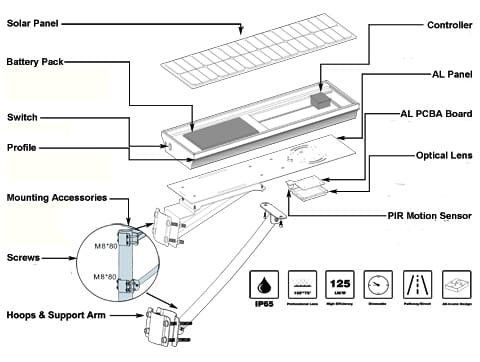
Components of a solar street light
The 9 Comprehensive Benefits of Solar Street Light Remote Control Systems
1. Maximized Energy Efficiency Through Intelligent Control
Solar street light remote control systems optimize energy usage through intelligent features. Remote capabilities such as motion sensors provide precise control over lighting levels, allowing lights to dim or brighten based on activity.
- Dynamic Lighting Adjustments: Lights can be dimmed to energy-saving levels during off-peak times and brightened when traffic conditions require enhanced visibility.
- Scheduled Operation: Remote control outdoor lights can be configured to switch on only when needed, such as during nighttime hours or for special events.
- Energy Harvesting Optimization: Systems are designed to store solar energy during the day and use it efficiently at night.
Together, these features enable significant energy savings, which reduce operating costs and environmental footprints.
2. Enhanced Public Safety Through Adaptive Lighting
Solar street light remote control systems play an essential role in improving public safety during nighttime hours. Remote management eliminates the need for someone to physically drive over and turn on lights manually.
- Real-Time Adjustments: When emergencies occur or traffic congestion increases, lights can be instantly brightened to increase visibility and safety.
- Crime Deterrence: Remote control outdoor lights help deter criminal activity by ensuring areas remain well-lit, reducing opportunities for crime due to heightened visibility.
- Incident Response: In emergencies, these lights can be adjusted quickly, providing necessary illumination for first responders.
This capability is of particular benefit to urban environments, parks, and other high-traffic public areas.
3. Reduced Maintenance Costs and Extended Lifespan
Traditional street lights are inefficient, labor-intensive, and expensive to maintain. Solar street light remote control systems offer a better solution by reducing maintenance requirements and extending system lifespan.
- Proactive Monitoring: Malfunctioning systems can be detected early, allowing corrective action to be taken before complete failure.
- Long-Lasting Components: Remote control outdoor light systems are engineered with high-quality LED lights and solar panels that guarantee durability and longer lifecycles, limiting the need for frequent replacements.
- Easy Upgrades: Remote control systems can be updated with new software, keeping the lights current without requiring hardware changes.
These advantages significantly reduce long-term maintenance costs and extend equipment lifespan.
4. Versatility and Flexibility for Various Applications
Solar street light remote control systems are highly versatile and can be used in a variety of applications, from urban streets to rural environments. The remote technology enhances flexibility by allowing users to adjust lighting based on actual requirements.
- Urban Environments: City streets, parks, and public spaces benefit from remote systems that allow municipalities to quickly develop adaptive lighting strategies and remotely control the amount of light needed within these areas.
- Rural Areas: Remote control solar lights offer reliable lighting in areas where grid access is unavailable or impractical.
- Commercial and Industrial Sites: Businesses can configure outdoor remote light systems for optimal performance, illuminating facilities when staffed and saving energy during non-operational hours.
This flexibility makes these systems suitable for both crowded urban streets and quiet rural areas.
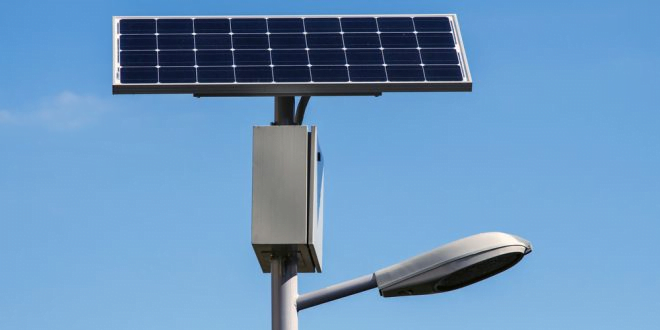
5. Strong Environmental Benefits and Sustainability
Solar street light remote control systems contribute significantly to environmental sustainability by using renewable energy and reducing pollution.
- Reduced Carbon Footprint: These systems help reduce greenhouse gas emissions by utilizing solar power instead of grid electricity.
- Minimized Light Pollution: Outdoor lights with remote control systems can be adjusted to reduce excessive brightness and avoid unnecessary lighting, helping to preserve natural night environments.
- Sustainable Materials: Many components in remote-control solar LED lights are recyclable, making them an environmentally responsible choice.
These features help solar street lights contribute to global sustainability goals and serve as a component of green infrastructure.
6. Advanced Customization for Optimized Performance
One of the key advantages of solar street light remote control systems is the customization option, where users can tailor their lighting systems to meet specific operational requirements.
- Personalized Settings: Users can customize light intensity, schedules, and lighting modes to suit their needs.
- Seasonal Adjustments: Lights can be programmed to adapt to changing daylight hours, ensuring consistent illumination throughout the year.
- Event-Specific Lighting: For special events, lights can be adjusted for enhanced brightness, colors, and lighting arrangements depending on aesthetic needs.
These adjustments ensure that lighting is as energy-efficient as possible while meeting the specific needs of each location.
7. Economic Impact and Cost-Effectiveness
In addition to energy savings, solar street light remote control systems offer real economic benefits that make them a smart investment for businesses and governments.
- Reduced Operating Costs: Since the lights consume less energy and need limited maintenance, they save a lot on expenses as compared to conventional lighting systems.
- Quick Return on Investment (ROI): The initial investments may be higher, however the savings in energy consumption and maintenance over time delivers a shorter ROI.
- Incentives and Rebates: There are Incentives and rebates available from governments in many areas for the installation of linked solar light, thus making the upfront cost even less.
The first advantage is the economic pros which means anyone can afford remote control outdoor lights.
8. Integration with Smart City Infrastructure
As more cities adopt smart technologies, solar street light remote control systems are expected to become a key component of future urban infrastructure.
- Centralized Management: Smart cities can centrally manage lighting control hubs, making way for real-time adjustments and monitoring..
- IoT Connectivity: Remote control outdoor lights can then be controlled from the same system offered by any street lighting solution, creating a much smarter data-driven urban environment.
- Scalability: Remote control solar lights can be scaled up easily as cities continue to grow.
This intelligent integration can go on to make cities that are more efficient, sustainable and future-proof.
9. Enhanced Community Engagement and Safety
Solar street light remote control systems are critical for ensuring community engagement and security. These systems offer adjustable lighting that makes public spaces more secure and inviting.
- Improved Public Spaces: Adequately-lit public spaces are accessible and promote socialization as members of the community seek comfort at night.
- Community Control: A few systems provide city input with time, or function, to enhance the lighting towards local demands.
- Safer Neighborhoods: Uniform, sensible lighting provides personal safety and reduces the chance of accidents and criminal activities – promoting safe neighborhoods and overall quality of life.
Remote control outdoor lights enable communities to establish safer, more engaged, and vibrant public spaces.
Conclusion
Solar street lights with remote control offer a wide variety of benefits, ranging from energy savings to enhanced safety and environmental sustainability. In an age of advancing technology, these systems will become increasingly important to both urban and rural development as part of a global movement toward smart city infrastructure. Many cities and towns will find remote control outdoor light systems to be the most reliable, adaptable, and future-proof solution available today.
Get the best solar lighting solutions with DEL lighting and illuminate your streets.
Frequently Asked Questions (FAQ)
1. What is a solar street light remote control system?
A solar street light remote control system provides a way to wirelessly control and operate solar street lights. These systems incorporate various technologies such as IR (infrared), RF (radio frequency), Bluetooth, Wi-Fi, or cellular networks for controlling light functions including on-off states, dimming levels, brightness adjustments, and scheduling. The remote setup improves convenience, power efficiency, and system flexibility, allowing users to optimize lights for any environment or condition.
2. How does a solar street light remote control work?
A solar street light remote control system works by sending wireless signals from the remote control device to a receiver located inside the solar-powered street light. The receiver processes these signals to control the light’s behavior. For instance, if the remote sends a signal to dim the light, the receiver processes this command and reduces the light’s brightness. The remote control can also be used to switch lights on or off, set timers, and change lighting modes, all without the need for direct manual operation.
3. What are the main benefits of using solar street light remote controls?
The major advantages of using remote controls for solar street lights include:
Energy Efficiency: You are able to control when and how all your lights should function which results in major power savings.
Better Security: Enhancing visibility & security in public spaces by real-time adjustments to the lights.
Saves Costs: Lesser demand of energy, and maintenance over time saves you a handful amount.
Sustainable Energy: Due to environment concerns, it’s essential that solar energy is now being used as an alternative source if power.
Tailored lighting systems: Remote controls make it possible to customize a light for individual needs and improve flexibility in energy efficiency.
4. Are solar street light remote control systems difficult to install?
No, solar street light remote control systems are generally straightforward to install. Since these systems are wireless and solar-powered, they do not require extensive wiring or complex infrastructure. The installation process typically includes mounting the solar panels, securing the light fixtures, and setting up the remote control system. Most of these systems can be installed easily, even by those who are not particularly tech-savvy.
5. What types of remote controls are available for solar street lights?
However, there are many varieties of remote control for solar street lights in the market and some may be more advantageous than others.
Infrared (IR) Remote Controls: These need a clear path and are limited to short ranges.
Radio Frequency (RF) Remote Controls: Have a longer range that can penetrate obstacles such as walls and trees.
Bluetooth Remote Control: This is used for short to medium range control via tablets or smartphones
Wi-Fi Remote Controls: Control from anywhere internet is access able, perfect for home requirements integration to smart systems.
Cellular Remote Control: Utilize networks to enable control from any location having cellular all-coverages.
6. Can solar street light remote controls be integrated with smart city infrastructure?
Yes, solar street light remote controls can be seamlessly integrated into smart city infrastructure. Most modern systems are designed to work with smart devices and networks, enabling centralized, automated management. These integrations allow for functionalities such as adaptive lighting that responds to real-time data like traffic flow and ambient conditions, predictive maintenance notifications that provide automated alerts when service may be required, and enhanced energy management. This integration complements larger smart city projects that share goals of greater urban sustainability and efficiency.