
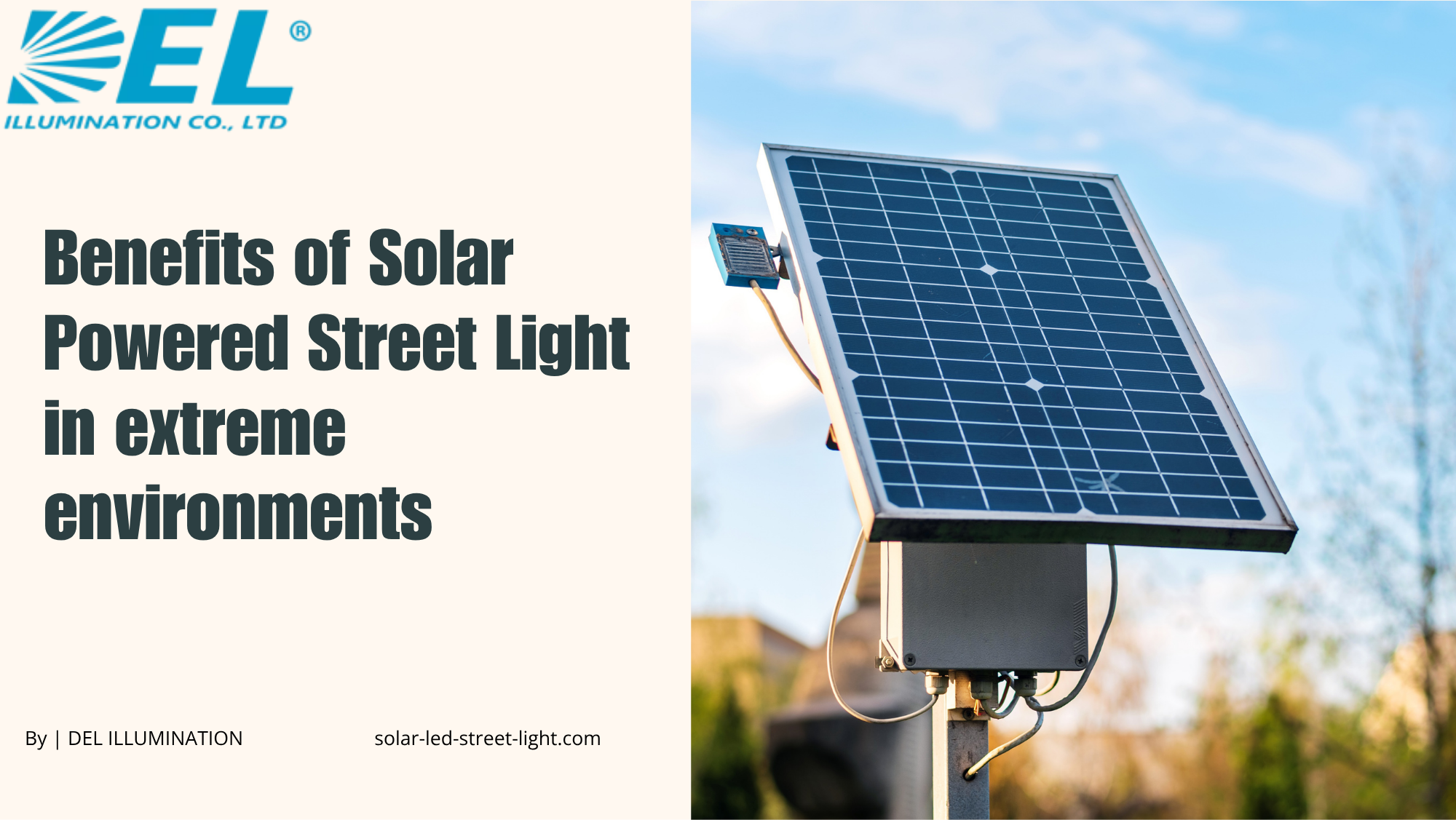
In extreme environments, traditional lighting systems often fail because of poor insulation, short circuits, or dampness in the wiring. A solar powered street light, however, keeps working reliably even under these harsh conditions. In this guide we look at what this lighting system is, the main types available, the components that make it work, and the six benefits it offers when installed in extreme environments.
What Is a Solar Powered Street Light?
A solar powered street light is an outdoor lighting fixture powered by solar panels instead of the traditional power grid. It uses photovoltaic cells to convert sunlight into electricity, which is stored in a battery for use after dark. Most units use LED bulbs, which are energy efficient and provide bright, even illumination for streets, sidewalks, and other public spaces. Because this system does not depend on buried cables or a centralized power source, it is especially useful in remote regions and areas prone to natural disasters.
Types of Solar Powered Street Light
There are three common types of this fixture used around the world today.
1. All In One Solar Powered Street Lights
This design combines the solar panel, battery, and LED light into a single compact unit. This design is simple to install and requires very little maintenance. The panel absorbs sunlight during the day and charges the battery, which then powers the LED at night. If you want to compare this option against other fixtures, take a look at our All In One Solar Street Light range for full specifications.
2. Integrated Solar Powered Street Lights
This type works in a similar way to the all in one design, joining the solar panel, battery, and LED light, except the panel and light are connected by a cable rather than housed in one unit. The battery usually sits inside the pole itself. These fixtures are also easy to install and need minimal upkeep, and you can browse our All In Two Solar Street Light lineup for a closer look.
3. Induction Solar Powered Street Lights
This variation uses induction lamps rather than LEDs. These are a category of fluorescent lamp that produces light through electromagnetic induction. They are known for good energy efficiency and a long service life, although LED based fixtures have become more common in recent years.
Components of a Solar Powered Street Light
It is built from several core parts that work together.
- Solar panel: converts sunlight into electrical energy and is usually mounted on top of the pole for maximum sun exposure.
- Battery: stores the energy generated during the day, typically as a rechargeable lithium battery that can keep the light running for several cloudy days.
- LED light: the actual light source, chosen for its efficiency and long lifespan.
- Controller: manages the charging and discharging of the battery and automatically switches the light on and off.
- Light pole: supports every other component and is built from metal or concrete to withstand tough weather.
Benefits of Solar Powered Street Light in Extreme Environments
How does a solar powered street light outperform traditional lighting when conditions turn extreme? Here are the six main benefits.
Small Battery
People used to picture huge battery banks when they thought about solar power, yet today the battery inside a solar street light is fairly compact. It is easy to install, and any surplus solar energy is stored directly in the battery rather than going to waste. Even in rainy or cloudy weather, the light still functions and illuminates through the night. For more on how battery technology has scaled up over the years, this piece on the world’s largest grid battery from the BBC is worth a read.
Suitable for Multiple Landforms
Traditional street lights have strict requirements about terrain, while a solar street light needs far less preparation and can be installed no matter how rugged or steep the surrounding roads are. This makes it a practical and efficient way to bring lighting to communities living in remote or mountainous regions. If you are planning a project along a busy route, our post on how to choose the right solar street light for highways covers the extra factors worth considering.
Anti Disaster Performance
Extreme regions tend to combine rugged terrain with dramatic weather, so earthquakes, strong winds, and storms occur more often. Traditional street lights struggle to withstand this kind of stress, while a solar street light is built to resist natural disasters and keep functioning for the community most of the time.
National Promotion
Over the past decades the drawbacks of traditional street lights have become clear, and fewer people see them as the default choice. Meanwhile, the advantages of solar lighting have caught the attention of national leaders and policymakers. Traditional lighting still has room to improve, but the outlook for continued development remains broad and positive.
Sustainable Development
When solar street lights were new, people assumed the technology was too sophisticated and therefore too expensive. As the years have passed, it has become clear that the price to performance ratio is actually quite strong given the technology involved. Large scale adoption is still growing, but because the materials are environmentally friendly, this lighting is expected to spread into more fields as development continues. To see how upfront costs compare over time, our breakdown of the variables behind solar street lamp installation costs is a useful next read.
High Price Performance Ratio
As mentioned above, a solar powered street light offers a strong price to performance ratio, and this is especially true in extreme environments. In northern regions where snowstorms are frequent, conventional street lights often cannot cope. A solar street light, by contrast, is built to withstand these conditions, and the energy it has stored keeps providing normal lighting even when the sun has not been out for a while. Choosing a reliable supplier matters here too, so our guide to choosing a solar streetlight supplier is worth checking before you commit to a project.
Frequently Asked Questions
1. What makes a solar powered street light suitable for extreme environments?
It does not depend on buried cables or a centralized grid, so it keeps working during storms, earthquakes, and other events that typically damage traditional wiring.
2. How long can a solar powered street light run without direct sunlight?
Most systems are designed to store enough energy in the battery to keep it running for several consecutive cloudy or rainy days.
3. Which type of solar powered street light is easiest to install?
The all in one design is generally the easiest to install because the solar panel, battery, and LED light are already combined into a single compact unit.
4. Do solar powered street lights need a lot of maintenance?
No. It is designed with minimal moving parts and a durable pole and controller, so it typically needs far less maintenance than traditional street lighting.
5. Are solar powered street lights cost effective in the long run?
Yes. Even though the upfront price can be higher, a solar powered street light usually delivers a strong price to performance ratio over its lifespan, especially in remote or harsh locations where grid power is expensive to extend.
If you have any requirements for a solar powered street light, feel free to contact us and our team will help you find the right fit for your project. You can also check our full FAQ guide for more detailed answers.