
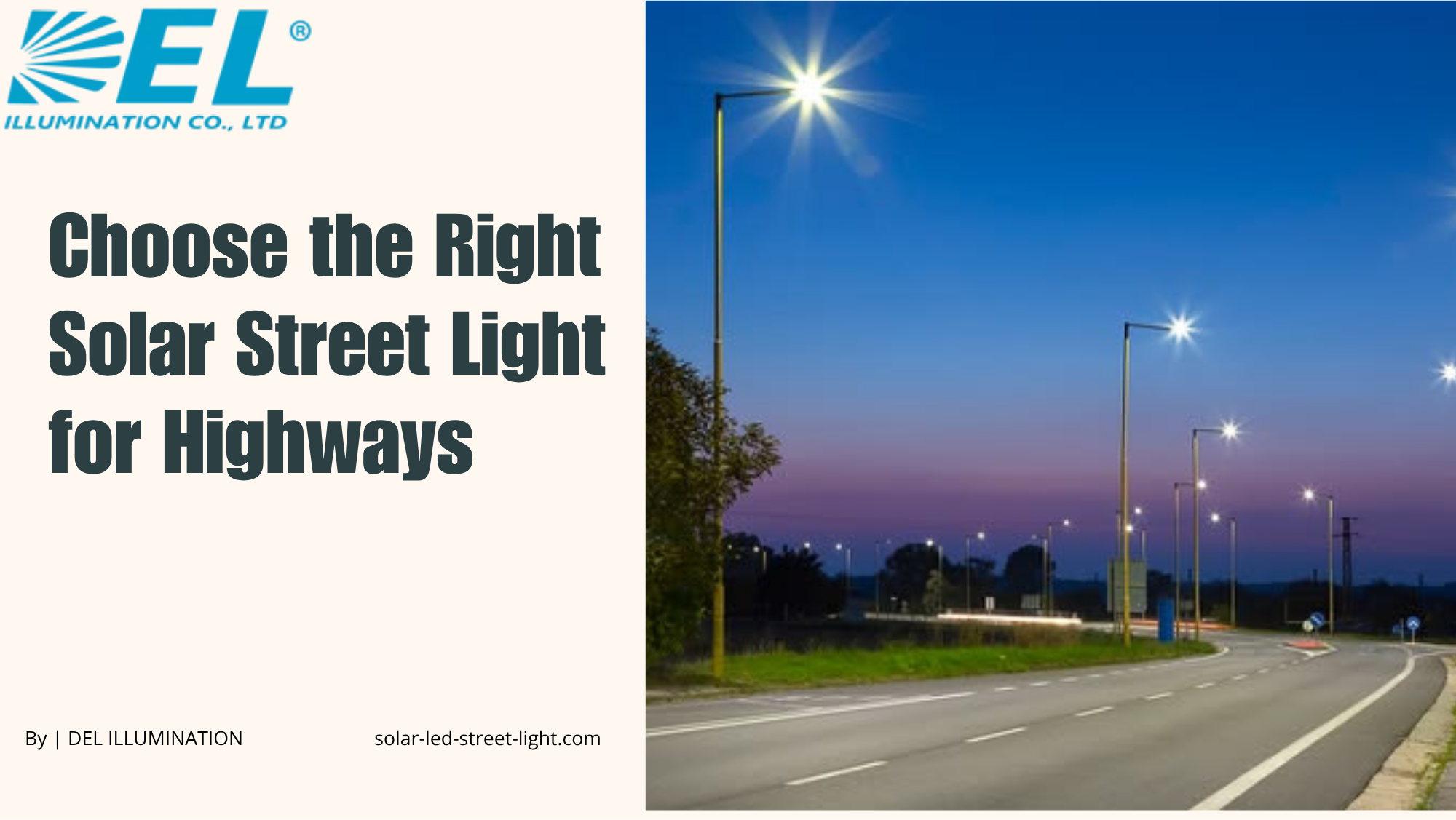
Every purchase has a story and a goal. What is yours? What are your needs? Choosing the right solar street light for highway use can be a daunting task. Over the years, serving diverse customers, we have discovered there is often a disconnect between what manufacturers think is needed and what customers actually need. This is especially true when you choose the right solar street light for highways, since there are many product options and not every one will meet your needs. We have crafted this guide to help you choose the right solar street light for highways with clarity and confidence.
Factors to consider when you choose the right solar street light for highways
1. Selecting the right components
Each solar street light for highway systems comprises several essential components. The solar panel captures sunlight and converts it into usable power. The lithium ion battery stores energy for use during night hours or low light periods. LED lamps light up the road when needed. The MPPT controller acts as the brain of the street light, managing charge and discharge levels, LED output, and other vital functions. Dusk to dawn sensors help automate lighting and control parameters. The housing protects the whole system from damage or deterioration. These are just a few components that matter when you choose the right solar street light for highways.
You can add many more components based on your needs. Remote monitoring lets you access your street lights for maintenance, troubleshooting, and real time data, which matters as IOT integration becomes more common. Motion sensing features have also been on the rise, increasing or decreasing light intensity and triggering security features in response to movement, which is why they are a smart addition whenever you choose the right solar street light for highways.
2. Location analysis
Location is one of the most critical aspects to weigh when you choose the right solar street light for highways. Placement can impact functionality significantly, so take time to analyze where you will place the light and account for sunlight exposure. Shading is also a critical factor, so consider vegetation, nearby structures, and other obstructions that could hinder solar panel efficiency.
Also consider traffic patterns. On a frequently busy highway, opt for higher grade LED lights, since they tend to be the first component to degrade. Consider the spacing between fixtures to work out how many units you need. Getting this right matters most when you choose the right solar street light for highways, since correct placement provides adequate visibility for road users.
3. Price
We have always used price as a determining factor before any purchase, and it matters just as much when you choose the right solar street light for highways. Price is important, but do not let it fully blind your judgment, since cheap is not always the best option. A few considerations can help you find the right balance between value and functionality.
Consider the quality of the components inside the fixture. Quality components often carry a higher price, but that price is offset by the reliability and durability they offer over the years. Also consider the manufacturer’s reputation. A reputable company will usually attract a higher price point, but you gain confidence in product reliability.
Also weigh the long term ownership cost of the solar street light you are considering. A lower purchase price is appealing, but the fixture may cost more over time through maintenance and replacements. Run a thorough cost and benefit analysis, since a higher priced but more efficient system may offer better returns over time, making it worthwhile whenever you choose the right solar street light for highways.
4. Efficient design
The design of the fixture is critical when you choose the right solar street light for highways. Does the design fit your expectations and needs? Choosing quality LED lights with high luminous efficacy and lower power consumption can extend operating hours. Smart lighting controls, programmable dimming schedules, and remote monitoring give you precise control over light output, while advanced battery management systems optimize energy storage and prolong battery life.
You can further increase efficiency during installation itself. Properly orienting the solar panels is one of the simplest ways to improve efficiency, since panels that absorb maximum sunlight improve both energy production and system performance. In regions with frequent seasonal changes, choose a street light with an adjustable tilt angle so the panel can absorb sunlight throughout the year, or consider an automated tracking system that follows the sun’s path.
5. Battery storage capacity
For any solar street light, the battery is the single most crucial element. Battery types include lithium ion, lithium iron phosphate, and newer solid state options, each with its own pros and cons. Make sure you choose a battery that will last and meet your needs, since this decision matters as much as anything else when you choose the right solar street light for highways. We recommend a LiFePO4 battery for its energy density, cycle life, cost, and environmental impact.
Battery capacity should store enough energy to power the system through the night. LED wattage influences how fast the system consumes stored energy, so calculate total consumption against capacity carefully. Confirm the battery exceeds what the street light needs, and check the recommended system autonomy, meaning the number of consecutive nights the lights can run without additional solar energy. Choose a street light with about three to five days of autonomy.
Depth of discharge is another critical factor. DOD is the percentage of total capacity discharged during use, and deep discharge can shorten battery lifespan considerably. Aim for a shallower discharge, typically between 50% and 70%.
If you would also like guidance on sourcing a reliable manufacturer, our post on choosing a solar streetlight supplier covers buying mistakes worth avoiding before you commit to any highway project.
Conclusion
We recommend doing your due diligence before you choose the right solar street light for highways. This proactive approach will save you from headaches later on. For a closer look at how pricing works across a full installation, see our breakdown on the cost of solar street lamp installations. Have specific questions? Contact us and we will be glad to help.
Frequently Asked Questions
1. What is the first step to choose the right solar street light for highways?
Identify the essential components your project needs, including the panel, battery, controller, and LED fixture, before comparing options based on location and traffic demands.
2. How does location affect the way you choose the right solar street light for highways?
Sunlight exposure, shading from nearby structures, and traffic volume all influence which fixture and spacing will work best for a stretch of highway.
3. Should price be the main factor when you choose the right solar street light for highways?
No. Price matters, but reliability, manufacturer reputation, and long term ownership costs usually matter more than the upfront number alone.
4. What battery features matter most when you choose the right solar street light for highways?
Look for strong energy density, a long cycle life, at least three to five days of system autonomy, and a shallow depth of discharge between 50% and 70%.
5. Can design choices improve efficiency when you choose the right solar street light for highways?
Yes. Proper panel orientation, adjustable tilt angles, and smart lighting controls like programmable dimming can noticeably extend performance and battery life.