
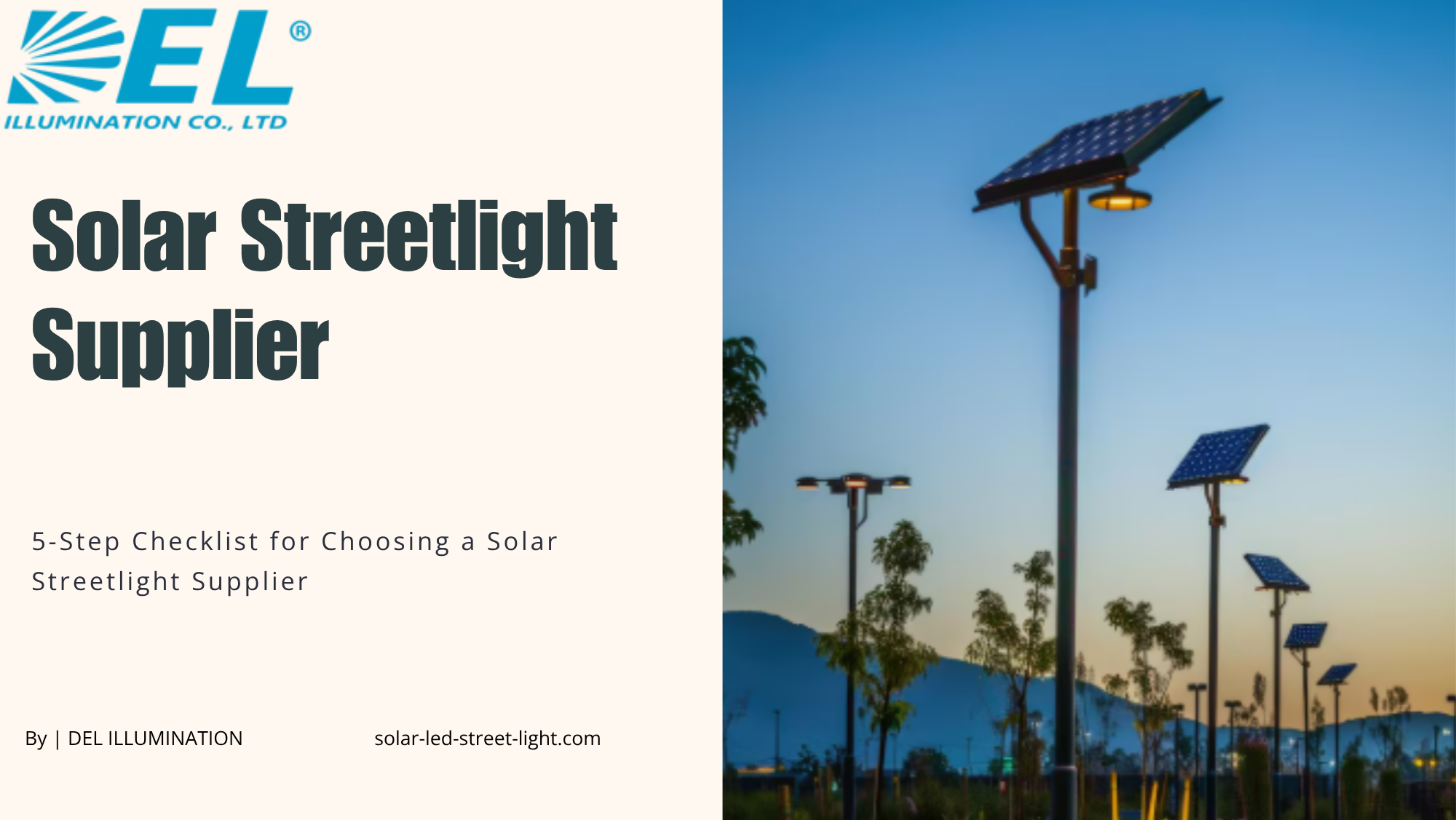
If you are planning a solar streetlighting project, this checklist for choosing a solar streetlight supplier is your must have tool. Solar powered street lighting is transforming communities across the region, especially where traditional grid infrastructure often falls short. With over 75 percent of the African population still lacking access to public lighting, dark and unsafe streets remain an everyday reality.
Municipalities and infrastructure planners are turning to solar solutions as a result. Decentralized solar lighting initiatives now receive 5 to 15 percent of national energy budgets in countries like Kenya and Nigeria, highlighting the growing potential of solar street lighting to cut costs and boost safety.
But not all solar lighting projects succeed, and the reason often comes down to choosing a solar streetlight supplier the wrong way. This checklist is designed for decision makers, municipality heads, and road project engineers who want to get it right from the start. Below are five critical steps most buyers overlook.
Step 1: Verify the Supplier Track Record and Local Experience
The first item on your checklist for choosing a solar streetlight supplier is verifying their track record in projects that resemble yours in scale, environment, and geography. Understanding local logistics, climate challenges, and regulations is key to success.
Look for relevant projects in similar climates, and ask for client references and case studies rather than settling for generic marketing materials. Check for certifications such as ISO 9001, CE, IEC, or Lighting Global, along with partnerships that signal trustworthiness.
This step helps weed out underqualified vendors early, ensuring you partner with a company that understands the factors that can make or break your project.
Step 2: Evaluate Product Quality and Technical Specifications
Once verified, the next essential step in choosing a solar streetlight supplier is evaluating the actual quality of their products. Many solar streetlights look similar in catalogs, yet there is often a huge difference in durability once installed in real world conditions.
Component quality matters greatly. The solar panel, battery, LED, and charge controller must work together for consistent performance. Insist on high efficiency monocrystalline panels, LiFePO4 or lithium ion batteries rated for 8 to 10 years, and premium LED fixtures rated for 50,000 plus hours.
Proper system sizing matters too. In regions with frequent rain or lower solar irradiance, the system needs a well matched panel to battery to load ratio and 2 to 3 nights of battery autonomy. Ask if the supplier can provide energy balance simulations from similar environments, since a one size fits all system often fails early.
Weather resistance is another key factor. Look for IP65 or higher ingress protection, anti corrosion coatings for coastal deployments, and wind resistant pole designs, ideal for coastal or island installations.
Anti theft features matter as well, since components are valuable in some regions. Look for integrated all in one designs that mount high on poles, tamper proof fasteners, and locked battery compartments. In one African town, over half of solar street lights were damaged by vandals stealing panels and batteries, which is why theft resistant design has become essential when choosing a solar streetlight supplier.
Step 3: Prioritize After Sales Support, Warranty, and Maintenance
A supplier’s job is not finished once the shipment arrives. One of the most overlooked steps in choosing a solar streetlight supplier is evaluating their after sales support, warranty coverage, and maintenance offerings.
The industry standard is typically a 3 year warranty, though top tier suppliers may offer 5 or more years on key components. Ask exactly what the warranty covers, who bears shipping costs for faulty parts, and whether batteries and poles are included.
Technical support matters just as much. Confirm whether the supplier provides an installation manual, on site supervision or remote support, and training for your local technicians. Also look for a clear maintenance schedule and upfront spare parts availability, since batteries typically need replacement after 5 to 7 years.
Step 4: Insist on Customized Solutions for Local Conditions and Regulations
Another key factor in choosing a solar streetlight supplier is their ability to tailor solutions to your region’s environmental and regulatory needs. What works in a dry inland town will not necessarily work in a humid coastal city or flood prone rural area.
Ask how their products perform in high rainfall zones and hot climates, where LiFePO4 batteries outperform lead acid, and in cyclone prone areas where poles may need reinforcement. Read our guide on choosing solar streetlights for harsh climates for more detail.
Compliance with local regulations is equally important. Verify that the supplier can meet required illumination levels and safety codes, and can provide region specific documentation for approval processes.
Physical and aesthetic customization also matters. In one Kenyan project, 200 watt solar streetlights with double lamps were mounted on 10 meter poles to cover a wide main road, an example of the kind of customization that improves functionality and safety.
Step 5: Confirm Logistics, Delivery, and Implementation Support
The final step in choosing a solar streetlight supplier is not about specs, it is about execution. Logistics and on ground support can make or break your project timeline and budget, yet many buyers overlook this phase, assuming the handoff ends at the warehouse.
Your supplier should have a clear plan for delivering products to each location, especially across multiple sites. Ask whether they offer centralized delivery, coordinate installation with trained technicians, and supply poles or provide specs for local fabrication. Confirm whether they assist with commissioning, provide a starter kit with spare parts, and follow up afterward with performance validation and check ins during the first 30 to 90 days.
Conclusion
Solar street lighting offers a bright solution for cities and towns, from improving safety to saving on energy costs and supporting green initiatives. But to unlock these benefits, you must start with a well informed supplier selection process. By using this 5 step checklist for choosing a solar streetlight supplier, you can confidently evaluate potential partners on everything that matters, not just the surface level pitches.
Del solar streetlights, manufactured in China and engineered in Germany, combine global quality with region specific adaptability, making them a strong choice for municipalities and infrastructure leaders across Africa, Southeast Asia, and beyond. If you are in the process of choosing a solar streetlight supplier, our all in one and all in two product ranges are built with exactly these standards in mind. Contact our team today to discuss your project.
Frequently Asked Questions
1. What is the most important step when choosing a solar streetlight supplier?
Verifying the supplier’s track record and local experience comes first, since a company familiar with your climate and regulations is far less likely to cause costly delays later.
2. How long should a solar streetlight warranty last?
Most suppliers offer a 3 year warranty, though when choosing a solar streetlight supplier, look for those offering 5 or more years on key components like panels and LEDs.
3. Why does system sizing matter when choosing a solar streetlight supplier?
A poorly sized system, with the wrong panel to battery ratio, can fail quickly in low sunlight regions, so ask for energy balance simulations before committing.
4. How can I protect solar streetlights from theft?
Look for integrated all in one designs, tamper proof fasteners, and locked battery compartments, all signs of a supplier who understands theft prevention when choosing a solar streetlight supplier.
5. Should I choose a local or international solar streetlight supplier?
Both can work well, but when choosing a solar streetlight supplier, confirm their logistics and on ground installation support regardless of location, since delivery and setup capability matter as much as product quality.