
A well maintained Solar Road Lighting System is key to ensuring safety and security while maximizing the life of your investment. Our comprehensive guide covers everything you need to keep the setup running smoothly, from routine cleaning to knowing when to call in an expert. Explore our All In One Solar Street Lights range to see how a complete system is built for low maintenance from the start.
Maintaining your solar road lights is a relatively easy process that only requires occasional attention. Follow these simple tips and you will enjoy the benefits of your investment for years to come.
Cleaning and Care Tips
To ensure optimal performance, it is important to keep your solar road lights clean and free of debris. We recommend cleaning your panels at least once a month, and more often in dusty or coastal environments where grime builds up faster on the surface.
Here are some tips to help you keep your system clean:
- Use a soft, dry cloth to wipe down the solar panels.
- Inspect the setup for any signs of damage or wear and tear.
- If you notice any damage, please contact us for assistance.
- Keep the area around the fixtures free of debris.
By following these simple tips, you can help ensure that your solar road lights will continue to provide optimal performance for years to come. A clean panel captures more sunlight, which directly translates into fuller battery charging and brighter, longer illumination each night. Neglecting this basic care is one of the most common reasons a Solar Road Lighting System underperforms, so it is worth building a short cleaning routine into your monthly schedule. Even fifteen minutes per pole once a month can noticeably extend the working life of the whole installation.
Things To Watch Out For
If you are responsible for maintaining your solar road lights, there are a few things you should keep an eye out for. By regularly inspecting the setup and addressing any issues quickly, you can help ensure that it continues to operate safely and efficiently.
Here are some things to look for when inspecting your solar road lights:
#1: Check for loose or damaged components
Over time, components can become loose or damaged. Regularly check all parts and tighten or replace them as necessary. Wind, vibration from passing traffic, and thermal expansion can all work fixings loose over a season. Pay particular attention to the panel mounting bracket and the arm that holds the light head, since these carry the most mechanical stress and are the parts most likely to shift out of their ideal angle. A panel that has drifted even a few degrees from its intended tilt will gather noticeably less energy across the day.
#2: Check the batteries
Batteries are a key component of any solar lighting setup. Make sure to regularly check the batteries and clean the terminals if necessary. You should also check the voltage and current to ensure they are within the recommended range, since a weak cell is the most common cause of reduced run time. The battery is usually the first part of a Solar Road Lighting System to wear out, so catching a fading cell early prevents a run of dim or dark nights before a full replacement can be arranged.
#3: Check the solar panels
Solar panels can become dirty or damaged over time. Regularly clean the panels and check for any damage. If necessary, you can repair or replace individual panels. Even a light film of dust can noticeably reduce how much energy the panel harvests.
#4: Check the electrical connections
Make sure all electrical connections are secure and free of corrosion. Regularly inspect the connections and clean or repair as necessary. Corroded contacts waste energy and can eventually cause a fixture to fail entirely. In coastal or high humidity locations, salt in the air accelerates corrosion, so these sites benefit from more frequent checks and a smear of dielectric grease on exposed terminals to keep moisture out.
By regularly checking your solar road lights and addressing any issues, you can help ensure the whole system keeps operating safely. For a deeper look at complete integrated units, see our guide to the 7 benefits of all in one street light technology.
When To Call a Professional
It is important to know when you should call a professional to maintain your solar road lights. Depending on the severity of the problem, some issues can be easily fixed on your own, while others need trained hands.
Below are some common problems that may arise and when it is best to call a professional.
#1: Yellow or Dim Lights
If you notice that your solar road lights are either yellow or dim, this is usually an indication that the batteries need to be replaced. Replacing batteries is a relatively easy process. Simply locate the batteries in the light fixture and replace them with new ones of the correct type and rating. Always match the replacement to the original specification, because fitting a battery of the wrong chemistry or capacity can leave the light unable to charge properly and may shorten its life.
#2: Flickering Lights
If your solar road lights are flickering, this is usually an indication of a loose wire. Once again, this is a relatively easy fix. Simply locate the loose wire and tighten it. If tightening it does not solve the problem, then it is best to call a professional.
#3: Broken Lights
If you notice that one of your fixtures is broken, this will require the help of a professional. Depending on the severity of the damage, the light may need to be completely replaced.
If you are experiencing any problems, it is always best to err on the side of caution and call a professional. Trying to fix the problem yourself could result in further damage, which will end up costing more money in the long run. A qualified technician can also spot early warning signs that are easy to miss, such as a slowly failing battery bank or minor corrosion beginning inside a junction box. Booking a professional inspection once a year gives your Solar Road Lighting System the best possible chance of reaching its full service life without unexpected downtime.
5 Advantages Of a Solar Road Lighting System
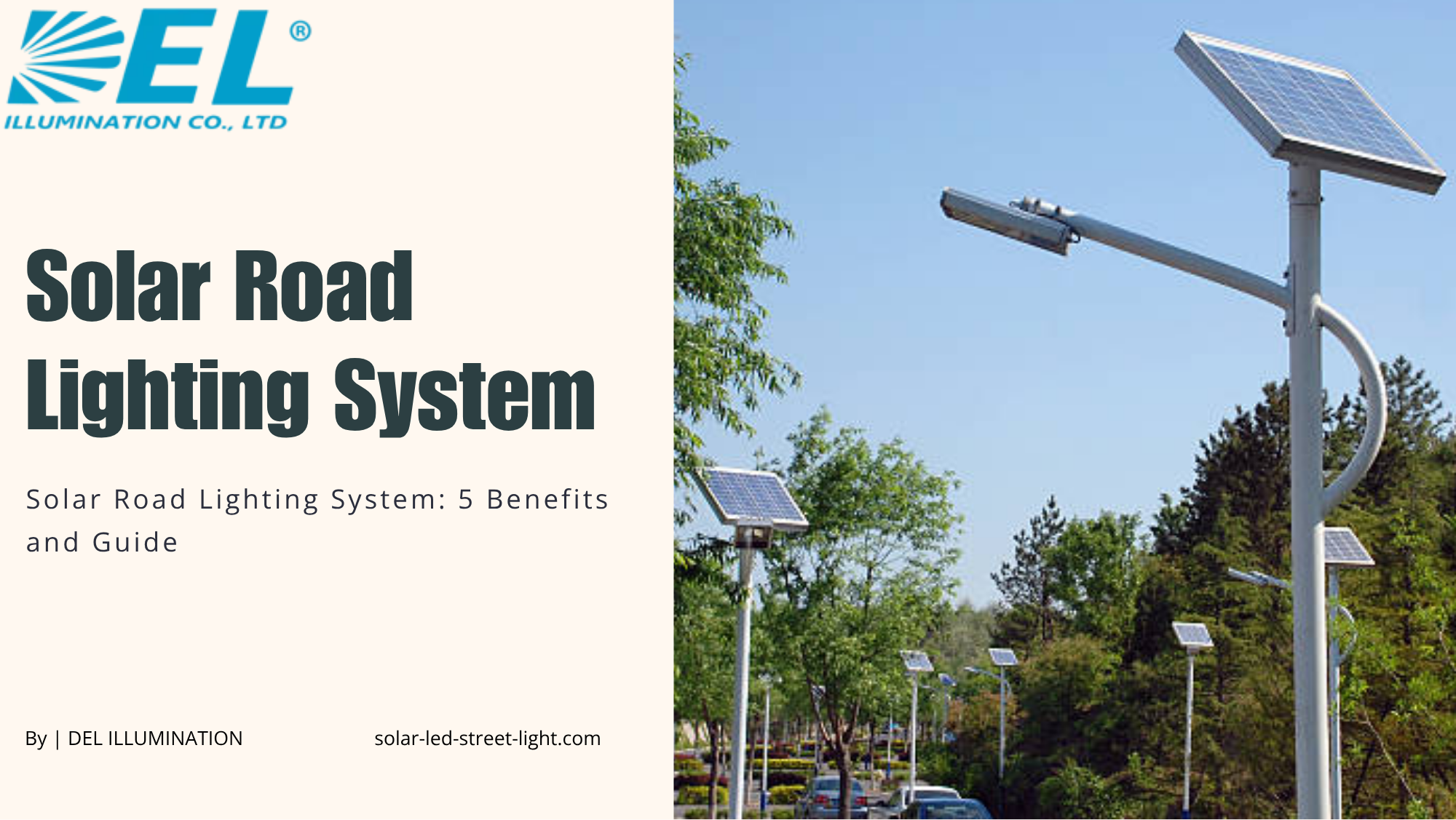
A Solar Road Lighting System is a great way to light up a street, parking lot, or any other large area without the need for traditional grid based power. These units are powered by the sun, so they require no external power source and are completely self sufficient. This makes them ideal for areas where it is not practical to run power lines, or where power is unreliable or nonexistent.
#1: Environmentally friendly
Solar power is a clean, renewable energy source that does not produce any emissions or pollution. This is in contrast to traditional grid powered street lights, which rely on fossil fuels such as coal and natural gas. Solar road lights, on the other hand, have no negative impact on the environment and help cut a community carbon footprint year after year. Over the lifetime of a large installation, the emissions avoided add up to a meaningful contribution toward local climate goals, which is one reason many councils now favour solar for new roads and public spaces.
#2: Cost effective
Compared to traditional grid powered street lights, the initial investment is often higher. However, over time solar road lights save money since they have very low operating costs and require virtually no maintenance. Grid powered lights incur monthly charges and demand regular replacement of bulbs and other components. Relying on free solar energy from the sun makes the system far more cost effective in the long run.
When you add up a decade of avoided electricity bills, avoided trenching, and reduced maintenance visits, the total cost of ownership usually falls well below that of a wired equivalent, even though the sticker price at purchase looks higher. For budget holders planning across many years rather than a single quarter, that long term saving is often the deciding factor.
#3: Most Reliable
Solar road lights are a very reliable option since they do not rely on the power grid, which can be unreliable in some areas. They are also not affected by power outages or other disruptions to the grid. This makes them ideal for use in remote areas or in disaster prone areas where power outages are common. Because each unit generates and stores its own power, a fault in one fixture never takes the rest of the street dark, which is a clear advantage over a wired circuit.
#4: Easy to Install
Solar road lights are very easy to install since they do not require any connection to the power grid. Units can simply be placed in a sunny location and will start working immediately. This is in contrast to traditional street lights, which need to be wired to the grid by an electrician, often involving costly trenching and cabling. That trenching alone can add weeks to a project timeline and a significant sum to the budget, especially where roads or pavements have to be cut and reinstated. Removing the grid connection removes that entire category of cost and delay.
#5: Safe
Solar road lights are a very safe option since they do not use any dangerous mains electrical components at the pole. The fixtures also run much cooler than traditional lights, so there is no risk of fires or burns. This makes them ideal for use around children and pets. The low voltage design also means there is no shock hazard if a unit is damaged in an accident, which is a real advantage on busy roads and in public parks where fixtures occasionally take a knock.
How to Get the Most From Your Investment
Beyond routine care, a few planning habits help a Solar Road Lighting System deliver its full value over its lifetime. Sizing the panel and battery correctly for your local climate is the single most important decision, because a system that is undersized for the number of cloudy days in your region will struggle every winter. Working with a supplier who calculates backup capacity for your specific location avoids that problem before it starts.
Placement matters just as much as hardware. Panels should face the direction that captures the most daily sun and should be kept clear of overhanging branches, signage, and the shadows of nearby buildings. Even partial shading across part of the day can cut charging enough to shorten run time at night. A quick site survey before installation saves a great deal of trouble later.
Finally, keep a simple record of each inspection and any parts replaced. A short maintenance log makes it easy to spot patterns, such as a particular pole that repeatedly needs attention, and it helps you budget for battery replacement at the right time rather than as an emergency. Treated this way, solar road lights reward a small, steady effort with many years of quiet, dependable service.
It also pays to keep a few common spare parts on hand for larger installations, such as a spare battery or two and replacement fixings. Being able to swap a failed part the same day, rather than waiting on a delivery, keeps the road lit and avoids the safety concerns that come with a dark stretch of street.
For managers responsible for many poles across a wide area, this kind of light forward planning turns maintenance from a series of emergencies into a predictable, low stress routine that fits comfortably around other work. Setting a fixed inspection date each month, and pairing it with a quick visual drive by check after any severe storm, catches most problems before residents ever notice a dim or dark light. Over a full year this handful of small habits adds up to fewer complaints, lower repair bills, and a lighting network that residents can simply rely on without a second thought.
Conclusion
A Solar Road Lighting System is a great way to light up a street, parking lot, or any other large area without the need for traditional grid based power. Solar road lights are powered by the sun, so they require no external power source and are completely self sufficient. According to the International Energy Agency, off grid solar lighting of this kind plays a growing role in expanding safe, affordable access to electricity worldwide. These systems are also environmentally friendly, cost effective, reliable, easy to install, and safe around children and pets. If you are ready to plan a project, contact our team for expert guidance and a customised quote.
Frequently Asked Questions
How often should a Solar Road Lighting System be cleaned?
Cleaning the panels at least once a month keeps performance high, and dusty or coastal sites may need attention more often. A clean panel surface captures maximum sunlight, which keeps the battery well charged and the lights bright throughout the night.
How long do solar road lights last?
With good maintenance a quality system runs for many years, with the battery usually being the first part to need replacement. Keeping connections tight, panels clean, and batteries within their rated range extends the overall life of the investment considerably.
Do solar road lights work on cloudy or rainy days?
Yes. A properly sized system stores enough charge to run through several days of low sunlight, thanks to backup capacity built into the battery. Correct sizing of the panel and battery for the local climate ensures reliable operation during extended overcast periods.
Are solar road lights cheaper than grid powered lighting?
The upfront cost is often higher, but the long term cost is lower. There are no monthly electricity charges, no trenching or cabling, and very little maintenance, so the setup typically pays back the initial investment and then costs almost nothing to run.
Can I install solar road lights myself?
Basic installation is straightforward because there is no grid connection required, so a unit can be mounted in a sunny spot and start working right away. For large projects, correct spacing and pole placement, larger scale wiring, and repairs to broken fixtures are best handled by a professional.