
Across the country, outdoor lighting street lamps help communities create a safe setting for residents and business owners to live, play, work, and travel. This is an essential public service supported by taxpayer dollars that municipalities and their utilities provide. However, this fundamental offering consumes a great deal of energy around 1.3 quadrillion Btu every year and is often tied to significant operational costs. For the fundamentals of modern lighting, our guide on the solar street light working principle is a helpful companion read.
Outdoor lighting street lamps can account for the majority of a municipal energy budget depending on the size of the region, the extent of the services offered, and the efficiency of the public lighting. States and districts are also responsible for roadway lighting, often including highway, interstate, tunnel, and bridge lighting.
In the last several years, many districts have switched to new lighting technologies (such as induction and LED) that can cut energy costs by roughly half compared to traditional technologies, and provide extra savings through lower operations and upkeep costs due to longer lifetimes. Our comparison of HPS lights vs LEDs in outdoor solar street lamps explores this shift in depth.
Outdoor Lighting Street Lamps: Issues and Solutions
LED outdoor lighting street lamps have recently become increasingly popular across the U.S.A. and the world. These are more efficient, last longer, and save districts money compared to older lamps, yet they also have their drawbacks. This surge prompted the AMA (American Medical Association) to release an official statement, collectively endorsed by the group’s members, with guidelines on how to mitigate the potential for harm to both human wellbeing and the environment.
Below are the main problems with outdoor lighting street lamps and how to solve them.
1. High Color Temperature (CT)
The fundamental issue with many outdoor lighting street lamps is their color temperature (CT), a numerical score of the color tone of a light source. Higher values indicate added blue content and cooler light, while lower values indicate a warmer light with more red content. The AMA advises that outdoor night lighting should not have a CT of more than 3,000 Kelvin; white LED street lamps, popular in cities like Seattle and New York, can have a CT of 4,000 to 5,000K.
For reference, an ordinary incandescent lamp is around 2,700K and a small flame or candle is about 1,800K. The solution: choose warmer outdoor lighting street lamps rated at or below 3,000K to reduce blue light output while still providing safe, effective illumination.
2. Harm to Human Health and Vision
These LED lamps don’t just affect circadian rhythms but may also harm the human retina when viewed for a long enough period. Driving at night could soon become considerably more difficult because of this effect. A steadily growing body of research suggests that ambient exposure to blue and white light before and during sleep can lead to a wide array of issues that go far beyond fatigue.
The solution: even if you can fall asleep with this light coming through your window, your sleep quality and health could still suffer. Warmer, lower intensity outdoor lighting street lamps, along with proper shielding, significantly reduce these risks.
3. The Limitations of CT as a Metric
Another issue is that while CT is a useful metric, it has its limitations namely, it doesn’t factor in human color perception. CCT (Correlated Color Temperature) is an additional method that accounts for how human vision is sensitive to colors. By this method, two LED outdoor lighting street lamps with a CT of 3,000K may appear vastly different from one another.
The solution: evaluate outdoor lighting street lamps using both CT and CCT metrics, and where possible, view samples in person before committing to a large rollout.
4. Rollouts That Ignore Health Considerations
The issue with the existing rollout of outdoor lighting street lamps is that it often seems to be carried out with no regard for these problems or their potential solutions. Rather than blindly blasting white light, it would be possible and in fact, not terribly difficult to create programmable LED street lamp systems that at least partially filter out offending wavelengths at certain hours.
There are plenty of researchers in this space who would jump at the chance to help. The solution: invest in programmable, smart outdoor lighting street lamps that can adjust output by time of day, offering the safety of a well lit road without completely ruining rest and overall wellbeing. Our post on the 9 benefits of solar light remote control technology shows how programmable control works.
5. Long Lifespans Locking in Poor Choices
These outdoor lighting street lamps are built to last a long time, and each block that gets switched over without concern for the health outcomes could subject a generation of city residents to health problems that we are only now beginning to understand. Because the fixtures last for years, a poor choice today can affect a community for a decade or more.
The solution: cities rolling out new outdoor lighting street lamps can learn from the mistakes of early adopters, choosing health conscious specifications from the start. Our list of the 10 things about the best solar street lights can guide these decisions.
6. Light Pollution and Glare
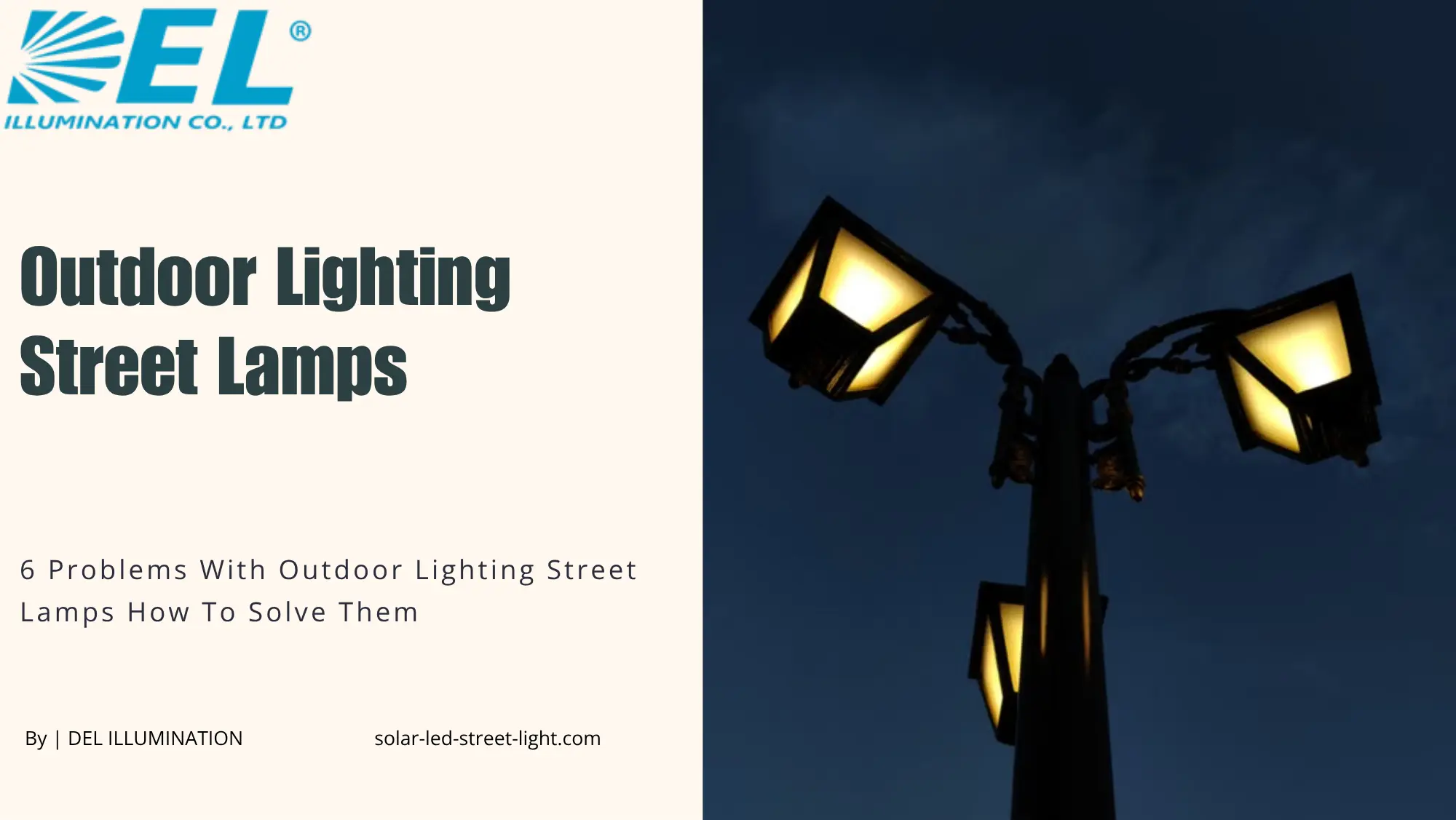
Despite the increasing risks, there are ways to mitigate most, if not all, of the negative effects of LED outdoor lighting street lamps while keeping the benefits. Yellower LED street lamps can soften the intensity of the blue light, and lower power lights can help make a neighborhood feel less like a stadium lit up at night while still keeping the streets feeling safe.
The solution: shields on the sides of the lights can help as well, so that light is directed down onto the ground rather than scattering all around, including into people’s windows. Choosing quality IP65 rated fixtures with proper shielding keeps outdoor lighting street lamps effective and considerate.
Outdoor Lighting Street Lamps: Conclusion
As more urban areas roll out LED outdoor lighting street lamps along their streets, they can learn from the mistakes of early adopters reaping the financial advantages of LED street lamps without the sleepless nights. By prioritizing warmer color temperatures, proper shielding, and smart programmable controls, cities can enjoy safe, efficient, and health conscious outdoor lighting street lamps. According to the U.S. Department of Energy, thoughtful LED design delivers major energy savings without compromising quality.
Frequently Asked Questions (FAQs)
1. What are the main problems with outdoor lighting street lamps?
The main problems with outdoor lighting street lamps include high color temperature (excess blue light), potential harm to human health and vision, the limitations of CT as a metric, health blind rollouts, long lifespans locking in poor choices, and light pollution with glare. Most can be solved with warmer, shielded, programmable fixtures.
2. What color temperature should outdoor lighting street lamps be?
The American Medical Association advises that outdoor lighting street lamps should not exceed 3,000 Kelvin. Warmer lights at or below 3,000K reduce harmful blue light content while still providing safe, effective illumination for streets and roadways.
3. Are LED outdoor lighting street lamps bad for health?
LED outdoor lighting street lamps with high blue light content can disrupt circadian rhythms, affect sleep quality, and potentially harm the retina with prolonged exposure. However, choosing warmer color temperatures (under 3,000K), lower intensity lights, and proper shielding significantly reduces these health risks.
4. How can cities reduce light pollution from outdoor lighting street lamps?
Cities can reduce light pollution from outdoor lighting street lamps by using yellower, lower power LEDs and fitting side shields that direct light downward onto the ground rather than scattering it into the sky or people’s windows. Programmable dimming at certain hours also helps.
5. Do solar outdoor lighting street lamps have the same issues?
Solar outdoor lighting street lamps can have the same color temperature and glare issues if poorly specified, but they offer the same solutions warmer CT ratings, shielding, and smart controls while also cutting energy costs and grid dependence, making them an efficient and health conscious choice.