
As far as city planners and commercial developers are concerned, the pressure to balance operational efficiency with aggressive sustainability goals has never been higher. Traditional grid tied lighting is no longer an option due to its high contribution to a city’s carbon overhead.
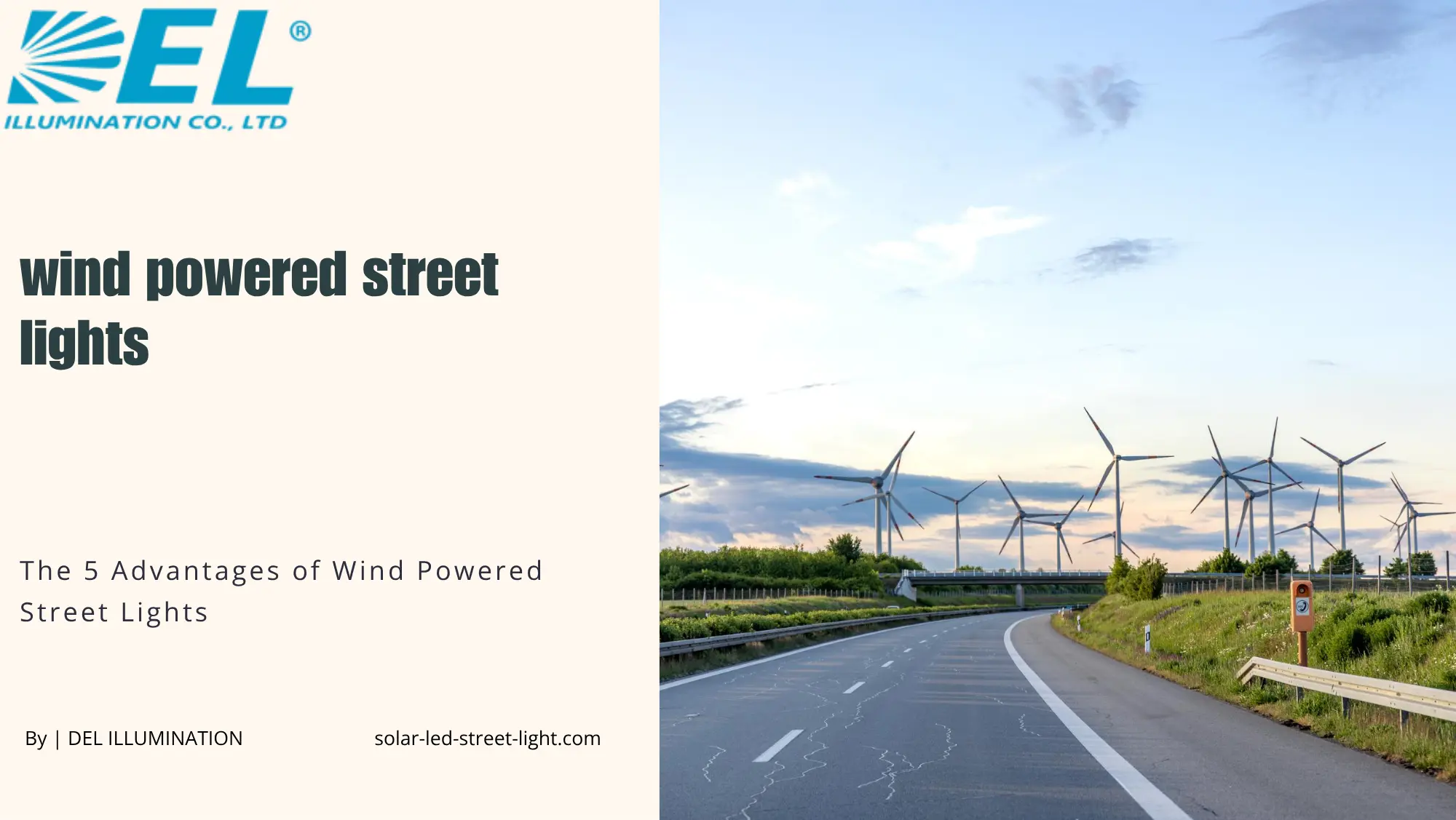
Wind powered street lights are emerging as the forefront solution for resilient urban design. They decentralize your lighting infrastructure to create a network that remains functional even when the grid fails.
The shift toward these technologies is backed by significant market momentum. According to the MRA Growth Outlook Report, the global market for wind solar hybrid streetlights is projected to exceed 10 million units by 2028, with growth rates exceeding 15% annually.
In this article, we’ll explore the five key advantages of integrating wind power into your lighting strategy and how this shift drives long term value for both your budget and your community. For a comparison with solar systems, our guide on the solar street light working principle is a helpful companion read.
What Are Wind Powered Street Lights?
Wind powered street lights are lighting systems that rely on wind turbines to generate electricity. These systems are designed to operate independently of the grid and do not require any external power source. When wind hits the turbine blades, it causes them to rotate, which drives a generator to produce electricity. Batteries store the electricity generated by the wind turbine to power the street lights.
Here’s how it works:
- The process begins with the turbine blades. As wind flows across the blades, it creates a difference in air pressure, generating lift that forces the rotor to spin.
- The rotor is connected to a generator (or alternator) located inside the unit. As the wind turns the rotor, the generator converts that rotational motion into AC or DC electricity.
- A voltage regulation system is used to stabilize the power and ensure the battery is charged safely. Many high end systems use Maximum Power Point Tracking to extract the most possible energy from the wind at any given moment.
- The stabilized energy is sent to a deep cycle battery (usually lithium ion or lead acid) housed in a protective box on the pole or buried underground. This storage is critical because it ensures the light stays on during calm nights. Our guide on battery powered street lights explains how to calculate these storage requirements.
- When the sun sets, a Light Dependent Resistor (LDR) or a programmed timer signals the controller to release power to the LED luminaire. Our post on the automatic solar street light explanation covers this dusk to dawn triggering in more detail.
Components of Wind Powered Street Lights
Wind powered street lights consist of several components that work together to harness the power of the wind and convert it into light energy.
1. Wind Turbine
The wind turbine is a crucial component of wind powered street lights. It captures the energy of the wind and converts it into electricity to power the street light. The turbine is mounted on top of the street light pole. It consists of a rotor, blades, and a generator.
2. Battery
The battery is another critical component of wind powered street lights. It stores the electricity generated by the wind turbine, allowing the street light to continue operating even when there is no wind. Batteries are located at the base of the street light pole. The two types of batteries used are lead acid and lithium ion. Our 10 tips to maintain your solar street light battery apply equally to wind powered systems.
3. Controller
The controller is responsible for managing the flow of electricity between the wind turbine, battery, and LED lights. It ensures that the battery is charged when there is excess electricity and regulates the power supplied to the LED lights based on the available charge. Our guide to the solar street light controller explains how these controllers work in depth.
4. LED Lights
LED lights are the light source in wind powered street lights. They are highly efficient, consuming much less electricity than traditional street lights. Our comparison of HPS lights vs LEDs in outdoor solar street lamps explains why. The LED lights can be configured to turn on automatically when it gets dark or when motion is detected. Discover more in our post on the 8 benefits of a solar sensor street light.
5. Pole
The pole provides support for all the other components of wind powered street lights. It is usually made from steel or aluminum and is designed to withstand strong winds and other environmental conditions. Our 9 factors for choosing solar power light poles cover pole specifications and wind loading. The pole also houses the battery and controller and is a mounting point for the wind turbine and LED lights.
Advantages of Wind Powered Street Lights
What are the benefits of wind powered street lights? Let’s check them out.
1. Renewable Energy Source
Wind power is a renewable energy source that offers numerous benefits over non renewable sources like coal and oil. Unlike these finite resources, wind is an infinite resource that can be harnessed to generate electricity without depleting the Earth’s natural resources.
In addition, wind powered street lights provide a reliable source of energy that is not subject to the volatility of the energy market. This means cities and towns can count on wind power to light their streets without worrying about fluctuating energy prices or supply shortages.
2. Cost Effective
Wind powered street lights offer a cost effective alternative to traditional street lighting options. Once installed, they can operate on a constant electricity supply from the grid… except they don’t need one. This means municipalities can save on energy costs and reduce their reliance on the power grid.
With wind powered street lights, there are no electricity bills to pay, as the turbines generate electricity from the wind for free. This makes them an attractive option for municipalities looking to reduce operating costs and improve their bottom line. Our post on the 8 ways that affect solar street light price breaks down the comparable cost picture for solar systems.
3. Environmentally Friendly
Wind powered street lights are an environmentally friendly solution for lighting public spaces. Unlike traditional street lights that require electricity from non renewable sources, wind powered street lights harness the power of the wind to produce clean energy.
Wind powered street lights generate electricity using wind turbines and produce zero greenhouse gas emissions. They also reduce reliance on fossil fuels, a contributor to climate change. The U.S. Department of Energy explains how wind turbines convert kinetic energy into clean electricity.
4. Energy Independence
Wind powered street lights provide energy independence by harnessing the power of the wind to generate electricity. This energy can then be stored in batteries or used to power street lights directly.
These street lights do not rely on the traditional power grid, which is often powered by fossil fuels and is subject to power outages and blackouts. This provides energy independence, as the street lights can continue to function even if the traditional power grid goes down. Our post on how village solar street lights help rural communities shows the value of off grid lighting in underserved areas.
5. Maintenance and Durability
Wind powered street lights require less maintenance and are more durable because they generate their power through the use of wind turbines. The turbines convert wind energy into electrical energy, which is stored in batteries for later use. This means there is no need for an external power source, such as an electrical grid, which can be expensive to install and maintain.
Because wind powered street lights do not rely on an external power source, they are also more durable. They are less susceptible to power outages and other electrical issues that can occur with traditional street lights. In addition, wind turbines are designed to withstand harsh weather conditions, such as high winds and heavy rain, which means they are less likely to be damaged or require repair. Choosing an IP65 rated fixture further protects the electronics against rain and dust.
Challenges of Wind Powered Street Lights
While wind powered street lights offer many benefits, some challenges must be considered when implementing this technology.
1. Initial Investment Cost
One of the biggest challenges of wind powered street lights is the initial investment cost. Wind turbines and batteries can be expensive, and the cost of installation and maintenance can also add up. However, over the long term, wind powered street lights can be more cost effective than traditional street lights because they require less energy and can reduce reliance on non renewable energy sources. For large builds, our post on the cost of solar street lights for construction projects offers a useful budgeting comparison.
2. Dependence on Wind Speed and Direction
Another challenge of wind powered street lights is their dependence on wind speed and direction. If there is no wind, or if the wind speed is too low, the wind turbine may not generate enough electricity to power the street light. Conversely, if the wind speed is too high, the wind turbine may generate too much electricity, which could damage the battery or LED lights. This means wind powered street lights may not be suitable for all locations. In such cases, a solar alternative may be a better fit, as explored in our post on what photovoltaic street lights are.
3. Maintenance Requirements
Wind powered street lights also require regular maintenance. The wind turbine, battery, and LED lights need inspection and maintenance regularly. Reinforce the street light pole if it is damaged by strong winds or other environmental factors. Maintenance can add to the overall cost of wind powered street lights, but it is essential to ensure their continued operation and reliability. Our 6 tips for solar street light maintenance provide a complementary routine.
Tips to Maintain Your Wind Powered Street Lights
Here’s a comprehensive maintenance checklist to lengthen your wind powered street lights’ lifespan.
1. Regular Maintenance
To ensure a 20 year lifespan for your infrastructure, a boots on the ground inspection is non negotiable. You must check:
- Mechanical Integrity: Technicians must inspect the turbine blades for stress fractures or “pitting” caused by wind borne particulates.
- Drivetrain and Bearings: Checking the main shaft and bearings for smooth rotation. Any resistance here increases the “cut in” speed, meaning the light won’t charge in light breezes.
- Electrical Pathing: Verifying that all wiring harnesses are secure and haven’t been compromised by vibration or local wildlife. If a light stops working, our guide on 5 ways to fix a solar light not working covers similar electrical faults.
2. Strategic Cleaning and Debris Management
Environmental buildup is the silent killer of renewable efficiency. In a B2B context, dirty equipment is literally lost revenue. For solar hybrid units, a layer of dust can drop energy intake by 30%, while grime on a wind turbine disrupts the laminar flow of air over the blades, reducing torque. Our post on why solar panel glass is crucial explains why panel cleanliness matters so much on hybrid systems. A scheduled pressure wash or specialized wipe down ensures the system captures every possible watt of energy.
3. Performance Monitoring via Smart Sensors
Modern street lighting is an investment in data as much as hardware. You should have advanced features like:
- Real Time Analytics: Use IoT enabled sensors to track RPM, voltage output, and battery discharge rates.
- Automated Alerts: Set up “exception reporting,” where the system sends an instant alert to the maintenance team if a unit’s output falls below a specific threshold compared to the rest of the grid.
- Predictive Maintenance: Analyzing data trends to identify a failing battery before the light actually goes dark. Learn more in our post on the 9 benefits of solar light remote control technology.
4. Rapid Response Repairs
When the monitoring system flags an issue, speed is the priority to prevent “cascading failures.” For example, a minor short in the controller can lead to deep cycling the battery, which can permanently damage the cells within days.
Pro Tip: Always maintain a local “first response” kit of critical fuses, sensors, and hardware. Immediate intervention prevents a $50 repair from turning into a $2,000 component overhaul. Only use technicians certified in DC electronics and high altitude turbine safety.
5. High Spec Component Replacement Strategy
Every component has a shelf life, and for B2B assets, you need a replacement roadmap rather than a reactive approach.
- Battery Cycles: Most batteries are rated for a specific number of cycles. Plan for a full fleet replacement every 5 to 7 years to maintain grid reliability.
- Standardization: When replacing blades or controllers, stick to high quality OEM parts. Mixing and matching off brand components can cause balance issues in the turbine, leading to excessive noise and mechanical wear. Sourcing from a reputable factory helps ensure component consistency.
- Professional Installation: Ensure that replacements are balanced and calibrated using precision tools to maintain the unit’s warranty and safety rating.
Frequently Asked Questions (FAQs)
1. What is the working principle of a street light?
Modern street lights operate on an automated electrical circuit using a photocell (light sensor) that detects ambient brightness. When sunlight fades, the sensor’s resistance increases, triggering a relay or transistor to complete the circuit and power the lamp; at dawn, the process reverses to save energy.
2. Is wind power better than solar?
Wind power is generally more efficient, converting up to 60% of kinetic energy into electricity compared to solar’s 15 to 22%, and it can generate power 24/7 regardless of sunlight. However, solar is often considered “better” for most users because it is quieter, requires significantly less maintenance, and is easier to install in populated areas.
3. Which is cheaper: solar or wind?
Solar power is significantly cheaper for small to medium applications due to lower hardware costs and minimal maintenance requirements. Even though utility scale wind can be cost competitive, the specialized turbines, moving parts, and complex installation needed for wind energy usually result in a much higher price per watt than solar panels.
4. What is the biggest problem with wind turbines?
The primary challenge is intermittency and inconsistency, as turbines only generate power when wind speeds are within a specific range. In urban environments, “wind turbulence” caused by buildings further reduces efficiency and increases mechanical wear, often making standalone wind systems less reliable than solar or grid tied alternatives.
5. Are wind powered street lights a good fit for every location?
Not necessarily. Because output depends heavily on consistent wind speed and direction, sites with unpredictable or very low average wind may not generate enough electricity to reliably power the light through the night. A site assessment of local wind patterns is worth doing before committing to wind powered street lights over a solar or hybrid alternative.
Conclusion
Moving toward wind and solar street lighting isn’t just about going green; it’s about making urban infrastructure smarter and more resilient. Even though wind powered street light systems offer a unique way to keep the lights on in remote or windy corridors, the ultimate goal is creating a reliable, off grid network that performs year after year. For a broader buying reference, see our list of the 10 things about the best solar street lights.
At DEL Illumination, we specialize in bringing these sustainable visions to life through high performance solar and hybrid street lighting projects. Our team focuses on delivering reliable, grid independent solutions tailored to your environment.
Have you considered a shift to renewable street lighting for your next project? We’d love to hear your thoughts or help you pick the best options for your site. Contact us now for more information!
Harness the Sun. Get Solar Power Today!