
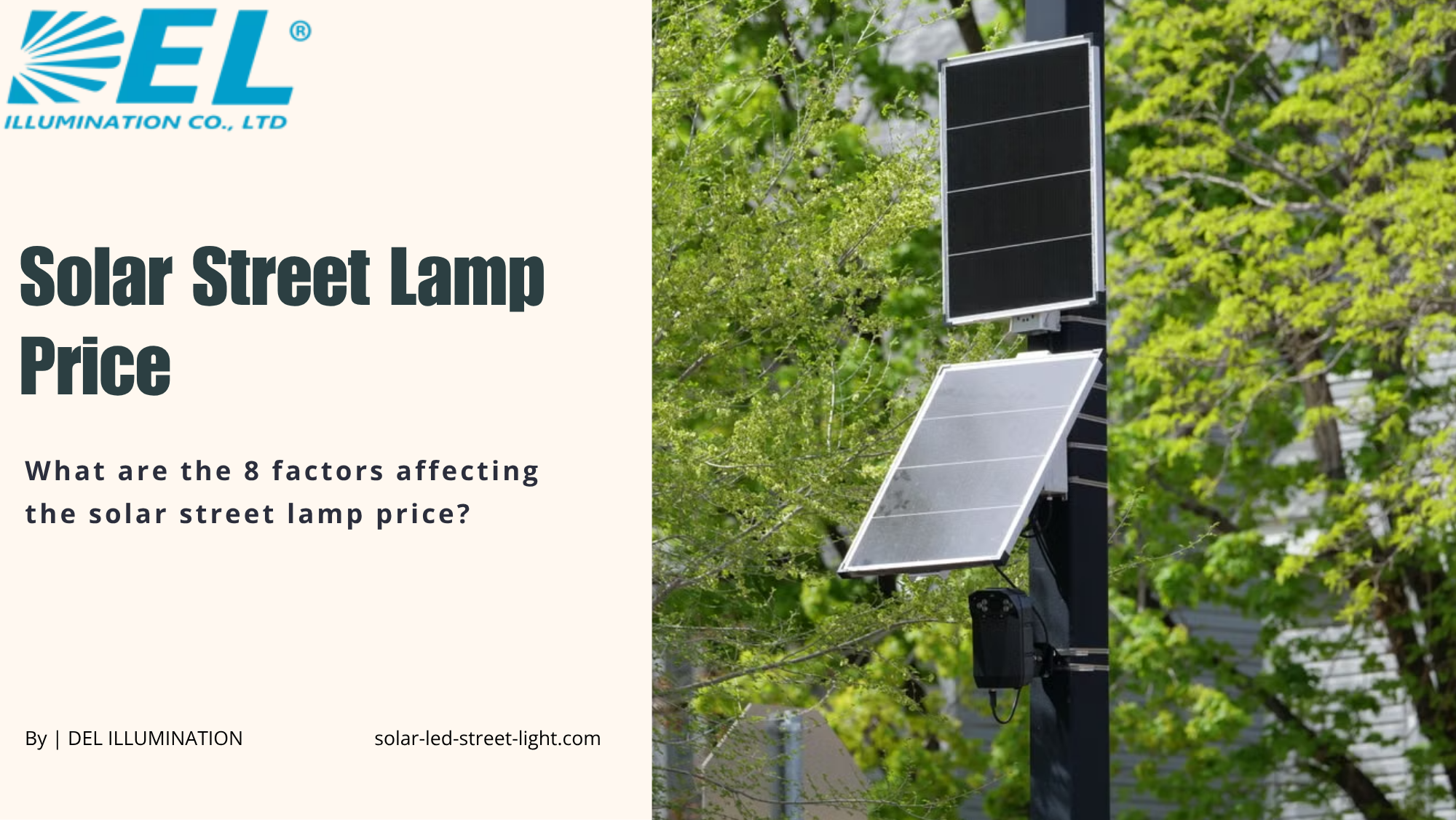
Solar street lamps are among the most common street lights used all over the world. They illuminate streets at night, roads, highways, and open ground, and are also used for surveillance in sensitive areas where continuous lighting is needed to ensure proper visibility. However, not all solar street lamps are created equal, and some offer higher efficiency, performance, and more advanced specifications than others.
The specifications of a street lamp depend on its intended use, since some projects call for advanced features while others only need standard lighting output. In every case, solar street lamp price depends significantly on these specifications, along with the quality of components used in manufacturing the fixture.
In this article, we will walk through some of the important specifications and factors that affect solar street lamp price, so you can balance your budget against your project requirements. This will help you make an informed decision and get the best value out of your investment. The factors that influence the price of solar street lamps are as follows.
1. Solar Lamp Technology
This is one of the most important factors affecting solar street lamp price. Several different lighting technologies are available on the market, and each affects performance efficiency differently. When advanced technology is used to manufacture solar lamps, the price is typically much higher than when traditional technology is used. For example, LED lighting tends to cost more upfront than incandescent, high intensity discharge (HID), high pressure sodium (HPS), or metal halide (MH) options, though LED usually delivers better long term value through lower running costs.
2. Power Rating of the Solar Lamp
Street lights with different power ratings, measured in watts, are available on the market. Solar lamps with higher wattage ratings provide greater levels of illumination compared to those with a lower wattage rating. The wattage rating of a solar lamp, along with other factors, is also closely tied to how much area the light can cover.
It is important to accurately assess your illumination and coverage needs before purchasing a solar street lamp. Solar street lamp price depends heavily on wattage rating, since higher wattage models are significantly more expensive than lower wattage ones. A power rating of 15 to 60 watts is generally recommended for standard street illumination, while higher ratings are reserved for more demanding applications.
3. Pole Height
Solar street lamp price is also affected by the height of the pole on which the fixture will be mounted. When a taller pole is required, it affects how much light actually reaches the ground, since the scattering effect increases with height. Because of this, a lamp with an appropriate power rating needs to be paired with the correct pole height to meet lighting requirements, which in turn affects your budget. A taller pole is also more expensive than a standard sized one, adding to the overall cost of the street light system.
4. Number of Lighting Hours
This is another important specification that significantly influences solar street lamp price, since it relates directly to the solar panel and battery, both integral parts of the system. Lighting hour requirements vary by region, and panel and battery specifications are chosen accordingly. Most solar street lamps are designed for six to twelve hours of coverage, though systems offering longer coverage are also manufactured for special requirements. The price of the system is directly tied to how many lighting hours are needed, and longer coverage significantly increases the cost.
When more lighting hours are required, a higher rated solar panel and battery must be installed to ensure enough stored power is available when needed.
5. Number of Rainy Days Covered
One important factor to consider when installing solar street lamps is that during the rainy season, solar radiation may not be available consistently throughout the day, even though lighting may still be needed for long hours each night. This is especially relevant in regions that experience a higher number of rainy days on average. Solar lights are typically designed to provide lighting for a specific number of consecutive rainy days without full sun. This also affects solar street lamp price, since higher rainy day coverage requires a larger battery storage rating.
6. Controller
Solar street lamps usually come with a controller that continuously measures the intensity of natural light nearby and turns the artificial lighting system on or off accordingly. This is an intelligent solution that removes the need for manual control of the lights. However, a higher quality controller also adds to the overall solar street lamp price.
7. Waterproofing
Waterproofing is highly important for solar street lights since they are constantly exposed to rain and moisture. Providing a reliable waterproofing mechanism requires special materials and sealing techniques, and this is one more variable that affects the overall solar street lamp price.
8. Maintenance and Installation Costs
Solar street lamps also require ongoing maintenance for various reasons, which adds to the overall cost over the lifetime of the system. Taking precautionary measures during installation can help minimize future maintenance needs, though this too can add to the upfront cost.
Installing solar street lamps also requires a skilled workforce, and while wiring requirements are far lighter than traditional grid connected lighting, there are still labor and equipment costs that should be factored into the overall solar street lamp price. If you are planning a larger rollout, our guide on the factors influencing the cost of solar street lights covers budgeting for bigger projects in more detail.
There are other secondary factors that can affect the overall price of installing solar street lamps in a given area, but the factors covered above are usually sufficient for making a solid cost analysis before you invest in solar street lighting. According to the U.S. Department of Energy, continued advances in solar technology and manufacturing scale are expected to keep driving equipment costs down over the coming years, which is good news for anyone budgeting a solar lighting project today.
If you are ready to compare specifications and pricing for your own project, take a look at our All in One and All in Two solar street light product pages, or feel free to contact us for a personalized quote.
Frequently Asked Questions
1. What is the average solar street lamp price for a standard installation?
Pricing varies widely based on wattage, pole height, and battery capacity, but most standard fixtures fall within a moderate range that is offset over time by having no electricity bills or trenching costs.
2. Why does LED technology cost more than traditional lamp types?
LED fixtures use more advanced components and deliver higher efficiency and a longer lifespan, which raises solar street lamp price upfront but usually results in lower long term running and maintenance costs.
3. How does pole height affect the overall cost of a solar street lamp?
Taller poles require sturdier materials and more complex installation, and they also change how light scatters toward the ground, which may require a higher wattage lamp to maintain adequate brightness.
4. Do I need a larger battery if my area gets a lot of rainy days?
Yes. Areas with more overcast or rainy days typically need a larger battery and solar panel to store enough energy in advance, which raises the overall solar street lamp price.
5. How can I reduce the long term solar street lamp price for my project?
Choosing a quality controller, proper waterproofing, and a well matched battery and panel size upfront can significantly reduce maintenance needs and extend the working life of the system, lowering the total cost of ownership over time.