
There are several solar street light parts that come together to build a complete commercial solar lighting system. Which components a manufacturer chooses can make or break that system over time. Below is a quick overview of the solar street light parts used in most standard setups, along with practical tips for each one. Keep in mind that not every manufacturer uses identical parts in their solar lighting systems.
Solar Street Light Parts Overview and Tips
The Solar Battery Assembly
This assembly includes the wiring and batteries that connect to the solar panel and the light fixture. Batteries should be sized for at least five days of autonomy, which helps extend their working life, typically five to seven years, while still supplying power to the system during stretches of poor sunlight caused by bad weather.
The battery assembly should sit inside a vented aluminum battery box that offers heat ventilation, and it is best positioned beneath the solar panel for extra shade so the batteries do not overheat. Newer designs also use lower battery box framing with bolted panels for easier access during maintenance, though when a system is sized correctly this is only needed every few years or so.
Solar Light Fixture
LED fixtures are now the most common pairing among solar street light parts, though other lamp choices remain available. The fixture should deliver the required light level on the ground for clear visibility while staying as energy efficient as possible.
Choosing the fixture style, light level, and distribution pattern is the first step toward getting the lighting system you actually need for your road lighting project. Getting these solar street light parts right from the start avoids costly swaps later. LED technology has widened the range of available styles, from standard cobra head street fixtures to decorative pendant style units and everything in between, all while delivering strong lighting performance at a much lower wattage.
Solar Panel Assembly
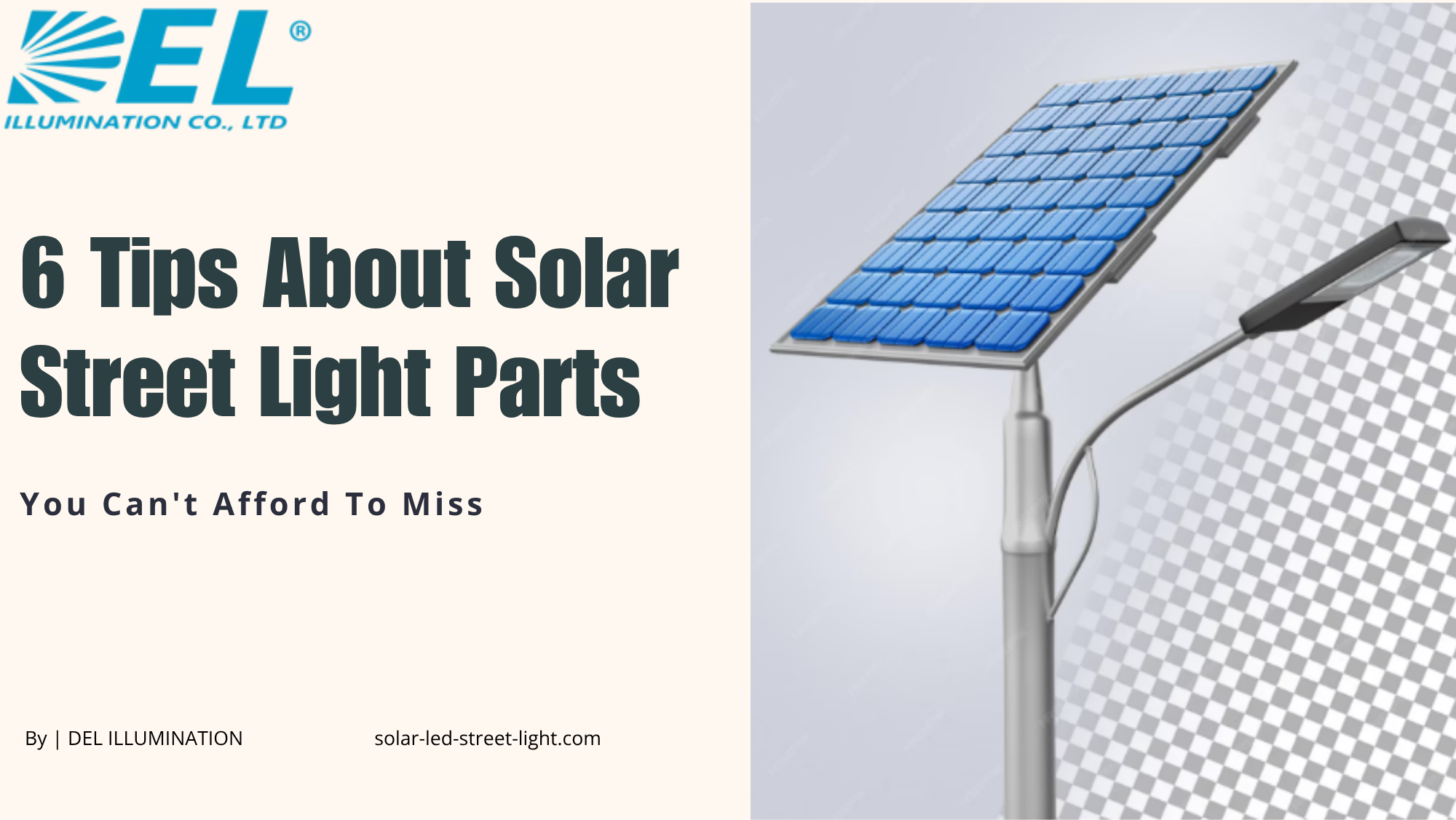
This part of the system contains three main pieces, the mounting bracket, the solar panel itself, and the supporting hardware. There is no simple way to just attach a bare panel to a pole. Brackets and mounting hardware are required to make that connection work. A raw solar panel on its own only consists of the solar cells, glass, and frame, so a dedicated bracket assembly must be added before it can be mounted to a pole. For a closer look at how panel sizing ties into overall project planning, our guide on factors to include in a solar street light project proposal is worth reading.
Using stainless steel hardware with an all aluminum bracket frame helps your solar panel assembly hold up over time, particularly in harsh environments prone to rust and corrosion. It is also worth securing the back of the panel with a vented panel pan for added protection against wind blown debris and vandalism.
Light Controls
Among the various solar street light parts, the light controller usually sits inside the battery box and manages the on and off function of the whole system. It also runs the correct operating profile for individualized run times.
The controller should include a low voltage disconnect feature that protects the battery once it drains to a critical point, preventing it from ever running completely flat and extending the life of the battery system. Control options range from dusk to dawn operation, sunset for a set number of hours, split time schedules, and more. It is worth speaking with a solar lighting professional about which controls fit your specific project.
The Pole
The pole is the final piece among the main solar street light parts in any successful installation. It needs to be strong enough to support the fixture and tall enough for the panel to sit above it, while still keeping the fixture mounted at the right height for proper light coverage on the ground. In some regions, the pole also has to meet local wind load requirements together with the panel attached.
Poles come in aluminum, fiberglass composite, steel, or concrete, and can use either direct burial or anchor base mounting. Transformer base poles can also work for certain applications. Understanding what goes into pole selection helps confirm your pole will hold up well over time.
The Fixture Mounting Bracket
The fixture mounting bracket holds the light fixture onto the pole at a set distance. It can range from just a few inches, such as a side of pole tenon bracket around five inches long, up to several feet out from the pole, such as a side mount bracket typically four to eight feet long, though spans of twelve to fifteen feet are available when needed.
This bracket positions the fixture away from the pole to place light exactly where it is needed on the ground, while also giving the required setback from the roadway. The bracket itself can be plain, feature an upsweep, or even be decorative depending on the design requirements of the lighting project.
Solar Street Light Parts: Wrap Up
There you have it. Understanding which solar street light parts go into a commercially built solar lighting system, along with the tips above, will help you know exactly what you are getting when you speak with a manufacturer. Every part should consistently fit together and function smoothly for years to come. If you want to see complete assemblies built from these components, our All In One Solar Street Light page has more detail, and for background on battery technology used in these systems, this overview from Wikipedia on aluminum air batteries is a useful external reference.
Frequently Asked Questions
1. What are the main solar street light parts in a typical system?
The main parts include the battery assembly, the light fixture, the solar panel assembly, the light controller, the pole, and the fixture mounting bracket.
2. Which solar street light parts affect the fixture’s lifespan the most?
The battery assembly and the light controller tend to have the biggest impact, since proper sizing and a working low voltage disconnect protect the battery from premature failure.
3. Do all manufacturers use the same solar street light parts?
No. Manufacturers vary in the quality and design of components they use, which is why it helps to ask specifically about the parts going into your system before purchasing.
4. How often do solar street light parts need maintenance?
When a system is sized and installed correctly, most components need only occasional checks, often just every few years, though battery replacement is generally needed every five to seven years.
5. Why does pole selection matter among solar street light parts?
The pole supports the entire fixture and panel assembly, so choosing the right material and height ensures proper light coverage and helps the system meet local wind load requirements.