
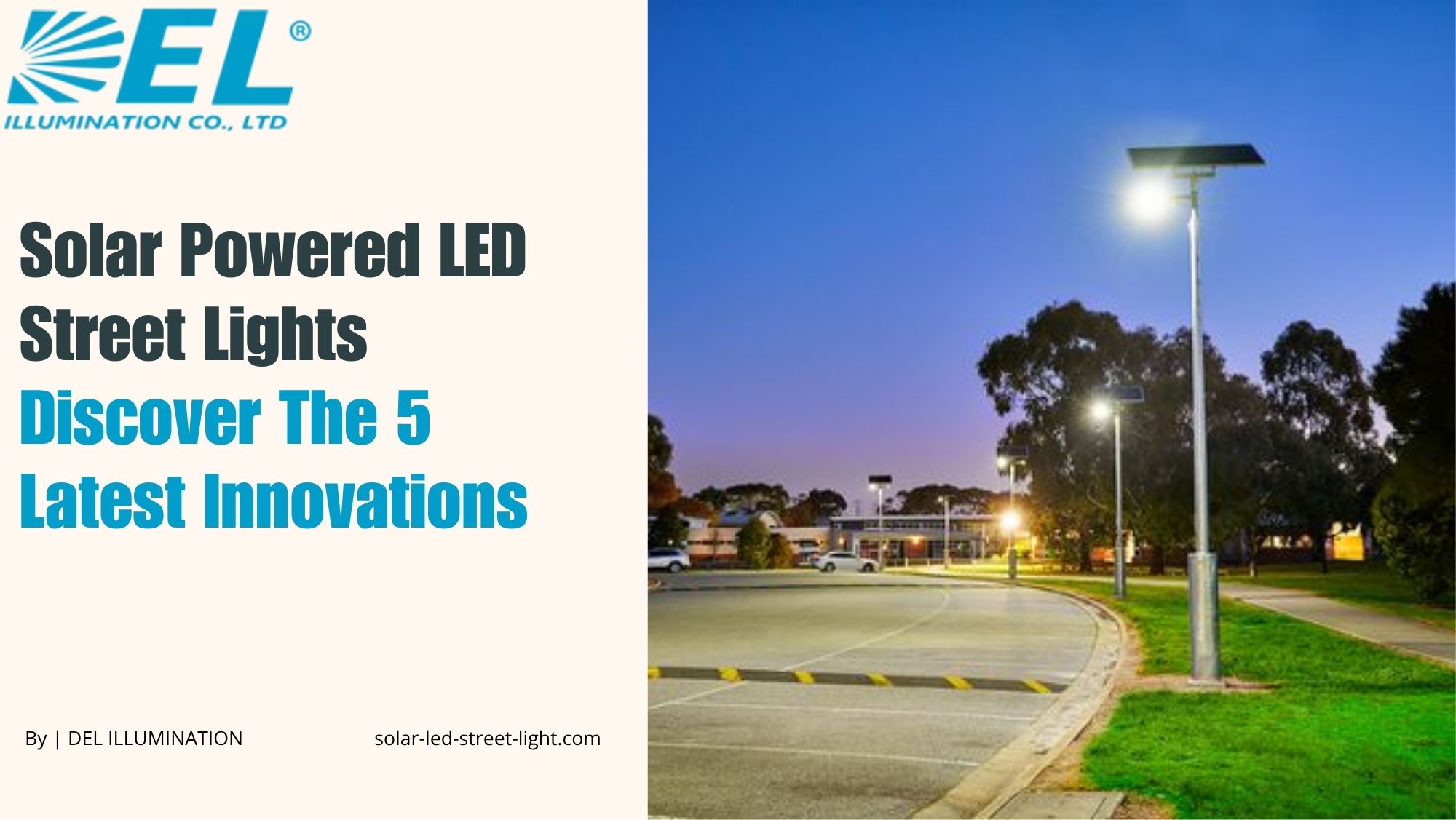
There is an unusual movement of technology in the solar powered LED street lights industry toward integrated intelligent systems. Besides combining all solar energy resources, there is the growing use of mobile applications to control the operations of a street light system.
Substantial technical development has taken place in the field of street lighting. We have seen the rise of solar and LED technology, and scientists are putting a lot of effort into making these two fields more efficient. Others are stepping in to take control of the solar street light and introduce a form of automation to regulate the energy generated. If you want a proven example, our All in One Solar Street Lights show how far this technology has come.
New technology in solar powered LED street lights is a game changer and has made them a viable option in public and private applications.
Solar Powered LED Street Lights Design
1. Integrated Solar Powered LED Street Lights
Several companies and research centers have emerged and are still exploring new designs and technologies for solar street lights. To achieve a perfect integration of all the components into one configuration, the battery and solar panel must reduce in size while still offering high storage and strong solar energy conversion.
Integrated solar powered LED street lights seek to solve the problem of high temperatures in tropical and sub tropical climates. Installation of solar powered LED street lights can also become a cumbersome process when you consider the many wiring cables required. The integrated design comes with easy plug and play installation.
2. Modular Solar Powered LED Street Lights
Modular design is an approach where the solar LED street light is composed of smaller, interchangeable parts or modules that can be easily assembled, disassembled, or replaced. Each module performs a specific function and can be added or removed without affecting the rest of the system. Using modular design in solar powered LED street lights simplifies installation and maintenance. Each component, such as the solar panel, battery, and LED lights, can be replaced independently without requiring a complete replacement of the entire system.
3. Battery Technology
As suggested earlier, batteries are heat sensitive, so there is a need for advanced technology that can support different climatic conditions. In areas that receive high temperatures, nickel metal hydride batteries can supersede lead acid and lithium ion batteries. The newer chemistry shows high service life when subjected to both deep cycling and high temperature.
Besides lead acid, lithium ion, and nickel metal hydride, there are a variety of battery technology options. These include:
- lithium nickel manganese cobalt (NMC)
- lithium iron phosphate (LFP)
- lithium nickel cobalt aluminum (NCA)
- lithium titanate (LTO)
- lithium manganese spinel (LMO)
- Molten Salt Storage Technology
- Gel Cell Deep Cycle Battery
- Lithium Ferro Phosphate (LiFePO4)
Research centers and solar companies are still working to add smart technology and long service life while achieving lower cost, better rate capability, higher energy density, faster activation, and resistance to high temperatures and deep cycling. To understand how these parts work together, understanding the solar street light working principle is a helpful companion read.
Contemporary solar powered LED street lights come with a battery management system (BMS). The BMS assumes control from the solar panel through to the lighting levels. A more advanced approach adds an adaptive lighting feature that activates depending on the weather and battery charge level. Other BMS features include no blackout modes, battery life extension, and connectivity options.
4. Solar Panel Technology
Scientists are also working on technologies that optimize the performance of solar panels. In solar cell research, the discovery of gallium arsenide, a material that triples the efficiency of existing solar cell technologies, is especially promising.
Modern solar panels can track the movement of sunlight. This technology seeks to maximize the solar energy conversion rate by guiding energy into the system. Some solar powered LED street lights come with panels that have a built in rechargeable battery, a design believed to lower the cost of the product by up to 25%. According to the International Energy Agency, solar PV efficiency keeps improving year on year, which directly benefits street lighting.
5. Conventional Street Light Lamps
Traditionally, solar street lights used high pressure sodium, metal halide, and low pressure sodium lamps. The growing need to replace conventional bulbs has led to cutting edge alternatives such as the light emitting diode and compact fluorescent lamps.
In solar powered LED street lights, LED technology is preferred over high pressure sodium or metal halide because it occupies less space in the lamp and has a higher luminous efficacy. It also consumes at least 50% less energy than conventional light sources.
Smart Energy Management and Control Technology
Intelligent Sensor Technology
Smart solar powered LED street lights come with motion sensing technology to enable automation. In solar powered LED street lights, sensor technology adjusts light levels when there is activity below the street light and as the surrounding ambience changes. Advanced units also include an inbuilt alarm sensor that triggers when someone touches the pole, an anti theft feature that addresses the risk of theft. When planning a site with sensors and controls, our Solar Lighting Project Checklist keeps every requirement in one place.
Dust Cleaning Circuit
On a windy day, dust particles settle on the surface of the solar panels. Accumulation reduces the conversion rate of the panels. Adjusting the solar panel tilt angle can help minimize dust, but it limits exposure to sunlight. Modern solar powered LED street lights come with a dust cleaning circuit, a robotic wet and dry auto cleaning system that brushes dust off the panel surface.
Mobile Application
The mobile application addresses the need for remote switching of the LEDs and lets you check the status of the unit. The app software uses a Bluetooth module for wireless connectivity and even allows you to change the tilt angle. Beyond control, the application provides real time updates on the components in your system. Knowing the state of your streetlight service life helps in predicting and scheduling repairs and maintenance. The same monitoring approach applies when you choose the best solar LED parking lot lights for larger commercial sites.
Solar Powered LED Street Lights: Conclusion
New solar powered LED street lights aim for enhanced connectivity, lower greenhouse gas emissions, and stronger sustainability. The best way for companies and research centers to develop smart and efficient solar powered LED street lights is through cutting edge technology. In streetlights, that technology revolves around the battery, the solar panel, and the lighting system. If you have a project in mind, please feel free to contact us and our team will guide you.
Frequently Asked Questions
What are the newest innovations in solar powered LED street lights?
The leading advances are integrated and modular designs, smarter battery chemistries with a battery management system, sun tracking solar panels, self cleaning dust circuits, and mobile app control for remote monitoring.
Why are integrated designs better for hot climates?
Integrated units are engineered to manage heat that would otherwise shorten battery life in tropical and sub tropical regions. They also cut installation complexity by removing most external wiring.
Which battery type lasts longest in high temperatures?
Nickel metal hydride and modern lithium iron phosphate cells handle heat and deep cycling better than older lead acid batteries, giving longer service life and more reliable all night performance.
Do solar powered LED street lights need cleaning?
Panels collect dust that lowers energy conversion. Many modern units include an automatic dust cleaning circuit, though occasional manual checks still help maintain peak output.
Can I control solar street lights from my phone?
Yes. Many systems pair with a mobile app over Bluetooth, letting you switch lights on or off, adjust settings, change tilt angle, and monitor component status in real time.