
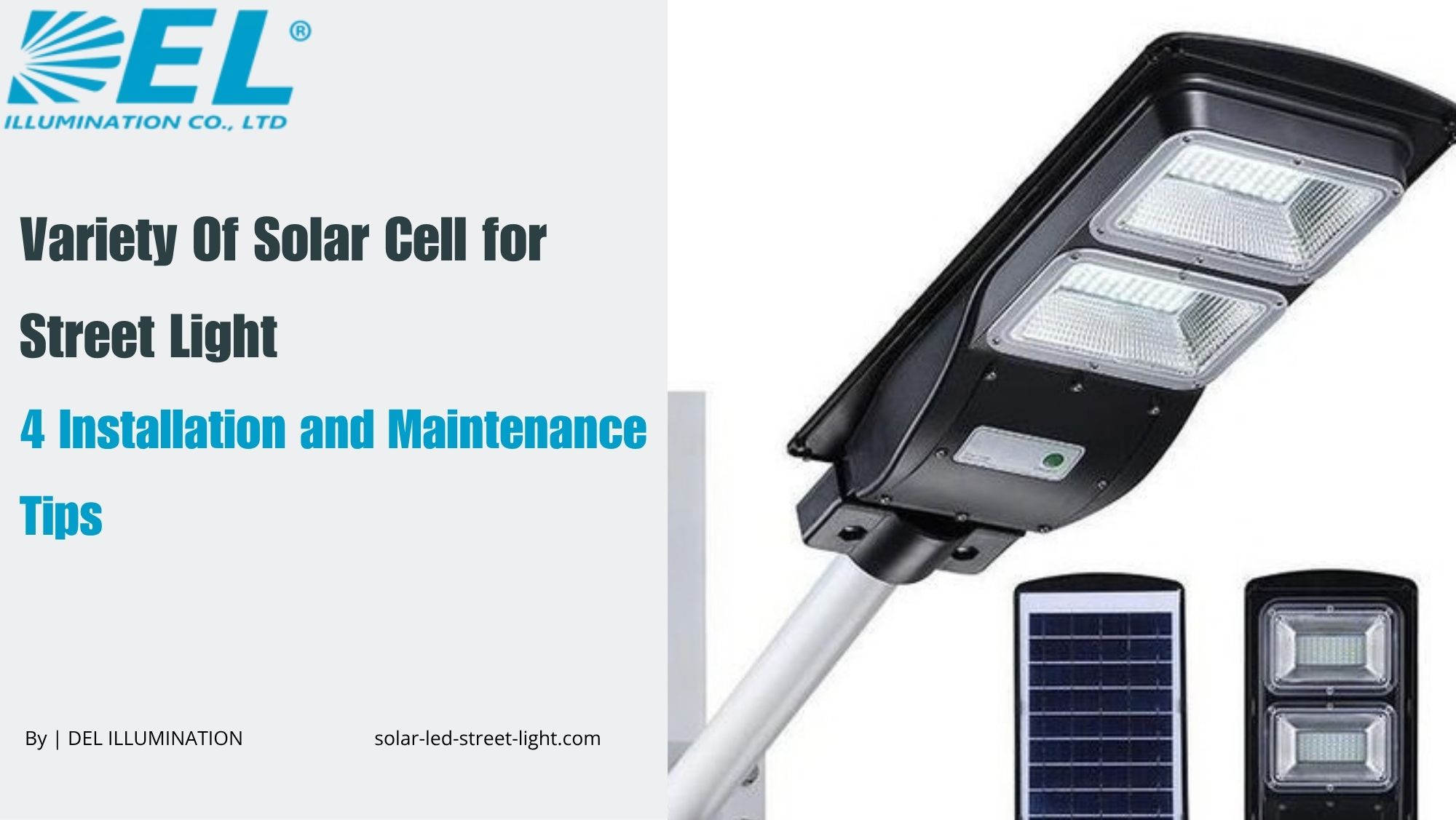
Using a solar cell for street light power is a great way to reduce greenhouse gas emissions. It is also a great way to save money on energy costs. Solar cells are devices that convert sunlight into electricity. They are made of semiconductor materials, such as silicon. Solar cells are often used in calculators and watches, and they can also be used to power homes, businesses, and public lighting.
Streetlights are important for safety and security, but they also use energy. A solar cell for street light use can power a streetlight on its own. This means that the streetlight does not need to be connected to the electric grid and does not need to be powered by fossil fuels. In modern all in one solar street lights, the solar panel, battery, controller, and LED lamp are combined in one compact unit.
Solar street lights are a great way to light up a street or pathway without needing traditional grid based power. However, one of the challenges with solar street lights is that they need a reliable source of sunlight to function properly. This is where choosing the right solar cell for street light projects makes all the difference.
Solar Cells are a Great Way to Power Streetlights
Solar cells are an increasingly popular way to power streetlights. Solar cells are a clean and renewable energy source, and they can be used to power streetlights without the need for a traditional power source like the grid. Each new generation of solar cell for street light use is more efficient, meaning more light can be produced from a smaller panel.
Solar cells are a great way to power streetlights because they are a clean and renewable energy source. Solar cells do not produce emissions while operating, and they can be used to generate electricity without relying on fossil fuels. The International Energy Agency identifies solar PV as one of the leading technologies for expanding clean electricity around the world.
Solar cells are also becoming more efficient, meaning that more light can be produced with less solar cell material. This is important because it means that a compact solar cell for street light fixtures can power a bright lamp without needing a large amount of space on the pole.
Solar Cells for Street Lights are Environmentally Friendly
Solar cell technology has come a long way in recent years, and solar cells are now commonly used to power street lights. Solar street lights are environmentally friendly since they don’t produce any emissions or pollution while running. They’re also very efficient, using only a small amount of energy to run.
Solar cell street lights are a great option if you’re looking for an environmentally friendly way to light up your street. Not only are they good for the environment, but they’re also very efficient and easy to install.
Different Types of Solar Cell for Street Light
Solar cells come in a variety of shapes and sizes, and they are made from different materials. The most common type of solar cell for street light use is the crystalline silicon cell. These are made from either a single crystal (monocrystalline) or a polycrystalline silicon wafer. Another type is the cadmium telluride (CdTe) cell, which is made from a thin film of cadmium telluride deposited on a glass substrate.
There are also thin film solar cells made from amorphous silicon, copper indium gallium selenide (CIGS), and other materials. Solar cells are typically classified by their material composition and their structure.
Monocrystalline vs Polycrystalline
Today, monocrystalline silicon is the most popular solar cell for street light products. It offers the highest efficiency in a small area, which suits compact all in one fixtures. Polycrystalline cells cost a little less but need more surface area for the same output, so they are now used less often in new street lighting designs.
Efficiency
Solar cells are also classified by their efficiency, which measures how well they convert sunlight into electricity. Solar cell efficiency is usually expressed as a percentage. A good monocrystalline solar cell for street light panels typically reaches around 20% to 23% efficiency at module level, while the best silicon cells in laboratories have exceeded 26%. CdTe modules usually reach around 18% to 20%, and amorphous silicon cells reach only around 6% to 9%.
Temperature
Solar cells are also affected by operating temperature. Standard solar panels are rated to work from about minus 40 to 85 degrees Celsius, but their output falls as they get hotter. Crystalline silicon panels typically lose around 0.3% to 0.5% of their power for every degree above 25 degrees Celsius. CdTe panels lose slightly less power in heat, which can help in very hot climates.
There are many different types of solar cells available on the market today. When choosing a solar cell for street light projects, the most important things to consider are its efficiency, its performance in heat, and its expected lifespan.
4 Installation Tips for Solar Cells
If you’re considering installing solar street lights, you should keep a few things in mind to ensure a successful installation. Good planning at this stage protects your investment for years. For larger projects, a solar lighting project checklist helps you record site conditions before you order.
Tip 1: Choose a Spot With Direct Sunlight
Solar cells should be installed in an area that receives direct sunlight for most of the day. This will ensure that each solar cell for street light panels receives enough energy to charge the battery fully.
Tip 2: Face the Panel Toward the Equator
The panel should face south in the northern hemisphere and north in the southern hemisphere, tilted at an angle close to your local latitude. This maximizes the amount of sunlight the cells receive across the year.
Tip 3: Avoid Shade and Obstructions
The cells should be installed so they will not be obstructed by trees, buildings, signboards, or other objects. Even partial shade on one part of the panel can reduce output sharply.
Tip 4: Use a Sturdy Pole and Mounting
The panel should be installed on a sturdy pole and bracket that can support its weight and withstand strong winds. A proper concrete foundation keeps the whole light stable.
Finally, it is important to work with a qualified supplier or installer to ensure that the panel, battery, and lamp are sized correctly and that the entire system is safe. With these tips in mind, you can be sure your solar street light installation will succeed.
Maintenance Tips for Solar Cell for Street Light
Solar cells are a great way to generate electricity, but they require some upkeep. Here are a few tips to keep your solar cell for street light panels in top condition:
Keep Them Clean
Dust, dirt, bird droppings, and grime can reduce your solar cells’ efficiency. Make sure to keep them clean with regular wiping or rinsing with plain water, especially in dusty or dry regions.
Check for Damage
If you notice any cracks, chips, or other damage to the panel, it’s important to have it repaired or replaced as soon as possible. Not only will this restore efficiency, but it will also help prevent moisture from getting inside.
Allow Good Airflow
Solar cells work best when they’re cool, but they still need full sunlight to work. Never shade the panel to cool it. Instead, make sure there is space behind the panel for air to flow, which helps it shed heat on hot days.
Inspect Regularly
It’s a good idea to inspect your solar street lights every few months to ensure they’re still in good condition. This way, you can catch any problems early and prevent them from getting worse.
Conclusion
A solar cell for street light systems is the most important element in solar street lighting, because it supplies all the energy the light uses each night. By choosing the right solar cell for street light projects and maintaining it properly, you can ensure it will last many years. Following the tips above, you can keep your solar cells clean and working properly. In addition, you should check the condition of the wires and connections regularly to ensure that they are in good condition. By taking these steps, you can keep your street lights running smoothly and efficiently for many years.
DEL Illumination works as a solar street lighting engineering solution expert, matching each solar cell for street light designs to the battery, lamp, and local sunlight of the project. Contact our team to find the right solution for your site.
Frequently Asked Questions
1. Which solar cell for street light use is best?
Monocrystalline silicon is the most common choice today. It offers high efficiency in a small area, which suits compact solar street light designs and gives reliable output over a long life.
2. How long do solar panels on street lights last?
Quality solar panels usually keep working for 20 years or more, although their output slowly declines over time. The battery normally needs replacing sooner than the panel.
3. Do solar cells work on cloudy days?
Yes, but at reduced output. A correctly sized battery stores enough energy to keep the light running through several cloudy days, which is why system sizing matters as much as the panel itself.
4. How often should solar street light panels be cleaned?
In most areas, cleaning every few months is enough. In dusty, desert, or coastal areas, panels may need cleaning more often to keep their output high.
5. Does heat reduce solar panel performance?
Yes. Solar panels lose a small amount of power for every degree above 25 degrees Celsius. Good airflow behind the panel and choosing panels with a low temperature coefficient help reduce this loss.