
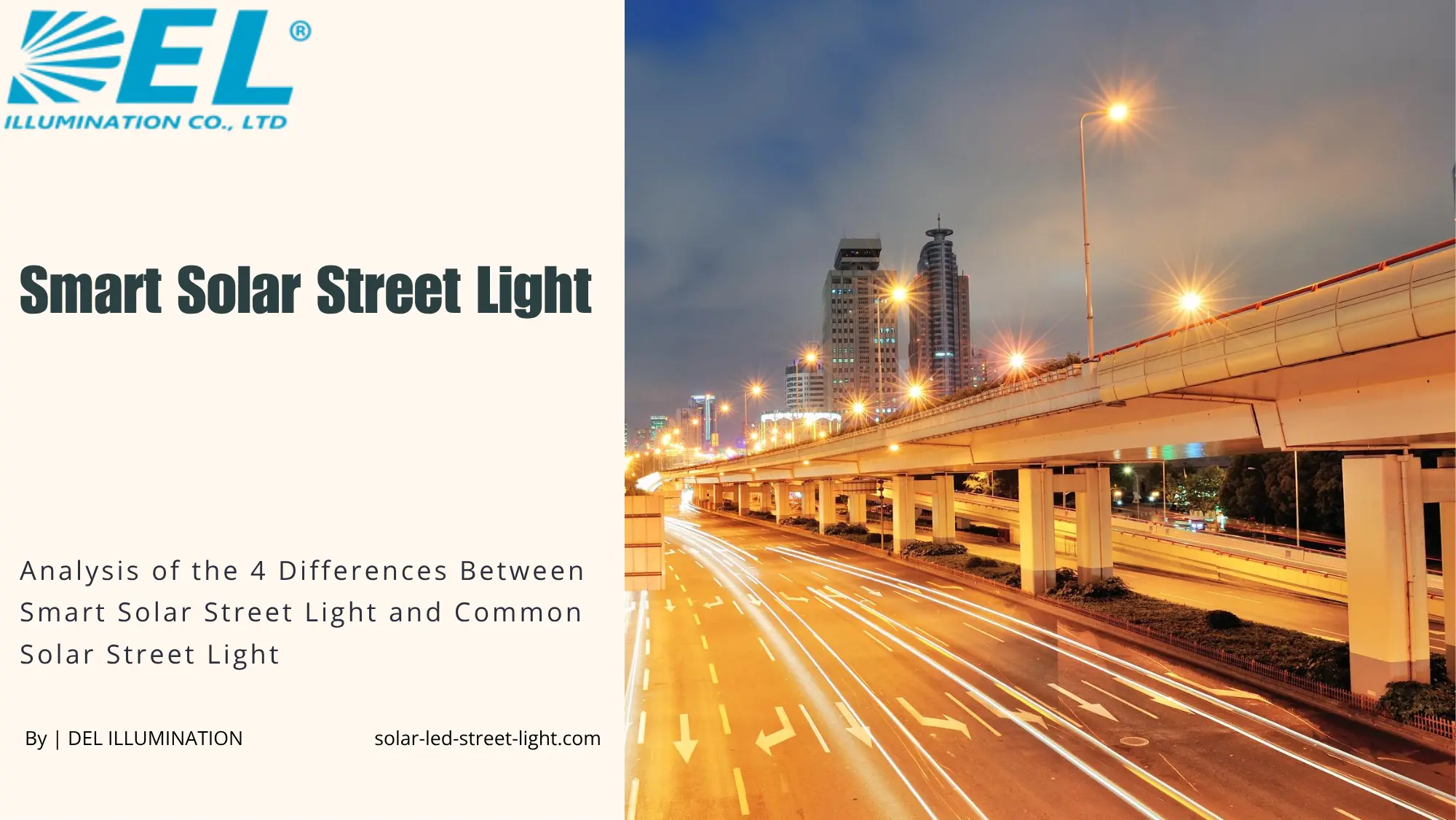
When night falls, the solar street light on both sides of the road glows and illuminates the entire road, and the city looks like day. Solar street lights can be seen in many places nowadays, but a smart solar street light is rare. Smart solar street lights are a more advanced technology product that extends beyond the capabilities of ordinary solar street lights. For the fundamentals of how these systems work, our guide on the solar street light working principle is a helpful companion read.
What Is a Smart Solar Street Light?
It’s a lighting system that utilizes solar energy to power LED lights on the street. It’s equipped with advanced technologies such as sensors, controllers, and communication devices that allow for remote monitoring, automatic adjustment of lighting intensity and duration, and data collection and analysis. Learn more in our post on the 9 benefits of solar light remote control technology.
Similarities in Operating Principles
In terms of operating principles and application functions, what are the similarities between a smart solar street light and a common solar street light system?
- Both solar street light systems have a lighting function.
- Both are also assembled from six components: solar panels, solar controllers, solar batteries, light poles, light sources, and accessories. Our post on the anatomy of solar LED street light luminaires breaks these down further.
- Both solar street lights operate in the same way, relying on solar panels to convert sunlight energy into electrical energy for operation. To understand the panels better, see our post on what photovoltaic street lights are.
- Both rely on light energy to operate; therefore, both need to pay attention to the installation of the solar panel and ensure that there are no tall buildings or trees around, so as to avoid solar panels from being blocked and affecting their absorption of solar energy. Our solar street light installation guide covers correct panel placement.
The Differences Between Smart Solar Street Light and Common Solar Street Light
How different are these two lighting solutions in 2026?
- The function of a smart solar street light is much more than that of a common solar street light. In addition to the common lighting function, it also has the functions of real time monitoring and playing music.
- In terms of components, in addition to the main six components, smart solar street lights have accessories such as cameras and speakers. The intelligent control behind these features is explained in our guide to the solar street light controller, and our post on the 8 benefits of a solar sensor street light covers the sensor side.
- Smart solar street lights have more flexible installation requirements. In addition to locations suitable for common solar street lights, areas that need to be fireproof, such as forest areas, are also a good choice. Forest areas are not in high demand for lighting, but the inspection requirements are very strict, and a smart solar street light can play a role there.
- Nowadays, the poverty alleviation work has changed from extensive poverty alleviation to precise poverty alleviation. Common solar street lights and poverty alleviation are based on a poor village as a unit to solve the lighting work of countryside roads, so as to solve the difficulty in traveling at night for farmers. Our post on how village solar street lights help rural communities shows this impact firsthand.
The Future of Smart Solar Street Light
As cities worldwide continue to grow and develop, the demand for sustainable and energy efficient infrastructure increases. One technology that has the potential to revolutionize urban lighting systems is the smart solar street light.
Potential for Smart Solar Street Light in Smart City Development
This revolutionary solar street light technology offers numerous benefits to smart city development. With its ability to remotely monitor and control lighting systems, smart solar street lights can provide more efficient and cost effective lighting solutions. Moreover, solar street lights can be integrated into larger smart city networks, creating a more cohesive and interconnected infrastructure that can improve safety, reduce energy consumption, and enhance overall quality of life. Our post on the 4 LED solar street light innovative solutions explores more of this technology.
Role of IoT and AI in Enhancing the Capabilities of Smart Solar Street Light
The integration of IoT and AI technologies into smart solar street lights can enhance their capabilities even further. IoT sensors can collect data on traffic patterns, weather conditions, and pedestrian activity, allowing the lighting system to adjust its settings accordingly. AI algorithms can analyze this data and optimize lighting schedules and intensity, further reducing energy consumption and enhancing safety. For the circuitry behind this, see our guide on how to make a smart solar street light circuit.
Challenges and Opportunities for Smart Solar Street Light Adoption
While the future of smart solar street light technology is bright, there are still challenges that need to be addressed. One major challenge is the upfront cost of implementing such systems. Our post on the 8 ways that affect solar street light price breaks down what drives cost. Additionally, there may be regulatory and policy hurdles that need to be overcome to ensure the widespread adoption of smart solar street lights. Our post on understanding solar light pole street restrictions covers common local rules.
Despite these challenges, the opportunities presented by smart solar street lights are significant. Not only do they offer more energy efficient and cost effective lighting solutions, but they also have the potential to be integrated into larger smart city networks that can improve the overall quality of life for urban residents. The U.S. Department of Energy outlines many of these long term efficiency benefits.
Conclusion
Smart solar street lights adopt a whole new mode of “solar street lights plus internet plus precision poverty alleviation.” Poverty alleviation work is not only limited to poor villages but is also accurately targeted to poor households. For a broader buying reference, see our list of the 10 things about the best solar street lights.
Harness the Sun. Get Solar Power Today!
FAQs: Smart Solar Street Light
1. What makes a smart solar street light different from a common solar street light?
A smart solar street light adds real time monitoring, remote control, and often additional accessories like cameras or speakers on top of the standard lighting function. It typically also supports automatic adjustment of lighting intensity and duration based on data collected through its sensors, something a common solar street light cannot do.
2. Do smart and common solar street lights share the same basic components?
Yes, both are built from six core components: solar panels, solar controllers, solar batteries, light poles, light sources, and accessories. A smart solar street light simply adds extra accessories like cameras and communication devices on top of this shared foundation.
3. Are smart solar street lights suitable for remote or forested areas?
Yes, in some cases they’re actually a better fit than common solar street lights. Forest areas typically don’t have high lighting demand but do have strict fire safety inspection requirements, and a smart solar street light’s monitoring and data collection capabilities can help meet those requirements more effectively.
4. How do IoT and AI improve smart solar street light performance?
IoT sensors collect real time data on traffic patterns, weather conditions, and pedestrian activity, while AI algorithms analyze that data to optimize lighting schedules and intensity automatically. This combination reduces unnecessary energy consumption while maintaining or improving safety compared to a fixed, non adaptive lighting schedule.
5. What’s the biggest barrier to wider smart solar street light adoption?
The upfront cost of implementing smart systems is generally the biggest hurdle, since the additional sensors, controllers, and communication hardware raise the price compared to a common solar street light. Regulatory and policy considerations can also slow adoption in some regions, even though the long term efficiency and safety benefits are significant.