
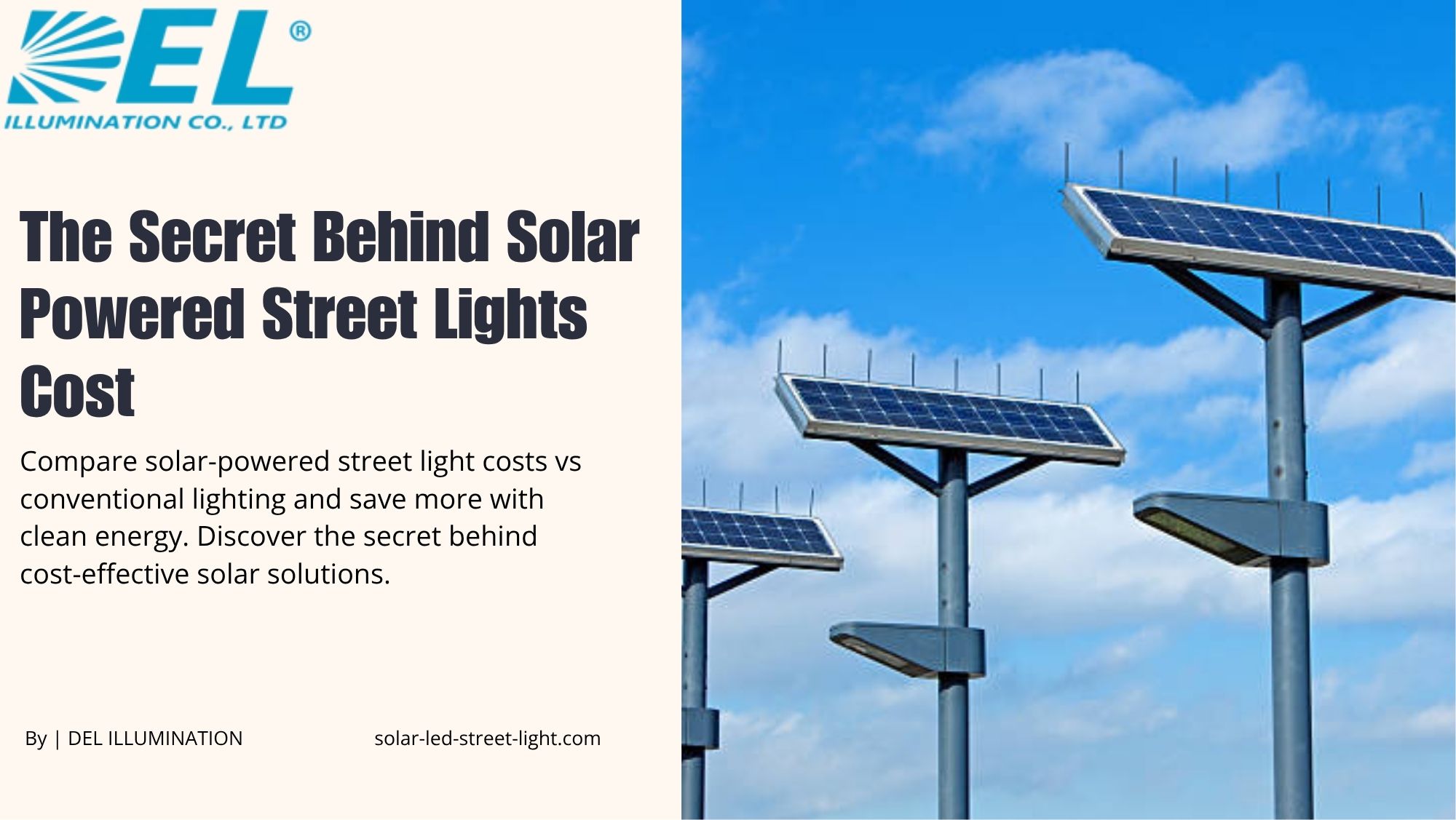
Solar powered street lights are incredible for brightening regions without electricity, for example parks, courtyards, gardens, streets, walkways, campuses and beyond. Why burn through thousands of dollars running power to a remote area on your property and putting an extra cost on your electric bill? With solar lighting there is almost no upkeep, so you simply set it and forget it. In this guide we break down exactly why solar powered street lights save money over their full lifetime and where those savings actually come from. If you want to compare specific models first, browse our All in One Solar Street Lights range.
Solar Powered Street Lights Cost Evaluation Versus Conventional Lights
If you do a fast search on the web, you will see that the popularity of solar lights has surged in the past several years because of rising green technology and mounting energy costs. Amid this shift toward increasingly sustainable power sources for lighting, a major question keeps coming up: how much do solar powered street lights cost compared with conventional street lighting? To answer this, our expert team of engineers gathered the vital data to give a clear cost breakdown of each lighting system. The total road light expenses may surprise you, and the figures below lay out the full picture in an impartial review.
| Category | Solar powered street lights ($) | Conventional lights ($) |
|---|---|---|
| Light | 3000 | 1500 |
| Energy | 0 | 1500 |
| Installation | 1500 | 4500 |
| Maintenance | 1000 | 800 |
| Total | 5500 | 8300 |
Cost of Solar Powered Street Lights Versus Conventional Light Setup
The cost for solar lighting may at first be a hurdle for concerned buyers until you examine the financial details. The greatest difference between the costs of conventional and solar systems lies in the setup expenses tied to conventional lighting.
Conventional lights are connected to a typical electrical network to draw their power, which requires digging and concealed wiring. Once you include labor expenses for digging and wiring, this process charges customers roughly $120 per linear foot. The normal setup expense for conventional lighting then works out to about $4500, considerably greater than the cost of a solar system.
Because these fixtures are self contained and off the main grid, buyers avoid the long and costly process of digging and wiring. The cost of installation drops drastically to around $1500, driving down the complete expense for solar.
Energy Invoices
As a matter of fact these lights gather their energy from the sun, so there are zero energy costs. Conventional lights, on the other hand, rack up roughly $1500 in energy costs over 10 years by drawing power from the main grid, and that is the energy cost of a single road light. An array of ten solar powered street lights will pile up a heavy bill across 10 years. Anyone hoping to buy road lights would prefer lower energy costs, and solar wins this category with no doubt. According to the International Energy Agency, solar photovoltaic technology continues to fall in price year after year, which strengthens the case for solar lighting even further.
Upkeep Costs With LED Lights
Solar LED units are most productive when paired with LED technology to light a zone of concern. You may believe that solar LED lights need higher support and upkeep levels compared with conventional lights. In truth, they actually require less upkeep than conventional lighting systems. The normal lifespan for a conventional road light averages roughly 5,000 to 8,000 hours, which is somewhat below a year of use, while solar units last five to seven years.
The secret is in the technology of LEDs, since they are far more efficient with power than conventional lighting methods and gradually fade over time rather than burning out in a moment. If you want to plan a full deployment, our Solar Lighting Project Checklist walks through every step.
While solar lights get serviced less often, the cost of each service is higher. The battery of a solar light should be changed every five to seven years. The expense of two batteries and labor for those changes averages nearly $1000. This is only marginally higher than the expense for conventional lights, which is around $800 for standard upkeep charges.
There is a whole other side to solar financially than simply saving money long term. Solar lighting systems are also heavily subsidized to support the use of clean power. They offer more than just energy savings and multi year warranties. Many organizations beyond light makers are eager to enter the road lights space. Networked lighting can provide extra public safety measures and dim or brighten based on specific conditions.
Solar Powered Street Lights: Conclusion
When looking at the total expenses of conventional and solar lighting, there appears to be an obvious winner. Overall, solar lighting costs roughly $5500 over 10 years, while conventional lighting costs a steep $8300 due to digging and setup costs. As before, this is the expense of a single road light, and solar powered street lights scale their savings with every extra unit. Imagine 10 lights, or 20. Suddenly, the savings with solar are clear cut.
In the battle of the lighting systems, innovation and development prevail. While conventional lighting systems may have won a few battles, solar powered street lights win the war for road light costs. It is the combination of innovative solar panels with energy saving LED technology that moves these road lights far ahead of the competition. Ready to compare options for your own project? Reach out through our contact page for a tailored quote.
Frequently Asked Questions
How much do solar powered street lights cost over 10 years?
On average, solar powered street lights cost around $5500 over a 10 year period, compared with roughly $8300 for conventional lighting. The savings grow larger as you add more units across a site.
Why are solar lights cheaper than conventional lights?
The biggest saving comes from installation. Conventional lights need trenching and grid wiring at about $120 per linear foot, while solar units are self contained and off grid, cutting setup costs to around $1500.
How long do solar street lights last?
The LED fixtures typically operate for many years, and the battery generally needs replacing every five to seven years. This is far longer than the 5,000 to 8,000 hour lifespan of a conventional road light.
Do solar powered street lights have any energy costs?
No. These lights collect energy from the sun and store it in a battery, so there are no ongoing energy bills, unlike conventional lights that draw grid power at roughly $1500 over 10 years per light.
Are solar street lights good for areas without electricity?
Yes. Solar powered street lights are ideal for parks, campuses, rural roads, gardens and remote sites, since they need no grid connection and almost no maintenance once installed.