
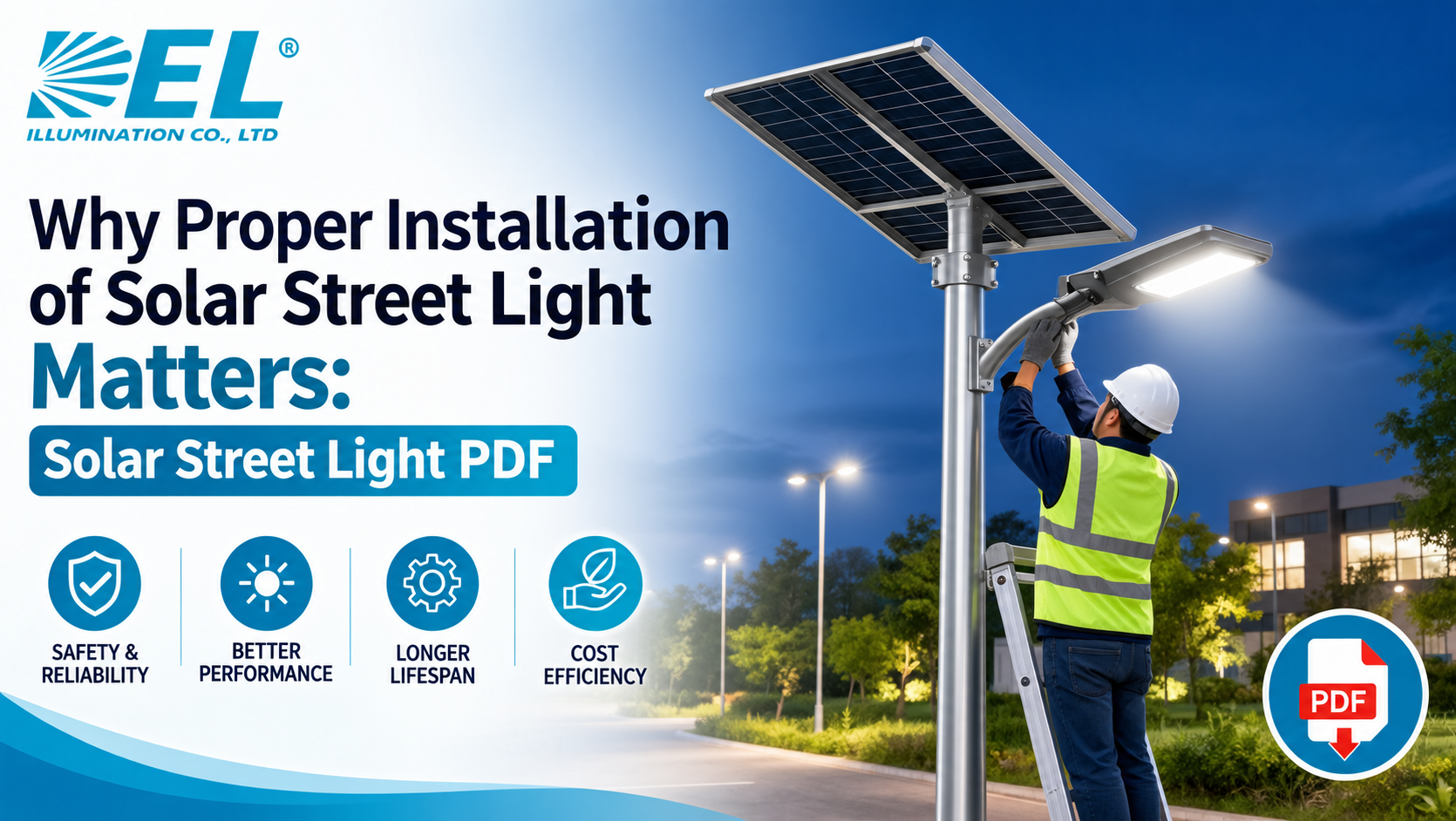
Solar energy has become one of the most popular power sources for street lighting, thanks to its abundant availability and relatively simple setup. Even so, the installation of solar street light fixtures needs to be done right to actually deliver on that promise. Solar energy is readily available from the sun, environmentally friendly, and costs less to run over time, but you only get those benefits if the installation of solar street light hardware is planned and executed properly.
This guide walks through the components, design considerations, and procedures that make the installation of solar street light systems successful, whether you have hands on installation experience or none at all. If you want a fixture engineered to make this process easier from the start, the All in One Solar Street Light bundles the panel, battery, and LED into a single unit that simplifies the entire installation of solar street light hardware on site.
Proper lighting functionality
Correct installation of solar street light fixtures plays a major role in whether the lighting actually functions as intended. Good coverage and minimal power loss both depend on getting the setup right, and a properly installed light also adds a sense of scale and visual continuity to distant stretches of road.
Getting the installation of solar street light hardware right usually starts with a knowledgeable designer who can advise on the right style and layout for the site. A good specialist knows how to balance efficiency against visual comfort, which is the combination that produces genuinely sustainable lighting.
Maintenance cost reduction
A poor initial installation of solar street light equipment tends to mean repeated repair work down the line. Efficient lighting starts with strong luminous efficacy, and street lighting has different demands than lighting a house or an indoor space, since it needs to cover a much wider area while still serving its core purpose of improving security.
That means the installation of solar street light systems should always start with quality solar cell modules. Higher output modules are simply more efficient, and skimping here usually means an earlier, more expensive replacement down the road.
Energy optimization
Solar power behaves differently from grid electricity, since availability is essentially unlimited but your own system design is what limits how much you can actually use. Where a grid connected lighting project is judged on minimizing power consumption, the installation of solar street light systems works the other way around, since the goal is maximizing how much usable power the system can convert and store.
In practice, this means your solar parameters, panel size, battery capacity, and controller settings, need to be matched to the site’s actual light output needs. What the system can store and convert is ultimately what limits performance, so getting this right during installation avoids underpowered fixtures later.
Guarantees street safety
Proper lighting contributes significantly to the safety of streets and the areas around them. Crime tends to be more common in poorly lit areas, since artificial lighting at night works against opportunistic activity by increasing the risk of being seen.
A careful installation of solar street light fixtures also helps motorists spot traffic signs and road hazards more easily, cutting down on accidents. For genuinely reliable street safety, lighting needs to stay uninterrupted throughout the night, and a poor installation of solar street light hardware is one of the more common causes of unexpected dark patches after dusk.
Street enhancement
How fixtures are positioned during installation has a real impact on how a street looks overall. Street lighting design should be planned early, since a thoughtful installation of solar street light fixtures produces a noticeably higher quality result than an afterthought approach.
Good aesthetic design also helps control light pollution, contributes to how well maintained a street feels, and says something about the character of the area it serves.
Getting pole height and design right
Choosing the right pole height and fixture design during installation calls for a few specific considerations.
Scale. Street lighting is usually intended to serve a road’s full width, so pole height should suit the cross section of the street rather than towering out of scale relative to pedestrians and cyclists. Good urban design keeps the scale of the lighting matched to the people actually using the space.
Colour of light. Where pedestrians are a priority, white light generally performs better than yellow or orange tones, since it makes it easier to judge facial expressions and read body language at a distance, which matters for personal security.
Luminance. Recommended light levels vary by setting, with some standards calling for around 10 lux at bus stops and community gathering points in rural areas. Matching luminance to the specific use case is an important part of planning the installation of solar street light fixtures properly.
According to the International Energy Agency, solar generation and storage technology continue to improve rapidly worldwide, which is exactly what makes a well planned installation of solar street light systems increasingly cost effective for municipalities and infrastructure projects alike.
If you would like expert input on your own project, our service page covers how our team supports planning and installation from design through commissioning.
Conclusion
Getting the installation of solar street light fixtures right affects everything from safety and running costs to how a street actually looks and feels after dark. Considering component quality, design, and site specific factors up front pays off in fewer repairs and better performance over the long term. If you would like help planning the installation of solar street light fixtures for your project, reach out through our contact page and our team can walk you through the details.
Frequently asked questions
Why does proper installation matter so much for solar street lights?
Installation quality affects light coverage, power efficiency, maintenance costs, and safety. A poorly installed fixture can underperform or fail well before its expected lifespan.
What pole height should I use?
Pole height should match the width of the street and the spacing between fixtures, staying proportional to the people using the space rather than towering unnecessarily.
Does the colour of the light matter for safety?
Yes. White light generally makes it easier to see faces and read body language at a distance compared with yellow or orange tones, which supports personal security.
How does solar installation differ from a grid connected lighting project?
Grid projects are typically designed to minimize power draw, while solar systems are designed to maximize how much usable energy the panel and battery can convert and store.
What is a reasonable light level for street lighting?
Recommended levels vary by location and purpose, with some standards suggesting around 10 lux for community gathering points such as bus stops in rural areas.