

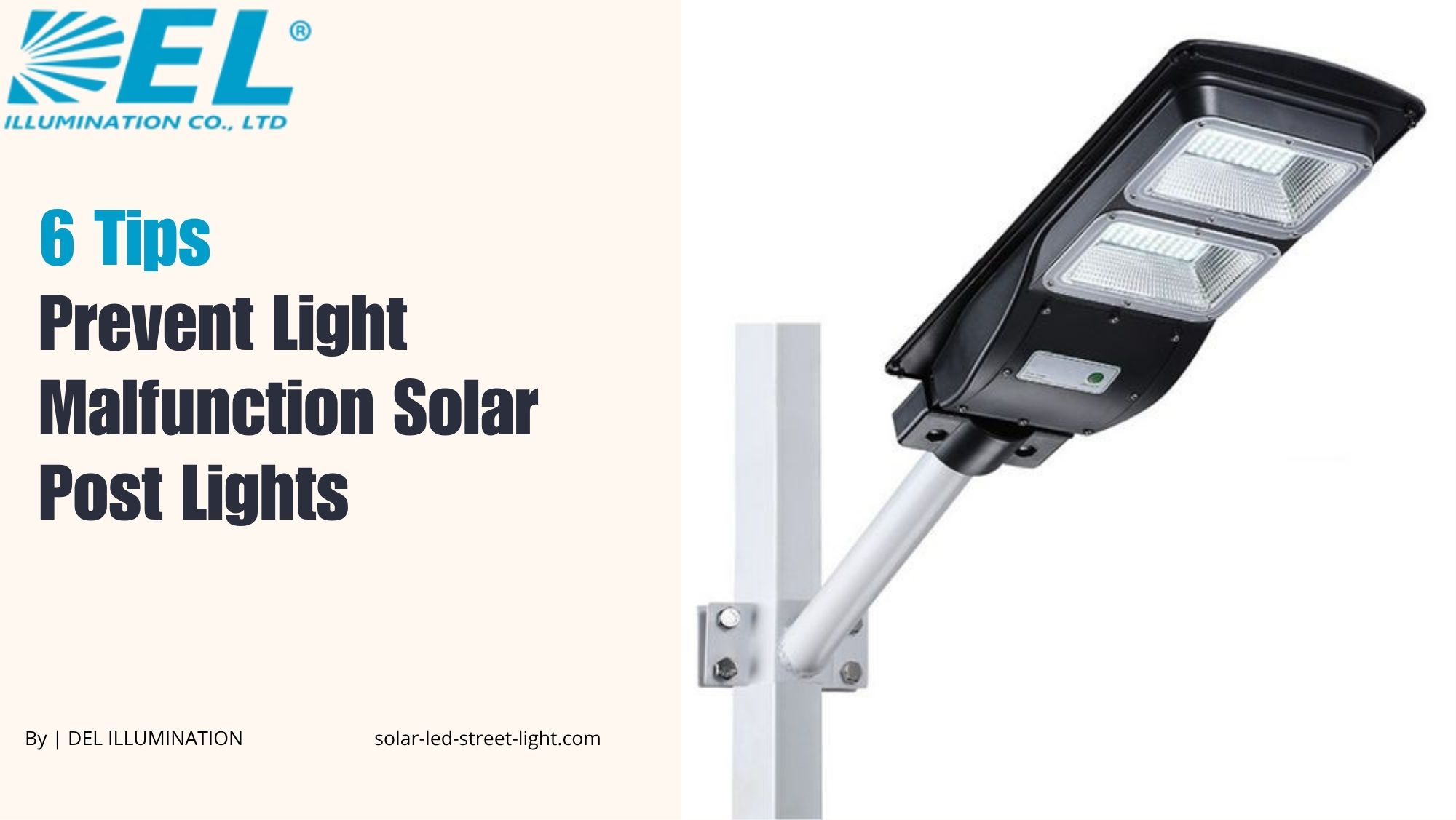
Today, solar post lights are gradually replacing traditional post lights, and more regions will use these environmentally friendly and energy saving fixtures in the future. Present day solar street lights generally use LED as the light source, but it is often the case that the light does not turn on when in use. This is the phenomenon we usually call light malfunction. In this guide we explain what causes it and share six easy tips to keep your solar post lights working reliably for years. If you are choosing new fixtures for a project, browse our All in One Solar Street Lights range for durable, tested options.
What Causes a Solar Post Lights Malfunction?
Light malfunction of solar post lights is caused by two main reasons. First, high leakage current results in PN junction failure and light malfunction, but this does not affect the entire light. Only the faulty diode stops working while the rest of the array continues.
Second, a disconnected internal connection lead inside solar post lights means no current passes through, causing light malfunction so the entire light cannot function properly. Understanding which of these two faults you are dealing with makes the repair far quicker, because a single dead diode is a minor issue while a broken internal lead usually needs the fixture opened and reconnected.
How to Prevent the Light Malfunction of Solar Post Lights
Prevention is far cheaper than replacement. The six tips below cover both manufacturing quality and everyday care, so they help whether you build solar post lights or simply own them.
1. Prevent Static Electricity
Static electricity is an extremely harmful threat for LEDs. It can damage or permanently destroy the LED if any discharge occurs. Static electricity in the human body can reach around 3000V, which is more than enough to break down the LED chip. Therefore it is essential to have a scientifically standardized grounding design at the LED assembly production line. Wrist straps, anti static mats and proper humidity control all reduce the risk during handling.
2. Use Automatic Welding Equipment
Strict welding temperature control is required in manual welding. When the temperature is too high, it will cause light malfunction. If you use a soldering iron for the welding process, the tip often runs hotter than 300 to 400 degrees Celsius. Light malfunction occurs when the temperature is not controlled well, so automatic welding equipment that holds a steady temperature gives a far more reliable joint than hand soldering.
3. Replace Faulty Components
To prevent light malfunctions in solar post lights, it is important to regularly inspect all components. If any component is found to be faulty, such as the LED bulb, solar panel or battery, it should be replaced immediately. Faulty components can cause the light to malfunction, so replacing them promptly keeps the light operating properly and stops one weak part from damaging the others.
4. Check the Battery
The battery is a critical component of solar post lights, since it stores energy from the solar panel to power the light at night. Regularly checking the battery and making sure it is fully charged helps prevent light malfunctions. If the battery is not charged properly, it can cause the light to dim or fail to turn on at all. Check the battery regularly and replace it when its capacity drops. Most batteries in this class last several years before they need swapping, and a quick voltage test tells you when that time has come.
5. Check the Wiring
The wiring in solar post lights carries energy from the battery to the light, so it is important to check it regularly. Loose or damaged wiring can cause the light to malfunction or fail to turn on at all. Inspect the wiring and connections often, tighten any loose connections and replace any damaged wiring to prevent malfunctions. Pay special attention to any joints exposed to weather, since moisture and corrosion are common causes of intermittent faults.
6. Clean the Solar Panels
Dirt, debris and other obstructions can prevent the solar panels from absorbing sunlight properly, which can cause the light to dim or fail to turn on. To prevent this, clean the panels regularly with a soft cloth and a gentle cleaning solution. Remove any dirt or debris that has built up, paying close attention to corners and edges where dirt collects. By keeping the panels clean and unobstructed, you ensure the solar post lights receive the maximum amount of sunlight and operate properly. In dusty or coastal areas a monthly clean makes a noticeable difference to run time. For a full deployment plan, our Solar Lighting Project Checklist walks through inspection and maintenance schedules.
Why Solar Post Lights Are Worth the Care
Solar post lights offer real advantages over grid tied fixtures. They need no trenching or mains wiring, they run on free energy from the sun, and modern LED sources are efficient and long lived. According to the International Energy Agency, solar photovoltaic capacity keeps expanding worldwide as costs fall, which is exactly why solar post lights continue to replace conventional lighting on streets, campuses and pathways.
Conclusion
The tips above show how to prevent light malfunction in solar post lights. It helps to understand the underlying physics too. The coefficient of expansion of the LED lead wire under high temperature is several times higher than its coefficient at around 150 degrees Celsius. The inner gold spot welding can pull away from the welding joint because of thermal expansion and contraction, causing light malfunction. Therefore, preventing malfunction effectively will extend the service cycle of your lights and protect your investment. If you have any requirement for solar post lights, please feel free to reach out through our contact page.
Frequently Asked Questions
What are the main causes of solar post lights malfunction?
Two faults are most common: high leakage current causing PN junction failure in a single LED, and a disconnected internal lead that stops current reaching the whole fixture. The first affects one diode, the second disables the entire light.
How often should I clean my solar panels?
For most sites a clean every few weeks keeps output high. In dusty, sandy or coastal areas a monthly clean is wise, since even a thin layer of dirt reduces how much sunlight the panel can absorb.
How long does the battery in a solar post light last?
Batteries generally last several years before their capacity drops enough to affect run time. A simple voltage or charge test tells you when a replacement is due, well before the light starts failing at night.
Can loose wiring cause a solar light to stop working?
Yes. Loose or corroded connections interrupt the flow of energy from the battery to the LED, which causes flickering, dimming or a complete failure. Tightening connections and replacing damaged wire usually fixes it.
Why do LEDs fail from static electricity?
An LED chip is sensitive to sudden voltage. A static discharge from the human body can reach thousands of volts, enough to break down the chip instantly. Proper grounding and anti static handling during assembly prevent this.