
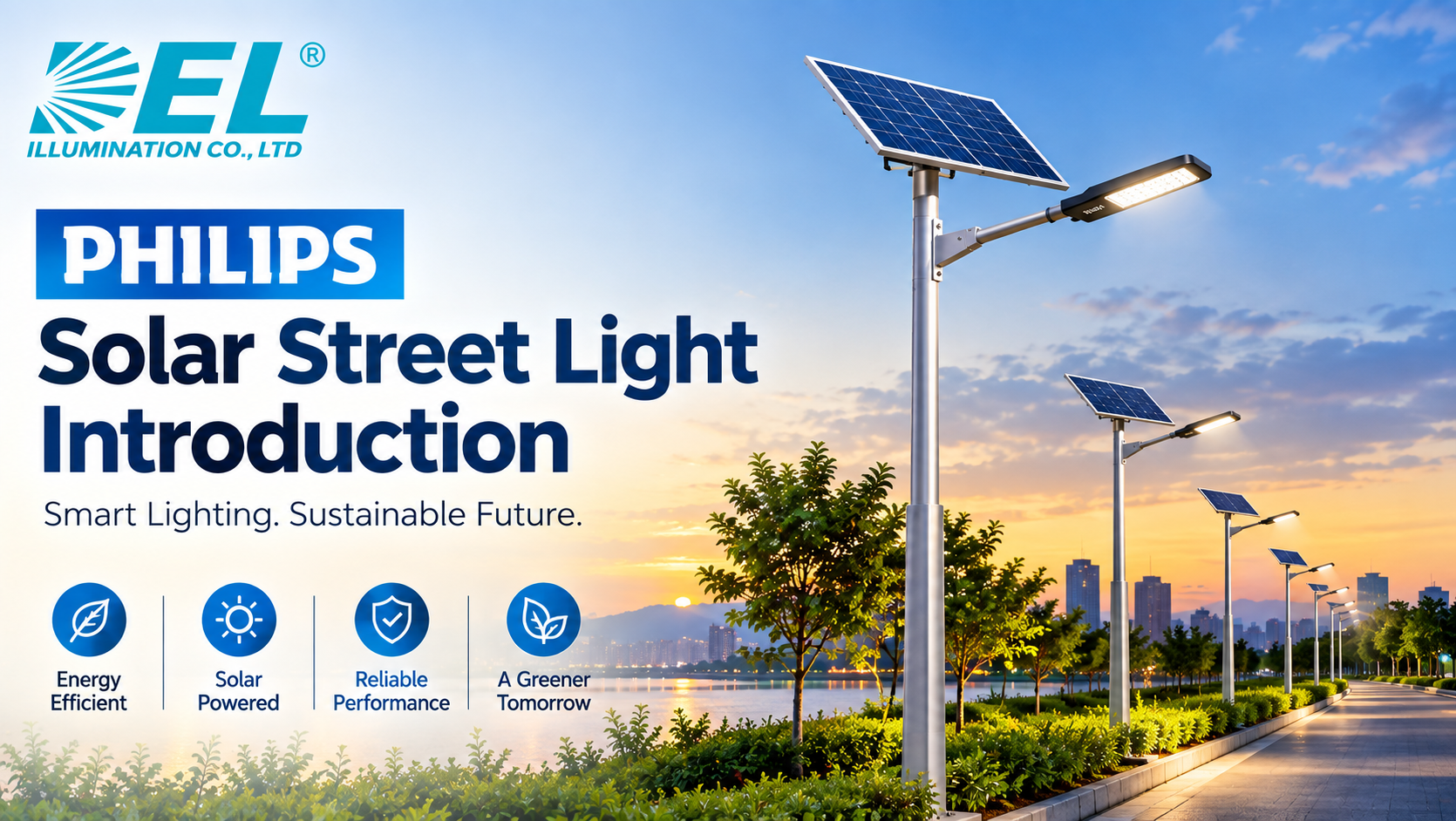
Lighting is one of the most important parts of any outdoor infrastructure project, and the Philips solar street light is one of the names buyers come across most often when researching solar powered options. Comparing it against other brands helps you understand exactly what you are getting, since a solar fixture that keeps working at night without a grid connection is only useful if it is specified and installed correctly.
Anyone shopping for outdoor lighting where grid power is unreliable or unavailable tends to end up considering this option at some point in the process. Before you commit to one, it is worth looking at a fully integrated alternative such as the All in One Solar Street Light, which bundles the panel, battery, and LED into a single unit rather than separate parts you have to match yourself.
What is it?
The sun is a clean, reliable, and virtually inexhaustible source of power, and rising concern over air pollution and resource scarcity has pushed photovoltaic technology into the mainstream. A Philips solar street light uses this same principle: solar panels capture daylight, store it in a battery, and release it through an LED at night. This makes it a practical solution for areas where grid electricity is erratic or simply unavailable, and it is increasingly used in urban settings too, since it cuts dependence on conventional power and lowers a project’s overall carbon footprint.
Common models include compact fixtures in the 8W and 15W range for pathways and smaller roads, along with higher output options around 21W to 43W for wider streets. Some versions also offer a hybrid battery charger or a twin arm mounting option, which lets one pole carry two fixtures instead of one.
Key features of a Philips solar street light
A typical Philips solar street light relies on a microprocessor controlled by an internal algorithm to detect sunrise and sunset automatically, so the light turns on and off without manual input. Efficiency and durability come largely from the quality of the crystalline silicon solar panel used, since a higher grade panel captures more usable energy per square meter of surface.
Light output comes from a high lumen LED module paired with a low voltage controller. This controller is what allows dimming, which helps the fixture conserve stored energy on longer nights or during extended cloudy periods. Energy storage is handled by deep discharge batteries designed to hold enough charge for reliable output even after a few days without strong sun.
Benefits of a Philips solar street light
Because a Philips solar street light operates as an independent power system, it carries very low ongoing operating costs. There is no wiring back to the grid, no electricity bill tied to the fixture, and the system runs entirely on energy it collects during the day. Compared with conventional grid connected street lighting, it also needs less routine maintenance and carries a lower risk of overheating, since there is no continuous current running through buried cables.
The absence of external wiring also reduces installation risk. Without exposed cabling, the chances of electrocution or accidental strangulation during setup and servicing drop significantly. On top of that, a Philips solar street light is inherently more environmentally friendly, since its entire power draw comes from sunlight rather than fossil generated electricity, and the compact, self contained design makes it easier to transport components to remote project sites.
Drawbacks to weigh before buying
No lighting option is without trade offs, and a Philips solar street light is no exception. The upfront cost is usually higher than a conventional grid connected fixture, which is the main reason some buyers hesitate before purchasing, even though its long term running costs are typically lower over the life of the project.
Because the fixture is not wired into a building or utility structure, theft risk is also higher, particularly given the resale value of the panel and battery components. Horizontally mounted panels can also accumulate dust, moisture, or snow, which reduces output until the panel is cleaned, so a Philips solar street light installed in a harsh climate needs periodic inspection. The rechargeable battery inside will need replacement at some point in its service life as well, which adds to the total cost of ownership even though it is a predictable, budgeted expense rather than a surprise one.
Philips solar street light versus an integrated alternative
Weighing the advantages against the drawbacks above is really the whole exercise when deciding whether a Philips solar street light fits your project. According to the International Energy Agency, solar generation capacity keeps expanding worldwide as more regions look to cut reliance on grid power for public infrastructure, which is exactly the gap this kind of fixture is built to fill.
If you would rather avoid sourcing and matching the panel, battery, controller, and pole separately, our All in Two Solar Street Light range offers a factory matched alternative that is engineered and tested as one system before it ever leaves production, which removes much of the guesswork that comes with assembling components from different suppliers.
Conclusion
A Philips solar street light can be a solid choice for projects that need reliable, low maintenance lighting in areas without steady grid power, but it is worth understanding both the strengths and the trade offs before you buy. If you would like help comparing it against DEL Illumination’s integrated options for your specific project, reach out through our contact page and our team can walk you through the right fit.
Frequently asked questions
What makes a Philips solar street light different from a regular street light?
A Philips solar street light runs entirely on stored solar energy rather than a grid connection, using a solar panel, battery, and LED built into or mounted on the pole. This removes the need for buried cabling and ongoing electricity costs.
How long does the battery in a Philips solar street light last?
Most rechargeable batteries used in solar street lighting need replacement every few years, depending on chemistry and climate. This is a planned maintenance cost rather than an unexpected one.
Is a Philips solar street light more expensive than a conventional fixture?
The upfront cost is usually higher, since the panel, battery, and controller all add to the purchase price. Operating costs are lower over time, since there is no ongoing electricity bill.
Do Philips solar street lights work in cloudy or rainy climates?
Yes, as long as the battery is sized to store enough charge to cover several days without strong sun. Panels should also be checked periodically for dust, moisture, or snow buildup, which can reduce charging efficiency.
What wattage options are available for Philips solar street lights?
Common ranges include smaller 8W and 15W fixtures for pathways, up to 21W and 43W models for wider streets and roads, with some versions offering a twin arm option for two fixtures on one pole.