
Introduction: Why Battery Life Matters in Solar Lighting
When people choose solar lights, they’re often looking for a simple, sustainable lighting solution that doesn’t require constant upkeep. But what many homeowners and property managers don’t realize is this: solar light batteries are the backbone of the entire system.
These batteries are what store the energy collected from the sun and release it to power your lights after dark. If the battery fails or underperforms, your solar lights won’t function—no matter how advanced the solar panel or LED bulb might be.
So naturally, one of the most common questions we hear is:
“How long do solar light batteries really last?”
It’s a fair—and important—question. Solar lighting is an investment and knowing what to expect from its most critical component helps you plan for maintenance, replacement, and total cost of ownership.
In this article, we’ll dive deep into:
- The typical lifespan of solar light batteries based on type and quality
- Real-world factors that shorten (or extend) battery life
- Signs it’s time to replace your solar batteries
- And how to maximize performance over time
Whether you’re lighting a walkway, backyard, commercial lot, or signage, understanding how solar light batteries work—and how long they last—will help you get the most value from your solar setup.
What Are Solar Light Batteries?
At the core of every solar lighting system is a rechargeable battery designed to store energy collected by the solar panel during daylight hours. When the sun goes down, this stored energy powers the light—automatically turning it on without any need for wires, switches, or manual input. That’s the basic function of solar light batteries—but there’s more to understand if you want to choose the right system and keep it running efficiently.
Bonus Read: Get Your 2025 Solar Lighting Project Checklist [Free PDF]
What Kind of Batteries Do Solar Lights Use?
There are three primary types of batteries used in modern solar lights: Nickel-Metal Hydride (NiMH), Lithium-Ion (Li-ion), and Lithium Iron Phosphate (LiFePO₄). Each one performs differently in terms of charge capacity, environmental tolerance, safety, and lifespan.
Let’s break them down in detail:
1. Nickel-Metal Hydride (NiMH) Batteries
Overview:
NiMH batteries are a legacy option used in many low-cost or older solar lighting systems. They replaced NiCd (Nickel-Cadmium) batteries due to better environmental safety and slightly improved performance.
Key Specs:
- Voltage: 1.2V per cell
- Energy Density: ~60–120 Wh/kg
- Charge Cycles: 500–1000 cycles under ideal conditions
- Self-Discharge Rate: High (can lose 20–30% charge per month)
Advantages:
- Widely available and inexpensive
- Easier to dispose of than NiCd
- Safer and more environmentally friendly
- Handles moderate temperature swings
Drawbacks:
- Lower energy capacity than lithium-based batteries
- High self-discharge means lights may dim or fail sooner if not consistently charged
- Typically lacks built-in battery management systems (BMS), which increases the risk of overcharging or deep discharge
- Sensitive to overcharging without proper regulation
Lifespan in Solar Lights: Usually 1–2 years depending on sunlight exposure and weather. In shaded areas or cloudy climates, performance and lifespan may drop below one year.
Ideal Use: Budget-friendly decorative garden lights or seasonal lighting that doesn’t require daily, year-round performance.
2. Lithium-Ion (Li-ion) Batteries
Overview:
Li-ion batteries are the current standard for many consumer electronics and high-performance solar lighting products. They’re lighter, more compact, and store more energy than NiMH batteries.
Key Specs:
- Voltage: 3.6V–3.7V per cell
- Energy Density: ~150–200 Wh/kg
- Charge Cycles: 1000–1500 cycles
- Self-Discharge Rate: Low (around 2–5% per month)
Advantages:
- Higher energy density = longer light runtime per charge
- Stable voltage output for consistent brightness
- Lower self-discharge, even if the light is inactive for weeks
- Performs well in a wide range of temperatures (0°C to 45°C for charging; -20°C to 60°C for discharging)
- Compatible with smart battery management systems (BMS) that extend battery life and prevent damage
Drawbacks:
- More expensive than NiMH
- Sensitive to overcharging or deep discharge if BMS is not included
- May degrade faster in extreme heat or if regularly overcharged
Lifespan in Solar Lights: Typically, 2–3 years but can reach up to 4 years with proper thermal regulation and charging controls.
Ideal Use: Residential and commercial solar lights with high daily usage, motion sensors, or longer nighttime operation—such as security lights, floodlights, and post lights.
3. Lithium Iron Phosphate (LiFePO₄) Batteries
Overview:
LiFePO₄ batteries are a subtype of lithium-ion tech, but with added stability and safety. These are considered the gold standard for outdoor solar applications due to their long lifespan, thermal resilience, and non-flammable chemistry.
Key Specs:
- Voltage: 3.2V per cell
- Energy Density: ~90–160 Wh/kg (less than regular Li-ion but with greater cycle life)
- Charge Cycles: 2000–3000+ cycles
- Self-Discharge Rate: Very low (~1–2% per month)
Advantages:
- Extremely long lifespan—can last 5–7 years or more with proper management
- Very stable thermal chemistry (less risk of overheating or thermal runaway)
- Performs well in harsh climates—both hot and cold
- Excellent tolerance for deep discharging without permanent damage
- Eco-friendlier and safer than many other lithium chemistries
Drawbacks:
- Higher initial cost
- Slightly larger and heavier for the same power output compared to regular Li-ion
- Requires a compatible charge controller for best performance
Lifespan in Solar Lights: Often 3 to 5+ years, depending on climate and charge cycle frequency. Ideal for commercial-grade solar lighting or installations in remote areas where long-term maintenance isn’t practical.
Ideal Use: Premium outdoor solar lights, municipal and industrial lighting, solar-powered signage, or any system needing top-tier reliability and longevity.
Comparison of Solar Light Battery Types
| Battery Type | Average Lifespan | Pros | Cons |
|---|---|---|---|
| NiMH | 1-2 years | Cheap, safe, easy to replace | Low energy capacity, high self-discharge |
| Li-ion | 2–3 years | High power, compact, stable output | Pricey, sensitive to extreme heat |
| LiFePO₄ | 3–5+ years | Longest lifespan, safest, best for extreme weather | Higher cost, needs smart controller |
Choosing the right battery is about balancing cost, performance, and maintenance expectations. At Del Solar Lights, we use lithium-based batteries (Li-ion and LiFePO₄) in our products to ensure brighter, longer-lasting performance—even in demanding outdoor environments.
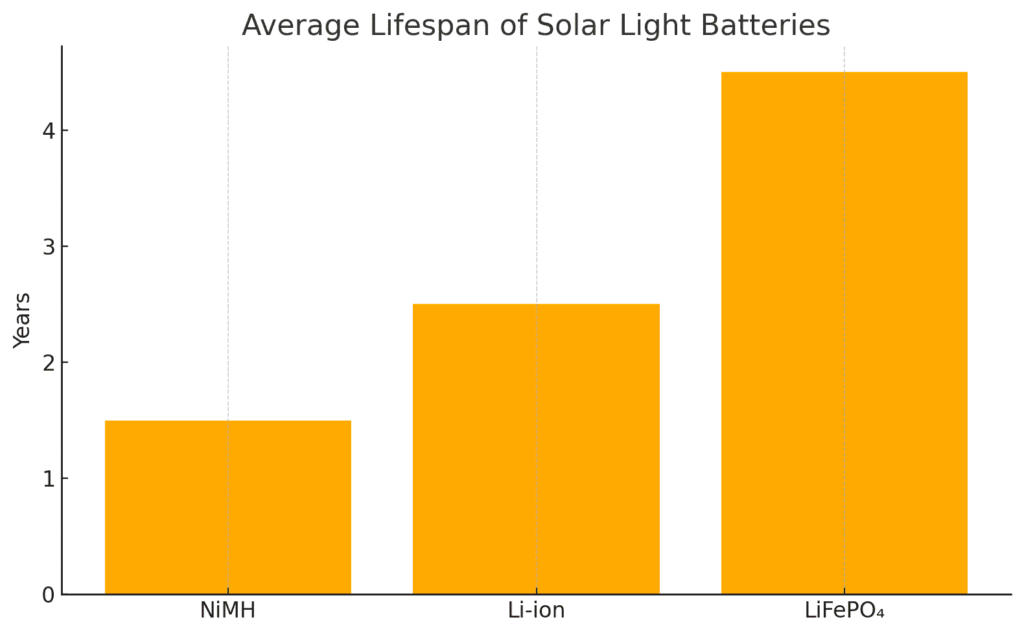
Figure 1- Lifespan Comparison: Shows how long these solar light batteries typically lasts in solar lighting systems.
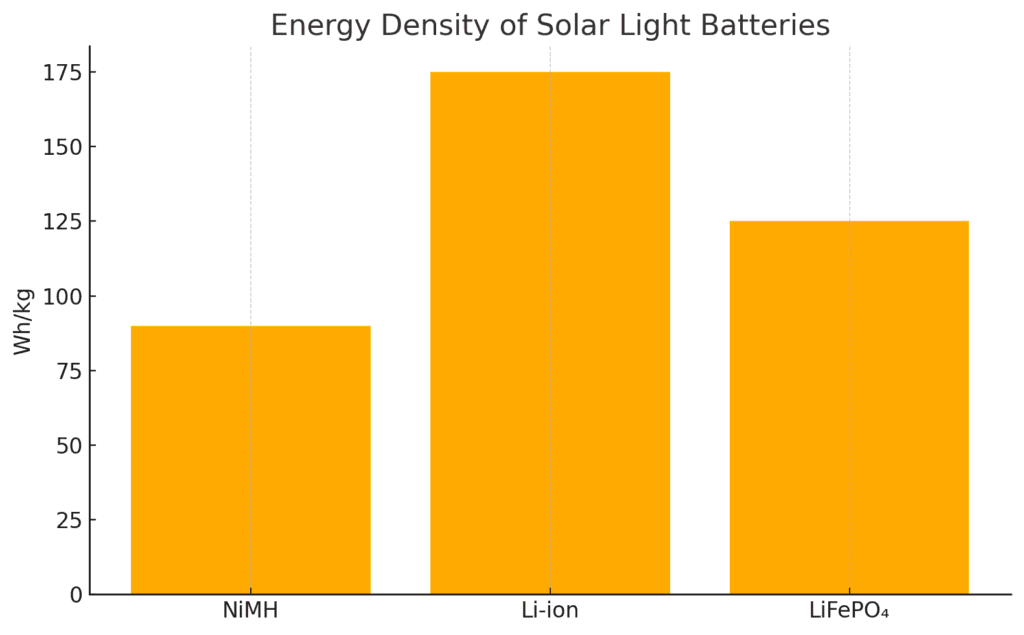
Figure 2– Energy Density: Compares how much energy these solar light batteries can store per kilogram.
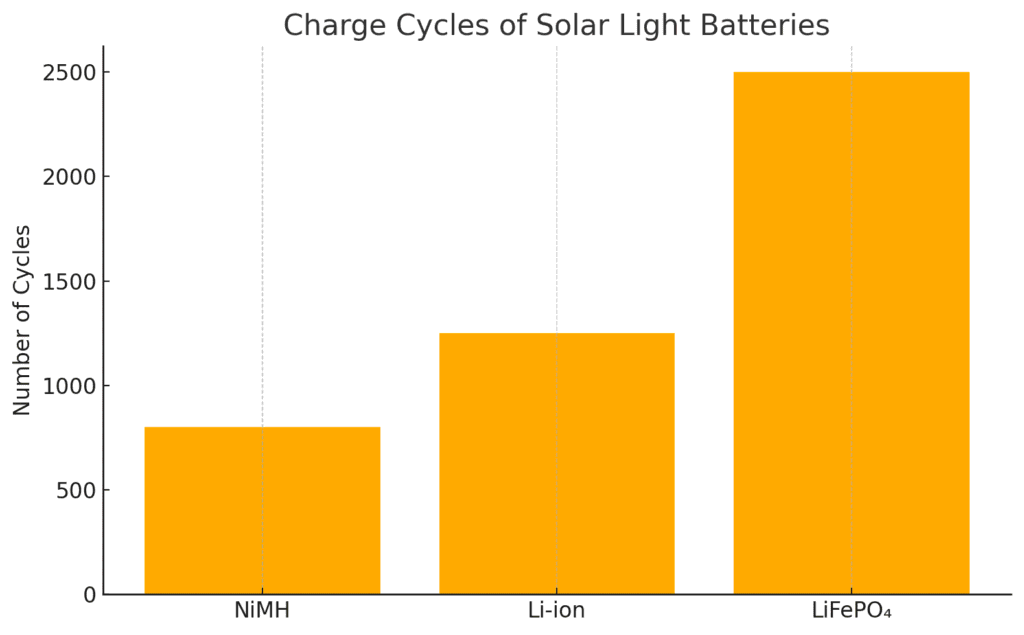
Figure 3– Charge Cycles: Highlights the expected number of full charge-discharge cycles these solar light batteries can handle.
Factors That Affect Battery Life
Understanding how long solar light batteries really last means looking beyond just the battery type. Even the highest-quality battery can fall short if it’s exposed to the wrong conditions. Here are the factors that affect the battery life and performance of solar light batteries:
Quality of the Battery Itself
Not all batteries are created equal. Battery chemistry is one part of the equation, but build quality, internal components, and manufacturing standards also make a huge difference.
- Generic or low-cost batteries often use cheaper materials and inconsistent internal architecture, leading to quicker degradation.
- Branded, grade-A cells (like those used in quality Del Solar Lights products) have tighter quality control, longer cycle life, and better thermal stability.
Impact: High-quality batteries can last 30–50% longer than cheaper alternatives under the same conditions.
Charge/Discharge Cycles
A charge cycle is one full charge and discharge of the battery. Every battery has a limited number of these cycles before it begins to lose capacity.
- NiMH batteries average 500–1000 cycles
- Li-ion batteries average 1000–1500 cycles
- LiFePO₄ batteries exceed 2000–3000 cycles
However, it’s not just the number of cycles—it’s how deeply the battery is discharged and how often it’s charged. Deep discharges (where the battery is drained close to empty) wear out batteries faster than shallow cycles.
Impact: Frequent deep discharges can cut battery life by 25–40% over time.
Sunlight Exposure & Charging Conditions
Solar lights rely on consistent sunlight to fully charge the battery each day. But if the solar panel doesn’t get enough light, the battery may never reach a full charge.
- Low sunlight (due to shade, overcast weather, or panel misalignment) leads to partial charging, causing the battery to operate below capacity.
- Partial charging over long periods can lead to memory effect in older battery types (especially NiMH) and reduce total energy storage.
Impact: Poor solar exposure can reduce both runtime and total battery life by up to 50%.
Temperature Extremes
Batteries are sensitive to temperature—especially those installed outdoors where conditions can swing between freezing winters and scorching summers.
- High heat (above 45°C/113°F) accelerates chemical degradation inside the battery, often causing swelling or leakage in lithium-ion cells.
- Cold weather (below 0°C/32°F) slows down the chemical reactions inside the battery, reducing performance and limiting how much energy can be stored or discharged.
LiFePO₄ batteries generally handle extreme temperatures better than Li-ion or NiMH.
Impact: Operating outside the battery’s recommended temperature range can cut lifespan by up to 40% and dramatically reduce performance during winter months.
Overcharging and Over-Discharging
Without proper regulation, batteries can suffer from both overcharging (being charged beyond capacity) and over-discharging (being drained too low), both of which are damaging.
- Overcharging causes excessive heat and can break down internal battery components, especially in Li-ion batteries.
- Over-discharging leads to irreversible chemical damage and reduced ability to hold a charge over time.
A smart Battery Management System (BMS)—like those integrated into higher-end Del Solar Lights—helps prevent both problems by regulating voltage, charge limits, and thermal conditions.
Impact: Batteries without BMS protection can degrade twice as fast under the same usage.
Moisture and Dust Ingress
Even though most outdoor solar lights are designed to be weather-resistant, not all are built equally. Poor sealing or weak enclosure ratings can allow water and dust to enter, damaging battery terminals and reducing efficiency.
- Look for an IP65 or higher rating to ensure protection against rain, dust, and debris.
- Any moisture inside the battery compartment can cause corrosion, short-circuits, and even electrical failure.
Impact: Exposure to moisture can cause premature battery failure within months of installation.
Frequency and Duration of Use
How often and how long your solar light is active each night also affects battery longevity.
- Lights that run for 8+ hours every night (such as dusk-to-dawn systems) cycle batteries more heavily than motion-activated lights that turn on only occasionally.
- Motion-sensing or timer-based systems typically extend battery life because they reduce discharge frequency and depth.
Impact: Constant full-capacity use may shorten lifespan by up to 20–30% compared to intermittent use.
Even the best battery won’t perform well if it’s poorly charged, exposed to the wrong temperatures, or installed in a suboptimal environment. To get the full lifespan from your solar light batteries, you need the right combination of:
- High-quality battery cells
- Optimal sunlight access
- Smart charge controllers
- Proper environmental protection
Del Solar Lights is committed to maximizing battery performance through quality design, intelligent systems, and rugged construction—so you get brighter nights and longer-lasting results.
How to Tell When It’s Time to Replace the Battery?
Even the best solar light batteries don’t last forever. Over time, chemical degradation, environmental wear, and repeated charging cycles slowly reduce their ability to hold and deliver power. But how can you tell when a battery is simply running low—and when it’s actually reached the end of its life?
Here are the clearest signs it’s time to replace your solar light batteries:
- Noticeably Shorter Illumination Time: If your solar lights used to stay on for 6 to 8 hours but now fade after just 2 or 3—despite full sun exposure during the day—that’s a strong indicator the battery is no longer holding a full charge.
Why it happens: As batteries age, their capacity (measured in mAh or Ah) decreases. Eventually, even a full charge doesn’t contain enough energy to power the light through the night.
- Dim or Flickering Light Output: Solar lights that appear noticeably dimmer than usual—or begin to flicker or pulse—are usually suffering from unstable or low voltage output caused by a failing battery.
Why it happens: Old batteries can’t deliver consistent current, which causes lights to dim or act erratically.
- Lights Work Only Immediately After Sunset: If your lights turn on briefly after sunset but shut off within an hour—even after a sunny day—that usually means the battery is only storing a minimal charge and can’t sustain the load.
Why it happens: Partial or shallow charging capacity is a hallmark of batteries near end-of-life. Sometimes, lights may not turn on at all after a few days of poor weather because the battery can’t recover.
- The Light No Longer Turns On at All: If the solar light completely stops working, even after cleaning the panel and verifying sunlight exposure, a dead battery is the most likely cause.
Important: Before replacing the battery, check the following:
- Is the solar panel clean and undamaged?
- Are the wires or terminals corroded or loose?
- Is the on/off switch (if present) functional?
If those all check out, a new battery is usually all that’s needed.
- Visible Battery Swelling or Corrosion: In some cases—especially with lithium-ion batteries—you might notice the battery casing has swelled, or there’s rust, corrosion, or leakage around the terminals.
This is a red flag. Swollen or leaking batteries are not just failing—they can be dangerous. Dispose of them safely and replace immediately.
Pro Tip: Always replace solar light batteries with the same type and voltage as the original. Using the wrong battery can damage the circuitry or reduce efficiency. When in doubt, check the user manual, or contact the manufacturer.
FAQs: How Long Do Solar Light Batteries Really Last
1. Can I use regular rechargeable batteries in solar lights?
Not recommended. While some AA or AAA rechargeable batteries might physically fit into solar lights, they’re not designed for solar charging systems. Solar lights require batteries specifically built to handle daily deep-cycle charging and exposure to fluctuating voltages. Using regular rechargeables can result in poor performance, overheating, or shortened lifespan. Always use batteries labeled as solar-compatible or approved by the light’s manufacturer.
2. Do solar light batteries charge on cloudy or rainy days?
Yes, but at a reduced rate. Solar panels still collect energy during cloudy or overcast conditions, but they generate significantly less power compared to full sunlight. This means the battery may receive only a partial charge, which can shorten illumination time that night. Prolonged cloudy periods may eventually leave the battery undercharged and affect performance until sunny weather returns.
3. Can I upgrade my solar light to a longer-lasting battery?
Sometimes, yes. If your solar light uses standard battery sizes (like 18650 Li-ion or AA NiMH), you may be able to upgrade to a higher-capacity version of the same type and voltage. However, you must:
- Match the voltage exactly (e.g., 1.2V or 3.7V)
- Ensure the new battery physically fits in the compartment
- Verify that the solar panel and controller can support the higher capacity
4. Should I remove solar light batteries in winter or when not in use?
Yes, especially if you live in a region with freezing temperatures or plan to store the lights for an extended period. Removing the batteries and storing them in a cool, dry place can prevent:
- Permanent damage from freezing
- Corrosion caused by moisture
- Loss of charge due to inactivity
Before reinstalling, recharge the batteries with a compatible charger or allow a few full days of direct sunlight to restore function.
Conclusion: Increase Performance by Understanding Your Solar Light Batteries
Solar lighting is one of the smartest ways to illuminate your outdoor spaces—eco-friendly, cost-effective, and low-maintenance. But at the core of every solar light is a battery that determines how well and how long that system performs.
So, how long do solar light batteries really last? The answer depends on the battery type, usage habits, and environmental conditions. While NiMH batteries may last 1–2 years, high-quality lithium or LiFePO₄ batteries can deliver 3 to 5 years (or more) of reliable service, especially when supported by proper design, smart charging, and environmental protection.
By knowing the signs of battery aging, understanding the factors that influence longevity, and choosing systems built with premium components, you can get the most from your solar investment.
At Del Illumination Co. , we don’t just sell solar lights, we engineer them for durability, performance, and long-term value. That means:
- Long-lasting lithium-based battery systems
- Smart controllers to prevent overcharging
- Weather-resistant, high-efficiency panels
- Thoughtfully designed housings built to withstand real-world conditions
So when you’re ready for solar lighting that just works, season after season, you know who to trust.