
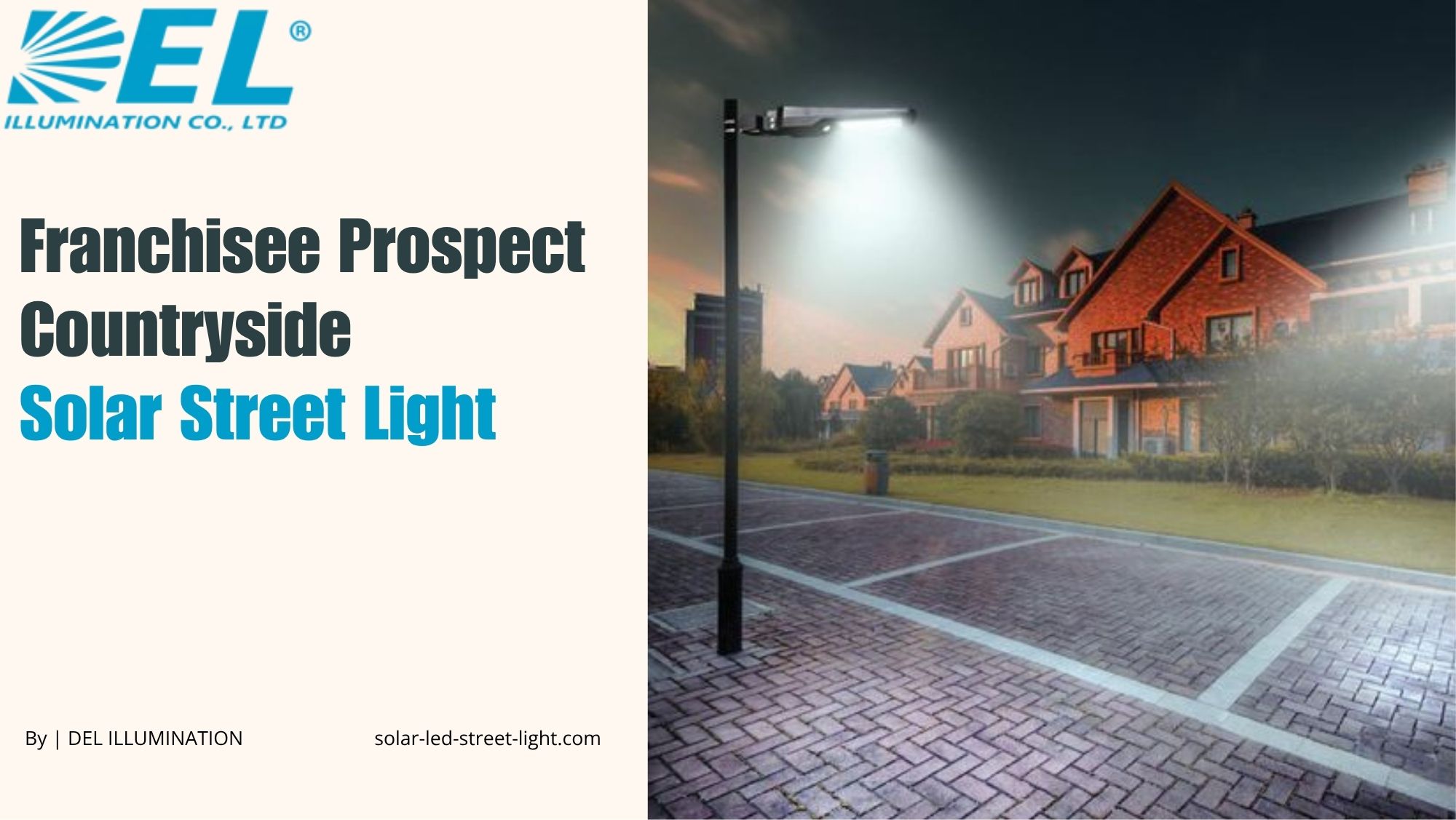
As rural construction advances, road lighting has become a central part of new countryside development. Yet the countryside brings its own complications, and traditional solar street lighting projects face real difficulties there. Understanding these challenges is the first step to seeing why countryside solar street lighting is such a promising franchise opportunity.
The common obstacles in rural road lighting include:
- Funding and investment gaps on the lighting project.
- Complex installation that requires digging, excavation, and use of farmland, which can create friction with residents and slow construction.
- Ongoing electricity costs and supply shortages that leave a completed grid project unable to run reliably.
- Heavy, costly maintenance and frequent replacement of parts.
- High energy use and the pollution that comes with conventional power.
Countryside solar street lighting solves most of these problems at once, which is exactly why it has become such an attractive product to franchise. Where a grid extension means months of trenching, permits, and rising electricity bills, a solar system arrives as a self contained unit that is installed in hours and runs for free. For a franchisee, that simplicity translates into faster projects, lower delivery cost, and a product that rural authorities are actively looking to buy.
Advantages of Franchising Countryside Solar Street Lighting
Franchising countryside solar street lighting offers several advantages that can lead to a successful business venture. Here are the main benefits.
Increased market potential
By franchising, a business owner expands their reach into areas they could not serve directly. Franchisees operate in local markets, build relationships with nearby customers, and open sales channels the original owner may never have accessed. Countryside solar street lighting suits this model well because rural demand is spread across many small communities.
An established business model
Franchising gives access to a proven, refined business model, so franchisees skip the trial and error of starting from scratch. The franchisor guides setup, operations, and marketing, which raises the odds of success considerably.
Training and ongoing support
Franchisees receive training on how to install, maintain, and repair systems, plus continuing support such as marketing help, customer service training, and access to the franchisor supplier network. This support helps a new franchise grow faster than an independent start up.
Reduced risk through shared responsibility
Franchising spreads risk. The franchisee benefits from an established brand, reputation, and tested systems, which lowers the chance of failure and improves the odds of a profitable countryside solar street lighting business.
Factors to Consider Before Franchising
Before committing, weigh several factors to make sure the venture succeeds.
Market demand and competition
Research demand and competition for solar lighting in the rural areas you intend to serve. This reveals the potential market size, existing rivals, and how to position your countryside solar street lighting offer for the best chance of winning contracts. In many rural markets the competition is still thin and the main rival is the old grid approach rather than another solar supplier, which gives an early franchisee room to establish a strong local presence before the market matures.
Available resources and infrastructure
Assess the supply chain and infrastructure you can call on, including suppliers, distributors, skilled installers, and suitable equipment. Support services such as logistics and marketing also matter for smooth day to day operation. You can review a dependable product line through our All In One solar street lights range.
Financial feasibility and return on investment
Analyse the setup cost, ongoing costs, and expected revenue before you sign. A sound franchise should be financially viable and deliver a solid return for both franchisor and franchisee, so build a realistic model before you commit capital. Factor in seasonal demand too, since rural lighting budgets often follow government funding cycles, and a franchisee who understands that rhythm can plan installations and cash flow around it rather than being caught out by it.
Why Countryside Solar Street Lighting Wins in Rural Projects
Countryside solar street lighting has become something of a star in new rural construction, and the reasons are practical.
- It is a clean, energy saving green lighting solution that governments actively promote.
- Funding is easier to secure, since many regions offer subsidies and special funds for energy saving lighting.
- It needs less investment while delivering economic performance comparable to conventional street lights.
- Construction is simple and fast, with no need to dig trenches or lay cable channels.
- There are no electricity bills, since the system draws free power from the sun.
- Maintenance is low or minimal, as quality LED sources last well over ten years.
- It beautifies the rural landscape and looks more appealing than older street lighting.
- It spreads the culture of energy conservation, guiding villagers toward greener habits.
The market opportunity is large and growing. The global solar street lighting market was valued at roughly 7.8 billion US dollars in 2025 and is forecast to keep expanding strongly through the next decade, with rural and off grid demand a major driver. Developing regions across Asia, Africa, and Latin America are electrifying rural roads for the first time, and many are choosing solar precisely because it skips the cost of grid extension.
For a franchisee, that means a widening pool of communities that need exactly this product, often with public funding attached. That trajectory is what makes a countryside solar street lighting franchise such a timely prospect. To explore a partnership or specify a project, simply contact our team for guidance. For wider context on rural electrification and solar adoption, the International Energy Agency publishes useful global research.
Frequently Asked Questions
Why is countryside solar street lighting a good franchise opportunity?
Rural demand is spread across many small communities, government subsidies often support clean lighting, and the product needs no grid connection or cabling. Together these lower the barrier to entry and create steady demand a franchisee can serve.
What problems does solar lighting solve in rural areas?
It removes the need for costly grid connection, trenching, and ongoing electricity bills, and it cuts heavy maintenance. This directly addresses the funding, construction, and power supply issues that stall conventional rural road lighting.
How much investment does a countryside solar street lighting franchise need?
Costs vary by region and scale, covering equipment, installation capability, and marketing. A realistic financial model that weighs setup cost, ongoing cost, and expected revenue is essential before committing capital.
What support do franchisees usually receive?
Typical support includes training on installation, maintenance, and repair, plus marketing help, customer service training, and access to the franchisor supplier network. This shortens the learning curve and speeds up growth.
Is rural solar street lighting reliable through the seasons?
Yes, when correctly specified. Quality panels, adequate battery capacity, and sensible autonomy sizing keep the lights running through cloudy spells and winter, which is why component quality matters as much as price.