

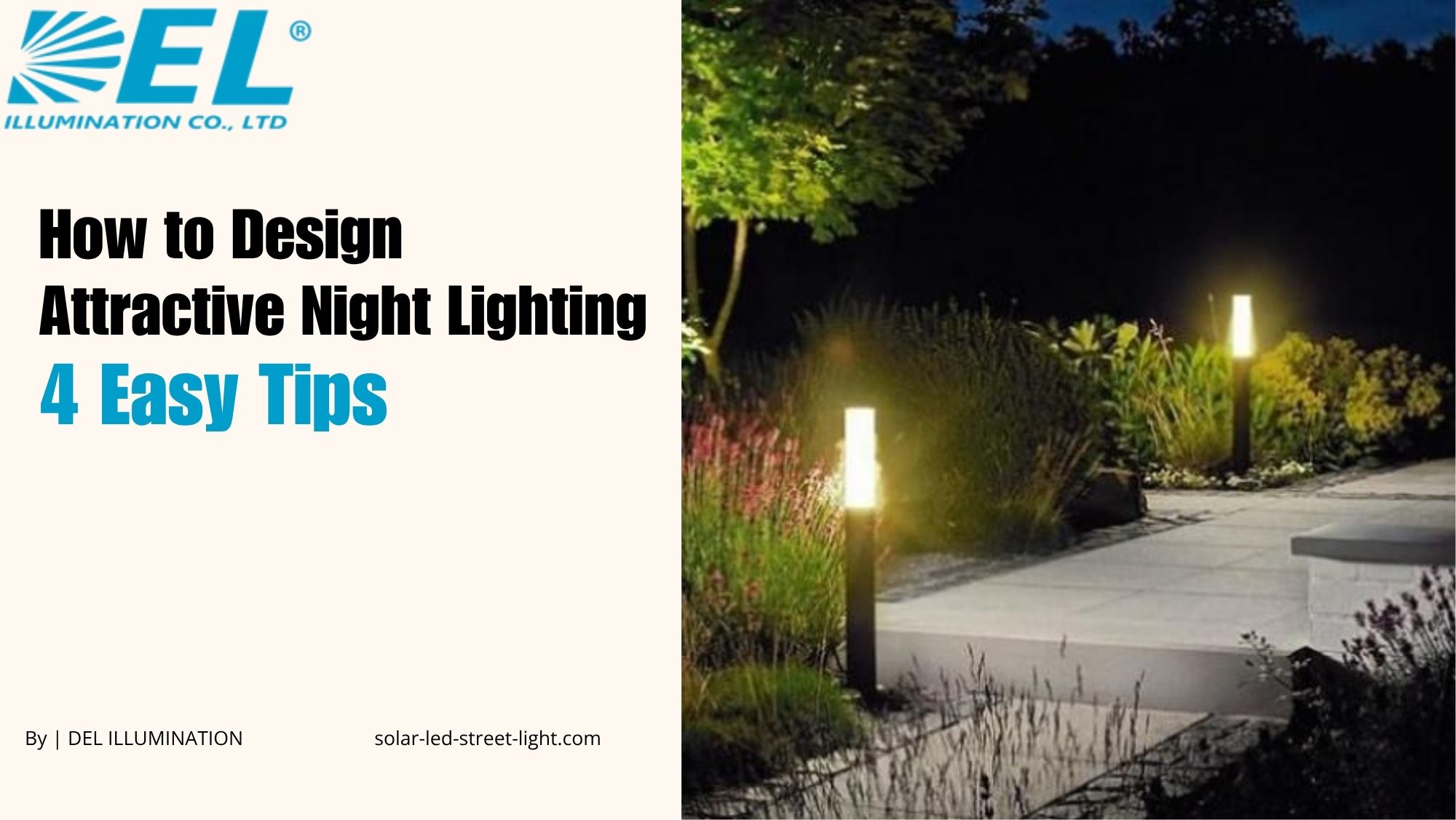
Designing attractive night lighting is a comprehensive process that rewards planning. Public space is the largest central area for people’s daily living, so night lighting there is also diverse. Attractive night lighting is designed according to the local illumination, function, feelings, and other factors. The entire scheme should suit the brightness of the setting and change in step with the space’s structure to enhance the overall effect. Poorly planned attractive night lighting can lead to a counterproductive result, or even destroy the attractions, if you do not understand the surroundings of the lighting environment.
Below, DEL Illumination will tell everyone how to design attractive night lighting that fits any public space. If you are planning a full project, our All in One Solar Street Lights give you a dependable, energy saving foundation to build on.
How to Design an Attractive Night Lighting Project
Great attractive night lighting starts with reading the environment, then choosing techniques that flatter each feature. These attractive night lighting techniques below cover landscape, water, sculpture, and building lighting, plus texture, bulb choice, and fine tuning.
Plant Landscape Light for Attractive Night Lighting
There are various plant landscape lighting styles, and under lighting and upper lighting are the two most basic techniques. Under lighting refers to the illumination of the plants from top to bottom, increasing the natural expression of the plants. On the contrary, upper lighting illuminates the plants from underneath. The effect of this technique highlights the partially clear texture of the plants, making the plant’s outer contour more mysterious and adding depth to your attractive night lighting.
Water Lighting for Night Lighting Design
If the water body is relatively clean, underwater lighting can be used to highlight the clearness of the water. If the water body is too muddy, this technique should not be used, or it will make the water seem dirtier. Used well, reflected light on a still surface is one of the most striking elements of attractive night lighting.
Sculpture Lighting for Night Lighting Design
The placement of sculptures is more flexible, so the effect of their night lighting must consider whether there is visual impact on pedestrians or interference with the surrounding residential areas. These issues should all be taken into account so the sculpture becomes a focal point in your attractive night lighting rather than a distraction.
Attractive Night Lighting: Building Lighting
It is necessary to consider the building itself when designing the building lighting, as a different building appearance will present a different lighting effect. Some are more uniform, some have obvious light and shadow levels, and the display of these effects depends mainly on the attributes of the building itself, a key idea in attractive night lighting. Exterior lighting design should consider not only a part of the building, but also whether it matches the surrounding scenery.
Incorporate Movement and Texture
Incorporating movement and texture into your attractive night lighting design adds interest and dimension to the space. One way to achieve this is by adding moving elements, such as lights that pulse, fade, or change color. By incorporating motion into your design, you can create a dynamic and engaging environment that captures people’s attention and draws them in.
Another way to add texture is by using a variety of different light sources. For example, you could use spotlights to highlight specific areas of a space while also using softer, diffused lighting to create a warm and welcoming ambiance. A mix of sources builds a sense of depth that lifts ordinary night lighting into something memorable. Our Solar Lighting Project Checklist helps you plan these layers before installation.
Choose the Right Bulbs
When choosing the right bulbs for your attractive night lighting project, it is important to consider the type of bulb. LED bulbs are a popular choice due to their energy efficiency, longevity, and versatility. They come in a range of colors and temperatures, making it easy to customize your lighting to your specific needs.
The color temperature of a bulb can significantly impact the ambiance of a space. Warm white bulbs (2700K to 3000K) emit a soft and cozy glow, perfect for creating a relaxing atmosphere. Neutral white bulbs (3500K to 4000K) provide a crisp and clear light, ideal for task lighting or highlighting features. Cool white bulbs (5000K to 6500K) emit a bright and vibrant light, perfect for outdoor areas or enhancing the visibility of dark corners. According to the International Energy Agency, efficient LED and solar technology continues to advance, which makes low energy attractive night lighting more accessible than ever.
Experiment and Adjust
Designing attractive night lighting requires experimentation and adjustment. Start your attractive night lighting with a basic plan and add or subtract lighting as necessary to achieve the desired effect. Do not be afraid to try different bulbs, fixtures, or placement to find the perfect combination. Always remember to consider safety, such as avoiding glare or placing lights in hazardous areas. If you would like expert guidance on your scheme, please feel free to contact us and our team will help.
Frequently Asked Questions
What makes night lighting attractive rather than just functional?
Attractive lighting reads the environment first, then layers techniques that flatter each feature. Balancing brightness, color temperature, and shadow turns plain illumination into an inviting scene.
Which color temperature is best for a relaxing outdoor space?
Warm white in the 2700K to 3000K range gives a soft, cozy glow that suits gardens, patios, and gathering areas. Cooler temperatures suit pathways and security zones where visibility matters most.
Can solar powered fixtures deliver attractive results?
Yes. Modern solar LED fixtures offer strong output, adjustable color temperatures, and consistent performance, so you can design a striking scheme without ongoing energy costs.
How do I avoid glare in a night lighting design?
Aim fixtures away from eye level, use shields or diffusers, and favor indirect placement. Softer, layered light reduces harsh hotspots while keeping the space bright enough to enjoy.
Should water and sculpture lighting use the same approach?
No. Clear water suits underwater uplighting, while sculptures need careful angling to avoid disturbing pedestrians or nearby homes. Each feature calls for its own tailored technique.