
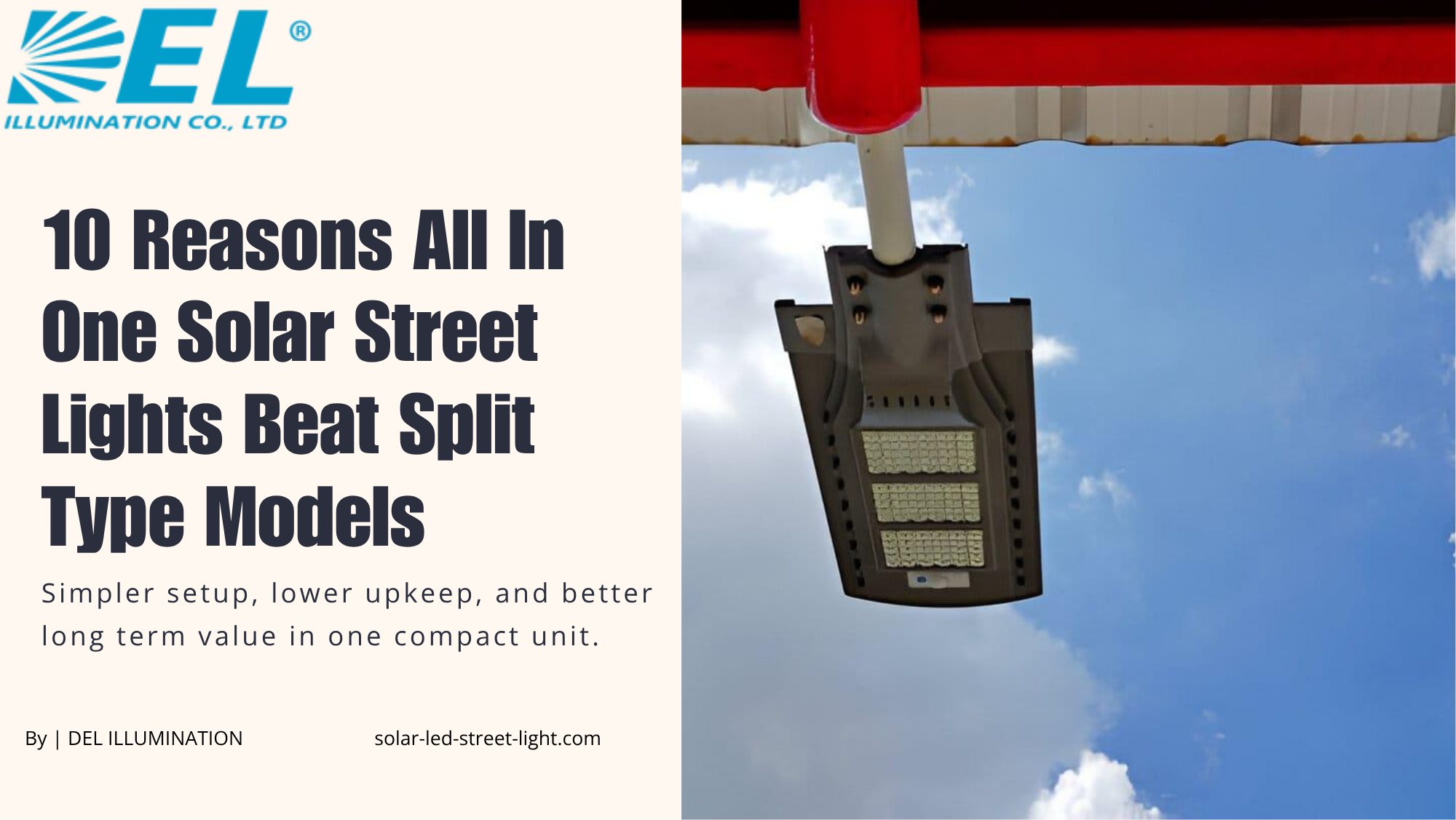
All-in-one solar street lights offer several compelling advantages over traditional split-type systems.
As renewable energy solutions gain traction worldwide, solar street lighting has emerged as a popular, sustainable, and cost-effective option for both urban and rural areas. Among the various types of solar streetlights available, two configurations stand out—all-in-one solar streetlights and split-type solar streetlights.
If you’re considering solar lighting for streets, parks, commercial premises, or residential communities, understanding the differences between these two systems is crucial. In recent years, many municipalities, property developers, and businesses have shifted towards all-in-one solar streetlights due to their numerous advantages over split-type models.
In this article, we’ll provide an in-depth comparison and explain why all-in-one solar streetlights the smarter choice for efficient, long-lasting outdoor lighting are often.
Understanding the Basics: All-in-One vs. Split-Type Solar Street Lights
Before deciding which type of solar street light best suits your project, it’s essential to understand the fundamental differences between all-in-one and split-type solar street lights. Both designs aim to provide reliable, off-grid outdoor lighting, but their construction, installation, and functionality differ significantly.
✅ All-in-One Solar Street Lights
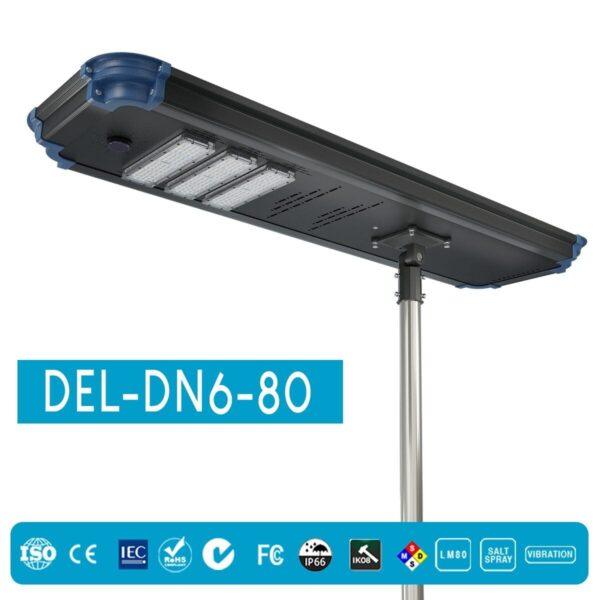
All-in-one solar streetlights combine solar panel, LED light, battery, controller, and sensor into a single compact unit. These systems are integrated, making them highly efficient and simple to install.
✅ Split-Type Solar Street Lights
In split-type systems, the solar panel, battery, and LED light are separated and installed as individual components. While this was the conventional design in earlier solar street lighting systems, it involves more complex wiring and assembly.
Key Components Comparison
| Component | All-in-One Solar Street Lights | Split-Type Solar Street Lights |
| Solar Panel | Integrated on top of light unit | Installed separately |
| Battery | Built-in, usually lithium-ion or LiFePO4 | Installed underground or in separate boxes |
| LED Light | Integrated into unit | Installed separately |
| Controller & Sensor | Built-in | External |
| Wiring | Minimal, plug-and-play | Complex, requires manual wiring |
Advantages of All-in-One Solar Street Lights Over Split-Type
These benefits explain why an increasing number of municipalities, businesses, and property developers are shifting toward integrated solutions.
1. Simplified Installation Process
One of the biggest reasons to choose all-in-one solar street lights is their ease of installation. Since all components are built into a single unit, there’s no need for complex wiring or technical setup.
Benefits:
- No trenching for underground cables.
- Minimal labor and installation costs.
- Plug-and-play design; installation usually takes less than 30 minutes.
- No special tools required.
In contrast, split-type systems often require hiring specialized technicians to connect wires, install batteries in separate enclosures, and adjust system settings manually.
2. Lower Overall Project Cost
Though some all-in-one models may have a slightly higher upfront cost per unit compared to basic split-type lights, the total project cost is often much lower when you factor in:
- Reduced labor costs.
- No need for trenching or conduits.
- Fewer installation materials.
- Quicker deployment for large projects.
For developers, municipalities, and contractors, these savings can be substantial—especially on large-scale projects.
3. Sleek, Modern Design
All-in-one solar street lights offer a streamlined, contemporary appearance. Their compact design blends well with urban, suburban, and rural environments, making them suitable for:
- Residential streets.
- Commercial complexes.
- Parking lots.
- Parks and recreational areas.
This aesthetic advantage makes them a popular choice for locations where visual appeal matters.
4. Enhanced Energy Efficiency
Thanks to smart engineering and advanced components like high-efficiency monocrystalline panels and LiFePO4 batteries, all-in-one lights often outperform split-type models in energy usage.
Key Features:
- MPPT (Maximum Power Point Tracking) controllers optimize solar charging.
- Intelligent sensors automatically adjust brightness levels based on activity.
- Better energy storage and faster charging cycles.
This efficiency translates into brighter illumination, longer operational hours, and consistent performance even in cloudy weather.
5. Durability and Weather Resistance
All-in-one solar street lights are designed to withstand harsh environments:
- IP65 or higher waterproof rating.
- Anti-corrosion aluminum alloy housing.
- UV-resistant and dust-proof enclosures.
With integrated units, there are fewer external connections that could fail due to weather exposure. In contrast, split-type systems often have external wiring that can degrade over time due to rain, wind, snow, or animals.
6. Minimal Maintenance Requirements
Maintaining split-type lights can be cumbersome since you need to inspect and service multiple components in different locations, such as buried batteries or distant solar panels. This often requires more time, specialized tools, and technical expertise.
- However, with all-in-one solar street lights from DEL ILLUMINATION CO., LTD, maintenance becomes significantly easier and more efficient:
- All essential components—solar panel, battery, LED light, and controller—are housed together in a single, compact unit.
- Routine maintenance typically involves basic cleaning and, after several years of use, occasional battery replacement.
- Many premium models from DEL ILLUMINATION CO., LTD also feature smart monitoring systems that can remotely report faults, battery status, and performance, reducing the need for frequent on-site inspections.
This streamlined design helps reduce downtime and keeps your lighting systems operating efficiently with minimal effort.
7. Smart Features and Automation
Many modern all-in-one systems include:
- Motion Sensors: Auto-dim or brighten lights based on nearby movement.
- Remote Monitoring: Some models support remote diagnostics and controls via apps or cloud-based platforms.
- Time-Based Lighting Schedules: Lights can automatically adjust output based on preset schedules.
Split-type systems usually lack these integrated smart functions unless additional components are installed, which increases cost and complexity.
8. Portability and Scalability
All-in-one solar street lights are easier to relocate or upgrade. If your needs change, the entire unit can be moved to a new location without complex rewiring or construction.
This flexibility makes them ideal for:
- Temporary lighting needs (construction sites, events).
- Expanding lighting coverage over time.
9. Environmental Friendliness
Both all-in-one and split-type lights promote green energy, but all-in-one systems tend to have a smaller carbon footprint due to:
- Fewer materials used in installation.
- Lower energy waste thanks to intelligent controls.
- Longer-lasting components, reducing electronic waste.
Additionally, many models use LiFePO4 batteries, which are safer, non-toxic, and more environmentally friendly compared to traditional lead-acid batteries.
10. Safety and Theft Resistance
Split-type systems with exposed cables or ground-mounted batteries are often targets for theft and vandalism.
All-in-one units offer better security:
- Components housed in a sealed, tamper-resistant unit.
- No external batteries to steal.
- Elevated installation reduces access to valuable parts.
Situations Where Split-Type May Still Be Considered
Though all-in-one systems offer many advantages, there are rare cases where split-type lights might still be used:
- Extremely high-powered projects: Very large highways or industrial zones where extremely large solar panels are needed.
- Shaded Areas: Sites where the solar panel must be installed separately from the lighting fixture to maximize sunlight exposure.
- Custom or Specialized Installations: Unique projects requiring unconventional configurations or higher-than-average energy demands.
Comparison Table: All-in-One vs. Split-Type Solar Street Lights
| Feature | All-in-One Solar Street Lights | Split-Type Solar Street Lights |
| Installation | Simple, plug-and-play | Complex, requires wiring |
| Design | Sleek, integrated | Bulkier, multiple parts |
| Project Cost | Lower (due to easy installation) | Higher (installation, trenching required) |
| Energy Efficiency | High (smart controls, MPPT) | Moderate (often basic controllers) |
| Durability | High (IP65+, weatherproof) | Moderate (exposed parts) |
| Maintenance | Low (single-unit service) | High (multiple parts, hard to access) |
| Smart Features | Advanced (sensors, remote control) | Limited (additional parts needed) |
| Portability | Easy to relocate | Difficult to relocate |
| Environmental Impact | Lower (compact, long life) | Higher (more materials, shorter lifespan) |
| Theft & Vandalism Risk | Low (integrated, elevated) | High (exposed components) |
Frequently Asked Questions (FAQ)
1. Are all-in-one solar streetlights suitable for all locations?
Yes, they work well in most environments, including residential areas, parks, and commercial spaces. However, extremely shaded areas may still require split-type systems for better solar exposure.
2. How long do all-in-one solar streetlights last?
Most models last between 8 to 12 years depending on battery quality, installation, and environmental conditions. The LED lights themselves often last up to 50,000 hours.
3. Do all-in-one lights work in cold climates?
Yes! Many units are designed to operate in extreme temperatures, though battery performance may vary slightly in subzero temperatures. Look for models with cold-weather battery protection if needed.
4. Are replacement parts available for all-in-one units?
Yes. Reputable manufacturers offer replacement batteries and LED modules, ensuring long-term use.
5. How do I choose the right size for my needs?
Consider factors like:
- Road width and height of light poles.
- Desired lighting duration (e.g., dusk-to-dawn).
- Average sunlight hours in your region.
Most suppliers offer sizing guides or consultation services.
Conclusion: Why All-in-One Solar Street Lights Are the Smarter Choice
In today’s rapidly evolving solar lighting market, all-in-one solar streetlights stand out as the superior solution for most applications. Their simplified installation, lower project costs, higher energy efficiency, durability, and smart features make them ideal for municipalities, developers, businesses, and homeowners alike.
Ready to upgrade your outdoor lighting? Contact DEL ILLUMINATION CO., LTD today to learn more about our advanced all-in-one solar street lights and get expert guidance for your project!
Whether you’re illuminating streets, parking lots, or community spaces, all-in-one systems deliver outstanding value, long-term performance, and a sleek modern appearance—without the hassle of complex wiring or ongoing maintenance.
If you’re ready to make the switch to a smarter, more efficient lighting solution, it’s time to consider all-in-one solar street lights for your next project.