
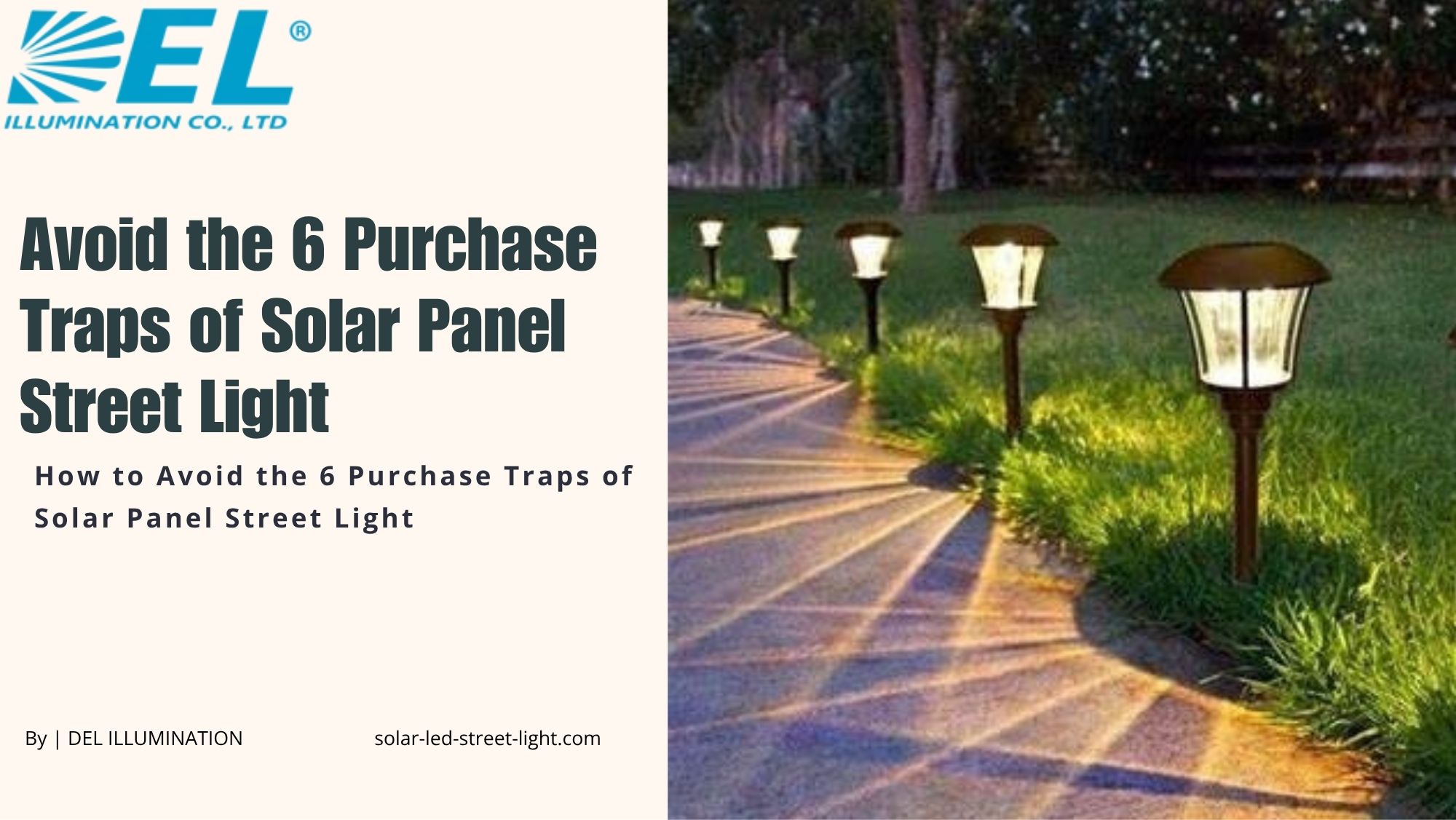
A Solar Panel Street Light gains popularity thanks to its advantages in energy saving, environmental friendliness, and simple installation. Many customers decide to buy solar street lights once they understand these benefits. However, it is easy to fall into a purchase trap if you do not understand the configuration of a Solar Panel Street Light. It is not worth chasing brightness, appearance, or the lowest price while ignoring quality and the overall price to performance ratio.
This guide walks through the six most common traps buyers fall into, and how to avoid each one so your investment delivers reliable light for years.
What Are the Top 6 Solar Panel Street Light Purchase Traps?
Trap 1: Neglecting battery capacity
Falling into this trap has real consequences, such as the light failing to run for the required hours or underperforming through the night. If the battery capacity is too low, the light may work for only a short time, leaving the area dark for the rest of the night. That raises the risk of accidents and makes the whole installation less effective.
Before purchasing a Solar Panel Street Light, evaluate the required battery capacity based on the location, the amount of sunlight available, and the intended use. Consider the number of operating hours needed, the light wattage, and any site limitations. Doing this lets you select a system with the right battery capacity for optimal performance. As a rule of thumb, size the battery for at least three cloudy nights of autonomy so a short spell of bad weather never leaves the road dark.
Trap 2: Ignoring solar panel quality
This trap leads to a shorter panel lifespan and reduced efficiency. Low quality panels degrade faster and generate less energy over time, which can leave the light unable to run efficiently or even power up at all.
Before buying, evaluate the panel quality and its efficiency rate. A good panel has a high efficiency rate and is built from durable materials that withstand harsh weather. Choosing a Solar Panel Street Light with a high quality panel avoids this trap and keeps the system performing reliably for its full service life.
Trap 3: Blindly pursuing high brightness
Solar street lights follow different lighting standards at different sites. Chasing the highest brightness wastes resources and can even cause glare that is harmful to pedestrians and drivers. Confirm the actual lighting requirement for your location first, then select a Solar Panel Street Light that matches that need rather than the biggest number on the spec sheet. A residential lane, a car park, and a main road each call for a different lux level, and matching that target gives even, comfortable light without paying for output you will never use.
Trap 4: Overlooking variable power usage
A modern Solar Panel Street Light can be smartly controlled and adjusted through the night according to need. Because brightness can step up and down on a schedule or by motion, the rated power draw is not constant. Understanding this dimming behaviour helps you size the battery and panel correctly instead of over specifying and wasting budget.
Trap 5: Assuming every component lasts the same time
An LED light source can reach up to 50,000 hours of service life, but a complete system is made of a solar panel, battery, controller, pole, and light source, and these do not age at the same rate. A solar panel can last around 25 years, a battery typically 3 to 5 years, and a controller roughly 2 to 5 years. Knowing these differences helps you plan maintenance and budget for the parts that will need replacing first, which is usually the battery. You can compare durable, factory matched components in our All In One solar street lights range.
Trap 6: Believing price alone defines the product
Price reflects a mix of cost, quality, and brand value. A rock bottom price is tempting, but poor quality cannot guarantee long term use. An excessive price is not wise either, since it may hide an over specified configuration or padding that simply wastes funds. Do not let a cheap offer on a Solar Panel Street Light cloud your judgement. Always do your due diligence and weigh the full specification against the quoted price.
Why the Right Configuration Matters Most
In summary, the suitable configuration is the key to buying a good Solar Panel Street Light. Every trap above comes back to the same principle: match the system to the site rather than to a single headline figure like brightness or price. A light sized correctly for its location, with a quality panel, adequate battery, and a controller tuned to real usage, will outperform a cheaper or flashier unit that was never specified for the job.
Taking a little time on these details before you buy protects both your budget and the safety of the area the lights are meant to serve. A well chosen Solar Panel Street Light pays back through years of reliable, low maintenance operation, while a poorly chosen one becomes a recurring cost. If you are unsure which configuration fits your project, our engineers are happy to help you specify it correctly from the start. Simply contact our team with your site details.
For a wider view of how solar lighting is deployed responsibly around the world, the International Energy Agency publishes useful guidance on solar and renewable adoption.
Frequently Asked Questions
What is the most common Solar Panel Street Light purchase trap?
Underspecifying the battery is the most frequent and damaging mistake. If the battery is too small, the light dies partway through the night, which defeats the entire purpose of the installation and raises safety risks.
How do I know if a solar panel is good quality?
Check the panel efficiency rate and the materials used. A quality panel has a high efficiency rating and durable construction that resists heat, cold, and moisture, so it holds output over many years instead of degrading quickly.
Is a brighter Solar Panel Street Light always better?
No. Excess brightness wastes energy and can cause glare that is unsafe for pedestrians and drivers. The right choice matches the lighting standard for the specific site rather than simply picking the highest lumen figure.
Which part of a solar street light fails first?
The battery, typically after 3 to 5 years, while panels can last around 25 years and controllers 2 to 5 years. Planning for battery replacement is a normal part of owning the system and should factor into your budget.
Does a higher price guarantee a better Solar Panel Street Light?
Not always. Price reflects cost, quality, and brand, but an inflated price can hide an over specified or padded configuration. The best value comes from matching a fair price to a specification that genuinely fits your site.