
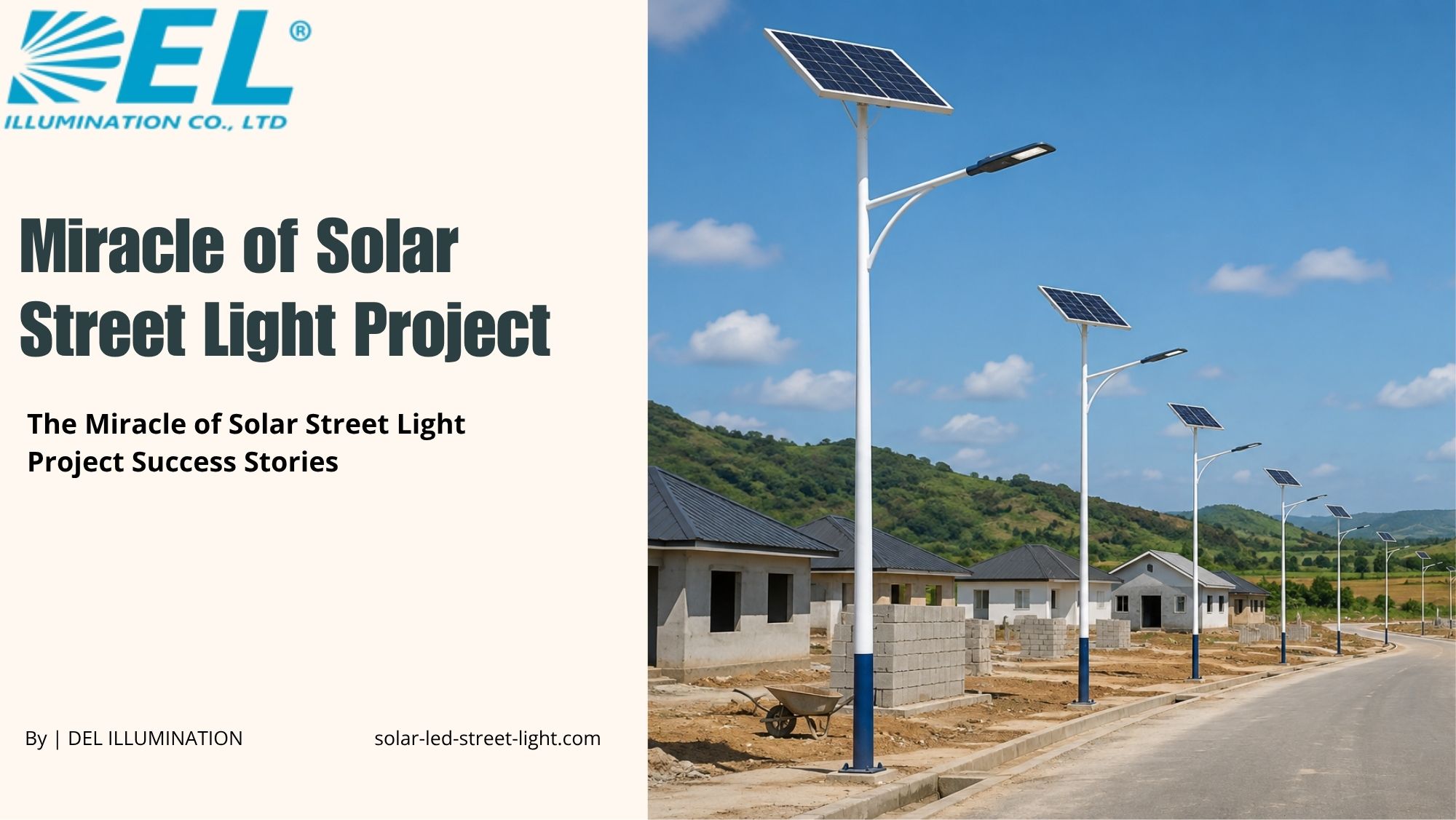
Solar street light project has become the leading modern substitute for traditional street lights such as metal halide, high pressure sodium, and low pressure sodium fittings. Unlike conventional lamps, solar street lights bring several clear advantages: they are environmentally friendly, cost effective, and energy efficient. Thanks to the rapid advance of LED illumination, this green alternative is now widely regarded as the best choice for outdoor lighting.
The working method of a solar street light project is simple. Sunlight is absorbed by the solar panel and converted into electrical energy that drives the light. The full system includes a solar panel, a controller, the LED light source, a pole, and a battery. Because weather and market requirements vary from region to region, the specification of each part depends on a few key factors:
- Average daily sunshine hours at the site.
- Backup days needed to keep the light running through spells of harsh or rainy weather.
- Required working hours per night.
Understanding these variables is the first step to a system that performs reliably for years. Get the sizing right for local conditions and the light runs every night without fail; get it wrong and even good hardware will dim or cut out during long cloudy spells, which is why proper specification matters as much as component quality.
Why a Solar Street Light Project Delivers Real Value
The greatest advantage is money
Solar lighting can look expensive at first, because the panel, controller, and battery are components that traditional lighting does not need, so the upfront cost is higher. Yet traditional lighting hides costs that rarely get scrutinised, such as trenching for electric cable and the labour that goes with it. Add those in, and grid lighting is often the pricier option over time.
Once a solar street light is installed, ongoing spending is minimal. The system needs little repair or maintenance because the chance of damage is low and there is no electricity bill at all, which is where the long term saving really comes from. Over a ten year horizon, the absence of energy costs and the low servicing burden usually mean a solar system recovers its higher purchase price and then continues to save money every year after that.
A solar street light project has a longer lifespan
A well built system is designed for durability. Quality LED sources are rated for tens of thousands of hours, batteries typically last five to seven years, and poles and panels can serve for around two decades. This means you are investing in a system that pays for itself over time. LED based solar street lights offer durability several times greater than traditional street lights, and longer than many competing technologies. The battery is usually the first component to need replacing, and budgeting for that single swap over the life of the installation keeps the whole system running dependably with no unexpected costs.
Solar street lights reduce pollution
Widespread adoption of solar lighting cuts harmful emissions significantly. According to the National Renewable Energy Laboratory, shifting outdoor lighting to solar reduces sulphur dioxide, nitrogen oxides, and other health harming pollutants in the atmosphere. It also lessens the land degradation caused by drilling and fossil fuel extraction. Because conventional grid lighting draws power largely from fossil sources, replacing it with solar removes a meaningful share of that carbon burden.
The takeaway is straightforward. Pollution affects public health more than many people realise, and solar lighting is a markedly cleaner option for both communities and the environment.
Solar street lights encourage community security
A solar street light provides strong night time visibility thanks to high output LED fixtures. In communities, this improves security, enhances safety, and helps deter crime, while also saving money through reduced vandalism. Studies of urban street lighting have linked better lit streets to measurable falls in crime. Businesses, schools, and rural sites that once suffered theft and vandalism see fewer incidents once reliable lighting is in place. Because solar units keep working during grid outages, they also maintain that protective visibility exactly when mains powered lighting would fail, which is a meaningful advantage in areas with an unstable power supply. The technology is versatile enough for streets, commercial areas, residential neighbourhoods, and car parks alike.
A solar street light project is a high technology system
A solar street light built with a monocrystalline panel is a highly effective lighting solution. Modern fixtures are far more efficient than earlier models, pairing better panels with smarter controllers and longer lasting batteries. You can compare current generation options such as our All In Two solar street lights, and engineers keep improving cost and efficiency with each generation, so a newer model is generally a better performer than the one it replaces. Choosing a current generation system ensures you benefit from these gains.
Conclusion
A solar street light project carries many advantages, and when specified correctly the results can be remarkable. Its greatest strength is cost, since it is cheap to run and maintain. It offers a long lifespan, reduces pollution, works as a high technology system, and strengthens community safety. Taken together, these benefits explain why solar has become the default choice for new outdoor lighting. To plan a system for your site, contact our team for guidance and a clear quote. For independent research on solar energy and emissions, the National Renewable Energy Laboratory publishes detailed data.
Frequently Asked Questions
Is a solar street light project more expensive than grid lighting?
The upfront cost is higher because of the panel, controller, and battery. However, grid lighting adds trenching, cabling, labour, and ongoing electricity bills, so over its life a solar street light project usually costs less overall.
How long does a solar street light project last?
Quality LED sources run for tens of thousands of hours, batteries typically last five to seven years, and poles and panels can serve around twenty years. Planning for one battery replacement over the system life is normal.
Does solar street lighting really improve safety?
Yes. Bright, reliable LED light improves night visibility, and better lit streets are consistently linked to lower crime and vandalism. This makes solar lighting valuable for streets, schools, businesses, and residential areas.
What factors decide the specification of a solar street light project?
The main factors are average daily sunshine hours, the backup days needed for cloudy or rainy spells, and the required working hours per night. These determine panel wattage, battery capacity, and controller settings.
Is solar street lighting suitable for every location?
It suits most outdoor settings, from city streets to car parks and rural roads, provided the site receives adequate sunlight. Correct sizing for local weather is what keeps a solar street light project reliable year round.