
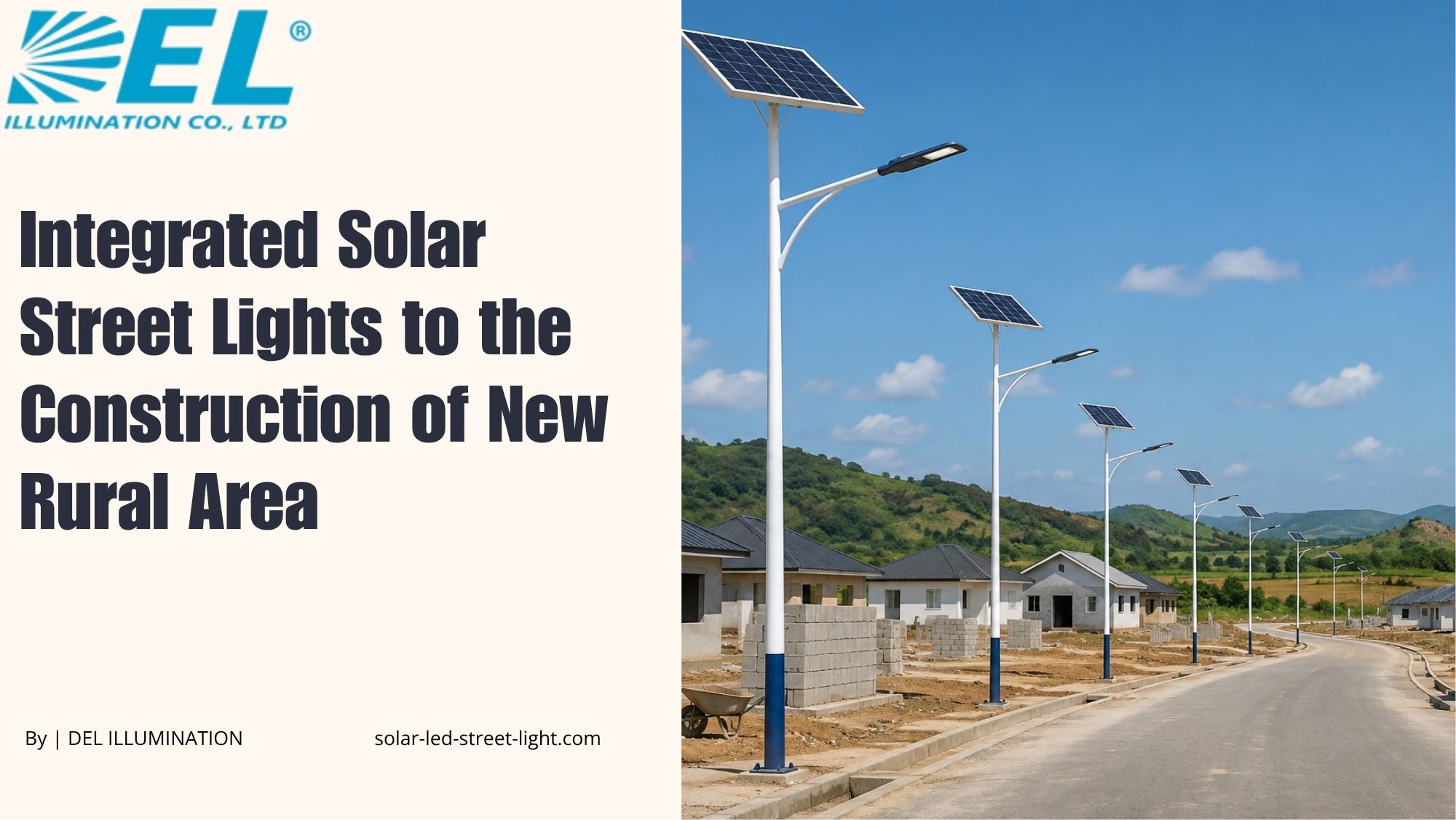
Rural areas have often been the point of contention regarding developmental projects, especially electrification. Some rural areas happen to be cut off from the power grid, which makes access to electricity quite difficult.
Furthermore, the provision of street lighting is virtually impossible in such cases. This can be solved with the construction of integrated solar street lights, which can provide off grid street lighting perfect for rural or remote areas.
Apart from the fact that solar energy is renewable and clean, there are other added benefits like a long life span and low cost of maintenance, which definitely stands to favor usage in rural areas. The PV cells used in an integrated solar street light convert this solar energy into usable electrical power, and this remains one of the most crucial energy sources of the 21st century.
Integrated solar street lights are a combination of all the main components of a solar street light into one compartment. That is, the battery, lamp, solar controller, and solar panel are all assembled into a single compartment instead of separately like in other solar street lights. This type of light makes use of a lithium battery, which has a charge and discharge cycle that is three times better than that of the lead acid battery usually used in the separated solar street light.
Additionally, these batteries also last longer and they work well in temperatures not lower than minus 20 degrees Celsius, which makes them perfect for temperate rural areas. However, any temperature between minus 20 and minus 30 degrees Celsius will reduce the battery capacity by roughly 30 percent.
Furthermore, the solar panel often used in these units is the monocrystalline solar panel, which is more efficient with a conversion rate reaching as much as 24 percent. They perform better than a polycrystalline panel, particularly in cold weather.
What Makes Integrated Solar Street Lights Different
Unlike traditional split systems, integrated solar street lights bring every working part into one sealed housing. This design choice matters most in rural settings, where spare parts, skilled labor, and reliable transport are all in short supply.
Because the whole unit arrives ready to mount, there is far less that can go wrong during shipping or handling. Fewer loose cables and connectors also mean fewer weak points where dust, water, or corrosion could cause a failure over the years.
The Benefits of Using Integrated Solar Street Lights in Rural Areas
These lights are equipped with a highly efficient solar panel along with highly efficient LEDs, a long lasting lithium battery, a smart controller, and mounting brackets in a single unit. The advantage of this integration is the easy installation of the light fixture owing to fewer components and lighter weight.
Mostly, it will take only two people and about 5 to 10 minutes to couple a single integrated solar light without the use of heavy gadgets or tools. This speed is a real advantage when a project has to cover many villages spread across a wide region.
Basically, these units work almost in the same way as a conventional street light. The big difference lies in the incorporation of all its components, like the batteries, solar panel, controller system, and LED light, into one.
This makes it much easier to move and install in rural areas and remote places. Additionally, it also means it is not necessary to be connected to the grid before the street can be illuminated, as the lights can operate independently of the grid and each other.
One of the biggest pluses of these lights is that they save you from bogus and unnecessary expenses incurred through construction, installation, and commissioning the project. When you compare them to traditional street lights, you will find that integrated solar lights carry roughly one fifth of the transport cost of traditional ones.
Also, when importing an integrated solar light, you only get to spend one tenth of the cost used for importing the commonly separated type of street lights. Following a simple solar lighting project checklist helps keep these savings on track from planning through handover.
Obviously, we keep gushing over the longevity of integrated solar lights, and that is because it is really worth the hype. Integrated solar lights make use of lithium battery management control technology, and when compared with other light fixtures, that technology sets them apart.
The ordinary battery used in some light fixtures lasts two to three years, but the lithium battery used in integrated solar lights is built to last far longer. Generally, within the first five years of the light fixture, there should not be any need to change the battery or carry out maintenance.
This significantly reduces the need for after sale services or replacing parts of the integrated solar light. Notwithstanding, if there is a need to carry out a replacement in the future, usually after about five years, then you only need a couple of minutes to do that without relying on technical support or an engineer’s guide.
Why Rural Projects Favor Off Grid Lighting
Extending the power grid into scattered villages is expensive and slow. Trenching, cabling, and transformer work can cost more than the lighting itself, and the grid may still fail during storms or peak demand.
Integrated solar street lights sidestep all of that. Each pole is its own tiny power station, storing sunlight by day and lighting the road by night, which keeps communities safe without waiting years for grid expansion. According to the International Energy Agency, off grid solar remains one of the most affordable routes to first time electricity access in remote regions.
Integrated Solar Street Lights: Conclusion
Given all the benefits and features that integrated solar street lights have to offer, especially in rural areas, they seem a very good choice for rural lighting projects in terms of saving cost, conserving power, and longevity.
Villages are sometimes located in remote areas where electricity from the power grid cannot reach. This is where integrated solar street lights can prove undoubtedly useful, as they can provide off grid connections for hard to reach areas.
Additionally, their easy installation means there is a chance to cut down on the cost of hiring a technician, as this is something a small local crew can handle with minimum fuss. To scope a village lighting project or request a quote, contact the DEL Illumination team for tailored guidance.
Frequently Asked Questions
What are integrated solar street lights?
Integrated solar street lights combine the solar panel, lithium battery, LED lamp, and controller into one sealed unit. This all in one design makes them lighter, faster to install, and better suited to remote rural roads than separated systems.
How long do integrated solar street lights last in rural areas?
The lithium battery is built to run for many years, and most units need no battery change or maintenance within the first five years. This low upkeep is a major reason villages choose them over grid connected lighting.
Do integrated solar street lights work in cold rural climates?
Yes. They operate reliably in temperatures down to about minus 20 degrees Celsius. Between minus 20 and minus 30 degrees Celsius the battery capacity drops by roughly 30 percent, so very cold sites may need a larger battery.
How many people are needed to install one unit?
Usually just two people and about 5 to 10 minutes per pole, with no heavy machinery. This makes it practical to light many villages quickly across a wide rural region.
Are integrated solar street lights cheaper than traditional street lights?
Yes. They avoid grid trenching and cabling, and their transport cost is roughly one fifth that of traditional lights, with import costs about one tenth of separated systems.