
In the energy sector, everyone is looking toward renewable sources, and solar energy leads the way. Apart from being a superb energy source, it is also sustainable. This is one reason many are investing in applications that make use of solar energy, such as solar panel street lights. According to the International Energy Agency, solar capacity continues to grow at record pace worldwide, with China remaining the clear leader in new renewable installations.
Now, what if you happen to live in a colder region with heavy snow and long winters? It might concern you how well solar panel street lights hold up during the winter period. It is a fair question. In cold climates you sometimes get only a few hours of daylight, you face low temperatures, and snow can occasionally sit on the panel surface. The good news is that none of these factors stops solar panel street lights from working reliably.
Performance in Cold Weather
Here is the reassuring part: external temperature does not reduce solar panel efficiency. All a panel needs is sunlight, and cold weather can actually help solar panel street lights perform at their best. Let us look at why cold conditions support strong output.
Cold weather prevents the panels from overheating
Solar cells convert solar energy into electrical energy directly, turning light photons into electricity. As long as the sun is up, cold weather does not affect this process at all. In hotter climates, panels tend to heat up under intense sun, and that heat lowers electrical efficiency. In colder areas this does not happen, which means a low temperature is actually a benefit to solar panel street lights rather than a drawback.
Snow and solar panels
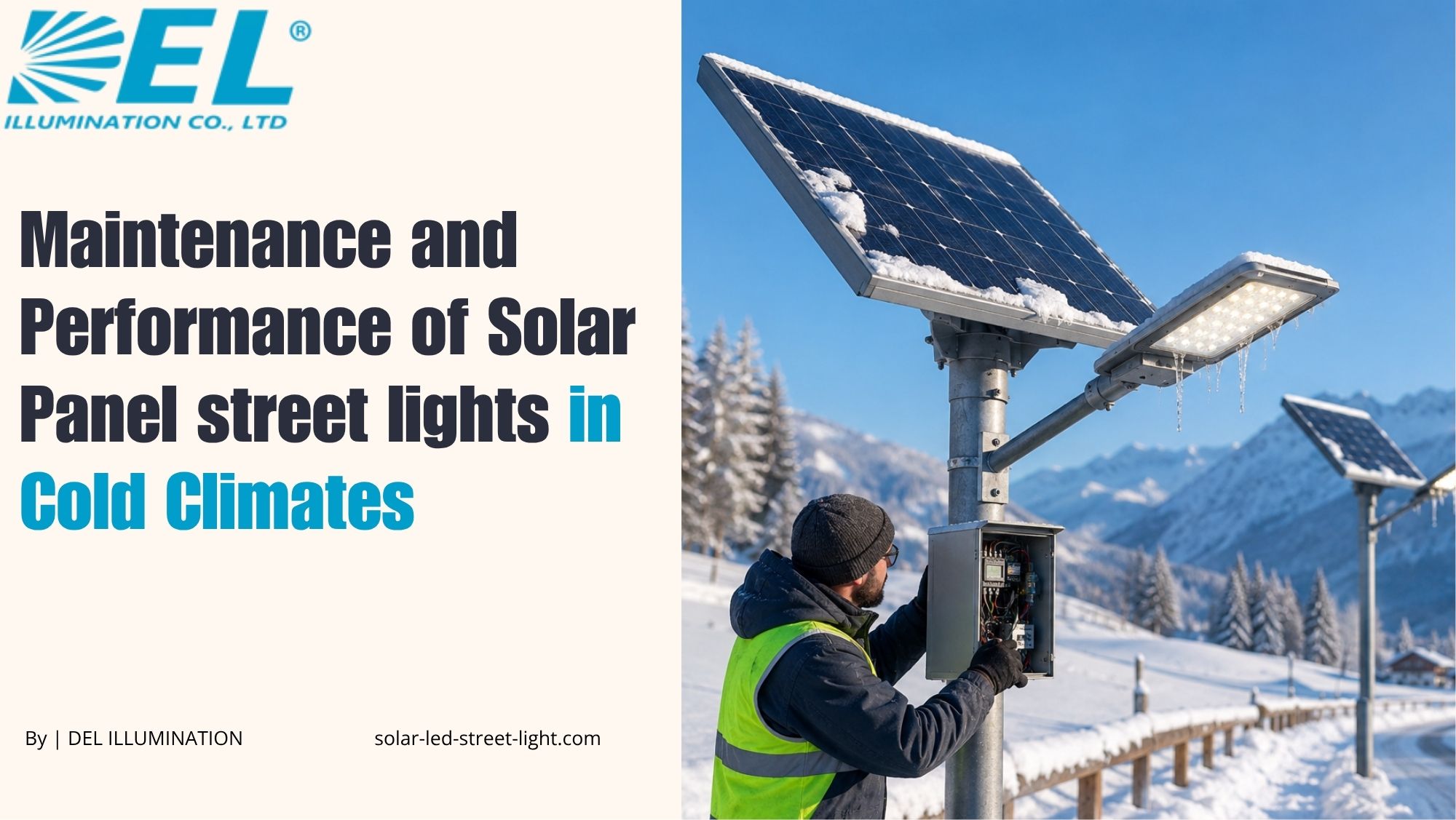
Another reason people feel skeptical about these lights is snow. In reality it is not the barrier many assume. Snow is soft and light, and quality panels are engineered to bear a certain load without any loss of durability. In most cases snow melts or slides off the tilted glass surface before it affects generation.
Even when a storm leaves snow sitting on the panel, clearing it is simple, either by yourself or with help from a professional. There is also an upside. The smooth white surface of surrounding snow reflects sunlight back onto the glass, so scattered light can lift output on bright winter days. This reflected gain is one of the quieter advantages of running these systems in snowy regions.
Maintenance in Cold Weather
If you are still worried about winter performance, a few simple maintenance habits will keep your system delivering sustainable power at the maximum level. Good upkeep is less about frequent work and more about a handful of correct choices at install time and after storms.
Position the panel at the right angle
In winter the sunlight arrives from a lower angle than in summer. Positioning the panel at a steeper tilt captures more of that low sun during the short daylight window, which raises daily power generation. In the northern hemisphere, aim the panels toward the south so they face the sun through the middle of the day. A correct tilt also helps snow slide off on its own.
Never rake off the snow
If snow does block the panel, resist the urge to scrape it off right away. You can melt it by hosing with water or simply let it slide off naturally as the surface warms. Raking can scratch or crack the glass unless you use a special solar panel snow rake made for the job. When in doubt, call a professional to clear the panels safely. Careful cleaning protects both the coating and the long term yield of the fixture.
Keep the surrounding site clear
Beyond snow, winter maintenance means keeping the panel free of leaves, dust, and bird debris that can build up during still, dry spells. A quick seasonal inspection of the battery housing, wiring, and mounting hardware catches small faults before they become winter outages. These checks take minutes and add years of reliable service. If you want a durable option built for tough weather, explore our All In One solar street lights range.
A simple winter routine keeps solar panel street lights running at full output with almost no effort. Wipe the glass clean after a storm, confirm the tilt still sheds snow, and check that the battery holds charge through the longest nights. These small habits keep solar panel street lights dependable all winter. Because the moving parts are few and the electronics are sealed, most systems ask for only a short check once or twice a season, which is one reason they suit remote and hard to reach sites so well.
Why Cold Climates Are No Barrier for Solar Panel Street Lights
It is not necessary to live somewhere as sunny as Arizona or California to enjoy the benefits of solar lighting. Colder places such as New York and Massachusetts rank among strong adopters of solar installations, and Germany, with a climate closer to Alaska than to the desert, has long been one of the global leaders in solar deployment.
That track record tells you clearly that cold climates do not hold back the effectiveness of solar energy applications. If you want to reduce your carbon footprint and cut long term operating cost, a well maintained system is a dependable choice even in the harshest winters. To see how the technology performs in practice, you can review our completed projects across a range of climates.
Conclusion
Cold weather, low sun angles, and occasional snow do not stop a solar lighting system from performing. If anything, cooler temperatures improve electrical efficiency, and reflected light off snow can add output. With correct panel angle, sensible snow handling, and a short seasonal check, solar panel street lights deliver clean, reliable illumination through winter after winter. For tailored advice on a cold climate project, visit our contact page and our engineers will help you specify the right configuration.
Frequently Asked Questions
Do solar panel street lights work in winter?
Yes. Sunlight, not warmth, powers the panels, so they generate through winter as long as daylight reaches the glass. Cooler temperatures can even improve electrical efficiency compared with hot summer conditions.
Does snow permanently damage the panels?
No. Panels are built to bear a snow load without losing durability, and most snow melts or slides off the tilted surface. Only prolonged heavy cover reduces output, and that is cleared easily and safely.
What is the best angle for panels in cold climates?
A steeper winter tilt captures the low seasonal sun, and facing the panels toward the south in the northern hemisphere maximises daily generation. A steeper angle also helps snow slide off on its own.
How often should the lights be maintained in winter?
A brief seasonal inspection of the panel surface, battery housing, wiring, and mounting is usually enough. Add a quick clean after major storms to keep generation at its peak.
Are cold regions like New York or Germany suitable for solar lighting?
Absolutely. Both are long standing leaders in solar adoption despite cold winters, proving that low temperatures do not limit the value of these systems.