
Solar street lights with remote control have become a popular and practical solution for illuminating outdoor spaces. These fixtures are powered by renewable solar energy and paired with wireless technology, allowing convenient operation from a distance. With the ability to adjust brightness, set timers, and switch the lights on or off, a solar street light remote control offers an efficient, eco friendly lighting solution that improves safety and visibility while cutting energy costs. Below we look at how this technology works, the types of remote available, and the six main benefits it brings.
What Is a Solar Street Light Remote Control?
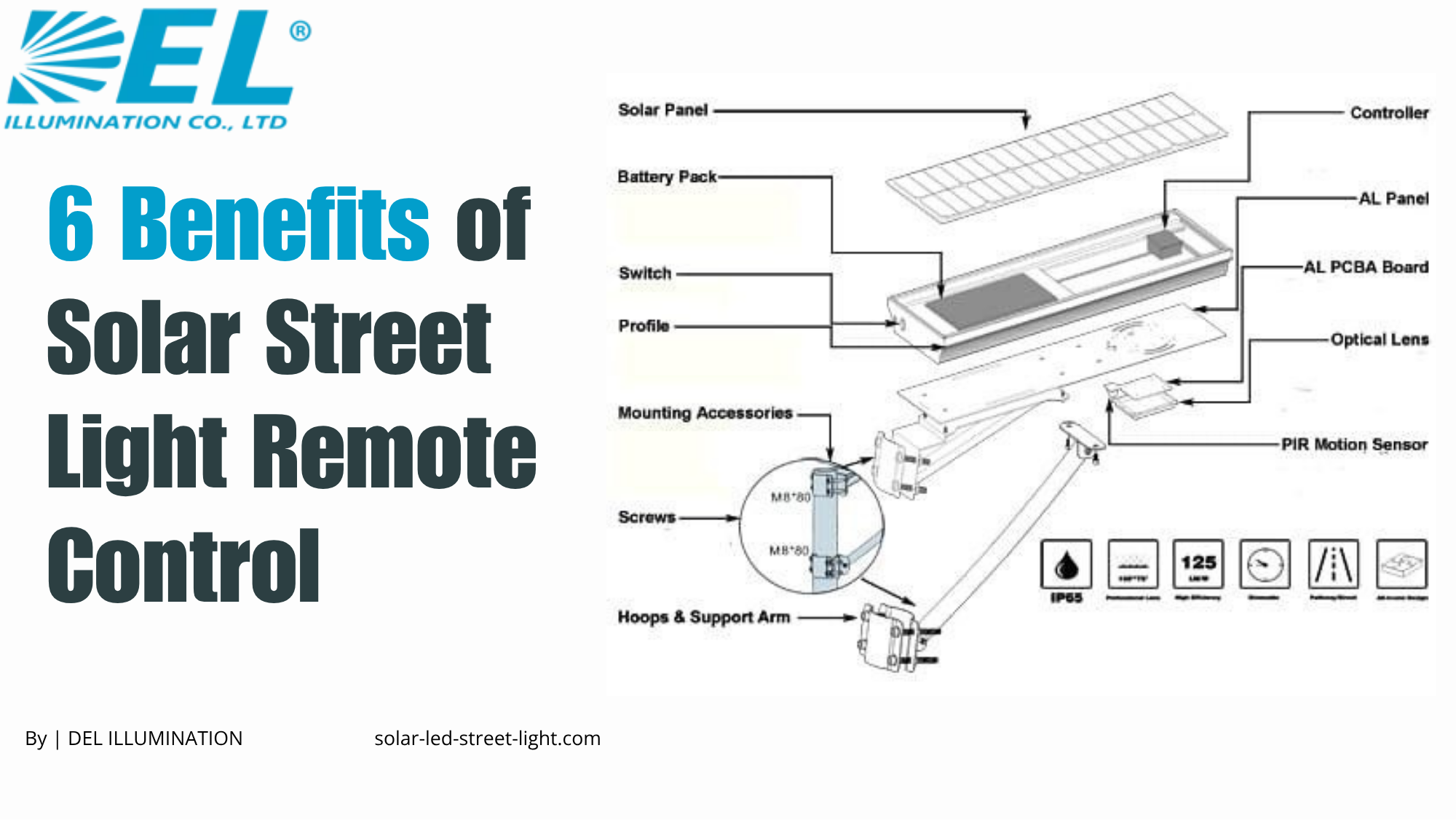
A solar street light remote control is a device used to operate solar street lights wirelessly. It lets the user turn the lights on, off, dim them, or adjust brightness from a distance. The remote has a transmitter that sends signals to a receiver built into the light. The receiver interprets the signal and passes it to the control circuitry, which adjusts the LED output accordingly. If the signal instructs the lights to switch off, the circuitry shuts the LEDs down to conserve battery power, and if the signal calls for a brightness change, the circuitry modifies the output to the requested level.
Types of Solar Street Light Remote Control
There are several common types of remote control used with solar lighting today.
- Infrared remote control: uses IR signals and needs a clear line of sight between the remote and the light.
- Radio frequency remote control: uses radio waves and can still work even when something blocks the path between the remote and the light.
- Bluetooth remote control: connects to the light through Bluetooth so it can be operated from a smartphone or tablet.
- WiFi remote control: connects over WiFi, letting you control the light from a phone, tablet, or computer.
- Cellular remote control: uses cellular networks, allowing control from almost anywhere with signal coverage.
To see how these controls pair with a full fixture, our All In One Solar Street Light page has more detail on compatible models.
Advantages of Solar Street Light Remote Control
What makes these systems worth choosing? Here are the six main benefits.
1. Enhanced Energy Savings
A solar street light remote control improves energy savings by letting the lights turn on and off exactly when needed, so nothing is wasted lighting an empty street during the day. It also lets you adjust brightness by time of night or activity level, for example raising output during peak traffic hours and lowering it when the streets are quiet, so energy is used only where it counts.
2. Increased Safety and Security
A solar street light remote control system can noticeably improve safety on the streets. It can be used to add extra lighting in spots known to be dangerous or poorly lit, so pedestrians and drivers see more clearly and the risk of accidents drops. Remote operation also adds a layer of security, since the lights can be monitored from a central point, which means suspicious activity or tampering near the fixture can be spotted and responded to quickly.
3. Easy Installation and Maintenance
Systems built around a solar street light remote control are simple to maintain thanks to their efficient design. The remote gives quick access to the light’s settings, so adjusting brightness or timers takes only a moment. Maintenance is further simplified because solar power removes the need for frequent battery swaps or wiring work, and the panels are built to handle harsh weather with only light cleaning. The LED bulbs used in these fixtures also outlast traditional bulbs, cutting down on replacements, and the compact design makes the whole unit easy to install or relocate. For a deeper look at upkeep over time, our guide on how to increase solar street light lifespan covers practical maintenance tips.
4. Versatility and Flexibility
A solar street light remote control lets you adjust lighting settings on the fly, turning fixtures on or off, changing brightness, setting timers, or switching modes such as from motion sensing to constant light. This flexibility supports tailored lighting for different environments and needs, and because the remote removes the need for physical access to the fixture, installation and upkeep stay simple too.
5. Environmental Sustainability
By relying on solar energy, a solar street light remote control helps cut carbon emissions and supports efforts against climate change. These systems do not emit pollutants such as carbon dioxide or sulfur dioxide that harm air quality and health. Because the fixtures also last a long time, replacements happen less often, which reduces the waste that would otherwise end up in landfills and lowers the overall footprint compared with traditional street lighting powered by non renewable sources.
6. Customization
Customization is one of the most useful benefits of a solar street light remote control, since it lets you tailor the system to your own needs. You can set timers so the lights switch on and off at set times, which is especially useful on busy roads where visibility matters most during peak hours. You can also fine tune brightness for the setting, for instance dimming lights in residential streets late at night to limit light pollution and save energy.
Factors to Consider When Choosing a Solar Street Light Remote Control
A few practical factors are worth checking before you buy.
- Range: confirm the remote can reach the light from the distance you actually need, since ranges vary between models.
- Battery life: think about how often you will use the remote and choose one whose battery will comfortably last that long.
- Control features: look for the specific functions you want, such as dimming, mode switching, or scheduled timers.
- Compatibility: check that the remote works with the solar street light you already own or plan to buy, since not every remote fits every fixture.
- Ease of use: pick a layout and control scheme that feels intuitive, since a confusing remote defeats the purpose of convenience.
If you are also weighing upfront budget, our breakdown of the cost of solar street lamp installations is a helpful companion read.
Conclusion
Solar street lights paired with remote control have become a popular and effective option for outdoor lighting. The remote feature adds convenience and flexibility, letting users adjust brightness, timing, and other settings from a distance. As a solar street light remote control becomes more efficient and reliable, it is an increasingly attractive choice for municipalities, businesses, and homeowners looking to cut energy costs and environmental impact. You can also compare wiring approaches through this overview of lighting control systems for broader context on how remote operated lighting works.
Frequently Asked Questions
1. What does a solar street light remote control actually do?
It lets you operate a solar street light wirelessly, turning it on or off, dimming it, or adjusting brightness from a distance without needing physical access to the fixture.
2. Which type of remote control works best for large installations?
Radio frequency and cellular options tend to work best across larger sites since they do not require a direct line of sight and can cover longer distances than infrared.
3. Can a solar street light remote control help reduce energy costs?
Yes. By allowing brightness to be adjusted based on time or activity, it prevents wasted output and keeps energy use closely matched to actual need.
4. Is a solar street light remote control difficult to install?
No. Most systems are designed for straightforward setup, and because the remote removes the need for physical access to the fixture, ongoing adjustments are simple as well.
5. Do all solar street lights support remote control?
Not always. Compatibility depends on the model, so it is worth confirming that a chosen remote matches your existing or planned fixture before purchase.
Feel free to contact us if you would like help choosing the right setup.