
Have you come across those intriguing short videos showcasing a solar street light autonomously cleaning itself? It is not just a futuristic concept, it is the reality of the innovative auto cleaning solar street lights now entering the market. This cutting edge lighting solution goes beyond the conventional, seamlessly integrating advanced technologies to ensure its own efficiency without waiting on a maintenance crew.
From self cleaning mechanisms to intelligent sensor systems monitoring environmental conditions, auto cleaning solar street lights redefine sustainable outdoor illumination. If you want to see the kind of compact, integrated fixture these self cleaning innovations are built on top of, take a look at our All In One Solar Street Lights range before continuing. Let’s dive in and discover the reasons behind the growing popularity of auto cleaning solar street lights.
Components of Auto Cleaning Solar Street Lights
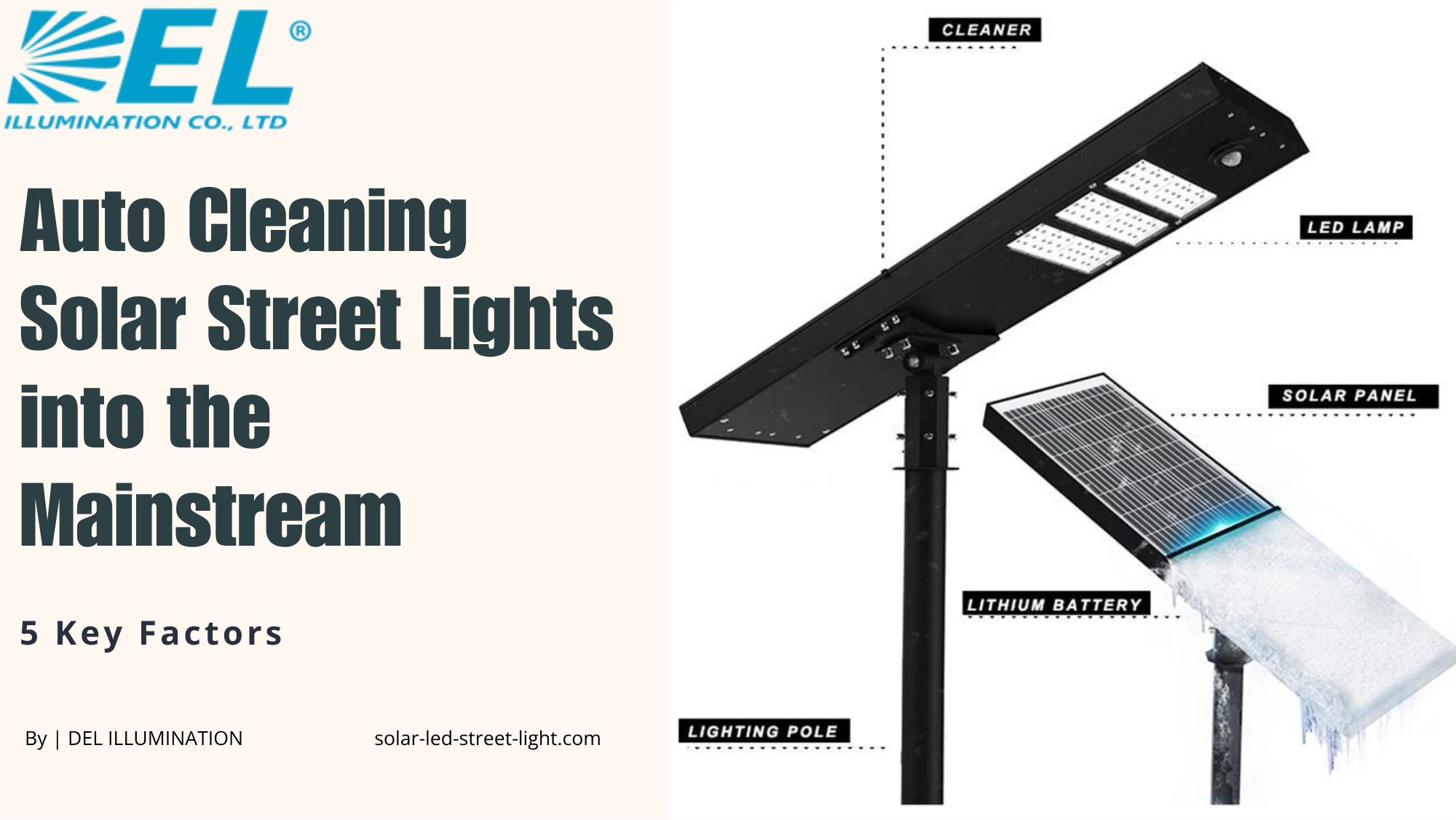
Auto cleaning solar street lights comprise several meticulously engineered components, each playing a crucial role. These include:
- Photovoltaic Panel: The cornerstone of any auto cleaning solar street light, the photovoltaic panel consists of high efficiency solar cells. These cells convert sunlight into electrical energy through the photovoltaic effect. The panel is coated with an anti reflective material to enhance light absorption, which matters even more here since the panel is expected to stay clear year round.
- Self Cleaning Mechanism: At the heart of auto cleaning solar street lights is a cutting edge self cleaning mechanism. This includes a precision controlled robotic arm equipped with advanced brushes. These brushes, often composed of durable and weather resistant materials, execute systematic cleaning sweeps to remove accumulated dust and debris from the solar panel, which is the single feature that defines this category of fixture.
- Sensor System: The intelligence of the system lies in a sophisticated sensor array. Optical sensors detect the level of dirt or obstruction on the solar panel, while environmental sensors monitor factors like humidity and weather conditions. This data is processed to trigger the self cleaning mechanism when predetermined thresholds are reached.
- Microcontroller Unit (MCU): Acting as the brain of auto cleaning solar street lights, the microcontroller unit processes information from the sensor system. It interprets data, calculates the optimal cleaning frequency, and controls the activation of the cleaning mechanism. The MCU ensures efficient energy use and responsiveness to environmental changes.
- Energy Storage System: To enable uninterrupted operation during periods of low sunlight, auto cleaning solar street lights incorporate an energy storage system, typically a high capacity lithium ion battery. This battery stores excess energy generated during the day for use during the night, ensuring a consistent and reliable light source.
- LED Light Fixture: The light emitting diode (LED) fixture is responsible for converting electrical energy into visible light. LEDs are chosen for their energy efficiency and longevity, and pairing them with the self cleaning panels used in auto cleaning solar street lights keeps output consistent for years. The system often includes a smart lighting controller that adjusts brightness based on ambient light conditions, further optimizing energy usage.
- Weatherproof Enclosure: All the electronic components are housed in a weatherproof enclosure, protecting them from environmental elements such as rain, snow, and extreme temperatures. This enclosure ensures the longevity and reliability of auto cleaning solar street lights in various outdoor conditions.
Working Mechanism of Auto Cleaning Solar Street Lights
Auto cleaning solar street lights employ a sophisticated mechanism to ensure the continual efficiency of their photovoltaic panels. Embedded with self cleaning technology, the solar light utilizes a combination of advanced materials and innovative engineering.
At regular intervals, a microfiber cleaning mechanism is activated, employing a precision controlled robotic arm. This arm, equipped with high performance brushes composed of durable and weather resistant materials, systematically sweeps across the surface of the solar panel. The brushes are designed to effectively remove dust, debris, and other contaminants that may accumulate on the panel, thereby optimizing light absorption and energy conversion, which is exactly what auto cleaning solar street lights are built to do.
Additionally, the cleaning process is complemented by a state of the art sensor system. These sensors detect the level of dirt or obstruction on the solar panel and trigger the cleaning mechanism when a predefined threshold is reached. The entire operation is meticulously orchestrated to minimize energy consumption while ensuring the solar panel remains free from hindrances, which is a large part of why auto cleaning solar street lights perform so consistently compared to older manual maintenance approaches.
The Reasons Behind the Push for Auto Cleaning Solar Street Lights
Why is this innovative lighting solution becoming so popular?
1. Autonomous Operation
One compelling scientific rationale behind the emphasis on autonomous operation lies in the impact of dust and dirt accumulation on solar panels. Photovoltaic cells, the key components responsible for converting sunlight into electricity, are susceptible to reduced efficiency when covered with debris. The accumulation of dust on the solar panels obstructs the incident sunlight, leading to a decrease in overall energy conversion efficiency, which is precisely the problem auto cleaning solar street lights are designed to solve.
To address this issue, auto cleaning solar street lights employ cutting edge technologies, such as robotic cleaning systems and self cleaning coatings. These innovations actively remove and prevent the buildup of dirt, ensuring that the solar panels receive maximum sunlight exposure. The use of hydrophobic coatings, for instance, minimizes the adhesion of dust particles, allowing rainwater or the automated cleaning mechanism on auto cleaning solar street lights to easily wash away contaminants.
Furthermore, the autonomy built into auto cleaning solar street lights reduces the need for manual intervention, making the maintenance process more efficient and cost effective. The incorporation of intelligent sensors, data analytics, and feedback loops enables the system to autonomously assess the cleanliness of the solar panels and trigger cleaning processes as needed.
2. Public Awareness and Perception
The growing recognition of solar energy as a clean and abundant resource has reshaped public perception, fostering a desire for eco friendly solutions. Auto cleaning solar street lights, equipped with advanced photovoltaic cells, capitalize on this awareness by efficiently harnessing sunlight to generate electricity.
Public perception has been positively influenced by the integration of self cleaning mechanisms in these solar street lights. Awareness of the scientific intricacies involved in auto cleaning solar street lights has led to a shift in public preferences towards sustainable and low maintenance lighting solutions. Understanding the underlying technological advancements, such as automated cleaning systems and smart sensors, has bolstered confidence in the reliability and efficiency of these solar powered street lights.
3. Technological Advancements
The incorporation of intelligent sensors, such as environmental monitoring devices and weather prediction algorithms, further enhances the functionality of auto cleaning solar street lights. These sensors enable the system to anticipate adverse weather conditions and proactively initiate cleaning processes, ensuring the consistent performance of the solar panels.
Breakthroughs in battery technology have significantly improved the storage capacity and overall reliability of auto cleaning solar street lights. Advanced energy storage solutions, such as solid state batteries and high capacity lithium ion batteries with rapid charging capabilities, ensure that these lights remain operational even during extended periods of low sunlight exposure. Manufacturers have also continued refining nano coating formulas this year, and newer super hydrophobic and photocatalytic coatings now allow some auto cleaning solar street lights to break down organic residue on the panel surface using sunlight itself, reducing how often the robotic cleaning cycle even needs to run.
4. Maintenance Cost Reduction
This innovative technology not only enhances the overall efficiency of solar energy absorption but also mitigates the need for frequent manual cleaning interventions. By employing these scientific principles, auto cleaning solar street lights significantly diminish the occurrence of performance degrading factors such as dust accumulation and shading effects. Consequently, the photovoltaic cells maintain optimal functionality, maximizing energy conversion and prolonging the lifespan of the entire solar lighting system.
The reduction in maintenance requirements translates into tangible financial benefits. The cost savings stem from decreased labor expenses associated with manual cleaning, as well as a diminished need for cleaning supplies and equipment, which is one reason municipalities and large facility operators are increasingly specifying auto cleaning solar street lights for new public lighting projects rather than a standard fixed panel model.
5. Optimized Energy Harvesting
By harnessing the principles of photonic efficiency, auto cleaning solar street lights maximize the conversion of solar energy into electrical power. The reduction of surface contaminants not only optimizes light absorption but also minimizes the impact of shading, subsequently enhancing the overall energy yield of the system.
Are Auto Cleaning Solar Street Lights Worth the Investment?
Given rising labor costs for manual panel maintenance and the steady drop in price for robotic cleaning components and hydrophobic coatings, the payback period for auto cleaning solar street lights has continued to shrink. For high dust environments such as desert regions, industrial zones, or roadside installations near unpaved surfaces, the reduced need for manual cleaning crews alone can offset a meaningful share of the upfront cost within the first few years of operation, making auto cleaning solar street lights an increasingly practical choice rather than a purely premium feature. If you are comparing suppliers for a large scale rollout, it is also worth reading our guide on choosing the right solar street lamp suppliers before you request quotes.
Conclusion
With the current pace of technological advancement, we are swiftly moving towards a world where auto cleaning solar street lights emerge as the new normal in urban lighting solutions. The widespread adoption of auto cleaning solar street lights seems inevitable, as they offer a promising pathway towards environmentally friendly and economically viable urban infrastructure. Would you consider auto cleaning solar street lights for your next project? Browse our project page to see real installations, check our service offering for ongoing support, or contact us to discuss your requirements.
Frequently Asked Questions
1. What makes auto cleaning solar street lights different from standard solar street lights?
Auto cleaning solar street lights include a robotic cleaning mechanism and sensor system that automatically remove dust and debris from the solar panel, while a standard unit relies entirely on manual cleaning.
2. How often do auto cleaning solar street lights need to run their cleaning cycle?
The frequency depends on environmental sensors that detect dirt accumulation, but most auto cleaning solar street lights are designed to trigger cleaning cycles only when needed, which conserves energy and extends component life.
3. Are auto cleaning solar street lights more expensive than traditional solar street lights?
Yes, the upfront cost of auto cleaning solar street lights is typically higher due to the added robotic and sensor components, but the reduced maintenance labor over time often offsets this difference.
4. Can auto cleaning solar street lights work in extremely dusty or desert environments?
Yes, this is actually where auto cleaning solar street lights deliver the most value, since frequent dust accumulation in these regions would otherwise require constant manual cleaning.
5. Do auto cleaning solar street lights require any manual maintenance at all?
While the cleaning of the panel itself is automated, periodic inspection of the battery, sensors, and robotic arm is still recommended to ensure auto cleaning solar street lights continue operating reliably for their full lifespan.